

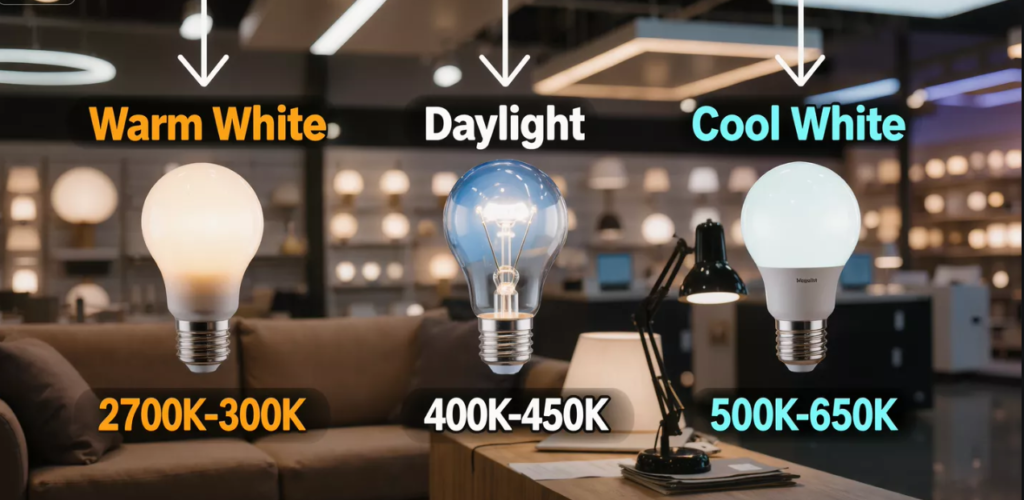
Walking into a lighting store can be overwhelming. With terms like "warm white," "daylight," and "cool white" everywhere, how do you know which one is right for your space? Making the wrong choice could leave you with harsh lighting that strains your eyes or dims your productivity.
The key difference lies in their color temperature1: Warm white (2700K-3000K) creates cozy, relaxing environments; Daylight (4000K-4500K) offers natural, balanced illumination; Cool white (5000K-6500K) provides bright, focused lighting for task-oriented spaces.

As a manufacturer who's worked with countless lighting projects, I've seen how color temperature1 can make or break a space. Let me share what I've learned about choosing the right light for different applications.
What Makes Warm White Light So Special?
Remember that cozy feeling of sitting by a fireplace? That's exactly what warm white light recreates. I've had clients who initially dismissed it as "too yellow," only to fall in love with its ability to transform spaces.
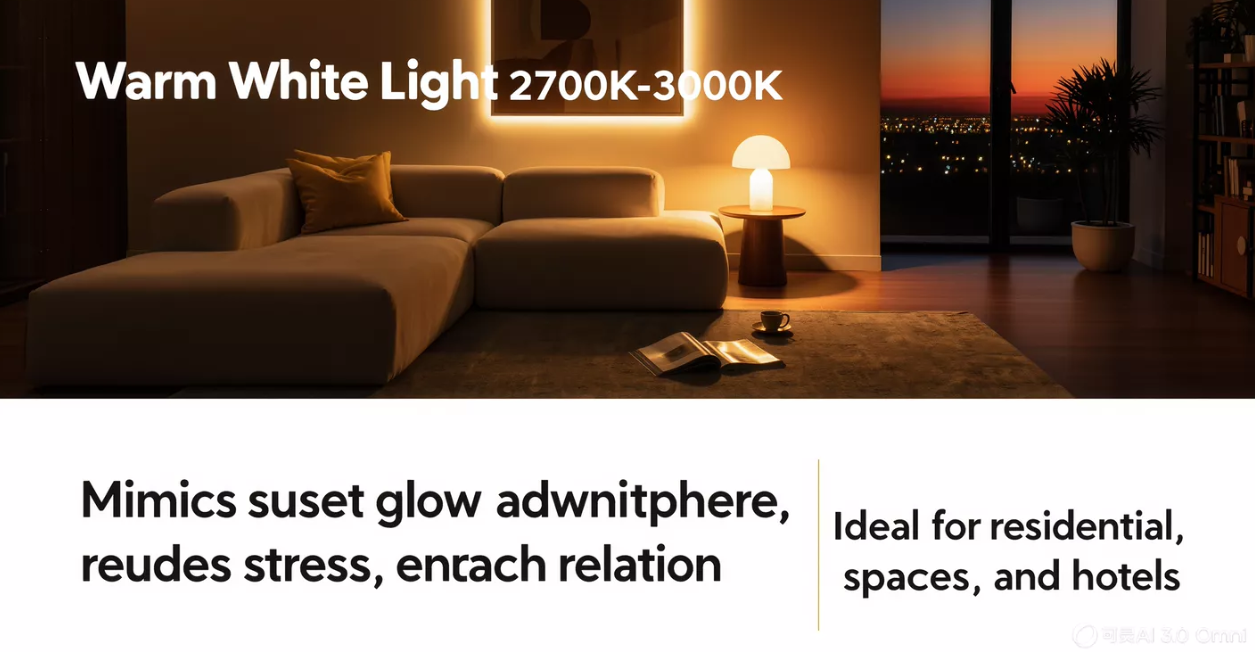
Warm white2 light (2700K-3000K) mimics sunset glow, creating an inviting atmosphere that reduces stress and enhances relaxation. It's ideal for residential spaces, restaurants, and hotels where comfort is key.
The Magic of Warm White
When it comes to warm white lighting, understanding its characteristics and applications can revolutionize your space design:
Perfect Applications
-
Residential Spaces:
-
Bedrooms
-
Living rooms
-
Dining areas
-
Commercial Settings:
-
High-end restaurants
-
Hotel lobbies
-
Spa facilities
Key Benefits
| Aspect | Impact |
|---|---|
| Psychological | Promotes relaxation and reduces anxiety |
| Physiological | Supports natural melatonin production for better sleep |
| Aesthetic | Makes skin tones appear more flattering |
| Practical | Reduces eye strain in evening hours |
Why Choose Daylight Color Temperature?
In my factory, we often test different color temperature1s side by side. Nothing matches daylight's ability to reveal true colors. It's become our most requested option for office environments.
Daylight color temperature3e](http://www.scholarpedia.org/article/Out-of-time-order_correlations_and_quantum_chaos)%%%FOOTNOTE_REF_1%%% (4000K-4500K) provides the most natural-looking light, closely mimicking mid-morning sunlight. It maintains high visibility while keeping colors accurate, making it perfect for offices and retail spaces.

Understanding Daylight LED Benefits
The versatility of daylight color temperature1 makes it a standout choice for various applications:
Ideal Settings
-
Professional Environments:
-
Office spaces
-
Conference rooms
-
Design studios
-
Retail Applications:
-
Showrooms
-
Clothing stores
-
Art galleries
Performance Metrics
| Feature | Benefit |
|---|---|
| Color Rendering | Excellent color accuracy (CRI>80) |
| Productivity | Enhances focus and alertness |
| Versatility | Works well with both natural and artificial light |
| Energy Efficiency | Optimal lumens per watt ratio |
What Makes Cool White Light Different?
I once installed cool white lighting in a precision manufacturing facility. The improvement in quality control was immediate – workers could spot defects they previously missed under warmer lighting.
Cool white light4 (5000K-6500K) produces a crisp, bluish illumination that maximizes visibility and contrast. It's specifically designed for task-oriented environments5 where attention to detail is crucial.
Cool White Light Applications
Understanding where cool white light excels can help make informed lighting decisions:
Best Uses
-
Industrial Settings:
-
Manufacturing floors
-
Quality control areas
-
Warehouses
-
Technical Spaces:
-
Laboratories
-
Medical facilities
-
Garages
Technical Advantages
| Feature | Application |
|---|---|
| High Contrast | Enhanced detail visibility |
| Maximum Brightness | Improved safety in work areas |
| Alert Environment | Increased focus and attention |
| Color Differentiation | Better quality control |
Conclusion
Choose warm white for comfort and relaxation, daylight for balanced and natural illumination, or cool white for task-focused environments. Your specific needs should guide your selection.
Understand the significance of color temperature in selecting the right lighting for different spaces. ↩
Explore how Warm white lighting can create a cozy atmosphere and enhance relaxation in your space. ↩
Learn about the advantages of Daylight color temperature for productivity and color accuracy in work environments. ↩
Discover how Cool white light improves visibility and safety in task-oriented environments. ↩
Discover the best lighting options for enhancing focus and productivity in task-oriented spaces. ↩