

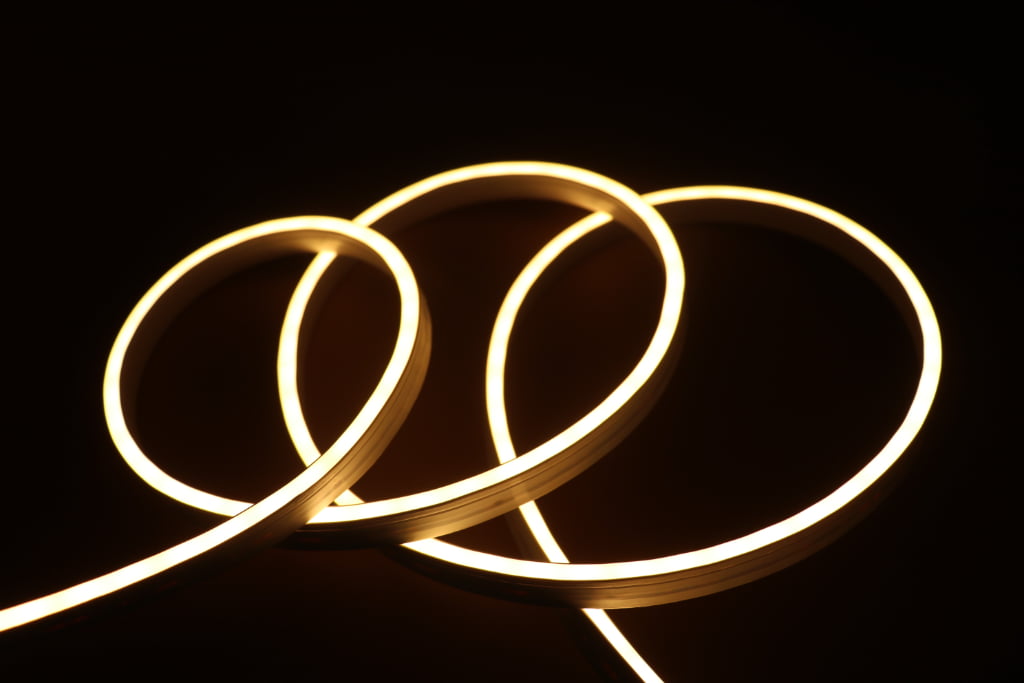
Water ingress in outdoor LED neon flex installations1 is a frustrating and costly problem. Many customers find their lights failing within months due to internal condensation and PCB corrosion2, despite having sealed ends.
The root cause is the "breathing effect3" - a physical phenomenon where temperature changes create pressure differences that draw moisture in through microscopic gaps, especially along wire entries. This occurs regardless of manual end-sealing.
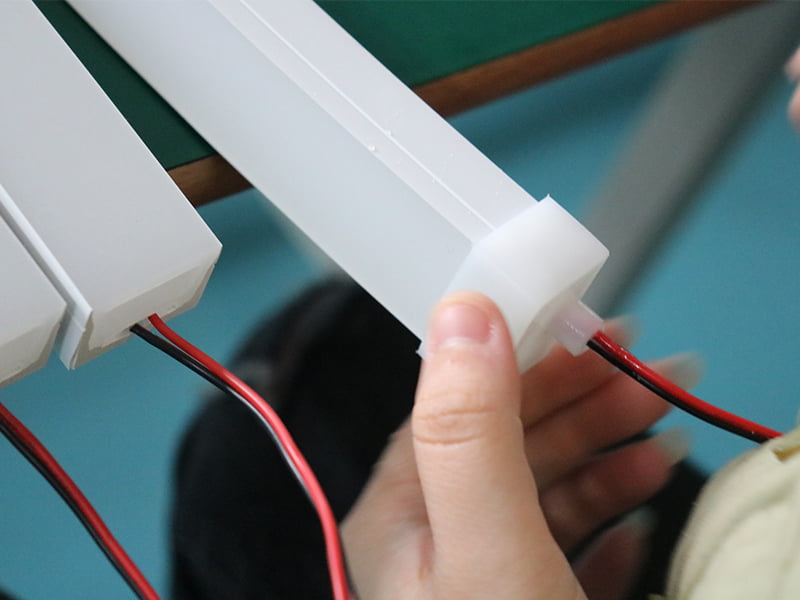
Let me explain the science behind this issue and share how we've solved it through advanced manufacturing techniques. As someone who has dealt with numerous outdoor lighting projects, I've seen firsthand how proper sealing technology makes all the difference.
What Causes the "Breathing Effect" in LED Neon Flex?
The constant heating and cooling cycles of LED strips create a pump-like effect that can draw moisture inside, even through seemingly sealed ends. This happens regardless of how well the manual sealing4 appears.
When LEDs heat up during operation, the warm air inside expands. As they cool down at night, the contracting air creates negative pressure that can pull in outside moisture through tiny gaps - especially along wire entries where capillary action occurs.
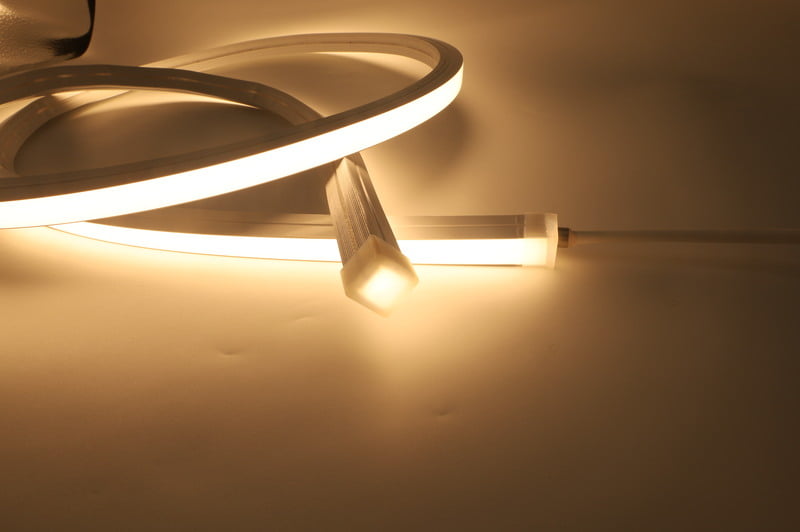
The breathing effect3 is particularly problematic because it's a cyclical process that happens daily. Here's what occurs in detail:
During Operation
- PCB temperature rises to 40-60°C
- Internal air expands
- Pressure builds up inside
- Microscopic gaps may form in seals
During Cool Down
- Temperature drops to ambient
- Internal air contracts
- Negative pressure develops
- Outside moisture gets drawn in
Over time, this leads to:
- Condensation formation
- Copper oxidation
- Solder joint corrosion
- LED failure
Why Traditional Manual Sealing Methods Fail?
Manual silicone sealing seems like a simple solution, but it has inherent flaws that make it unreliable for long-term outdoor use. This approach often leads to premature failure.
Traditional manual end-sealing relies heavily on worker skill and introduces variables like uneven curing and trapped air bubbles. While it may look sealed initially, environmental stresses5 eventually create micro-cracks.
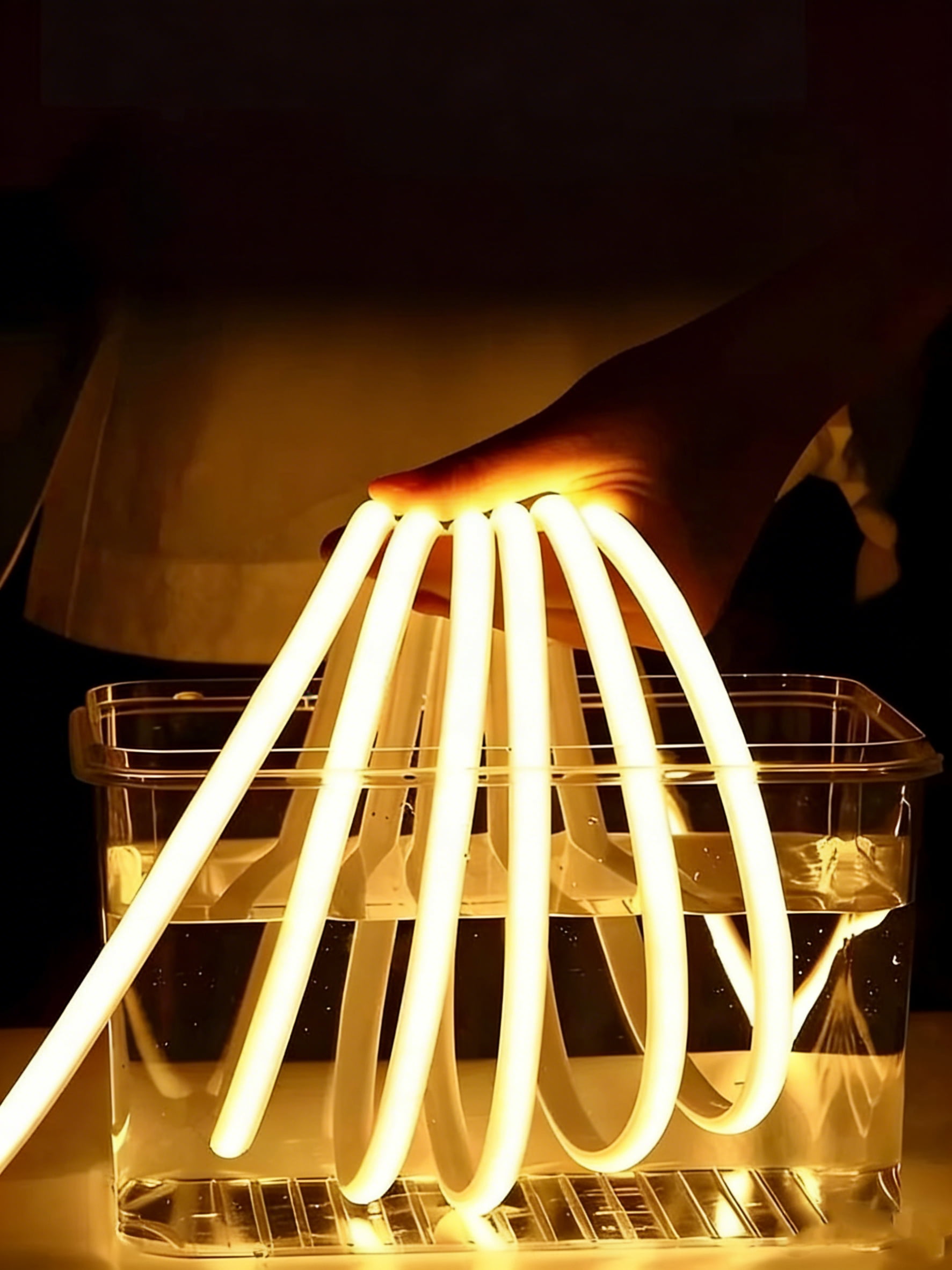
The manual sealing4 process has several critical weaknesses:
Quality Control Issues
- Inconsistent silicone amount
- Variable curing conditions
- Operator skill dependency
- Difficult inspection
Environmental Stresses
- Temperature cycling (-40°C to +60°C)
- UV radiation exposure6
- Physical movement/vibration
- Moisture exposure
These factors combine to create failure points that may not be immediately visible but develop over time. The interface between different materials (silicone, wire insulation, LED strip) is particularly vulnerable to separation under thermal stress.
How Does Over-Molding Technology Solve This Problem?
After years of research and testing, we've abandoned manual sealing4 in favor of automated over-molding technology7. This represents a fundamental shift in how LED neon flex is sealed.
Over-molding creates a molecular bond between components by injecting liquid silicone at high temperature and pressure. Unlike manual sealing4, this produces a truly unified structure without separate adhesive layers or human variables.
Our over-molding process addresses traditional sealing limitations through:
Advanced Manufacturing Controls
- Precise temperature regulation
- Controlled injection pressure
- Automated material handling
- Digital process monitoring
Material Science Benefits
- Molecular-level bonding
- Elimination of interface layers
- Consistent density throughout
- Superior stress distribution
The results speak for themselves - our over-molded products have demonstrated exceptional durability in extreme environments including:
- Coastal installations with salt spray
- Desert locations with intense UV
- Arctic regions with severe temperature cycling8
What Additional Measures Are Needed for Extreme Environments?
For challenging installations like coastal projects or large outdoor displays, standard waterproofing may not be enough. Additional protective measures become crucial.
We recommend incorporating pressure equalization vents9 for long outdoor runs. These specialized components allow air exchange while blocking liquid water entry, effectively preventing the breathing effect3.
Consider these environmental factors when planning outdoor installations:
Location-Specific Challenges
-
Coastal Areas
- Salt spray exposure
- High humidity
- Wind-driven rain
-
Urban Environments
- Pollution exposure
- Temperature extremes
- Vibration stress
-
Desert Regions
- Intense UV radiation
- Extreme temperature cycling8
- Sand/dust exposure
Conclusion
True IP67 protection10 isn't just about passing a one-time water immersion test - it's about maintaining seal integrity over years of environmental stress. Our over-molding technology7, combined with proper system design, ensures long-term reliability in real-world conditions.
Explore effective solutions to prevent water ingress and enhance the longevity of your outdoor LED neon flex installations. ↩
Learn strategies to protect your PCB from corrosion and extend the life of your outdoor lighting. ↩
Understanding the breathing effect can help you mitigate moisture issues in LED neon flex installations. ↩
Discover the limitations of manual sealing and why it may not be the best choice for outdoor applications. ↩
Gain insights into environmental factors that can compromise outdoor LED installations. ↩
Learn about the impact of UV radiation on LED lighting and how to protect your installations. ↩
Find out how over-molding technology enhances the durability and reliability of LED installations. ↩
Understanding temperature cycling can help you design better outdoor lighting solutions. ↩
Explore how pressure equalization vents can prevent moisture ingress and improve installation performance. ↩
Understand the importance of IP67 protection for ensuring the longevity of outdoor lighting systems. ↩