

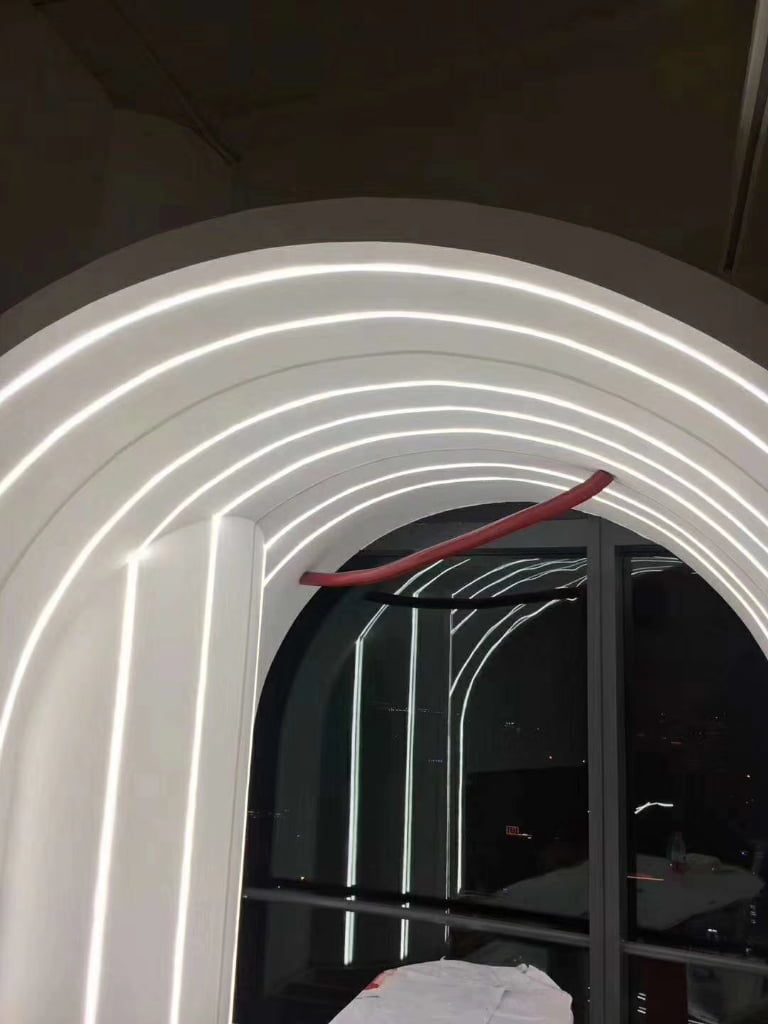
Have you ever installed LED strips on an exterior wall, only to find them drooping and misaligned months later? This common but frustrating issue can ruin the clean lines of your lighting design.
The key to preventing LED strip sagging lies in three critical factors: the silicone material1's Shore A hardness2 (40A-70A), its creep resistance3 properties, and mechanical anti-slip features4 in the mounting system. Proper material selection and installation methods can maintain straight lines even in high temperatures.
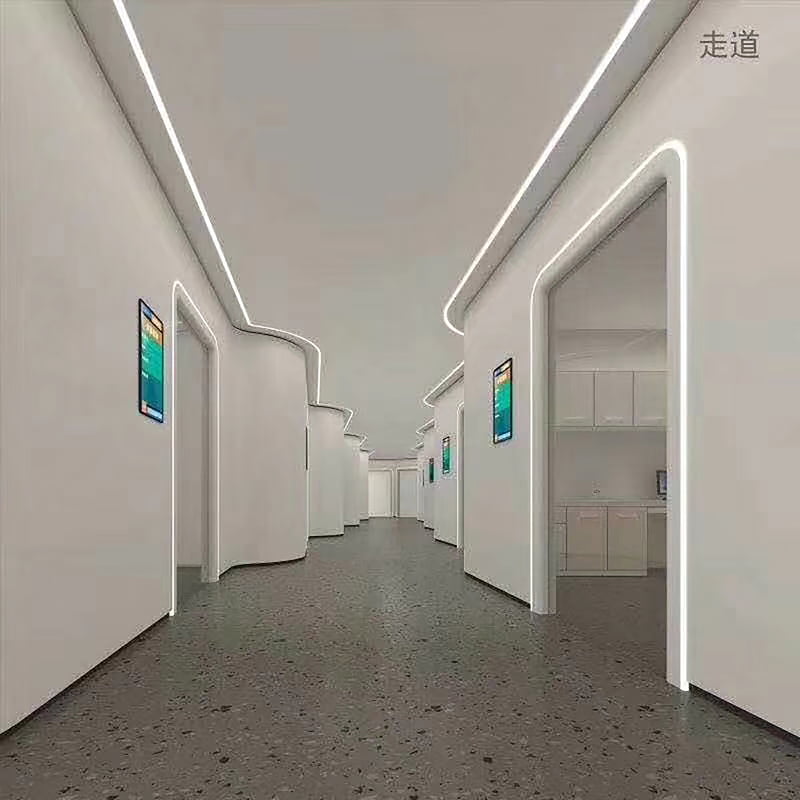
When it comes to vertical LED installations, the real challenge isn't just getting them to stay put initially - it's ensuring they maintain their position over time, especially under heat and gravity. Let me share what I've learned from years of manufacturing and testing these systems.
Why Do LED Strips Sag Under High Temperatures?
I've seen countless projects where perfectly installed LED strips started drooping after just one hot summer. The frustration of watching straight lines turn wavy is something no lighting professional wants to experience.
Silicone LED strips sag because of two main factors: the natural softening of silicone under heat and poor creep resistance3 in low-quality materials. When exposed to temperatures of 50-60°C on exterior walls, inferior materials slowly deform under their own weight.
Deep Dive: Understanding Material Properties
The science behind LED strip sagging involves several key material properties:
1. Shore A Hardness Ratings
| Installation Type | Recommended Shore A | Benefits |
|---|---|---|
| Vertical | 65A-70A | Maximum rigidity, minimal sag |
| Side-bend | 50A-60A | Balance of flexibility and stability |
| Front-bend | 40A-50A | Maximum flexibility for curves |
2. Creep Resistance Factors
- Material composition: Higher molecular weight silicone provides better structural stability
- Filler ratio: Optimized filler content improves long-term load-bearing capacity
- Cross-linking density: Enhanced cross-linking prevents internal structure displacement
The combination of these properties determines how well an LED strip maintains its position over time. Through extensive testing, we've found that materials with proper creep resistance3 can maintain their shape even after thousands of hours at elevated temperatures.
What's the Solution for Preventing LED Strip Sagging?
After witnessing numerous installation failures, I realized that traditional mounting methods weren't enough. We needed a comprehensive approach to tackle this challenge.
The solution combines three elements: custom Shore A hardness2 selection based on installation orientation, enhanced material formulation for improved resilience, and micro-grip teeth design in the extrusion mold that creates mechanical interlocking with mounting channels.
Deep Dive: Engineering the Perfect Solution
Our approach to preventing LED strip sagging involves multiple engineering considerations:
1. Material Engineering
- Optimized silicone formulation with enhanced rebound properties
- Increased tensile strength5 for better load distribution
- UV stabilizers6 to maintain material properties outdoors
2. Mechanical Design Features
| Feature | Function | Benefit |
|---|---|---|
| Micro-grip teeth | Creates mechanical lock | Reduces reliance on friction |
| Channel design | Optimizes pressure distribution | Prevents localized stress points |
| Surface texture | Increases contact area | Improves overall grip |
Through rigorous testing in our lab, including accelerated aging at 60°C with constant load, we've verified that this solution maintains structural stability with no significant displacement over extended periods.
Conclusion
Success in vertical LED installations isn't just about immediate stability - it's about maintaining perfect alignment through years of environmental stress. By focusing on material science and mechanical design, we've engineered a solution that stands the test of time.
Silicone materials offer unique properties that can significantly improve the longevity and performance of LED strips. ↩
Understanding Shore A hardness is crucial for selecting the right materials for LED strips, ensuring durability and performance. ↩
Creep resistance is vital for maintaining the shape and alignment of LED strips over time, especially in high temperatures. ↩
Exploring mechanical anti-slip features can enhance your understanding of effective LED strip mounting solutions. ↩
Tensile strength is crucial for ensuring that LED strips can withstand environmental stresses without sagging. ↩
UV stabilizers are essential for maintaining the integrity of outdoor LED strips, ensuring they last longer in sunlight. ↩