

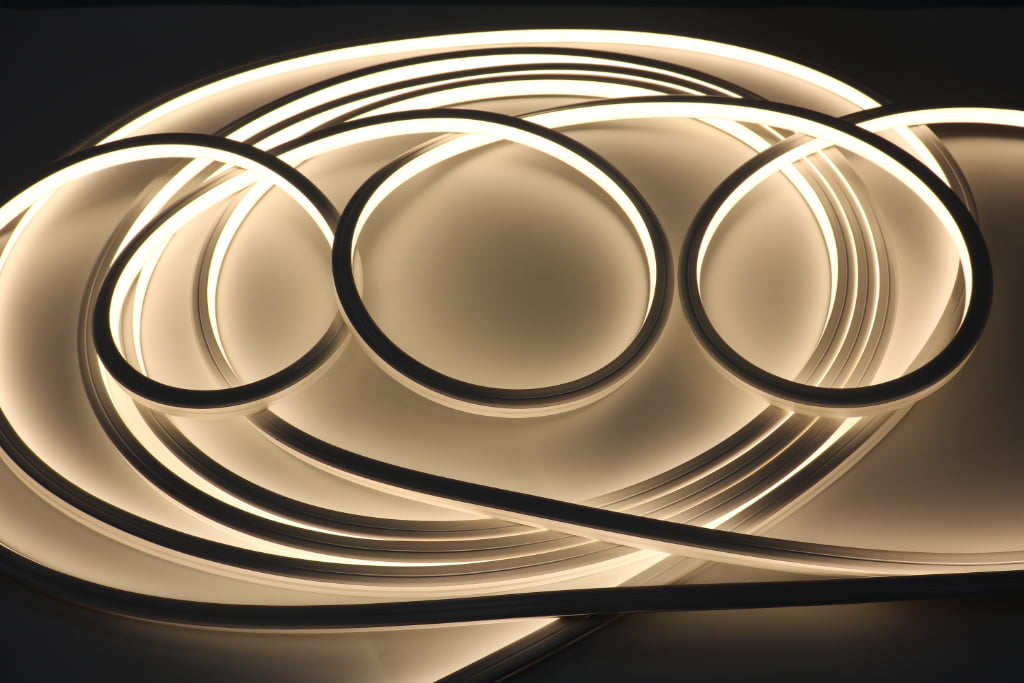
Many lighting professionals face a frustrating dilemma: choosing between bright but spotty LED strips or perfectly diffused but dim lighting. This trade-off has cost countless projects and led to expensive returns.
The key to achieving both bright and spotless lighting lies in the diffusion method. Instead of using light-blocking additives, advanced silicone neon flex1 uses microscopic silicone spheres2 that act as tiny lenses to redirect light while maintaining over 80% luminous efficiency.
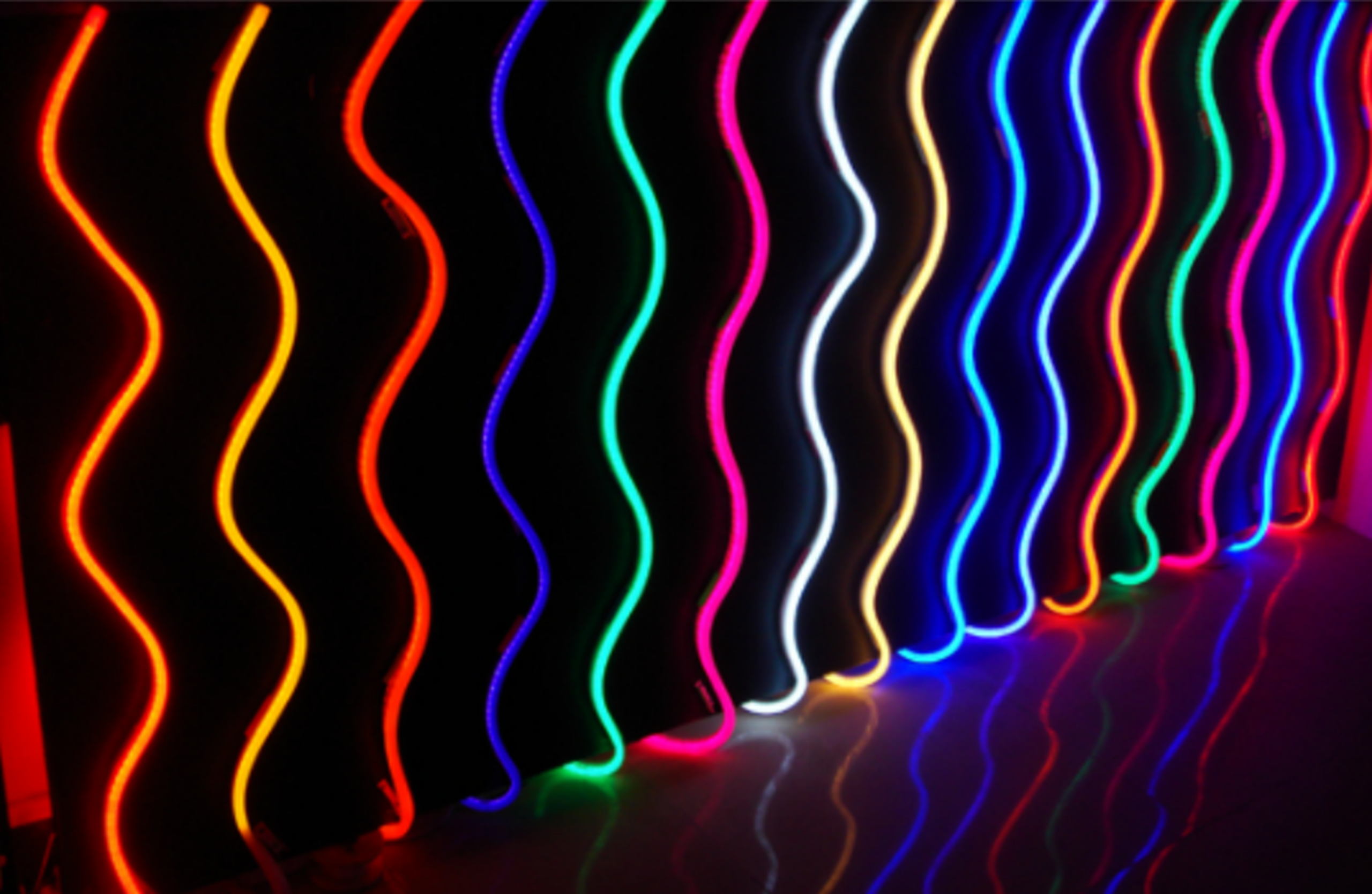
Let me share how we solved this common industry problem through years of research and development in silicone material science.
Why Do Traditional LED Diffusers Sacrifice Brightness for Smoothness?
The problem often starts when manufacturers take shortcuts by adding large amounts of titanium dioxide (TiO₂) to create a frosted effect. This brute-force approach blocks light instead of properly diffusing it.
Traditional diffusers use TiO₂ as an opaque filler that works by scattering and absorbing light. While this hides LED hotspots, it also dramatically reduces light output - often by 40-50% or more.
The Science Behind Light Loss
Traditional diffusion methods face several key challenges:
| Challenge | Impact | Root Cause |
|---|---|---|
| Light Absorption | 40-50% brightness loss | TiO₂ particles absorbing photons |
| Uneven Diffusion | Spotty appearance | Poor particle distribution |
| Heat Build-up | Reduced lifespan | Trapped light converting to heat |
The fundamental issue is that these methods try to hide LED spots by blocking light rather than redirecting it efficiently. This creates a cascade of problems from reduced performance to potential overheating.
How Does Modern Structural Light Diffusion Work?
We realized early on that true diffusion shouldn't block light - it should guide it. This led us to develop a structural approach using silicone resin microspheres.
Our advanced diffusion technology uses precisely engineered microscopic silicone spheres2 that act as thousands of tiny lenses. These spheres redirect light in multiple directions while allowing over 80% of the original brightness to pass through.
The Multi-Layer Diffusion System
Our solution combines several innovative approaches:
-
Primary Diffusion Layer
- Uniform microsphere distribution
- Optimal sphere size (2-5 microns)
- Controlled refractive index
-
Secondary Surface Treatment
- Micro-textured mold walls
- Precision-engineered patterns
- Enhanced light distribution
The results speak for themselves - smooth, even illumination without significant light loss. Here's a detailed breakdown:
| Feature | Traditional Method | Our Solution |
|---|---|---|
| Light Output | 50-60% | >80% |
| Hot Spot Visibility | None but dim | None and bright |
| Surface Texture | Rough/grainy | Smooth/premium |
| Heat Management | Poor | Excellent |
| Lifetime | 3 years | 5+ years |
Conclusion
By rethinking diffusion from the ground up, we've proven that you don't have to choose between brightness and smooth lighting. Modern silicone neon flex1 can deliver both through smart engineering rather than brute-force light blocking.