

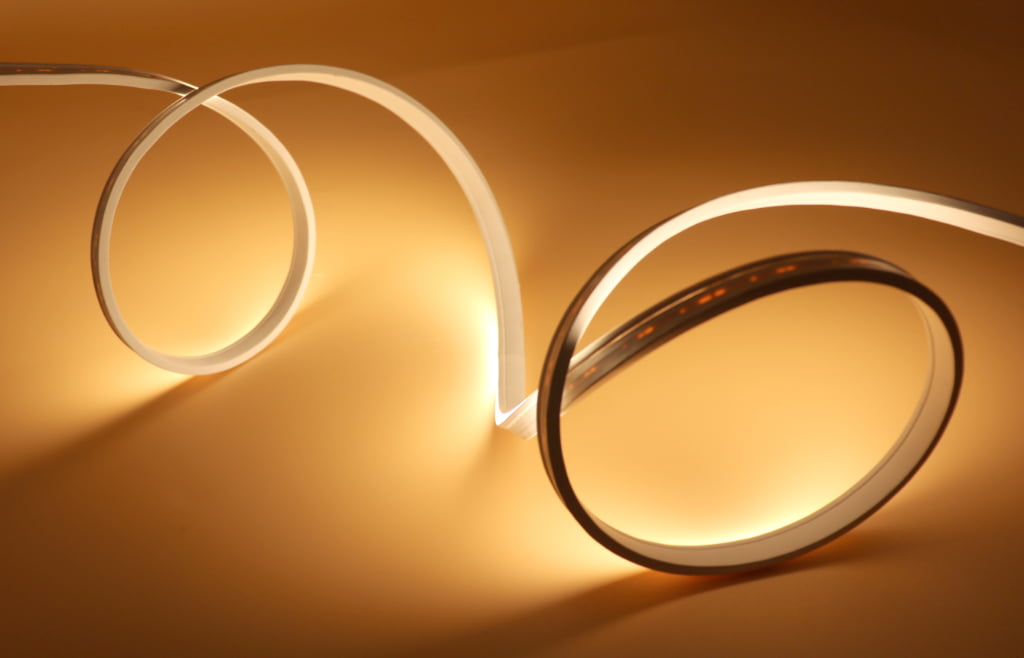
I've seen many lighting projects fail because of poor diffusion choices. Some manufacturers sacrifice up to 50% of brightness for diffusion, while others deliver harsh LED hotspots1 that look cheap and unprofessional.
The key to perfect LED diffusion lies in the silicone material technology2. Quality diffusion tubes use spherical silicone microbeads3 that act as micro-lenses, maintaining 75-85% light transmission4 while eliminating hotspots, rather than simply blocking light with titanium dioxide5.
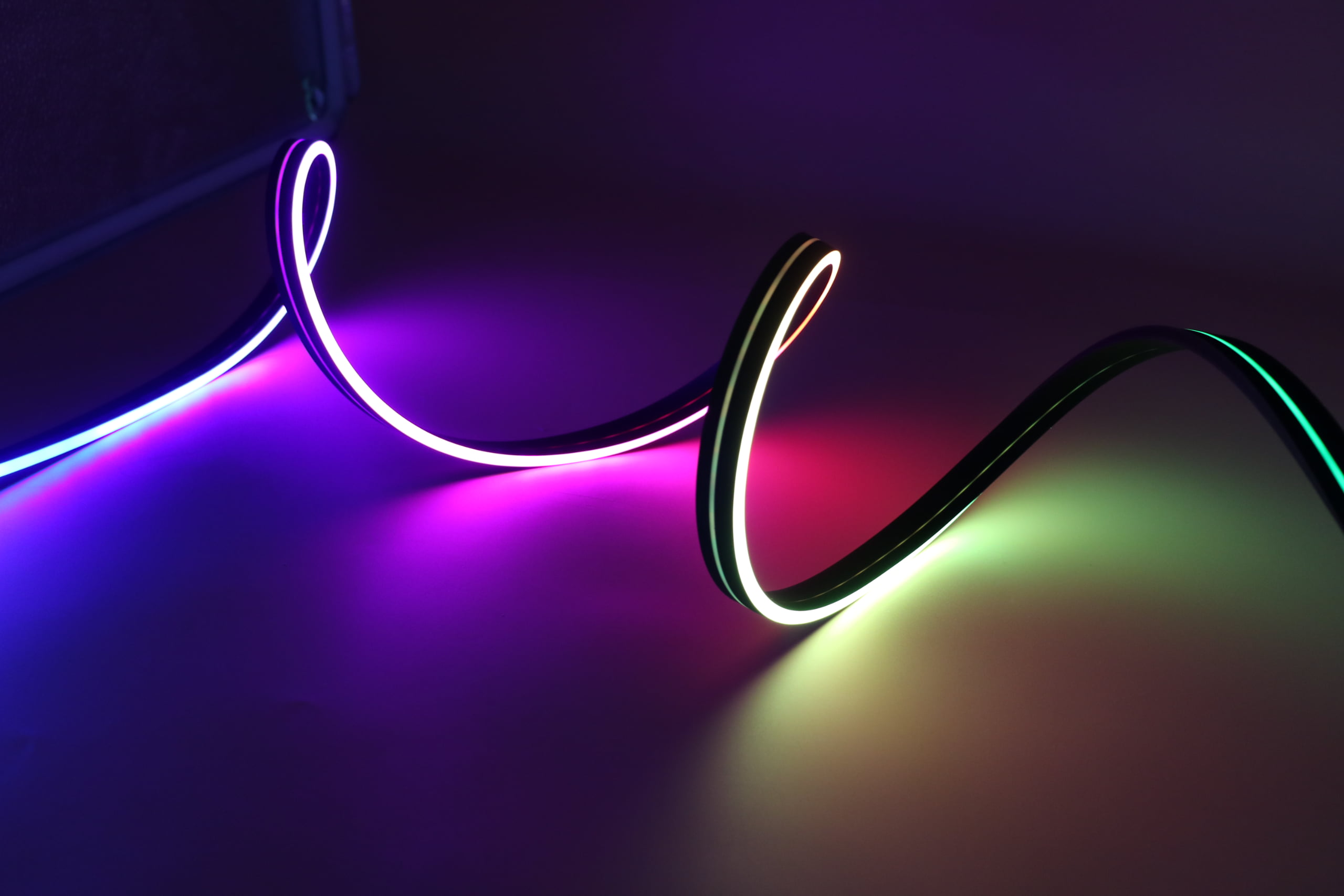
Let me share my decade of experience in LED silicone manufacturing to help you understand why some diffusion tubes fail while others excel. I'll break down the science behind light diffusion and show you what to look for in a quality product.
Why Do Some LED Silicone Tubes Look Dark and Uneven?
Many manufacturers rush to create frosted effects by adding large amounts of titanium dioxide5 (TiO₂) to their silicone. This quick fix creates more problems than it solves.
Titanium dioxide works by blocking and absorbing light rather than properly diffusing it. While it does create a frosted appearance, it significantly reduces light output, often by more than 50%, resulting in dim and inefficient lighting.

Let's dive deeper into why this approach fails:
The Problem with Traditional Diffusion Methods
1. Light Blocking vs. Light Diffusion
| Traditional Method (TiO₂) | Advanced Method (Silicone Microbeads) |
|---|---|
| Blocks light rays | Redirects light rays |
| High absorption rate | Low absorption rate |
| Significant brightness loss | Minimal brightness loss |
| Uneven diffusion | Uniform diffusion |
2. Impact on Light Quality
- Color Shifting: TiO₂ can cause unwanted blue tints in the light output
- Efficiency Loss: Traditional methods waste energy through absorption
- Inconsistent Results: Diffusion quality varies across the tube length
The real challenge isn't just creating a frosted appearance – it's maintaining brightness while achieving uniform diffusion. That's why material science plays such a crucial role in developing effective solutions.
What Makes a High-Quality LED Silicone Diffusion Tube?
After years of research and testing, I've found that the micro-structure approach6 using silicone microbeads delivers superior results every time.
High-quality LED silicone tubes use precisely engineered spherical silicone microbeads3 distributed evenly throughout the material. These act like thousands of tiny lenses, redirecting light without significant loss while eliminating visible LED hotspots1.

The Science Behind Superior Diffusion
Material Composition Breakdown:
-
Base Material
- High-purity vapor phase silicone
- Ultra-low impurity content
- Naturally clear with no yellowing
-
Diffusion Technology
- Uniform microbead distribution
- Optimal particle size for light manipulation
- Controlled refractive index matching
Performance Metrics:
| Parameter | Standard Value | Why It Matters |
|---|---|---|
| Light Transmission | 75-85% | Maintains brightness |
| Diffusion Uniformity | >90% | Eliminates hotspots |
| Color Accuracy | CRI>90 | True color rendering |
The combination of these elements creates a diffusion tube that doesn't just scatter light – it enhances the overall lighting quality while maintaining efficiency.
Conclusion
Quality LED diffusion isn't about blocking light – it's about intelligently redirecting it. Choose silicone tubes with microbead technology to achieve uniform, bright, and professional-looking results in your lighting projects.
Discover effective strategies to eliminate LED hotspots for achieving professional and uniform lighting results. ↩
Explore this link to understand how silicone material technology enhances LED diffusion and improves lighting quality. ↩
Learn about the role of spherical silicone microbeads in achieving superior light diffusion and eliminating hotspots. ↩
Find out why maintaining high light transmission is crucial for effective LED diffusion and overall lighting performance. ↩
Discover the drawbacks of using titanium dioxide in LED diffusion and why it can lead to poor lighting outcomes. ↩
Learn about the innovative micro-structure approach and its benefits for creating high-quality LED silicone tubes. ↩