


You've invested in premium LED strips for your project, but now they're showing uneven brightness1 or purple tints at the ends. This common but frustrating issue often stems from an inadequate power supply2 setup.
The power supply2 is the heart of any LED lighting system. For optimal performance, you need to match the power supply2 voltage (12V/24V/48V) to your LED strip's specifications and ensure sufficient wattage with a 20% safety margin.
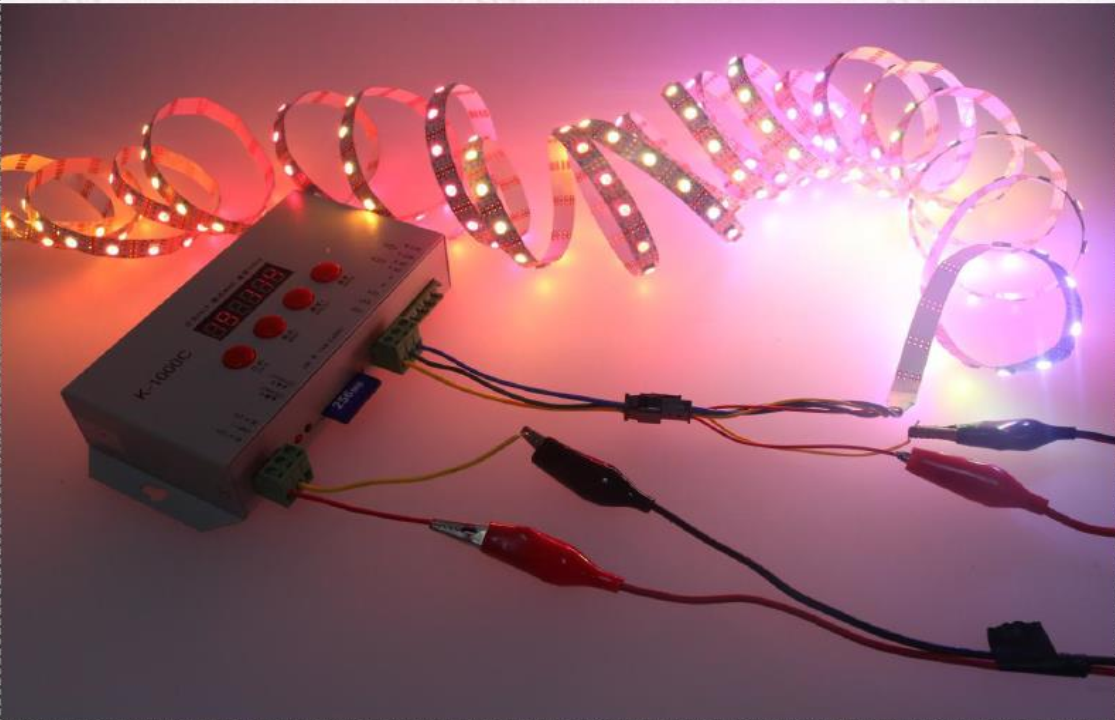
Let me share why choosing the right power supply2 matters more than you might think. I've seen countless projects where cutting corners on power supplies led to costly fixes down the road.
How Do I Calculate the Right Power Supply for My LED Project?
Many people struggle with dim or purple sections in their LED installations. This happens because they underestimate the power needs or don't account for voltage drop3 over long runs.
To calculate the right power supply2, multiply your LED strip's wattage per meter4 by the total length in meters, then add 20% for safety. For example, a 20-meter strip using 12W/m needs at least a 288W power supply2 (20m × 12W × 1.2).
Let's break this down further to understand power supply2 selection better:
Voltage Options
| Voltage | Best For | Max Run Length |
|---|---|---|
| 12V | Small projects | Up to 5m |
| 24V | Medium projects | Up to 10m |
| 48V | Large projects | Up to 20m |
Common Mistakes to Avoid
- Underestimating total wattage
- Ignoring voltage drop3
- Using inadequate wire gauge
The choice between 12V, 24V, and 48V systems isn't just about the immediate project needs. Higher voltage systems like 24V and 48V can handle longer runs with less voltage drop3, making them ideal for commercial applications. I've found that upgrading from 12V to 24V can often solve brightness issues without requiring additional power supplies.
What Are the Signs of an Undersized Power Supply?
If you've ever seen LEDs showing different colors at the strip's end, or noticed dimming sections, you're likely dealing with power supply2 issues. These problems often surface after installation, leading to expensive fixes.
Key signs of an undersized power supply5y](https://arxiv.org/html/2510.26162v1)%%%FOOTNOTE_REF_2%%% include uneven brightness1, color shifting (especially to purple), flickering, and reduced lifespan of LED strips. These issues typically appear at the furthest points from the power source.
When it comes to power supply2 problems, prevention is always better than cure. Here's what I've learned from years of troubleshooting LED installations:
Power Distribution Methods
| Method | Advantages | Disadvantages |
|---|---|---|
| Central Power | Simple installation | Limited range |
| Multiple Points | Even distribution | More complex |
| Loop Circuit | Balanced power | Higher material cost |
The right power distribution method can make or break your installation. For instance, in a recent project spanning 30 meters, we used a loop circuit with 24V power supplies at both ends. This approach eliminated the voltage drop3 issues that had plagued the client's previous installation.
How Can I Prevent Voltage Drop in Long LED Runs?
Voltage drop is the silent killer of LED installations, causing uneven lighting that can ruin the overall effect. I've seen many projects where this wasn't considered until it was too late.
To prevent voltage drop3, use thicker gauge wires for longer runs, install power supplies closer to LED strips, or implement parallel power injection points every 5 meters for 12V systems or 10 meters for 24V systems.
Understanding voltage drop3 is crucial for successful LED installations:
Wire Gauge Selection Guide
| Distance | Current | Recommended Gauge |
|---|---|---|
| 0-5m | <4A | 20 AWG |
| 5-10m | <8A | 18 AWG |
| >10m | >8A | 16 AWG or larger |
Professional installations require careful planning of power distribution. I always recommend creating a detailed wiring diagram before starting any installation. This helps identify potential voltage drop3 issues and determines optimal power supply2 placement. In commercial projects, we often use multiple smaller power supplies rather than one large unit, providing redundancy and better power distribution.
Conclusion
Choosing the right power supply2 isn't just about matching wattage - it's about ensuring long-term reliability and performance of your LED installation. Invest in proper power planning now to avoid costly fixes later.
Explore the causes of uneven brightness to troubleshoot and improve your LED lighting. ↩
Understanding the role of a power supply can prevent common LED issues and enhance performance. ↩
Learn effective strategies to prevent voltage drop and ensure consistent LED performance. ↩
Calculating wattage accurately is crucial for selecting the right power supply for your project. ↩
Identifying signs of an undersized power supply can help you address issues before they escalate. ↩