

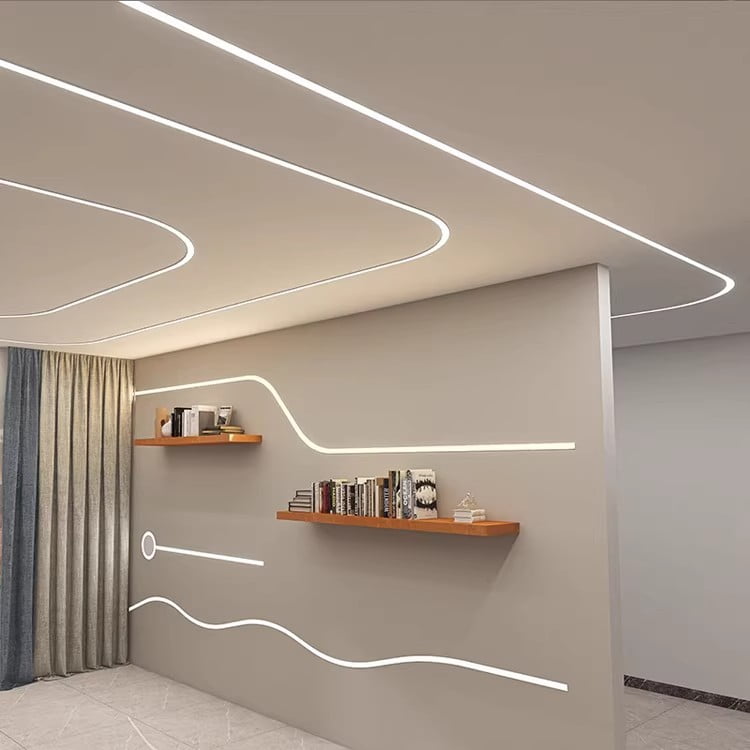
When clients inspect LED neon signs up close, they often notice wavy edges, shaky curves, and subtle logo distortions. For B2B projects, these imperfections can lead to immediate rejection and rework costs.
The key to flawless LED neon signs lies in the groove cutting process. Using CNC automation1 with ±0.05mm tolerance control2, rather than manual routing, ensures mathematically precise lines and curves that maintain brand integrity even under close inspection.
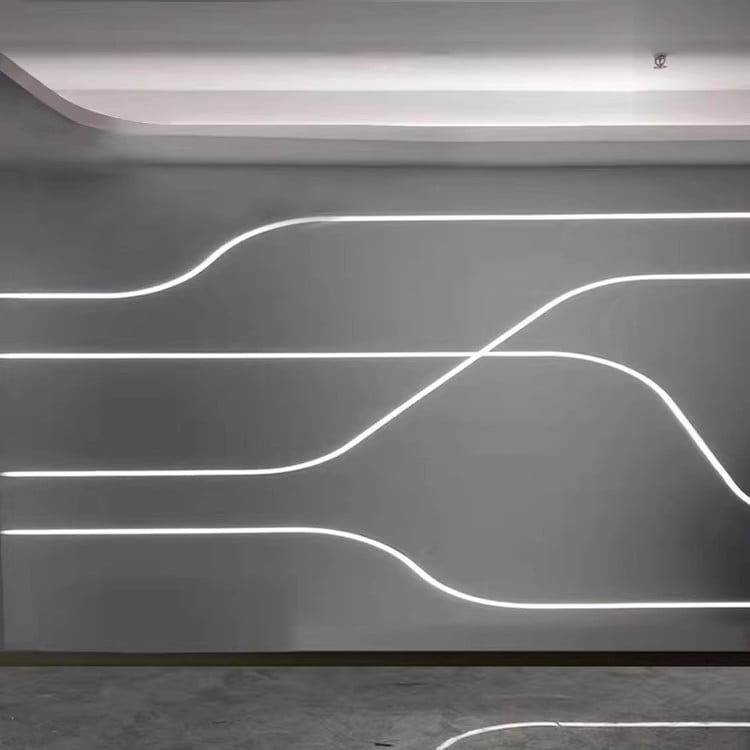
As a manufacturer who has produced thousands of custom LED neon signs, I've seen how small deviations in production can dramatically impact the final product. Let's explore why precision matters and how to achieve it.
Why Do LED Neon Signs Often Show Distorted Lines?
I've visited many small workshops where they use handheld routers to cut grooves in acrylic backboards, trying to save on equipment costs. This approach inevitably leads to quality issues that become apparent in the final product.
Manual routing creates five major problems: operator hand tremors, inconsistent groove depth, width variations, imperfect straight lines, and inaccurate curve radii. When LED strips are installed, these minor flaws become magnified, resulting in visible waviness and distortions.
The Technical Breakdown of Precision Manufacturing
When it comes to achieving perfect LED neon signs, the manufacturing process can be broken down into several critical aspects:
1. Design File Integrity
- Original CAD files used directly for manufacturing
- No manual re-drawing or interpretation
- Mathematical precision in curve calculations
2. Equipment Requirements
| Feature | Standard Manual Process | CNC Automated Process |
|---|---|---|
| Precision | ±0.5mm | ±0.05mm |
| Consistency | Varies by operator | Uniform across production |
| Speed | 1-2 meters/hour | 5-8 meters/hour |
| Quality Control | Visual inspection | Digital verification |
3. Quality Control Points
- Initial design verification
- CNC programming validation
- Test cuts for depth calibration
- Regular tolerance checking
- Final assembly inspection
How Can Buyers Ensure They're Getting Precision-Made Signs?
After seeing countless projects fail due to poor manufacturing precision, I've learned to spot the warning signs of subpar production methods immediately.
Quality LED neon sign manufacturers should provide: CNC automation1 proof, production process videos, direct CAD file usage confirmation, and documented tolerance specifications. These elements ensure consistent quality across large orders and complex designs.
Evaluating Manufacturing Partners
The selection of a manufacturing partner requires careful consideration of their capabilities:
Technical Capabilities Assessment
- Equipment inventory and specifications
- Production capacity and automation level
- Quality control procedures
- Material handling processes
Documentation Requirements
- Manufacturing tolerance specifications
- Quality control reports
- Production process documentation
- Material certifications
- Previous project portfolios
The difference between average and exceptional LED neon signs often comes down to these technical details that many buyers overlook. In my experience, clients who focus on these aspects during vendor selection consistently achieve better results.
Conclusion
Perfect LED neon signs require precision manufacturing using CNC automation1, strict tolerance control2, and rigorous quality assurance. Don't compromise on these elements if you want signs that maintain brand integrity.