


Most lighting professionals focus on brightness and waterproofing when choosing 24V RGB Pixel Neon Flex1. However, the real headache often emerges during installation - when it's already too late and costly to fix.
The biggest challenge with RGB Pixel Neon Flex1 isn't the LED strip itself, but rather matching the pixel control system2 with the power supply structure properly. Without proper planning, issues like signal delays3 and pixel misalignment4 become inevitable.
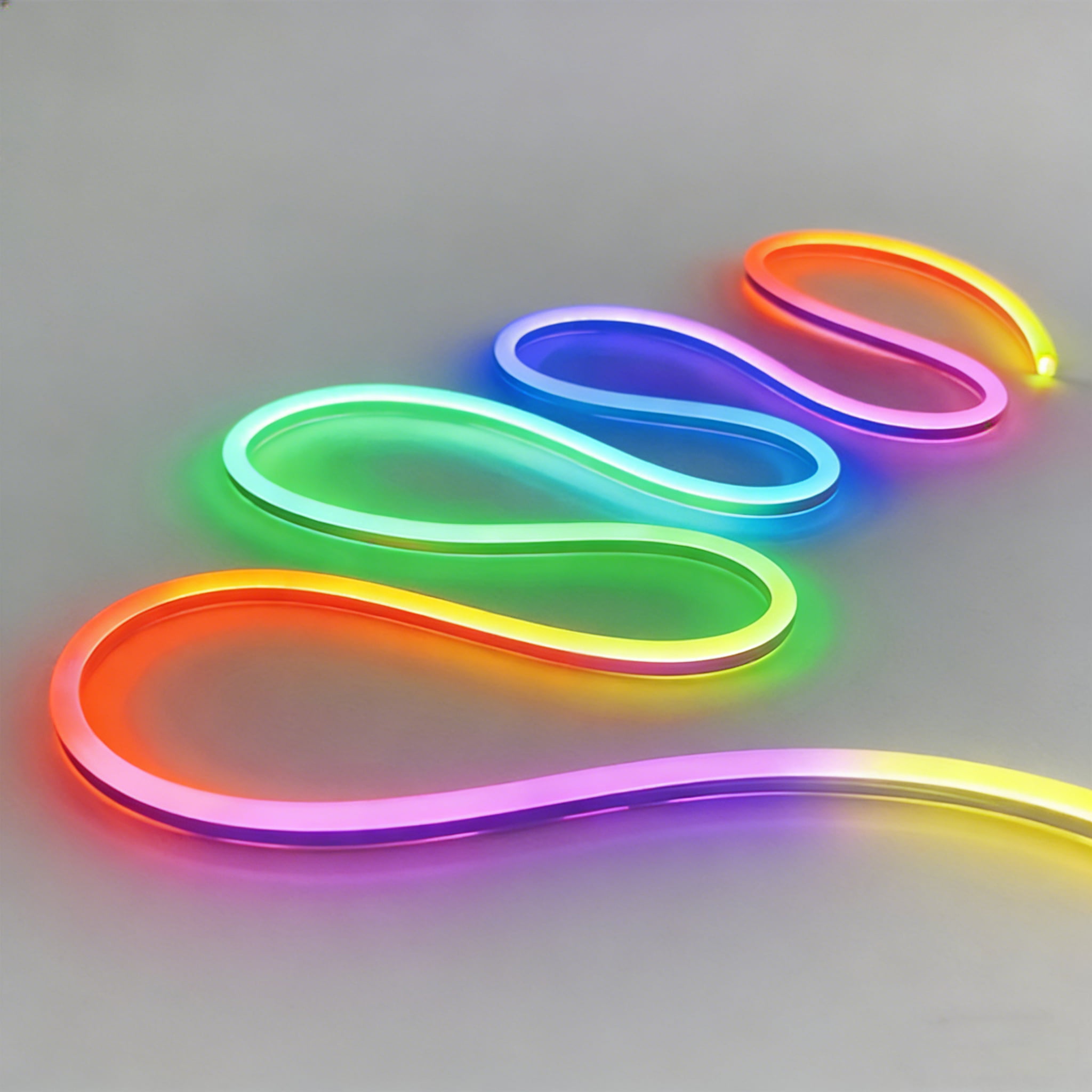
I've spent years helping clients navigate these technical challenges. Let me share what I've learned about avoiding the common pitfalls that can derail your RGB Pixel Neon Flex1 projects.
Why Do Pixel Control Issues Often Go Unnoticed Until Installation?
Many buyers get caught up in basic specifications like the 12W/m power rating or 12x22mm profile. They overlook the critical relationship between pixel density and controller capacity until problems surface during setup.
Pixel control issues typically manifest as unsynchronized segments, animation lag, or flickering - especially in 5-meter runs at full load. These problems stem from insufficient controller channels or unaccounted signal degradation.
Dive Deeper: Understanding the Technical Challenges
The complexity of RGB Pixel Neon Flex1 control systems can be broken down into three critical components:
1. Signal Integrity
- Signal Degradation: Each pixel requires precise timing
- Maximum Run Length: Signal quality decreases over distance
- Refresh Rate: Affects animation smoothness
2. Power Distribution
| Power Consideration | Impact | Solution |
|---|---|---|
| Voltage Drop | Dimming at strip ends | Multiple power injection points |
| Current Load | System stability | Proper power supply sizing |
| Heat Generation | Long-term reliability | Strategic power placement |
3. Controller Specifications
- Maximum pixel count per channel
- Data refresh capabilities
- Protocol compatibility (SPI/DMX)
These factors interact in complex ways. For example, a 5-meter strip with 60 pixels/meter requires not just sufficient power, but also appropriate data throughput and signal amplification5. Without considering these interactions during planning, even a perfectly manufactured strip can perform poorly.
What Makes Power Supply Design So Critical for RGB Pixel Systems?
Installers often treat RGB Pixel Neon Flex1 like traditional LED strips, focusing mainly on wattage requirements. This oversight can lead to system-wide failures and costly reinstallations.
A proper power supply design6 must account for both electrical power and data signal integrity. The 24V system reduces voltage drop7, but pixel control requires clean power and strong signals throughout the entire run.

Dive Deeper: Power Supply Considerations
The relationship between power supply design6 and pixel control reliability involves several key aspects:
Power Distribution Methods:
-
Single-End Power Injection
- Simple but limited in run length
- Higher voltage drop7 risk
- Suitable for shorter runs
-
Multiple Power Injection Points
- Maintains stable voltage
- Reduces signal interference
- Required for longer runs
Signal Amplification Requirements:
| Run Length | Signal Quality | Required Solution |
|---|---|---|
| 0-5m | Strong | Standard connection |
| 5-10m | Degraded | Signal amplifier |
| 10m+ | Poor | Multiple amplifiers |
Understanding these relationships helps prevent common issues like:
- Pixel flickering at strip ends
- Color inconsistency
- Animation synchronization problems
- System instability under full load
How Can You Ensure Successful RGB Pixel Neon Flex1 Installation?
Many projects fail because installers jump straight to implementation without proper system design. This approach almost always leads to complications and budget overruns.
Success requires careful pre-installation planning8, including calculating total pixel count, verifying controller capacity, and determining power injection points. Every meter of RGB Pixel Neon Flex1 must be treated as part of a data system, not just a light source.
Dive Deeper: Installation Best Practices
A systematic approach to RGB Pixel Neon Flex1 installation involves several critical steps:
Pre-Installation Checklist:
-
System Design
- Calculate total pixel count
- Determine power requirements
- Plan signal amplification5 points
-
Component Verification
- Controller compatibility
- Power supply capacity
- Cable specifications
Installation Guidelines:
| Phase | Action Items | Quality Checks |
|---|---|---|
| Planning | Signal path mapping | Signal strength verification |
| Power | Supply placement | Voltage drop calculation |
| Testing | Segment testing | System performance validation |
Following these guidelines ensures:
- Reliable pixel control
- Consistent brightness
- Smooth animations
- Long-term system stability9
Conclusion
The success of a 24V RGB Pixel Neon Flex1 installation depends more on proper system design than the LED strip itself. Careful planning of power supply and control systems is essential for avoiding costly installation problems.
Explore this resource to learn essential tips for a successful RGB Pixel Neon Flex installation. ↩
Understanding pixel control systems is crucial for avoiding common installation issues. ↩
This link will help you understand the factors leading to signal delays and how to mitigate them. ↩
Preventing pixel misalignment is key to achieving a flawless lighting effect; learn how here. ↩
Signal amplification can prevent issues in longer runs; explore when and how to use it effectively. ↩
A well-designed power supply is vital for performance; discover best practices in this resource. ↩
Learn about voltage drop and its impact on LED performance to ensure a successful installation. ↩
Proper planning is crucial for success; this resource outlines essential steps for installation. ↩
Learn strategies to maintain system stability and avoid costly failures in your projects. ↩