

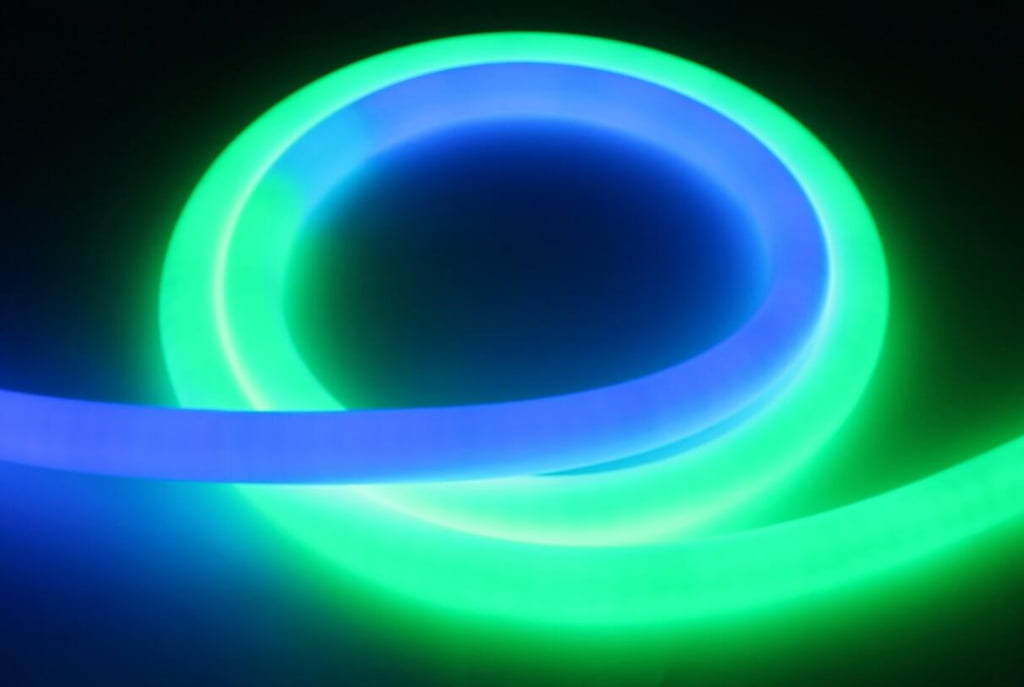
After years of working with LED neon flex projects, I've seen many installations fail due to one critical issue that often goes unnoticed until it's too late. The results can be disappointing and costly to fix.
The key to successful 360-degree LED neon flex installations is ensuring truly uniform illumination from all angles. This requires proper LED placement at the central axis, high-quality diffusion materials, and thorough testing of light distribution patterns before installation.
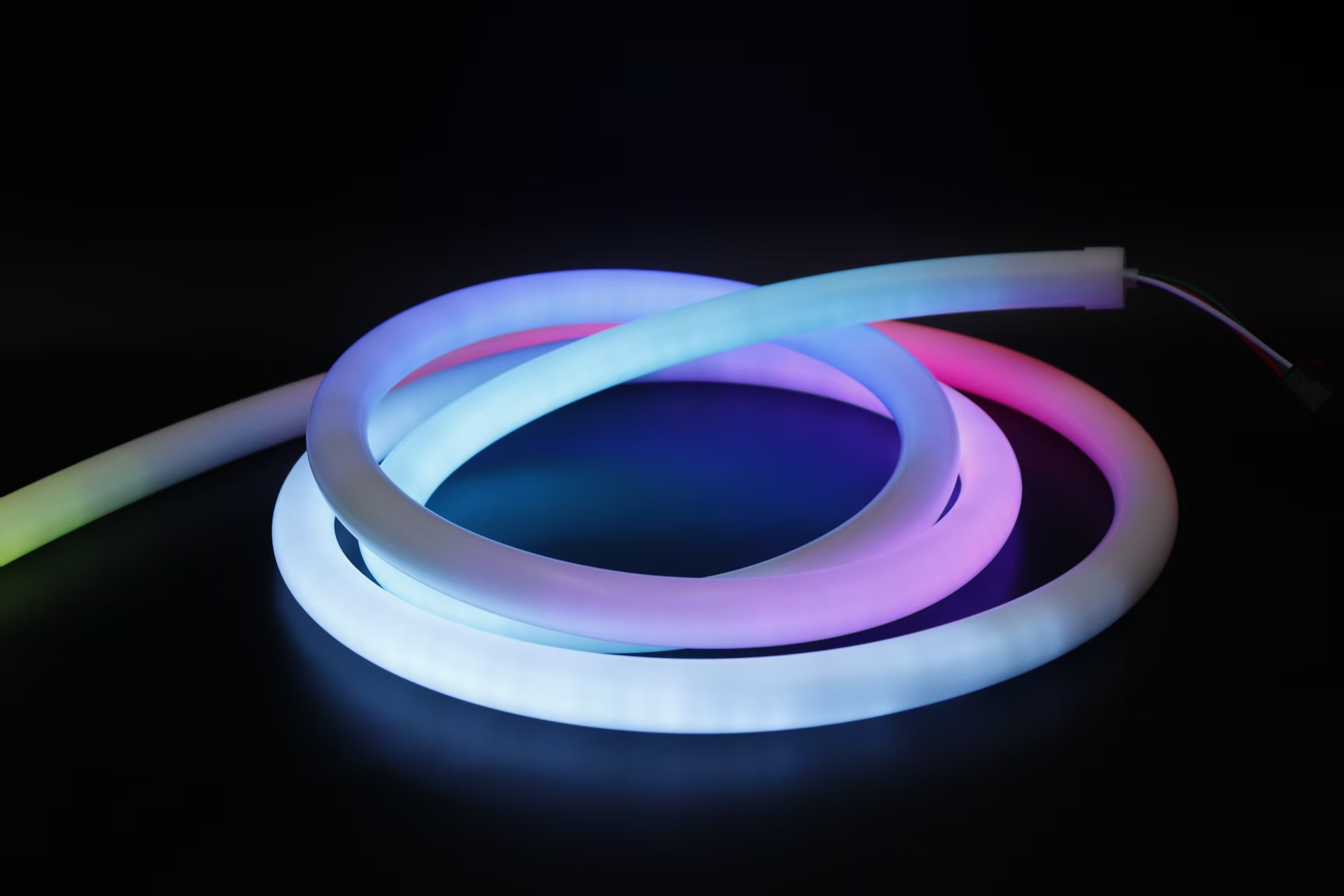
Let me share what I've learned from working with hundreds of projects, and help you avoid the most common pitfalls that can ruin an otherwise perfect lighting installation.
Why Do Many 360° LED Neon Flex Products Fail to Deliver True Omnidirectional Light?
When projects go wrong, clients often tell me they focused solely on the "360-degree" specification. But this seemingly simple feature masks complex engineering challenges that many manufacturers haven't solved.
True 360-degree illumination requires precise LED placement along the central axis, uniform light diffusion through high-quality materials, and careful structural design to eliminate dark spots or shadow areas. Many products labeled as "360-degree" fail to meet all these criteria.

Understanding the Technical Challenges
The core issues typically fall into three main categories:
1. Structural Design Flaws
- Center Axis Alignment: LEDs must be perfectly centered within the tube
- Light Distribution: Even spacing of LEDs around the circumference
- Material Thickness: Consistent silicone thickness for uniform diffusion
2. Material Quality Impact
| Factor | Poor Quality | High Quality |
|---|---|---|
| Diffusion | Visible hotspots | Smooth, even glow |
| Durability | Yellowing over time | UV resistant |
| Temperature | Limited range | -40°C to +60°C |
3. Manufacturing Precision
The manufacturing process must maintain tight tolerances for:
- LED positioning
- Material consistency
- Structural integrity
I've seen projects where even slight deviations in these areas led to visible light bands or shadow areas, especially in open spaces where the lighting is viewed from multiple angles.
How Can You Test for True 360-Degree Light Distribution?
Many clients discover lighting inconsistencies only after installation, when corrections become extremely costly. I've developed a simple but effective testing method through years of experience.
The most reliable way to verify 360-degree light distribution is through the rotation test: illuminate the fixture and slowly rotate it while observing from a fixed position. Any variations in brightness or color indicate uneven light distribution.

Comprehensive Testing Protocol
Here's the detailed testing approach I recommend:
Visual Assessment
-
Static Testing
- Observe from multiple angles
- Check for consistent brightness
- Look for hotspots or dark areas
-
Dynamic Testing
- Rotate the fixture slowly
- Test in both straight and bent positions
- Verify color consistency
Installation Simulation
| Test Type | Purpose | What to Look For |
|---|---|---|
| Hanging Test | Verify gravity effects | No sagging or twisting |
| Bend Test | Check light distribution in curves | Consistent brightness around bends |
| Distance Test | Assess visibility range | Uniform appearance from various distances |
I always insist on performing these tests before finalizing any large-scale installation. This attention to detail has helped prevent countless project failures.
What Solutions Ensure True 360-Degree Illumination?
Through extensive research and development, we've identified key elements that contribute to achieving genuine 360-degree illumination. These insights come from real-world applications and customer feedback.
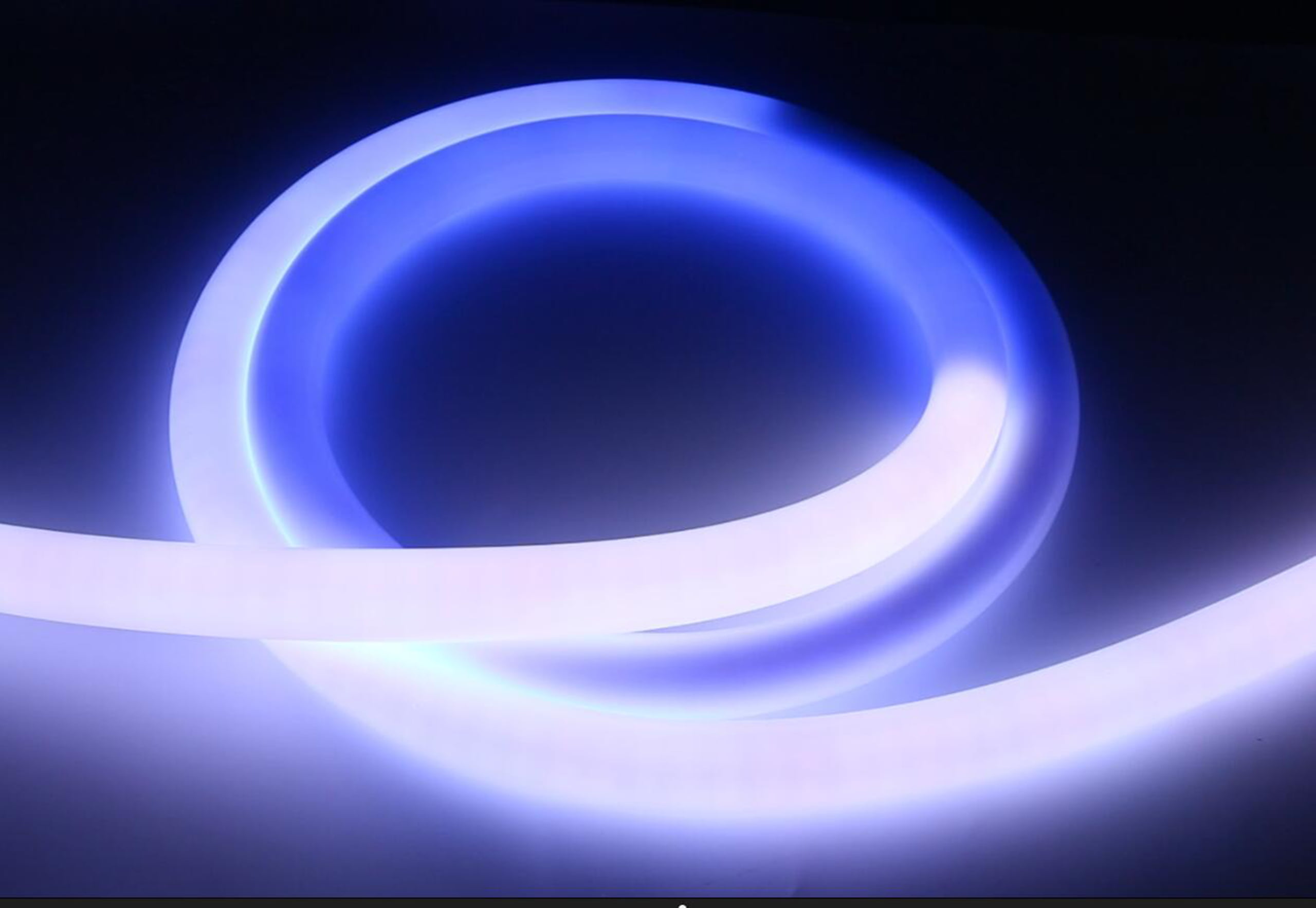
The solution combines precise engineering with quality materials: centrally-aligned LED placement, high-diffusion silicone compounds, and rigorous quality control during manufacturing. Each element must work in harmony to create uniform illumination.
Technical Implementation
Our approach focuses on three critical areas:
1. Structural Design
- Central axis LED positioning
- Optimized LED spacing
- Balanced heat distribution
2. Material Selection
| Component | Specification | Benefit |
|---|---|---|
| Silicone | High molecular density | Superior light diffusion |
| LED Chips | Premium grade | Consistent output |
| Connectors | IP68 rated | Waterproof reliability |
3. Quality Control
Every batch undergoes:
- Photometric testing
- Environmental stress testing
- Long-term durability verification
This comprehensive approach has helped us achieve consistent results across various applications, from artistic installations to commercial lighting projects.
Conclusion
When selecting 360-degree LED neon flex, look beyond basic specifications. Focus on verified performance through proper testing, and always choose manufacturers who can demonstrate true omnidirectional light distribution through practical demonstrations.