

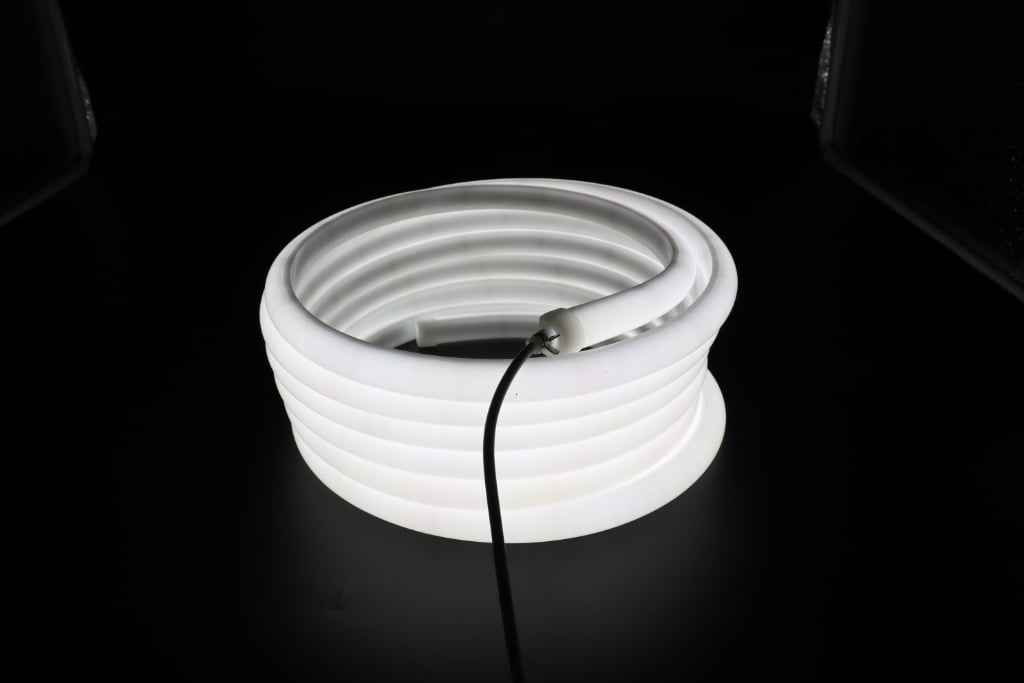
Have you ever installed a "360-degree" LED neon flex only to discover annoying dark spots and uneven lighting? This common issue has ruined countless high-end lighting projects and wasted valuable time and money.
A true 360-degree LED neon flex should emit light uniformly from all viewing angles, with no dark spots or directional lighting. This requires centered LED placement, symmetrical silicone diffusion, and proper optical design testing from multiple angles.
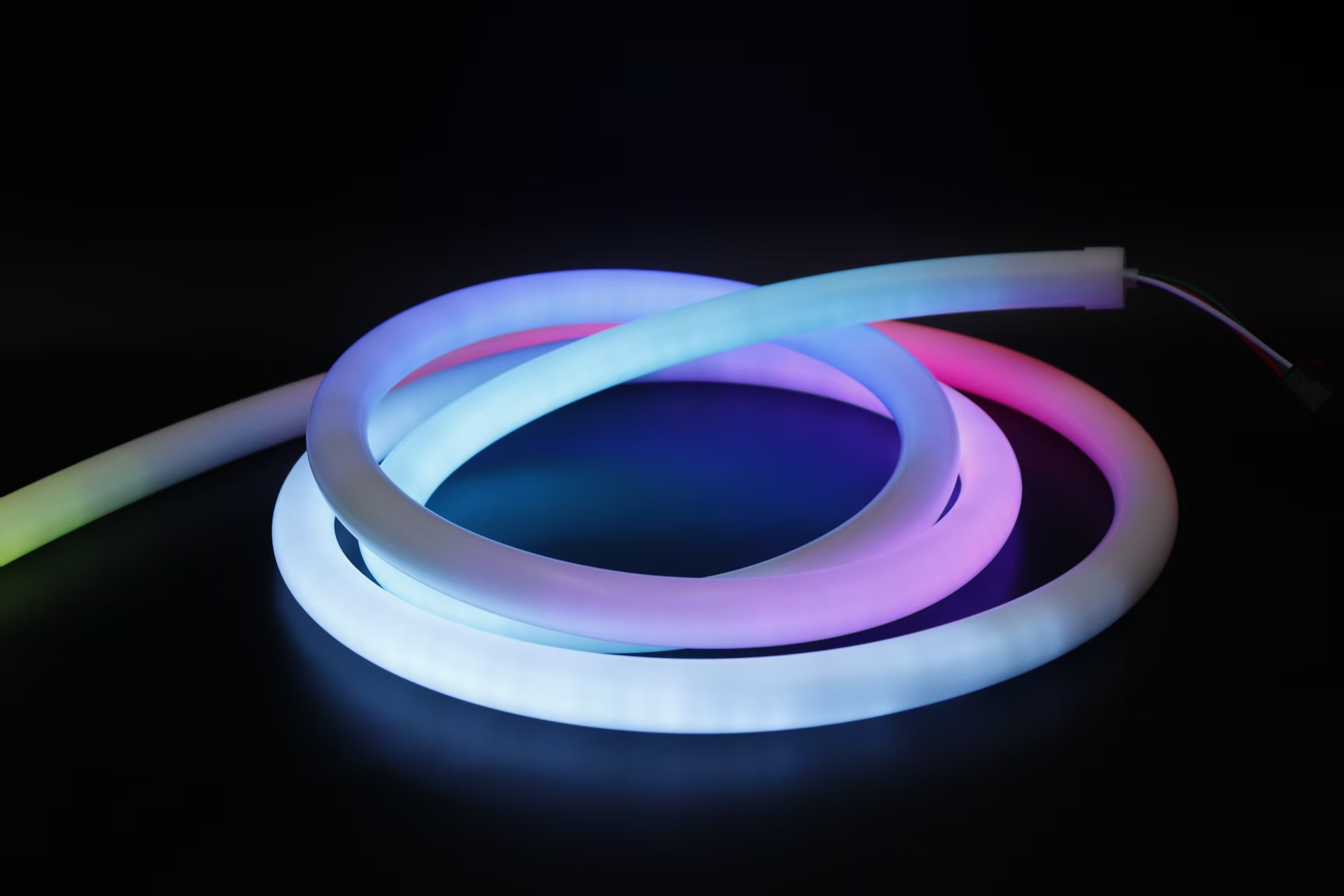
When it comes to suspended lighting designs, ring structures, and artistic installations, even slight variations in light distribution can dramatically impact the final result. Let me share what I've learned about avoiding these costly mistakes.
Why Do Most "360-Degree" LED Neon Flex Products Fail in Real Applications?
I've seen countless projects where the sample testing looked perfect, but once installed, the lighting was noticeably uneven. This frustrating situation has cost both time and reputation.
The main reason for uneven lighting is that many products are not truly center-emitting. Instead, LEDs are often offset to one side, resulting in directional light that becomes obvious when viewed from different angles in actual installations.
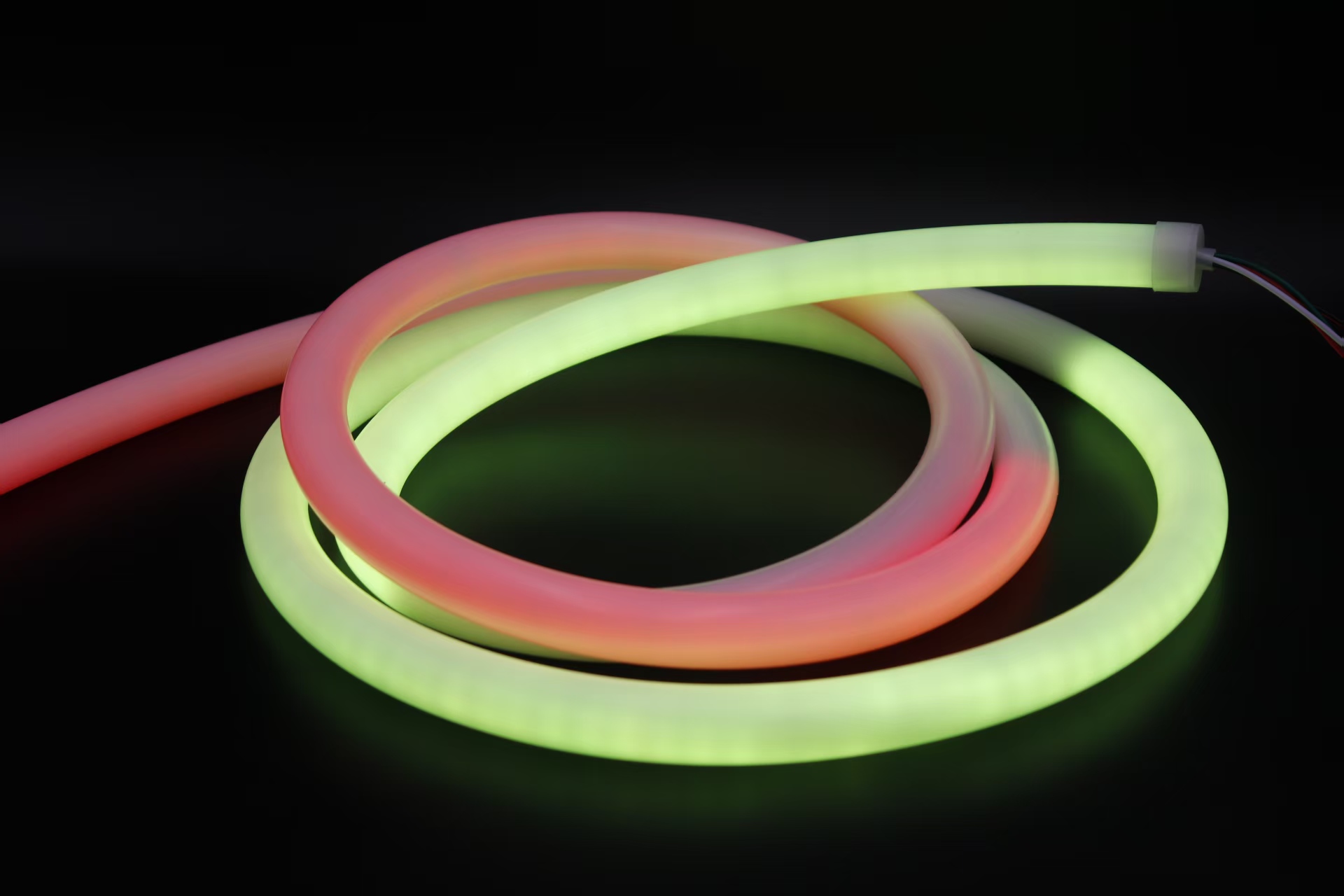
The problem goes deeper than just LED placement. Let's break down the key factors that determine true 360-degree performance:
1. Structural Design Elements
- LED Positioning: Center-mounted vs. Side-mounted
- Center mounting ensures even light distribution
- Side mounting creates inherent bright/dark sides
- Impact increases with viewing distance
2. Material Properties
-
Silicone Quality: Property Impact on 360° Effect Density Affects light diffusion Thickness Controls uniformity Optical formula Determines light spread
3. Testing Methodology
- Traditional sample testing often fails because:
- Short viewing distances mask problems
- Limited viewing angles during testing
- Lack of real-world installation simulation
I once worked on a high-end hotel lobby project where the initial product looked perfect during tabletop testing. However, after installation in the 6-meter-high atrium, the suspended rings showed obvious bright and dark sides. We had to replace everything with true center-emitting products, causing significant delays and additional costs.
How Can You Verify True 360-Degree Performance Before Installation?
After seeing numerous project failures, I've developed a systematic approach to product evaluation that has saved our clients from costly mistakes.
The key is to perform comprehensive testing that includes rotating the product through all viewing angles, checking uniformity at various distances, and specifically testing in suspended configurations that match your intended installation.

To ensure you're getting genuine 360-degree performance, consider these critical factors:
1. Visual Assessment Protocol
-
Multiple Angle Viewing: Viewing Angle What to Look For Front Baseline brightness Side Consistent output Back Equal to front view 45° angles No dark spots
2. Installation Simulation
- Mock up actual mounting conditions
- Test at intended viewing distances
- Check performance in motion
- Verify brightness consistency through rotation
I remember a museum installation where the client initially chose a product based on catalog specs alone. By implementing our testing protocol before final selection, we identified significant uniformity issues that would have been obvious in the gallery setting. The right product choice led to a stunning installation that truly achieved the designer's vision.
What Makes a Reliable 360-Degree LED Neon Flex Manufacturer?
Through years of manufacturing experience, I've identified key indicators of trustworthy producers who can deliver true 360-degree performance.
Look for manufacturers who can demonstrate their testing protocols, provide detailed optical design documentation, and show examples of successful large-scale installations where 360-degree viewing was critical to the project's success.
![manufacturing facility]https://siluxa.com/wp-content/uploads/2026/03/ojpg1122.jpg"quality control testing")
When evaluating manufacturers, consider these essential aspects:
1. Manufacturing Capabilities
-
Quality Control Systems: Process Stage Critical Checks Design Optical simulation Production Uniformity testing QC Multi-angle verification
2. Technical Support
- Detailed installation guidelines
- Project-specific testing
- Post-installation troubleshooting
From my experience managing our production facility, I've seen how proper quality control at each stage prevents problems before they reach the installation site. This attention to detail has helped us maintain a near-zero return rate on our 360-degree products.
Conclusion
True 360-degree LED neon flex requires careful attention to design, materials, and testing. Don't risk your project's success – verify uniform light distribution from all angles before committing to a product choice.