

You've specified silicone neon flex for your premium project. You've paid the premium price. But three months after installation, your client calls with complaints about sticky surfaces and chemical odors. What went wrong?
The answer lies in a hidden manufacturing shortcut called incomplete vulcanization1. When silicone undergoes insufficient secondary curing, residual catalysts2 leach out over time, creating oily surfaces, attracting dust, and releasing unpleasant fumes that can destroy your project's reputation and your client relationships.
I've spent years in LED manufacturing, and I've seen this problem destroy otherwise perfect installations. Let me show you exactly what's happening behind the scenes and how to protect your projects.
What Exactly Is "Incomplete Vulcanization" and Why Should You Care?
When you first receive silicone neon flex samples, they look flawless. The material feels smooth, appears crystal clear, and passes basic visual inspection. But appearances deceive.
Silicone requires a chemical process called vulcanization to transform from a soft, unstable compound into the durable, flexible material you need. This process involves cross-linking polymer chains using catalysts at controlled temperatures. When manufacturers skip or rush the secondary curing stage to save time and electricity costs, those unreacted catalysts remain trapped inside the material, waiting to cause problems.

Here's what happens in real-world conditions:
When your installation runs in summer heat or sits in sealed architectural channels, temperatures rise. Those residual catalysts2 become mobile. They migrate to the surface, creating a tacky, oil-like coating. This coating acts like a magnet for airborne particles. Within weeks, your pristine lighting becomes cloudy and dim. Worse, the chemical breakdown3 releases volatile organic compounds4 that create that distinctive "new plastic" smell that never goes away.
I once walked through a luxury mall where every display case reeked of chemicals. The contractor had chosen a supplier based solely on price. Six months later, they replaced every meter of lighting at three times the original cost, plus lost credibility with their anchor tenant.
How Can You Detect This Problem Before Installation?
You need practical tests that reveal quality issues before they become expensive disasters. I recommend these field-proven methods that we use with every batch.
The most reliable indicator is the sealed heat test5. Place a one-meter sample in an airtight container at 60°C while powered on for 24 hours. Quality silicone emerges unchanged. Poorly cured material develops surface tackiness and releases noticeable odors. This test simulates months of real-world stress in a single day.

The alcohol wipe test6 provides another quick verification. Soak a cloth with 90%+ isopropyl alcohol and vigorously rub the silicone surface for 30 seconds. Fully cured silicone shows no change. Incomplete vulcanization causes the surface to become rough, chalky, or release particles. This happens because alcohol dissolves unreacted compounds that proper curing would have eliminated.
Here's a comparison table of what you should observe:
| Test Method | Fully Cured Silicone | Poorly Cured Silicone |
|---|---|---|
| 60°C Sealed Heat (24h) | No surface change, no odor | Sticky surface, chemical smell |
| Alcohol Wipe Test | Surface unchanged | Roughness, white residue |
| UV Exposure (72h) | Color stable | Yellowing begins |
| Dust Adhesion | Minimal attraction | Particles stick readily |
I also recommend the flexibility retention test7. Bend a sample to 90 degrees and hold for one hour at room temperature. Release it and measure recovery time. Quality material returns to straight within seconds. Poor curing causes permanent deformation because the polymer chains never properly cross-linked.
What Manufacturing Standards Separate Quality from Compromise?
At our facility, we built our reputation on refusing to skip steps that competitors consider "optional." Every batch follows a mandatory protocol that costs more but eliminates warranty claims.
Our secondary vulcanization cycle8 runs 4-8 hours in forced-air circulation ovens at precisely controlled temperatures. This extended curing period drives out low-molecular-weight volatiles that cause the problems I described. Yes, it increases electricity costs. Yes, it reduces daily output. But it means our silicone performs identically in Dubai's summer heat and Toronto's winter cold.
We exclusively use platinum-catalyzed vulcanization9 systems. Traditional peroxide catalysts cost less but leave behind compounds that yellow and degrade. Platinum catalysts produce cleaner reactions with minimal residue. The material remains colorless and odorless even after years of UV exposure and thermal cycling.
Our quality control process10 includes these non-negotiable checkpoints:
Material Selection Phase: We source only food-grade, high-molecular-weight silicone11 compounds from certified suppliers. Each batch includes documentation showing molecular weight distribution12 and purity levels. We reject any material that doesn't meet our minimum 99.5% purity threshold.
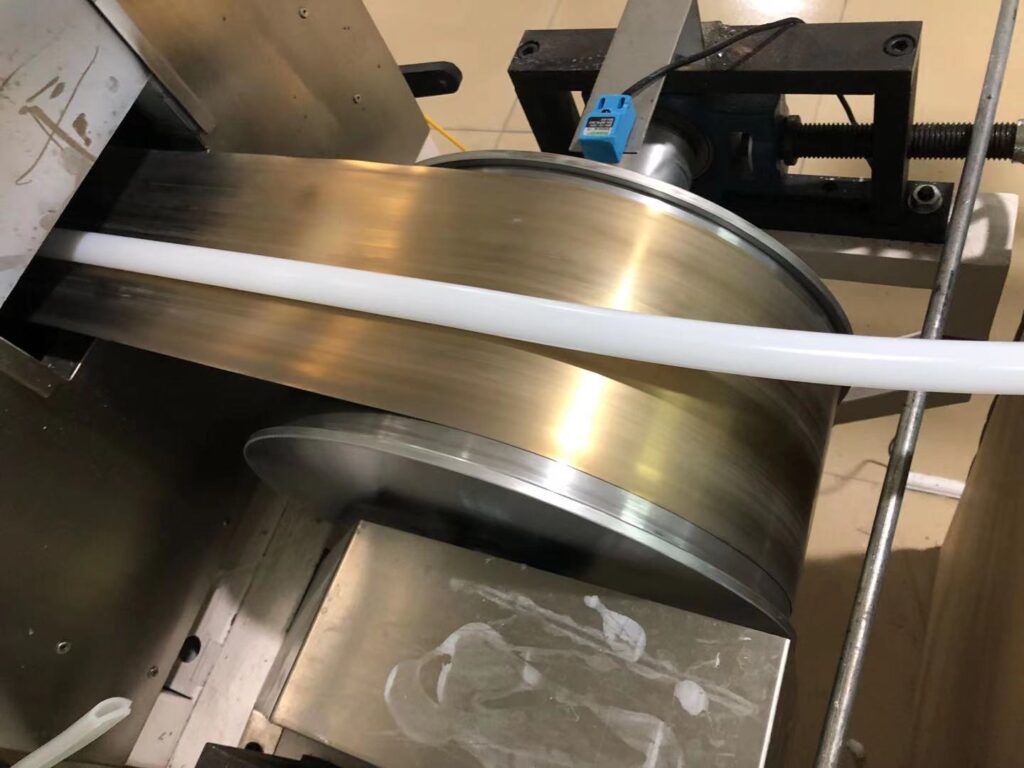
Production Phase: Extrusion occurs at controlled speeds that allow proper polymer alignment. Faster extrusion creates internal stresses that manifest as cracking and delamination months later. Our line speed might be 30% slower than competitors, but our rejection rate is 80% lower.
Curing Phase: Primary vulcanization happens in-line during extrusion. Then comes the critical secondary stage where material sits in our circulation ovens. Temperature sensors at multiple points ensure uniform heating. We validate complete curing by testing samples from each batch with gas chromatography13 to verify volatile content below 0.1%.
Post-Production Phase: Material rests for 48 hours before cutting and assembly. This aging period allows any remaining stresses to relax naturally. Then we perform the same tests I recommended for you: heat exposure, alcohol resistance, and flexibility retention.
Let me share a real example. A chain store fixture manufacturer contacted us after their previous supplier caused a crisis. Sixty locations nationwide had display cases emitting chemical odors so strong that mall management threatened lease termination. The manufacturer faced penalty clauses worth hundreds of thousands.
We provided fully cured silicone neon flex with documented test results. Installation occurred over one weekend per location. Six months later, not a single complaint. The material performs flawlessly in sealed cabinets with limited ventilation and elevated temperatures from both lighting and HVAC systems. That manufacturer now specifies our products for all international projects because they trust the consistency.
Conclusion
Incomplete vulcanization represents a hidden manufacturing shortcut that destroys projects and reputations. Demand proper secondary curing, platinum catalysts, and documented quality testing to ensure your silicone neon flex performs as promised for years, not months.
Understanding incomplete vulcanization is crucial to avoid costly mistakes in your projects. ↩
Learn how residual catalysts can impact the quality and longevity of silicone products. ↩
Learn about the factors that lead to chemical breakdown and how to prevent it. ↩
Discover the dangers of volatile organic compounds and how they affect indoor air quality. ↩
This test is essential for ensuring the quality of silicone before installation. ↩
Find out how this simple test can reveal potential issues with silicone products. ↩
Understanding this test helps ensure your silicone maintains its performance over time. ↩
Understanding this cycle is key to ensuring the longevity of silicone products. ↩
Explore why platinum catalysts are superior for silicone durability and performance. ↩
A robust quality control process is vital for ensuring product reliability and safety. ↩
Learn about the significance of using high-quality silicone in manufacturing. ↩
Understanding molecular weight distribution helps in selecting the right silicone for projects. ↩
Explore how gas chromatography ensures the quality and safety of silicone products. ↩