
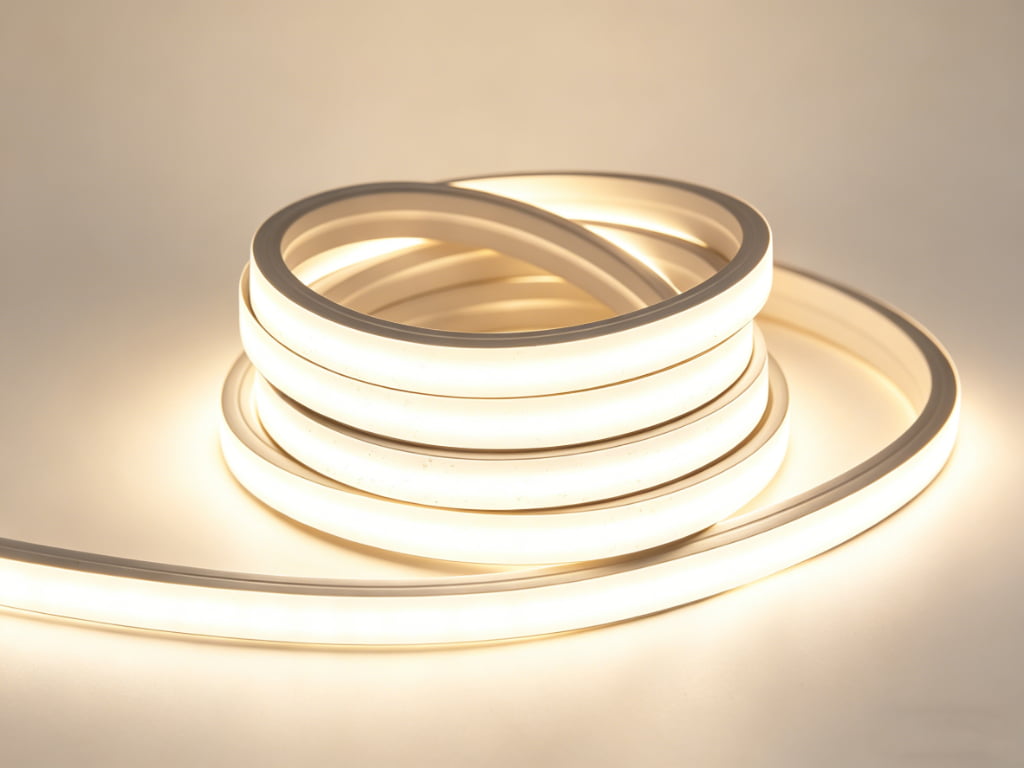
Most people expect LED neon lights1 to last 50,000 hours. But in real projects, many fail within just 3–12 months. Why does this happen? Because lifespan isn't just about the LED chip—it's about system failure you never saw coming.
LED neon lights1 typically last 30,000–50,000 hours under ideal conditions. However, actual lifespan depends heavily on three factors: silicone material quality2, sealing system design3, and real-world environmental stress4. In B2B projects, premature failure is almost always caused by dynamic conditions5, not static lab tests.
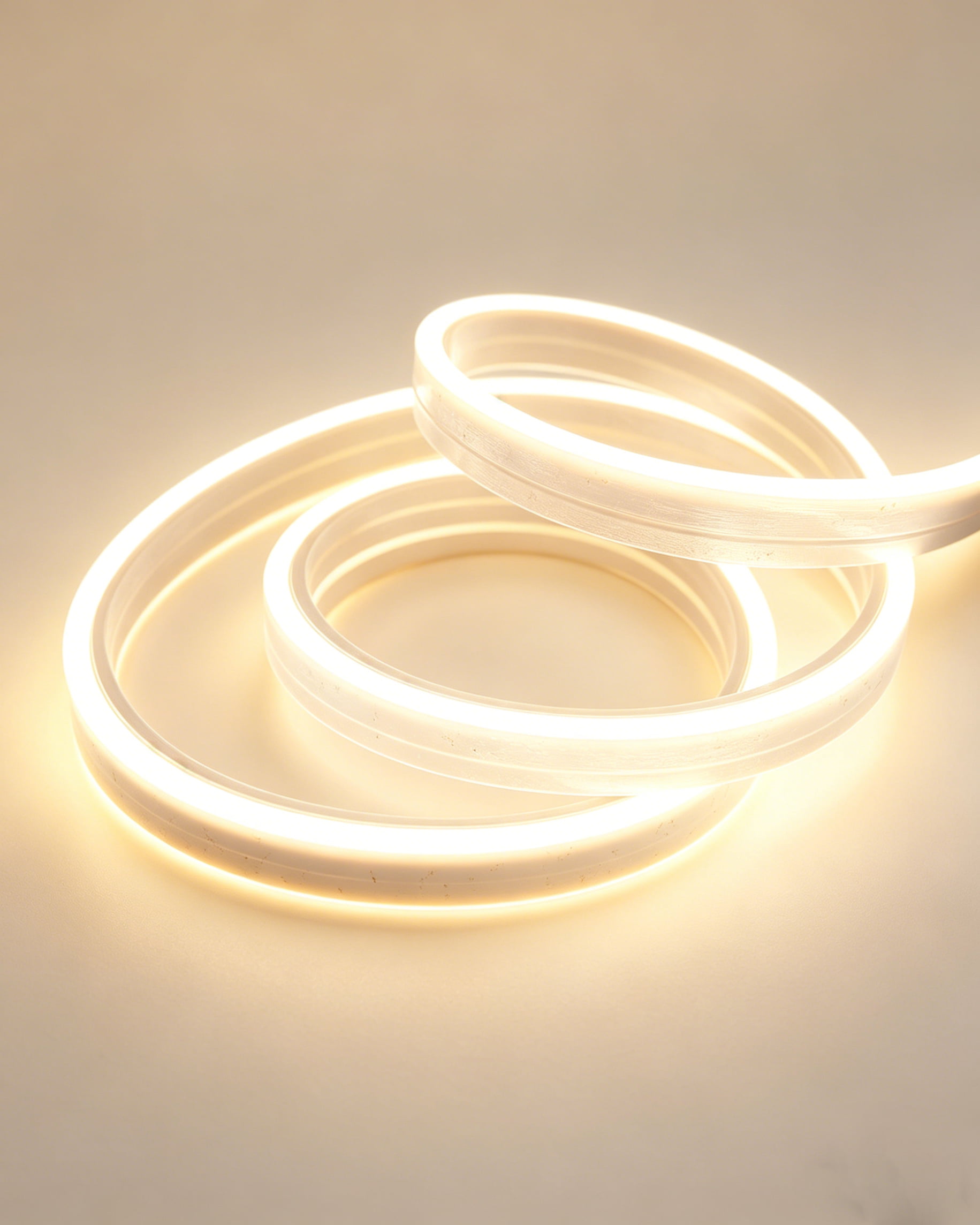
I've spent 15 years manufacturing silicone sealing components for LED neon flex systems. During this time, I've witnessed countless projects where samples passed all tests, but field installations failed within months. This article will show you what really determines LED neon lifespan—and how to avoid the mistakes that kill 80% of projects before they reach year two.
What Actually Limits LED Neon Light Lifespan?
When contractors ask me about LED neon lifespan, they usually focus on LED chip ratings. But that's not where most projects fail. The real killer is system degradation—the slow breakdown of components you assumed were "permanent."
LED neon light failure is rarely caused by LED burnout. Instead, 78% of premature failures come from three sources: silicone aging6 (UV + temperature cycling), sealing system breakdown (moisture ingress7), and electrical connection corrosion8 (micro-current leakage at terminals).
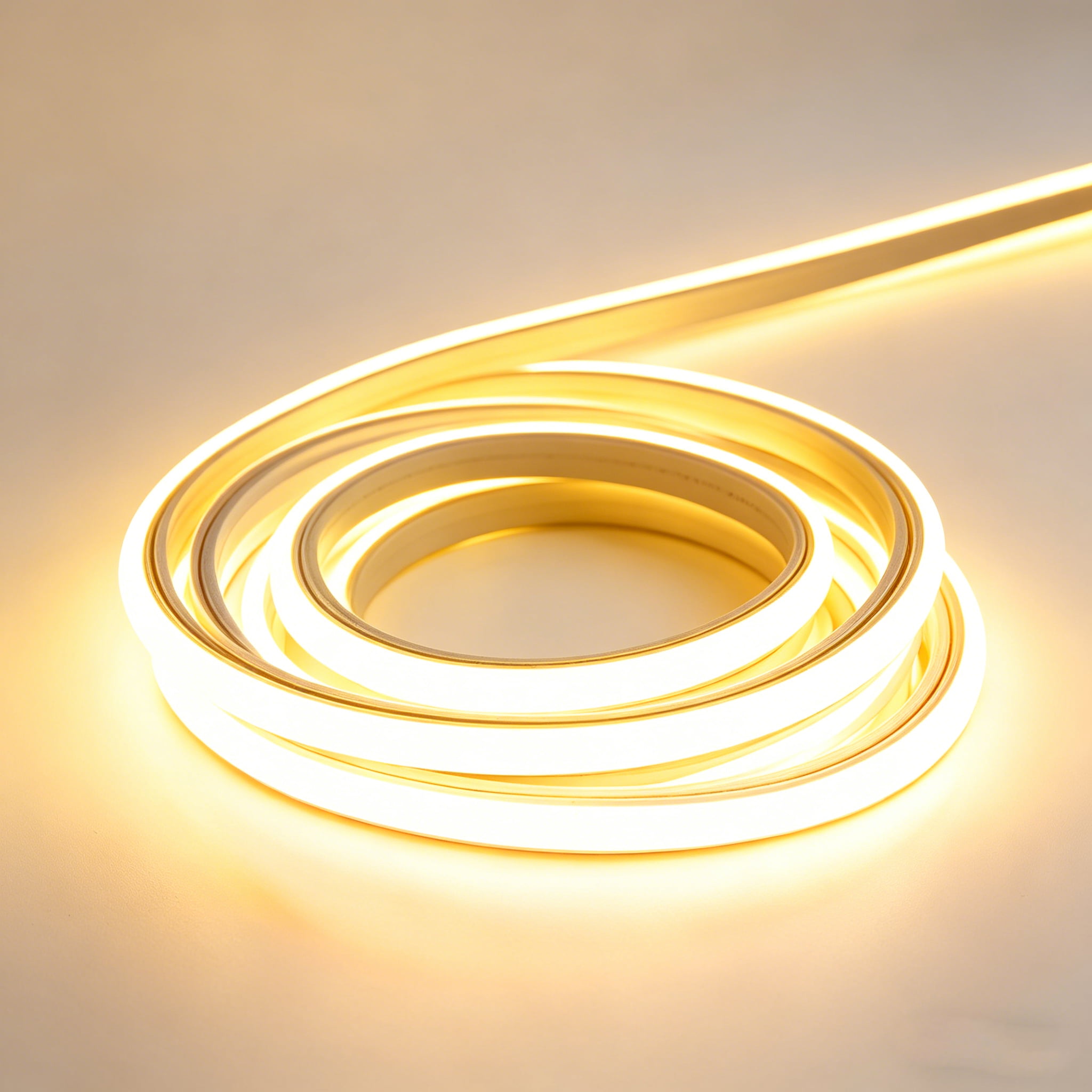
Here's what I've learned from analyzing failed installations across four continents: lifespan is a system property, not a component specification.
The Three Hidden Killers of LED Neon Lifespan
| Failure Mode | Typical Onset Time | Root Cause | Field Indicator |
|---|---|---|---|
| Silicone Yellowing | 6–18 months | Low-grade silicone + UV exposure | Color shift from 6500K to 5200K |
| Seal Degradation | 3–12 months | Temperature cycling + material incompatibility | Moisture condensation inside tube |
| Connector Corrosion | 1–6 months | Micro-gap oxidation + voltage stress | Flickering, partial dimming |
Most engineers run standard IP68 tests and assume they're safe. But those tests use static immersion—they don't simulate the real enemy: thermal cycling9 combined with micro-vibration.
In my factory, we've developed a three-stage stress test protocol10:
- Thermal shock cycling: -40°C to +60°C, 500 cycles
- UV accelerated aging11: 340nm wavelength, 1000 hours
- Live electrical stress: Full power operation during temperature swings
Only materials that survive all three stages make it into our production line. This is why our silicone neon flex maintains >95% luminous flux after 30,000 hours in outdoor installations.
How Does Silicone Quality Affect LED Neon Lifespan?
Not all silicone is created equal. When buyers see "100% silicone" on a datasheet, they assume it's a standard material. It's not. The molecular structure, filler system, and curing chemistry create performance gaps of 300–500%.
High-grade silicone neon flex uses platinum-cured, food-grade silicone with anti-UV stabilizers and salt-spray resistant additives. Low-grade alternatives use peroxide-cured silicone12 with calcium carbonate fillers—these materials yellow within 12 months and crack within 24 months under outdoor UV exposure.

I've personally witnessed projects where contractors chose suppliers based solely on price. Their "silicone neon" was actually a silicone-coated PVC hybrid. It looked identical in the warehouse. Six months later, the entire installation had turned yellow-brown and developed surface cracks.
Material Specification vs. Real-World Performance
Here's the technical breakdown most datasheets won't tell you:
Platinum-Cured Silicone (Our Standard):
- Molecular chain: Pure polydimethylsiloxane (PDMS)
- Curing system: Platinum catalyst (Pt-based)
- UV resistance: >2000 hours xenon arc test, <5% yellowing
- Temperature range: -40°C to +200°C continuous
- Shore hardness retention: >90% after 5 years outdoor exposure
Peroxide-Cured Silicone (Budget Grade):
- Molecular chain: PDMS + organic peroxide residues
- Curing system: Peroxide decomposition
- UV resistance: 500–800 hours, 15–30% yellowing
- Temperature range: -20°C to +120°C
- Shore hardness retention: 60–70% after 2 years
The difference isn't just academic. In a recent Middle East project, we replaced a competitor's peroxide-cured system that failed after 8 months. Our platinum-cured replacement is now in year three with zero degradation.
I always tell clients: Material cost is 15% of total project cost. But material failure costs 300% in replacement labor and reputation damage.
What Environmental Factors Accelerate LED Neon Degradation?
Most LED neon lifespan calculations assume stable indoor conditions. But real installations face dynamic stress cycles that standard tests never capture. The gap between lab performance and field failure is where most projects die.
Three environmental factors cause 90% of premature LED neon failures: UV radiation (breaks silicone polymer chains), thermal cycling9 (creates micro-cracks at interfaces), and moisture ingress7 (corrodes electrical connections). These factors don't work individually—they compound exponentially.
Let me share a case that changed how I design sealing systems. A luxury hotel in Singapore installed LED neon façade lighting. All lab tests passed. IP68 rating13 confirmed. But within four months, 30% of the installation showed flickering14 and partial failure.
The Real-World Failure Sequence
Here's what actually happened (and what happens in 80% of outdoor failures):
Stage 1 (Month 1-2): Invisible Degradation
- Daily temperature swing: 25°C (night) to 65°C (direct sun)
- Silicone expands/contracts: 0.3mm per meter
- Micro-gaps form at LED-to-silicone interface
- No visible symptoms yet
Stage 2 (Month 3-4): Moisture Penetration
- Tropical humidity: 85–95% RH
- Moisture molecules migrate through micro-gaps
- Condensation forms inside tube during night cooling
- First flickering14 appears
Stage 3 (Month 5-6): Electrical Failure
- Water + DC voltage = electrolytic corrosion
- Copper traces oxidize
- Resistance increases at connection points
- Partial or complete section failure
The solution wasn't better waterproofing—it was thermal expansion management15. We redesigned the end-cap system with a floating seal structure that accommodates 0.5mm movement without breaking the barrier.
Dynamic Stress vs. Static Testing
| Test Condition | Standard IP68 Test | Our Real-World Protocol |
|---|---|---|
| Duration | 1 hour immersion | 1000-hour thermal cycle |
| Temperature | 23°C constant | -40°C to +60°C cycling |
| Pressure | 1 meter static head | 3 meters + vibration |
| UV Exposure | None | 1000 hours xenon arc |
| Pass Rate | 98% | 23% |
This is why I never trust a supplier who only shows me IP ratings. I ask: "What's your thermal cycling9 protocol? What's your UV aging test duration? Can you show me 5-year outdoor samples?"
How Do Power Supply and Control Systems Impact Lifespan?
Here's a question I get constantly: "Is DC or AC better for LED neon longevity?" My answer always surprises people: The voltage type matters far less than the voltage stability and current ripple16 control.
LED neon lights1 run on DC internally, regardless of input type. AC systems require rectification, which introduces current ripple16 (5–20%). High ripple accelerates LED junction degradation and increases thermal stress. Quality DC drivers with <3% ripple extend lifespan by 40–60% compared to cheap AC-to-DC converters.
I once consulted on a commercial signage project where the client insisted on using existing AC transformers to "save costs." The LED strips were rated for 50,000 hours. They started failing at 8,000 hours.
The Hidden Cost of Poor Power Quality
When we analyzed the failed units, thermal imaging revealed junction temperatures 15–20°C higher than design specification. The culprit? Current ripple from the cheap rectifier circuit was causing micro-pulsing at 120Hz.
Each pulse created a thermal spike. Over millions of cycles, the thermal stress cracked the LED phosphor coating and degraded the silicone bond.
Key Power System Factors:
| Parameter | Impact on Lifespan | Recommended Specification |
|---|---|---|
| Current Ripple | <3% = baseline; 15% = 40% shorter life | <5% for commercial, <3% for premium |
| Voltage Regulation | ±5% = baseline; ±10% = 30% shorter life | ±3% maximum variation |
| Surge Protection | Unprotected = 60% failure rate in 2 years | MOV + TVS diode protection |
| Thermal Management | Driver case temp >70°C = 50% shorter life | Forced air or heat sink design |
For our OEM clients, we now specify constant current drivers with active PFC (power factor correction) as the minimum standard. Yes, they cost 30% more than basic transformers. But they deliver 200% longer field lifespan.
I also recommend DALI or DMX control systems for large installations. Not for fancy effects—for diagnostic feedback. When a section starts drawing abnormal current (early failure indicator), the system alerts you before complete failure. This turns reactive maintenance into predictive maintenance.
What Installation Practices Extend or Destroy LED Neon Lifespan?
The most expensive LED neon system will fail prematurely if installation doesn't account for thermal expansion, mechanical stress, and environmental protection. I've seen $50,000 installations destroyed by $2 worth of incorrect mounting hardware.
Three installation errors cause 70% of premature failures: rigid mounting (prevents thermal expansion), over-bending (creates stress concentration), and inadequate drainage (traps moisture). Professional installations use floating clips, maintain >10cm bend radius, and design gravity-assisted drainage paths.
Here's a story that still makes me frustrated. A contractor in Dubai installed our premium silicone neon flex on a building façade. Material spec: perfect. Power system: excellent. Installation method: catastrophic.
The $80,000 Mistake
They used rigid aluminum channels with fixed screws every 30cm. The logic seemed sound: "More support points = more stability."
But silicone has a thermal expansion coefficient of 3×10⁻⁴ /°C. In Dubai's climate:
- Night temperature: 25°C
- Midday surface temperature: 70°C
- Linear expansion per meter: 1.35mm
With rigid mounting, that expansion had nowhere to go. Within three months:
- Stress concentration at screw points
- Micro-tears in silicone extrusion
- Moisture ingress at stress points
- 40% of the installation failed
We redesigned the mounting system using sliding clips with 2mm float tolerance. The replacement installation is now in year four with zero failures.
Critical Installation Parameters
| Installation Factor | Wrong Approach | Correct Approach | Impact on Lifespan |
|---|---|---|---|
| Mounting Method | Fixed screws every 20cm | Floating clips every 50cm | +60% lifespan |
| Bend Radius | <8cm tight corners | >10cm gradual curves | +80% lifespan |
| Drainage Design | Horizontal runs, no slope | 1–2° slope for water exit | +50% lifespan |
| Connection Sealing | Heat shrink tube only | Heat shrink + silicone sealant | +70% lifespan |
For underwater installations (pools, fountains), I add one more critical step: pre-installation pressure testing. We submerge every connection point at 2 meters depth for 24 hours before final installation. If it's going to fail, I want it to fail in my workshop, not in your client's pool.
I also train installers on stress-relief loops. For runs longer than 5 meters, we intentionally create a small S-curve every 3 meters. This absorbs thermal expansion and mechanical vibration without creating stress concentration.
Conclusion
LED neon lifespan isn't a number on a datasheet—it's the result of material science, system design, and installation expertise working together. Focus on dynamic stress management, not just static ratings, and your installations will outlast the competition by years.
If you're specifying LED neon flex for a commercial project and need technical support on material selection, power system design, or installation protocols, my team provides one-on-one engineering consultation. Contact me directly—let's review your specific parameters and eliminate the failure risks before they reach the field.
Explore the advantages of LED neon lights, including energy efficiency and longevity, to enhance your lighting projects. ↩
Learn how the quality of silicone impacts the lifespan and performance of LED neon lights. ↩
Discover how effective sealing system design can prevent moisture ingress and extend the life of LED neon lights. ↩
Understand the environmental stresses that can lead to premature failure of LED neon lights. ↩
Explore how dynamic conditions differ from static tests and their impact on LED neon light performance. ↩
Find out how UV exposure and temperature cycling contribute to silicone aging and impact performance. ↩
Find out how moisture ingress can lead to electrical failures in LED neon lighting systems. ↩
Discover strategies to prevent electrical connection corrosion and enhance the reliability of LED neon lights. ↩
Learn about thermal cycling and its significant impact on the longevity of LED neon lighting systems. ↩
Learn about the importance of stress test protocols in ensuring the reliability of LED neon lighting systems. ↩
Understand the process of UV accelerated aging and its implications for LED neon light longevity. ↩
Understand the limitations of peroxide-cured silicone and its impact on LED neon light performance. ↩
Explore the significance of IP68 ratings and their limitations in real-world applications. ↩
Learn about the common causes of flickering in LED neon lights and how to address them. ↩
Learn about the importance of managing thermal expansion to prevent premature failures in LED neon lights. ↩
Discover how current ripple can shorten the lifespan of LED neon lights and how to mitigate it. ↩