

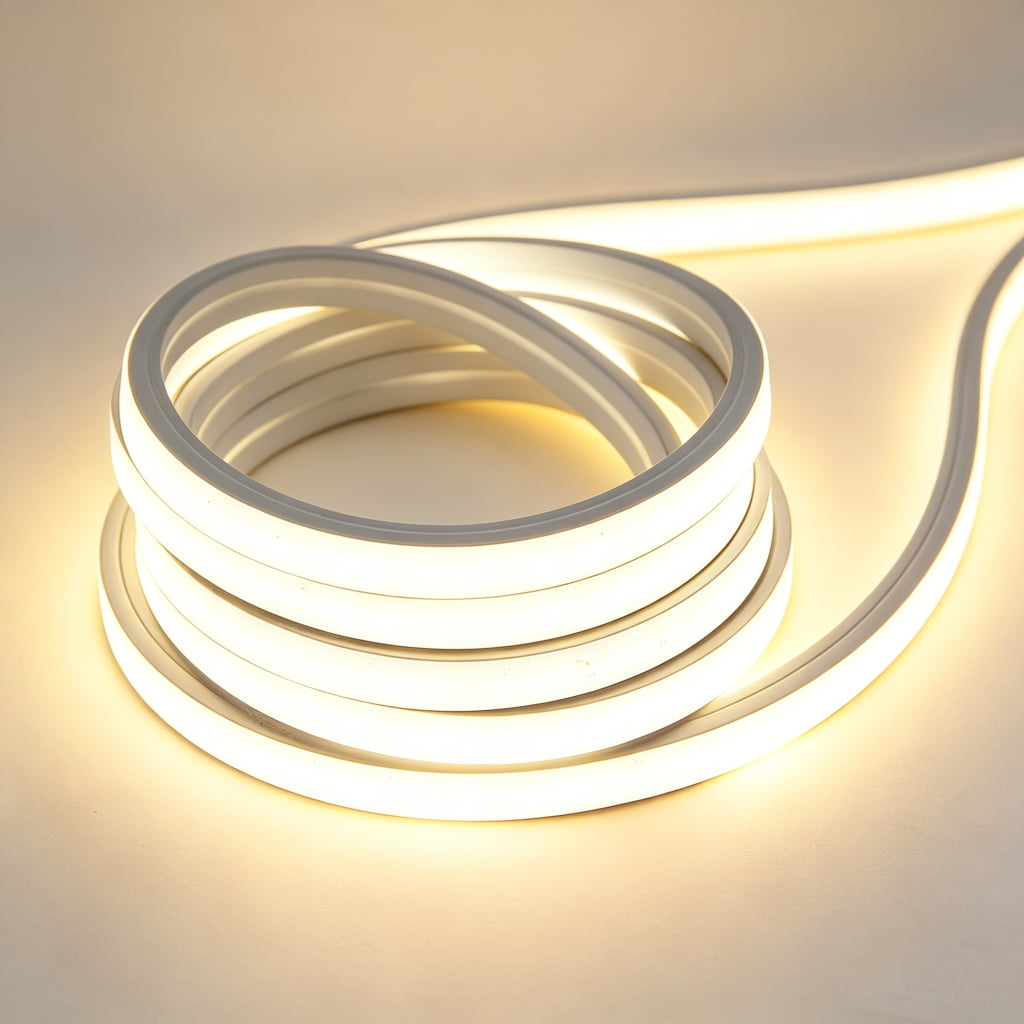
I've been making rubber seals for 15 years. Project engineers keep asking me the same question: "How long does LED neon1 actually last?" You'll see numbers everywhere—30,000 hours, 50,000 hours, sometimes even higher. But here's what I need to tell you straight: if you only look at those numbers, you're probably being misled.
In real projects, lifespan isn't determined by the LED itself. It's determined by something easier to overlook: sealing and material stability2.
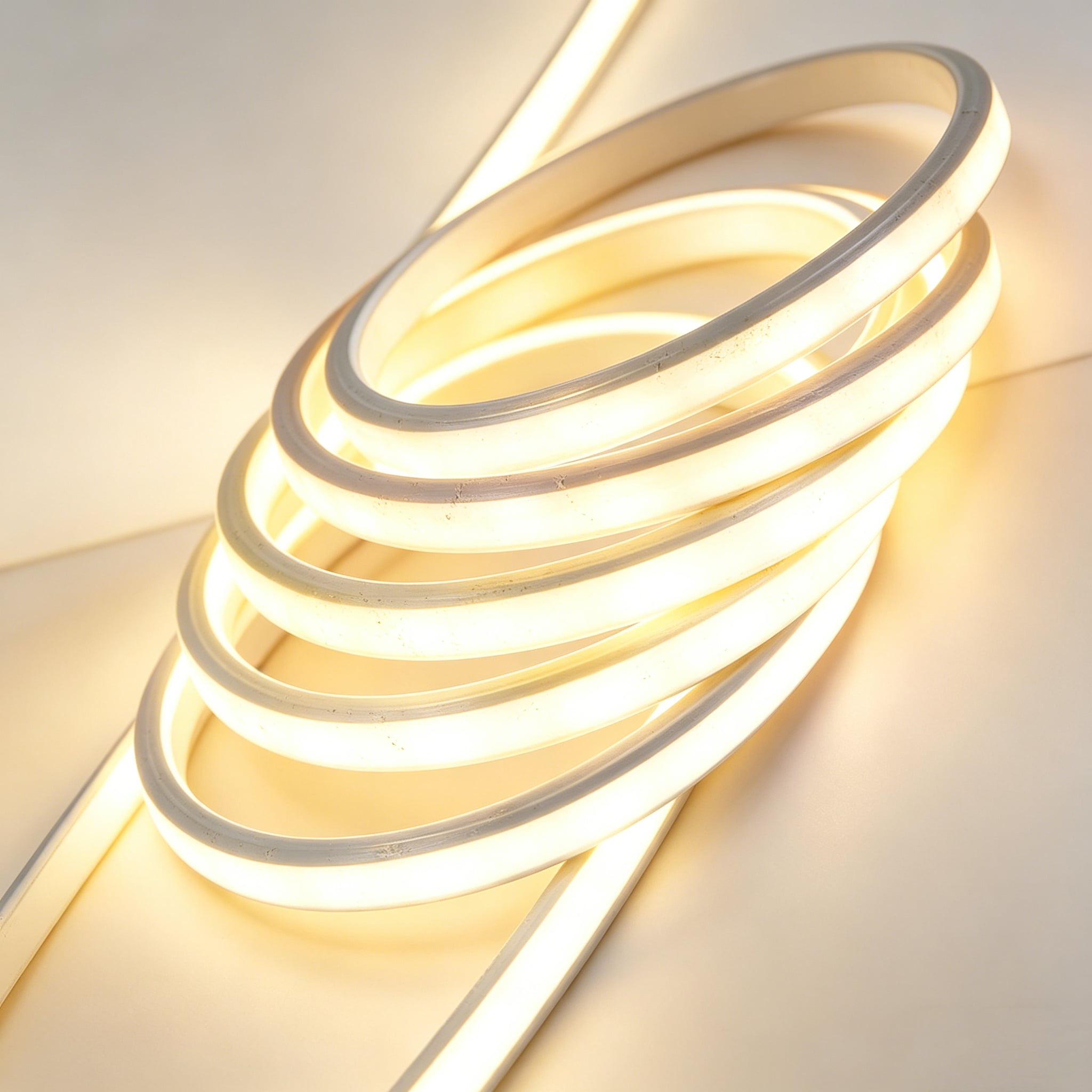
You bought the product because of those impressive hour ratings. You trusted the datasheet. But three months into installation, you're seeing water ingress3, abnormal light decay, or complete seal failure4. That's when you realize those 50,000 hours don't mean much anymore.
What's the Real Difference Between Theoretical Life and Actual Life?
From a chip perspective, yes, LEDs can work for a very long time.
But you're not just buying an LED chip. You're buying LED neon1—a complete system that includes LED heat generation, silicone or PVC housing degradation, seal structure under constant pressure, and continuous environmental stress.
The LED might survive 50,000 hours. Your product might not.
I've seen too many projects where sample testing looked perfect. Aging reports checked all the boxes. But less than three months in the field, problems started showing up:
- Localized water penetration
- Abnormal light decay
- Silicone becoming sticky or cracking
- Seal failure causing entire sections to fail
When you go back and look at that "50,000 hours" rating, it suddenly feels meaningless.
Why Laboratory Numbers Don't Match Field Performance
Here's the core issue: lab testing happens in controlled conditions. Real installations don't.
Lab tests typically involve:
- Constant temperature
- Single media exposure
- Stable pressure
Real-world conditions are completely different:
- Day-night temperature cycling5 (repeated expansion and contraction)
- Long-term UV exposure6
- Trace pollutants in the air
- Localized temperature spikes from power surges
- Micro-movements in seal structures
| Laboratory Conditions | Real-World Conditions |
|---|---|
| Controlled temperature | Temperature cycling |
| Single test medium | Multiple exposure factors |
| Stable pressure | Variable stress loads |
| No UV exposure6 | Continuous UV radiation |
| Static environment | Dynamic environmental shifts |
Each factor alone might seem minor. But when they combine, they fundamentally change material performance.
Did You Choose the Right Material, or Did the Material Change on You?
Let me walk you through a scenario you might be experiencing right now.
You're working on an outdoor LED neon1 project. You did your homework—checked material compatibility charts, made a reasonable choice between NBR and FKM, passed all laboratory tests. Everything looked good.
But reality hit differently.
Less than three months into operation, your seal rings showed irreversible changes—either swelling or hardening.
You start questioning everything:
- Did I choose the wrong material?
- Is there a supplier quality issue?
The real answer is simpler but harder to accept: you did static material selection for a dynamic environment.
The Problem Hides in That 5% of Non-Standard Variables
Material formulation matters more than material name.
Even within the same material category (NBR or FKM):
- Different fillers → different swell resistance
- Different additives → dramatically different aging resistance
- Different crosslinking systems → completely different long-term stability
This is why you can select the "right material" and still fail.
At Shenzhen Alister Technology, we use 100% food-grade, high-molecular silicone extrusion specifically to address this. Our formulation is engineered for anti-UV performance, salt-spray resistance, and non-yellowing properties across temperature ranges from -40°C to +60°C. This isn't just about picking "silicone"—it's about controlling the exact molecular structure and additive package.
If You Want LED Neon That Actually Lasts, Here's What You Should Do
I'm not going to give you theory. I'm going to share what I've verified repeatedly in real projects.
1. Don't Just Read the Datasheet—Test for Extreme Conditions
Ask yourself these questions:
- Will temperature change rapidly?
- Is there UV exposure6 combined with moisture?
- Could cleaning agents or unknown substances make contact?
If the answer is "yes" to any of these, your current material selection probably isn't enough.
2. Run Combined Testing, Not Individual Tests
Most testing separates conditions:
- Temperature resistance test
- Moisture resistance test
- Chemical resistance test
But real environments hit you with all of these simultaneously.
I recommend stacking these conditions together during testing. That's what actually matches field conditions.
| Single-Factor Testing | Combined-Factor Testing |
|---|---|
| Temperature only | Temperature + UV + moisture |
| Chemical exposure only | Chemical + thermal cycling |
| Static load | Dynamic stress + environmental exposure |
| Controlled humidity | Humidity + temperature variation |

3. Focus on the Sealing System, Not Just Material Choice
LED neon1 lifespan is determined by three things working together:
- Material performance
- Structural design
- Assembly condition
Optimizing material alone while ignoring structure won't get you where you need to be.
In our OEM/ODM manufacturing process, we don't just extrude silicone profiles. We engineer the entire sealing interface—compression ratios, groove geometry, assembly tolerances—because we know that's where field failures actually happen.
How I Make Project Lifespan Controllable
In my view, LED neon1 lifespan isn't "calculated"—it's verified.
In my projects, I focus on three things:
1. Validate with Real Operating Conditions, Not Standard Data
I simulate based on your actual project parameters:
- Temperature cycling patterns
- Humid-heat environments
- Powered thermal states
This ensures the material won't fail under your specific real-world conditions.
2. Control Raw Material Batch Consistency
Many engineers overlook this, but it's critical:
Sample stability ≠ production stability
I maintain:
- Locked raw material batches
- Strict formulation ratio control
- Performance verification for every batch
This prevents you from discovering problems during mass production.
3. Reduce Failure Probability Through Structural Design
Sometimes the problem isn't the material at all. It's:
- Improper O-ring compression design7
- Seal groove mismatch
- Excessive assembly stress
I get involved in these optimizations directly, rather than just supplying material.
For instance, our IP68-rated waterproof8 silicone neon flex doesn't just use better silicone—it uses optimized end-cap geometry, controlled compression zones, and assembly sequences that minimize stress concentration. That's what gets you from lab success to field reliability.
Conclusion
LED neon1 lifespan isn't about 50,000 hours or 30,000 hours. It's about whether your sealing system9 can withstand real environmental conditions. As long as the gap between static material selection and dynamic field failure exists, lifespan remains uncontrollable.
Explore this link to understand the true lifespan of LED neon lights beyond just the numbers. ↩
Learn how material stability plays a crucial role in the longevity of LED neon installations. ↩
Discover the factors leading to water ingress and how to prevent it in your projects. ↩
Find out the reasons behind seal failure and how to ensure your LED neon lasts longer. ↩
Explore the impact of temperature cycling on LED neon performance and lifespan. ↩
Learn about the effects of UV exposure on LED neon and how to mitigate them. ↩
Discover how O-ring compression design affects the performance of LED neon seals. ↩
Explore the benefits of IP68-rated waterproofing for ensuring LED neon durability. ↩
Explore the key components of a sealing system that ensure LED neon longevity. ↩