

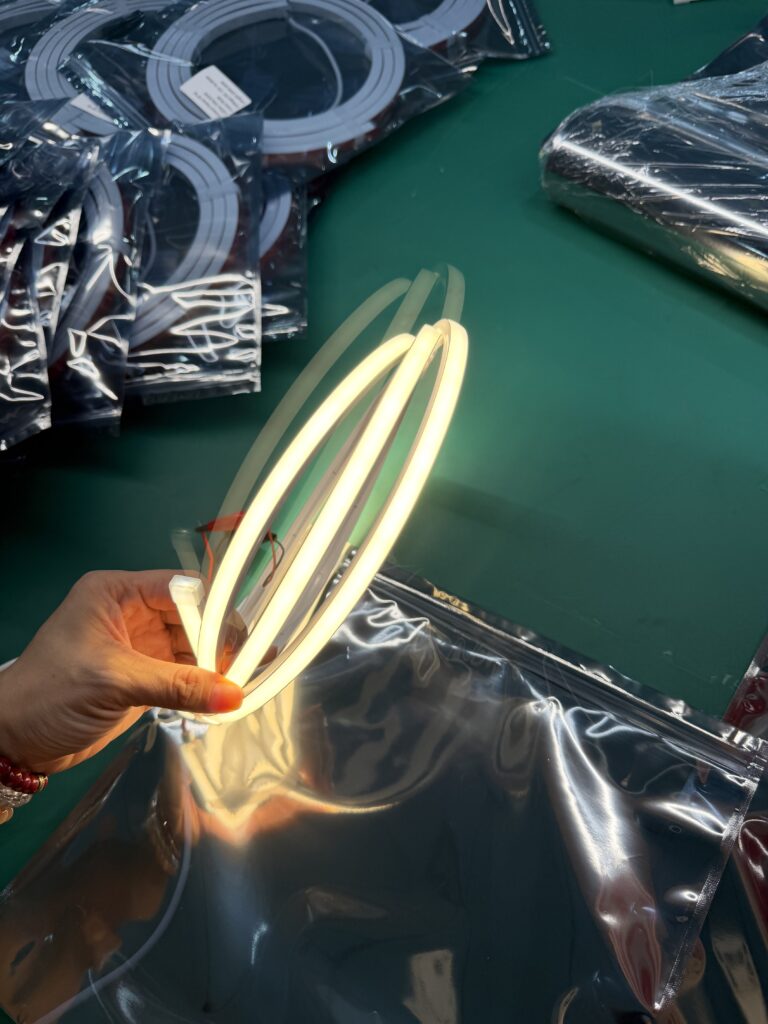
I have worked in rubber sealing for 15 years. During this time, I have been deeply involved in many Neon LED Strip1 projects. Project engineers often ask me: "Are you a professional manufacturer2?" I usually do not answer with a simple "yes" or "no." In my view, real professionalism is not about whether you can make it, but whether you can make it survive in real environments3.

You might have chosen the right materials and passed all lab tests. But three months after installation, your product starts to fail. Why? Because the real challenge is not making the product. The real challenge is making it last.
Why Do Many "Seemingly Professional" Projects Still Fail?
I have seen too many projects like this. The structure is well-designed. The materials are chosen correctly. All lab tests pass. Even the appearance and lighting effect are excellent. But once they enter real applications—outdoor installations, building contours, pool environments—problems start appearing within three months. The end caps leak. The seals fail. The silicone becomes hard or sticky. Cracks and yellowing appear locally.
When this happens, most people think: "Is the material not good enough?" or "Is the factory not professional enough?" But I will tell you something more direct: The problem is often not that you did it wrong. The problem is that you judged it wrong.
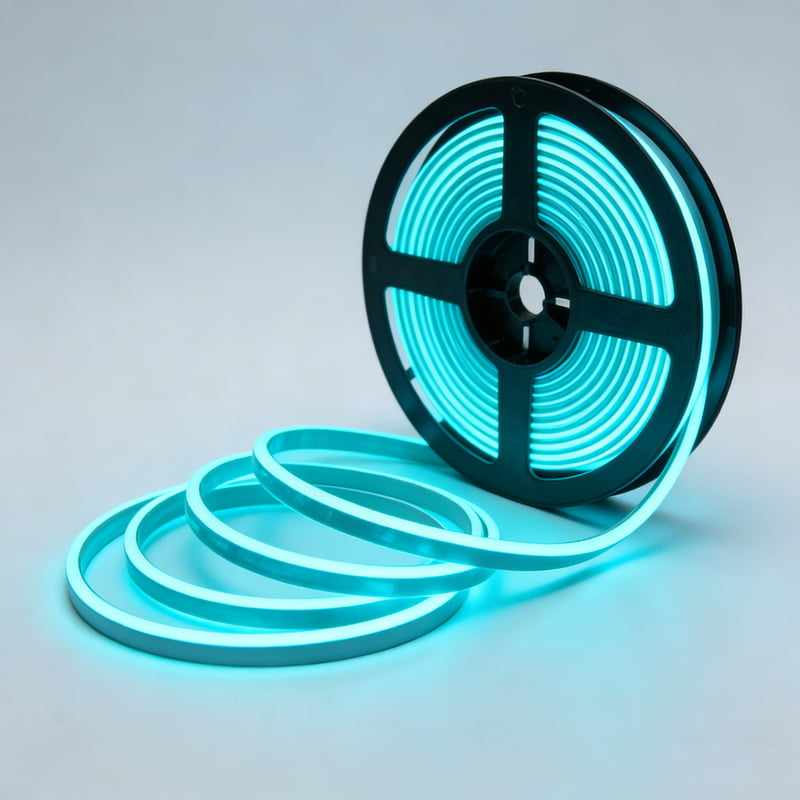
We always test products in controlled environments. We choose materials based on standard compatibility charts. We validate everything in the lab. But the real world does not follow lab rules. Temperature changes daily. UV light hits continuously. Moisture mixes with air pollutants. The power supply generates local heat. These factors combine and change how materials behave. This is where most projects fail. Not because of bad execution. But because of incomplete judgment.
The Real Trap: You Design for Static Conditions, But Products Run in Dynamic Worlds
Let me share a scenario you will definitely recognize. You are working on a Neon LED Strip1 project. Your process is very standard. You check material compatibility4 tables. You choose between NBR and FKM. You do lab validation. Test results are good. Everything meets expectations. So you move to mass production.
But reality hits hard. Within three months, the sealing rings show irreversible changes. They swell or harden. You feel confused. You did every step right. Why is the result still wrong?
The answer is simple: You made decisions under "static conditions," but the product runs in "dynamic environments5."
| Lab Testing | Real Environment |
|---|---|
| Constant temperature | Day-night temperature cycles |
| Single medium | UV + moisture + pollutants |
| Stable pressure | Compression + micro-movement |
| Short duration | Long-term exposure |
| Controlled conditions | Unpredictable variables |
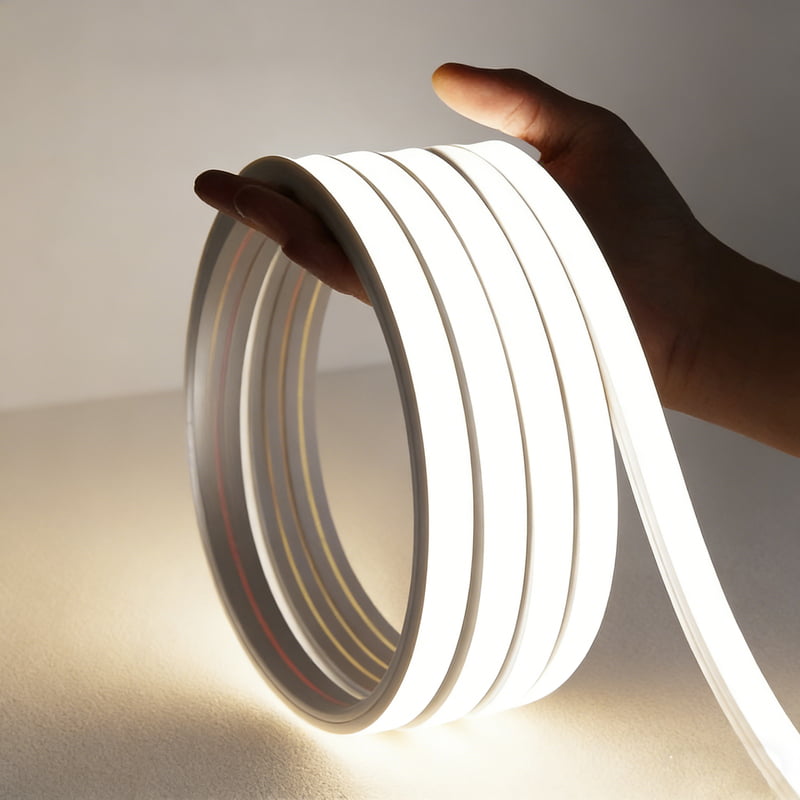
Lab tests usually work like this: constant temperature, single medium, stable pressure. But real environments3 are different. Day and night temperatures cycle. UV light hits continuously. Moisture mixes with air pollutants. Electrical current creates local heating. Long-term compression and micro-displacement happen constantly. Each factor alone seems harmless. But when they combine, they change material behavior completely. This is why your material choice was correct, but the material itself "changed" in the real environment.
The Root Cause of Failure Hides in That 5% of "Non-Standard Variables"
Most people focus on the big factors. They test temperature resistance. They check chemical compatibility6. They verify IP ratings. But they miss the small variables. These small variables are the real killers. I call them the "5% non-standard variables7."
These include things like: formulation ratios in the silicone compound, filler systems in the rubber seals, additive packages for UV resistance, curing systems for long-term stability. Two materials can have the same name—both called "NBR" or "FKM"—but behave completely differently because their internal formulas are different.

Here is what happens. Different filler systems create different anti-swelling abilities. Different additives lead to different anti-aging performance. Different vulcanization systems result in completely different long-term stability. This is why you chose the right material type, but it still failed in the actual environment. The material name was correct. But the formulation was not optimized for your specific conditions.
I have seen projects where the supplier used the cheapest filler to reduce costs. The material passed basic tests. But after six months outdoors, it hardened and cracked. I have seen cases where the UV stabilizer was insufficient. The product looked fine for the first year. Then it turned yellow and brittle. These failures do not show up in standard tests. They only appear in real-world use over time.
What Makes a Truly "Professional Manufacturer"? Here Is My Standard
If you are choosing a Neon LED Strip1 supplier, I suggest you do not just look at these things: whether they have a factory, whether they have certifications, whether the price is competitive. These are not enough. I suggest you ask three questions instead.
Question 1: Do they validate "real working conditions," not just standard tests?
Truly professional teams do not just do IP testing and aging tests. They do temperature cycling tests8. They do combined humidity and UV exposure tests9. They do long-term tests under powered conditions. Why? Because they know problems never appear under "standard conditions." Problems appear when multiple stress factors combine over time.
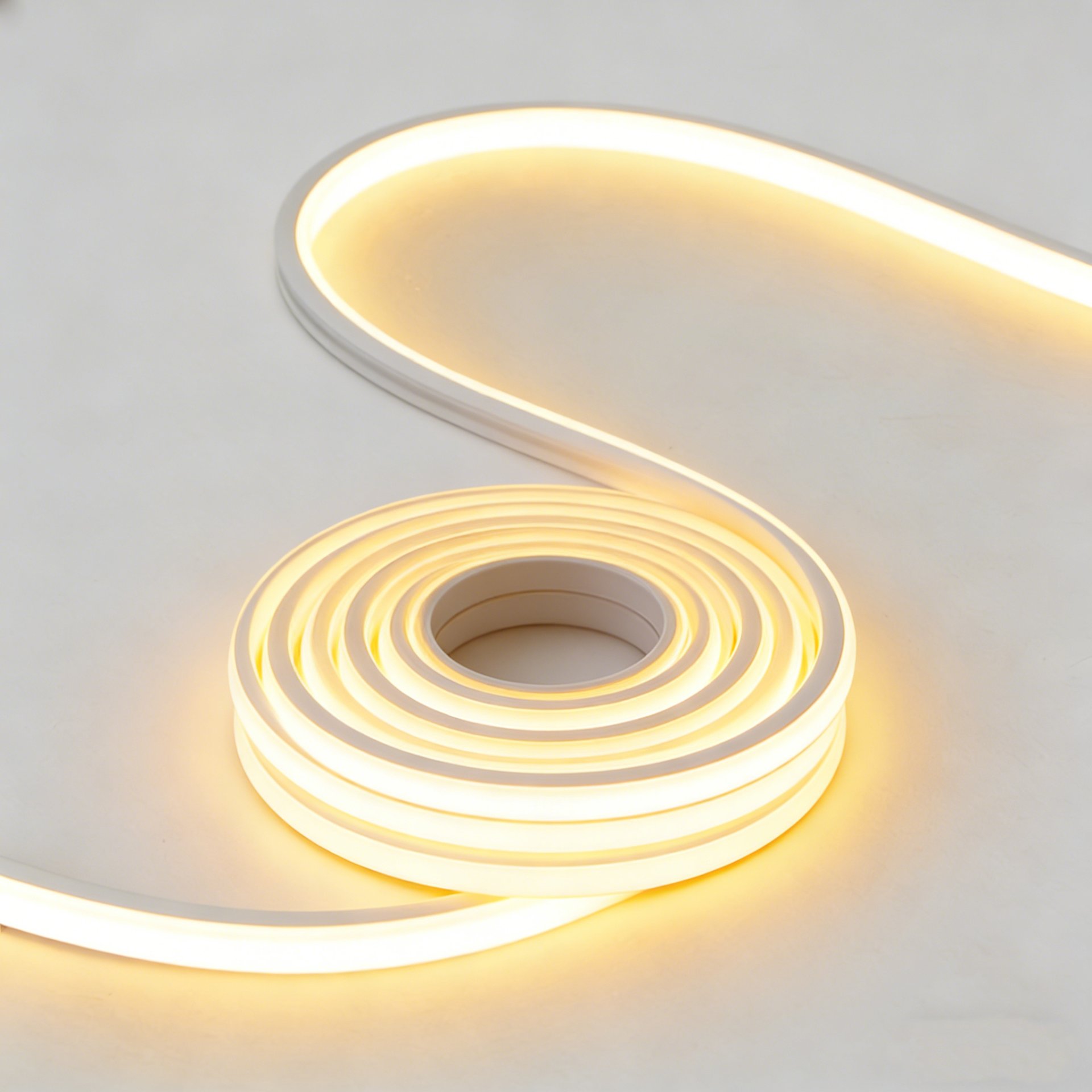
I remember one project where the client only did IP68 testing. The product passed. But when installed in a coastal area, it failed within four months. Why? Because the test did not include salt spray combined with UV exposure and temperature cycling. Each factor alone was manageable. But together, they accelerated degradation by 10 times. A professional manufacturer2 would have caught this in advance.
Question 2: Can they control material consistency?
Many projects fail not because of design errors, but because samples are stable but mass production varies. If a supplier cannot do raw material batch control10, formula stability, and performance verification for each batch, your risk is uncontrollable.
| Batch Control Element | Impact on Product Quality |
|---|---|
| Raw material sourcing | Direct effect on base properties |
| Mixing process control | Determines uniformity |
| Curing temperature/time | Affects long-term stability |
| Quality sampling frequency | Catches variations early |
I have worked with suppliers who changed raw material sources to save 2% on costs. They did not tell anyone. The first three batches were fine. The fourth batch started showing problems. The silicone became sticky after a few weeks. This is why I always ask: Do you lock your raw material batches? Do you verify each production run? Can you trace back to the exact formulation used? If the answer is vague, I walk away.
Question 3: Can they participate in structural optimization11, not just provide products?
In my view, those who only sell products are not professional. Those who can participate in system optimization are. Why? Because sealing problems are essentially the result of three factors working together: materials, structure, and working conditions. If a supplier only focuses on materials and ignores the other two, they are missing the point.
I have worked on projects where the seal kept failing. Everyone blamed the material. But when I looked at the design, I found the O-ring compression was set at 35%. This created excessive stress. The seal groove had sharp corners. This created stress concentration points12. The installation method13 required twisting the strip. This pre-damaged the silicone before it even went into service. We changed the compression to 20%, added radius to the corners, and modified the installation guide. The same material suddenly worked perfectly. This is what I mean by system optimization. You cannot solve a system problem with a material-only solution.
How Do I Make "Professionalism" Work in Real Projects?
I do not like empty words. I only talk about what I actually do in projects. Here are three things I always do.
First, I use real environments3 to "fail early."
At the beginning of a project, I actively ask you these questions: What is the actual operating temperature range? Is there UV or chemical contact? Are there dynamic stresses? Then I do one thing. In the testing phase, I combine all these extreme conditions. My goal is simple. Let problems appear in the lab, not on-site after installation.
For example, if you tell me the product will be used outdoors in a hot climate, I will not just test at 60°C. I will cycle between -20°C and 80°C every 8 hours. I will add UV lamps running 24/7. I will spray salt water every few hours. I will run electrical current through it continuously. This is not standard testing. This is abuse testing. But this is how I find weaknesses before you install thousands of meters.
Second, I control batch variation within predictable ranges.
I strictly do raw material batch locking, formula ratio control, and performance sampling for each batch. Why? Because I know very clearly what you really fear. You do not fear problems appearing. You fear problems being unpredictable. If I can tell you exactly what to expect from each batch, you can plan accordingly. If quality varies randomly, your entire project is at risk.
Third, I reduce failure probability14 from the design stage.
Many times, I do not recommend materials first. I first look at your structure. Is the O-ring compression reasonable? Does the sealing groove match the material? Are there stress concentration points12? Because I know one thing for sure: if the design is wrong, even the best materials cannot save it.
| Design Element | Common Mistake | Better Approach |
|---|---|---|
| Seal compression | Too tight (>30%) | Optimal range 15-25% |
| Corner radius | Sharp 90° angles | Minimum 2mm radius |
| Cable entry | No strain relief | Gradual transition zone |
| End cap design | Single seal point | Double seal with backup |
| Mounting clips | Metal direct contact | Soft buffer layer |
I remember one project where the client insisted on using a very thin wall thickness to save material costs. I ran simulations and showed them that under thermal expansion, the thin wall would create micro-cracks at the LED connection points within 18 months. They ignored my advice. Exactly 19 months later, they called me with massive failure rates. We redesigned with slightly thicker walls and proper stress relief features. Problem solved. But they lost a year and significant money. This is why I push back on bad designs early. Short-term savings often lead to long-term disasters.
My Final and Most Realistic Advice
If you are working on a Neon LED Strip1 project, remember this: What really determines project success is not which material you chose. It is whether you considered that 5% of non-standard variables7. If you ignore them, you will pay for it in time and cost sooner or later.
I have been in this industry for 15 years. I have seen brilliant designs fail because someone overlooked a small detail. I have seen average designs succeed because someone paid attention to those small variables. The difference between success and failure is often not in the big decisions. It is in the small details that most people ignore.
If you are facing complex sealing selection challenges, or if you have already encountered "passed testing but failed in reality" situations, I can help you break down the problem more clearly. My technical team can provide one-on-one reliable support. Feel free to contact me anytime. Let us discuss your specific project parameters.
Contact Information:
- WhatsApp/Mobile: +86 182 1841 0153
- Email: [email protected]
- Website: https://siluxa.com/
Conclusion
Real professionalism in Neon LED Strip1 manufacturing is not about claims or certificates. It is about understanding real-world failure modes and designing solutions that survive them. We focus on what matters: long-term reliability in actual conditions.
Explore this resource to understand the essential practices for ensuring quality and durability in Neon LED Strip projects. ↩
Learn about the key characteristics that distinguish a truly professional manufacturer from the rest. ↩
Discover how real-world conditions can impact the longevity and reliability of products. ↩
Understanding material compatibility is crucial for ensuring product durability; explore this link for insights. ↩
Find out how dynamic environments differ from static conditions and why they matter in product testing. ↩
Understanding chemical compatibility is essential for ensuring the longevity of materials in various environments. ↩
Explore the significance of non-standard variables and how they can affect product performance. ↩
Learn about the importance of temperature cycling tests in ensuring product reliability. ↩
Discover the role of UV exposure tests in assessing the longevity of materials used in products. ↩
Understanding batch control can help ensure consistent quality in manufacturing processes. ↩
Explore how structural optimization can enhance product performance and reliability. ↩
Learn about stress concentration points and how they can lead to product failures. ↩
Discover how the installation method can impact the effectiveness and longevity of products. ↩
Discover strategies to minimize failure probability in product design and manufacturing. ↩