
You walk into a retail space, and the lighting draws your eye to a product display. You notice a hotel lobby where the ceiling seems to glow with invisible lines of light. You see a restaurant where the bar counter is wrapped in a soft, continuous ribbon of color. You think: "What kind of lighting does that?" The truth is, most people don't know the difference between fixture types, and that ignorance costs them thousands in wrong purchases.
Commercial lighting fixtures fall into five core categories: recessed downlights, track and spotlight systems, linear lighting (including LED strips and silicone neon flex), pendant and chandelier fixtures, and wall-mounted accent lights. Each type serves a specific functional and aesthetic purpose, and choosing the wrong one can lead to poor visibility, high energy costs, or design failures that require expensive reinstallation.
You need to understand these categories before you make any purchase decision. If you are a contractor bidding on a project, a lighting designer specifying fixtures, or a business owner renovating your space, you cannot afford to pick the wrong tool. Let's break down each type, why it matters, and where it fails.
What are recessed downlights and when should you use them?
You see them everywhere. Offices, retail stores, hospitals. Recessed downlights are fixtures that sit flush with the ceiling. They provide general illumination from above. They are popular because they are clean, they are simple, and they do not take up visual space.
Recessed downlights are ceiling-mounted fixtures that direct light downward in a focused beam. They are ideal for general lighting in commercial spaces where you need even, non-intrusive illumination. They work best in environments with sufficient ceiling depth for installation and where you do not need decorative lighting elements.
But here is the problem. Recessed lights are not flexible. Once you install them, you cannot move them without cutting new holes. They also create heat buildup in the ceiling cavity. If you use cheap fixtures, you will see light degradation within months. The LED driver overheats, the lumen output drops, and you end up with a dim, uneven ceiling. I have seen retail stores where half the downlights are 30% dimmer than the other half, and the store looks like it has a lighting disease.
Here is what you need to check before you commit to recessed downlights:
| Factor | Why It Matters | What To Specify |
|---|---|---|
| Beam Angle | Determines light spread | 30° for accent, 60° for general lighting |
| Driver Quality | Prevents premature failure | Isolated driver, thermal protection |
| CRI (Color Rendering Index) | Affects product appearance | Minimum 80, prefer 90+ for retail |
| IP Rating | Protects against dust and moisture | IP44 minimum, IP65 for humid areas |
You also need to think about installation depth. If your ceiling is shallow, you cannot fit a standard recessed fixture. You need a slim-profile model, but those often sacrifice thermal management. The result is shorter lifespan. You save money upfront, you pay more later.
One more thing. Recessed lights are hard to service. If the LED module fails, you often cannot replace it. You have to replace the entire fixture. This is why you need to source from manufacturers who offer modular designs and long warranties. Do not buy based on price alone. You will regret it.
What are track and spotlight systems and where do they fail?
You walk into a boutique or a gallery. The lights are not fixed. They are on rails. They can move, they can pivot, they can focus on specific objects. These are track systems with spotlight heads. They are flexible, they are adjustable, and they are popular in spaces where the layout changes frequently.
Track and spotlight systems consist of a powered rail mounted to the ceiling or wall, with movable spotlight heads that can be repositioned along the track. They are ideal for retail, galleries, and showrooms where you need directional lighting that can adapt to changing displays or product layouts.
But track systems have serious limitations. First, they are visually prominent. If your design calls for minimalist aesthetics, track lighting will dominate the ceiling. Second, they are expensive to install properly. You need to run power to the track, you need to ensure the track is level, and you need to balance the electrical load across the circuit. If you overload the track, you will trip breakers or cause voltage drop.
Here is the bigger problem. Most track systems use halogen or early-generation LED spotlights. Halogen generates massive heat. I have seen retail displays where the heat from spotlights damaged the products on the shelf. If you use LED spotlights, you need to check the quality of the optics. Cheap spotlights create harsh shadows and color inconsistency. You will have one spotlight that looks cool white, another that looks warm white, even though they are supposed to be the same.
Here is what you need to specify for track systems:
| Component | Common Failure Point | How To Avoid It |
|---|---|---|
| Track Power Rating | Overloading causes tripping | Calculate total wattage, add 20% buffer |
| Spotlight Beam Quality | Cheap optics create shadows | Require anti-glare lenses, CRI 90+ |
| Mounting Structure | Poorly installed tracks sag | Use ceiling-rated anchors, check load capacity |
| Color Temperature Consistency | Mixed batches look unprofessional | Buy all spotlights from same production batch |
If you are using track lighting for accent purposes, you also need to think about glare. Direct spotlights can blind customers if the beam angle is too narrow or the mounting height is too low. You need to test the installation before the space opens. Walk the floor, look at the lights from customer eye level, and adjust the angles. This is not optional. I have seen stores where customers avoid certain aisles because the lighting is uncomfortable.
What is linear lighting and why does everyone get it wrong?
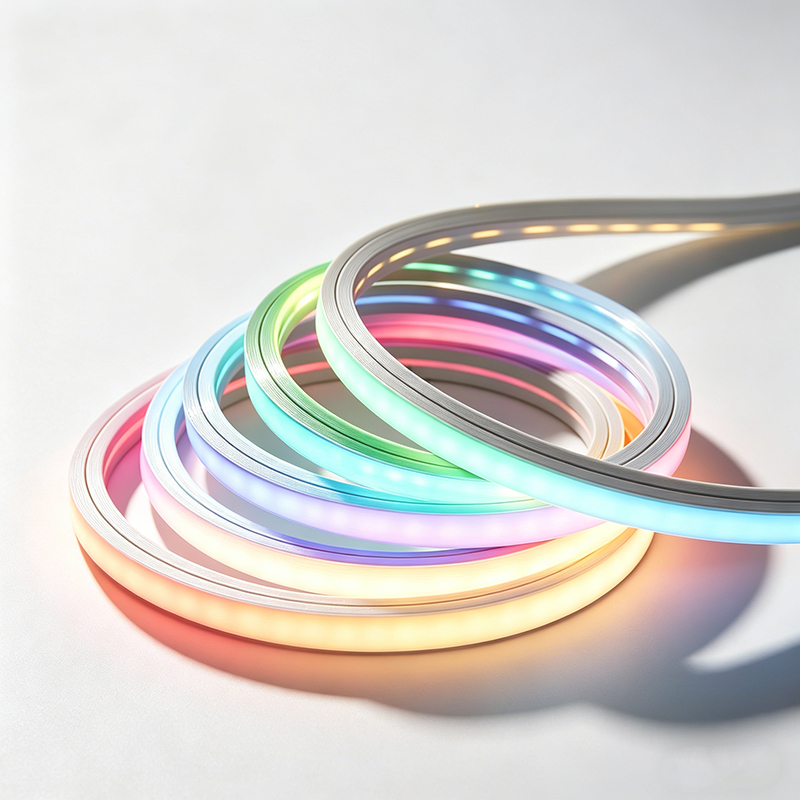
You see linear lighting in modern architecture. It is the continuous line of light that runs along ceilings, walls, or architectural features. It is clean, it is minimalist, and it is everywhere now. But most people do not understand the difference between LED strip lights and silicone neon flex, and that confusion leads to failed installations.
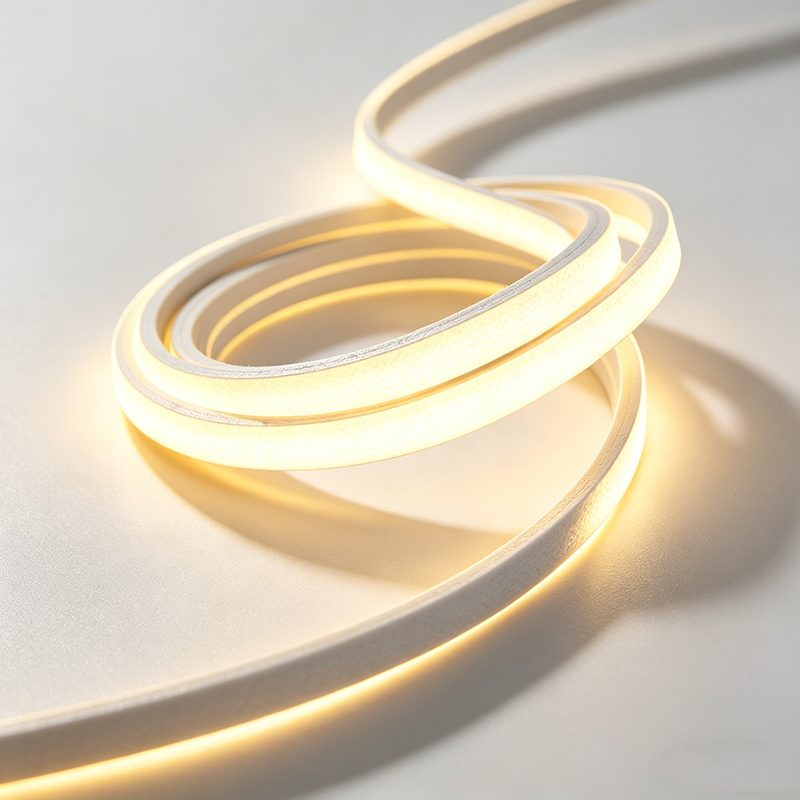
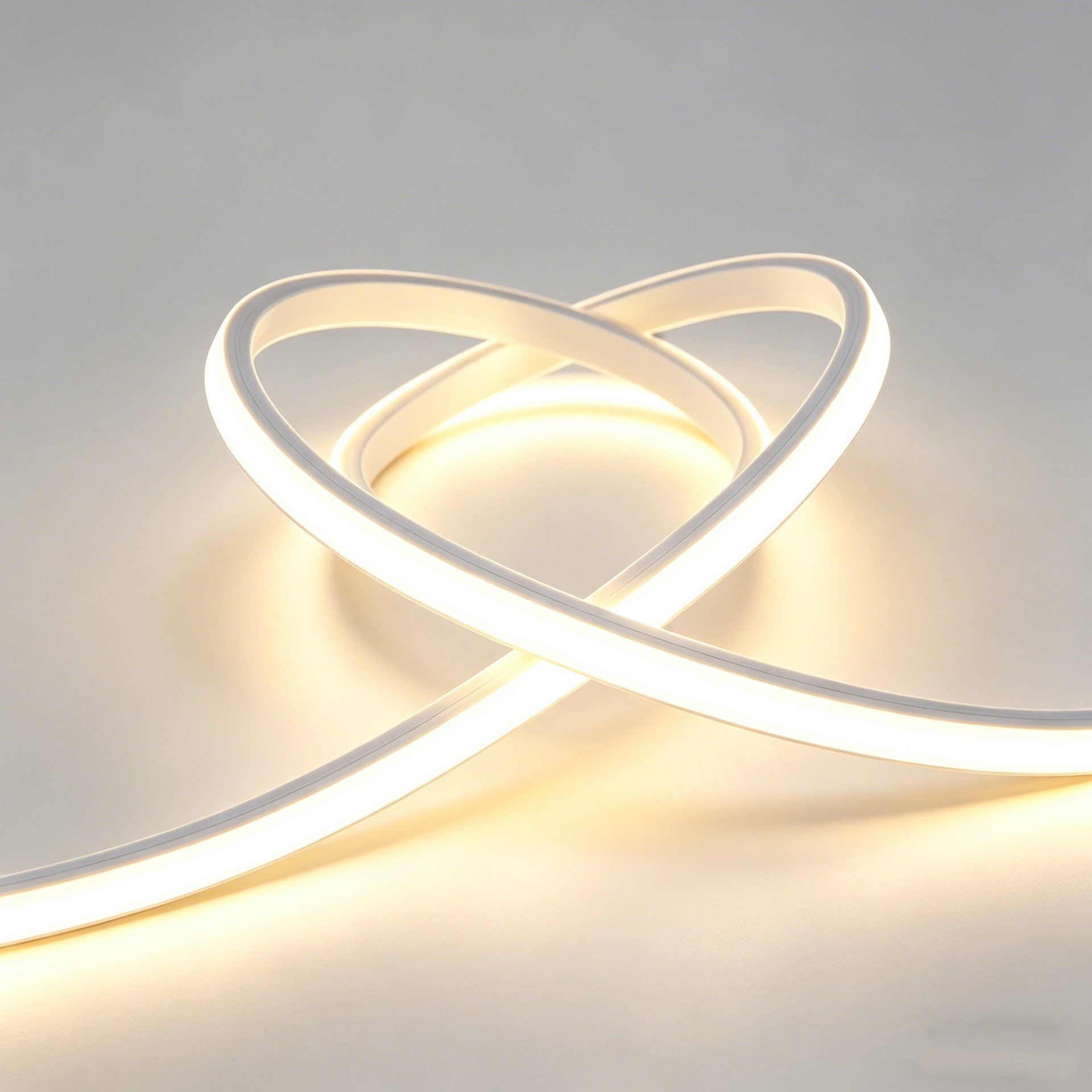
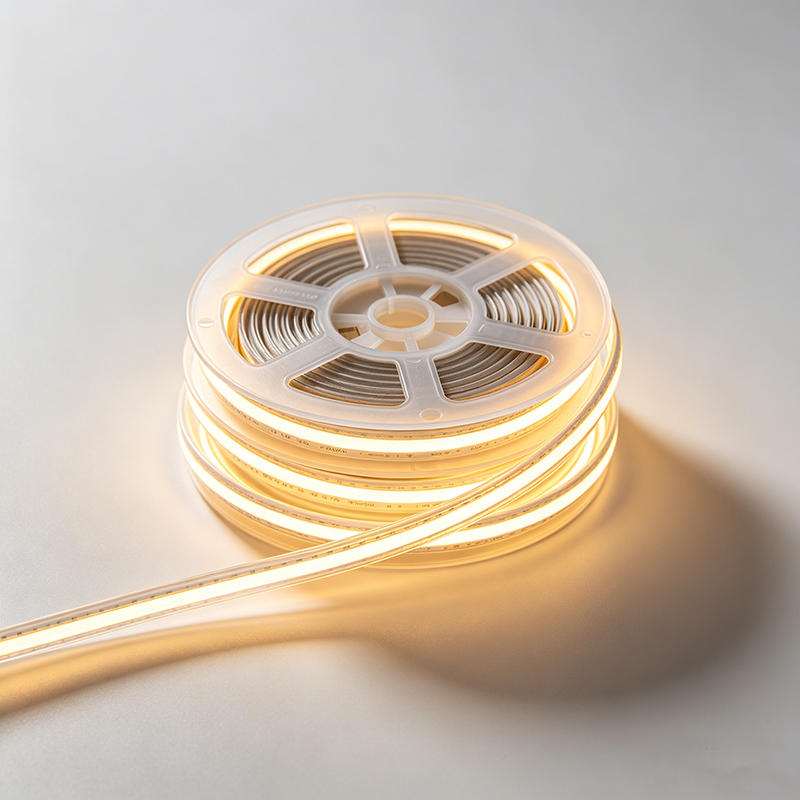
Linear lighting refers to continuous, strip-form light sources that create unbroken lines of illumination. The two main types are rigid LED strips (mounted in aluminum channels) and flexible silicone neon flex (which can bend and curve). The choice between them depends on whether you need straight runs or complex shapes, and whether the installation is indoors or exposed to weather.
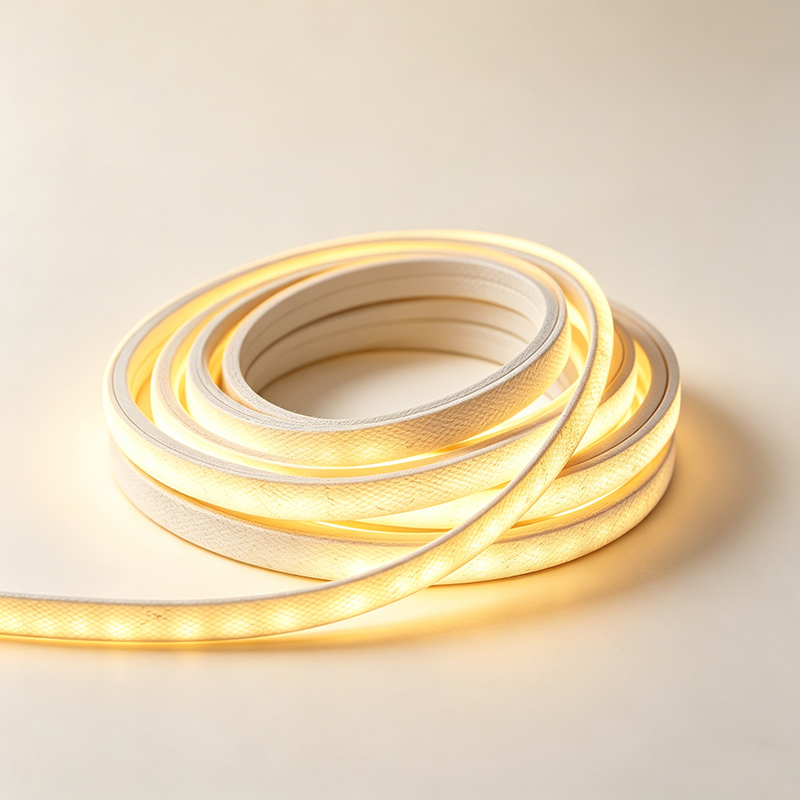
Here is where it gets technical. LED strips are cheap, they are easy to install, and they are bright. But they have a fatal flaw: they are not weatherproof unless you enclose them properly. If you use LED strips outdoors without IP67-rated enclosures, moisture will kill the LEDs within months. Even indoors, dust buildup on exposed LED strips reduces light output and creates uneven illumination.
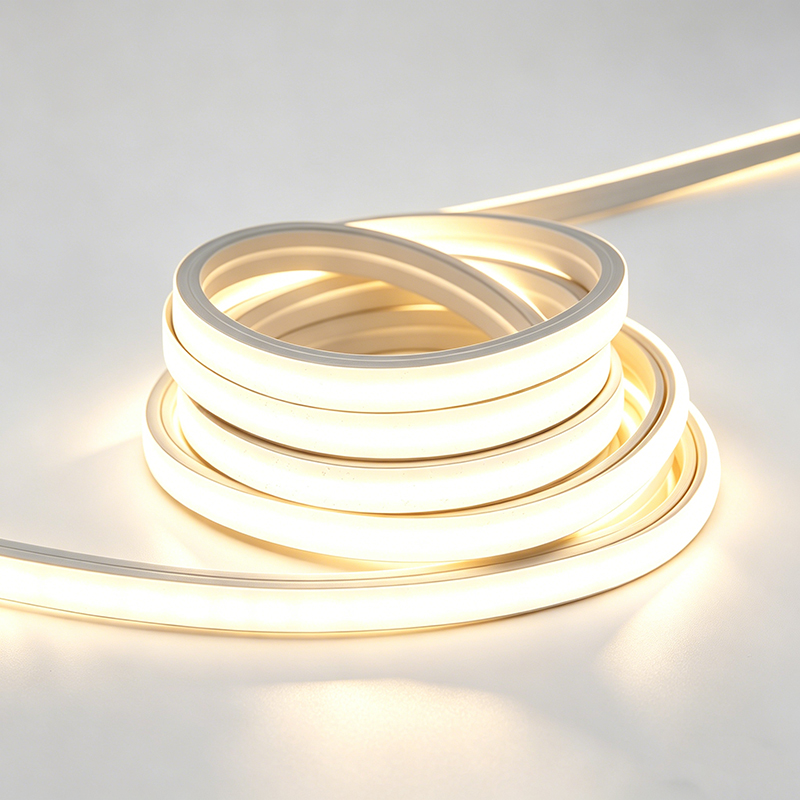
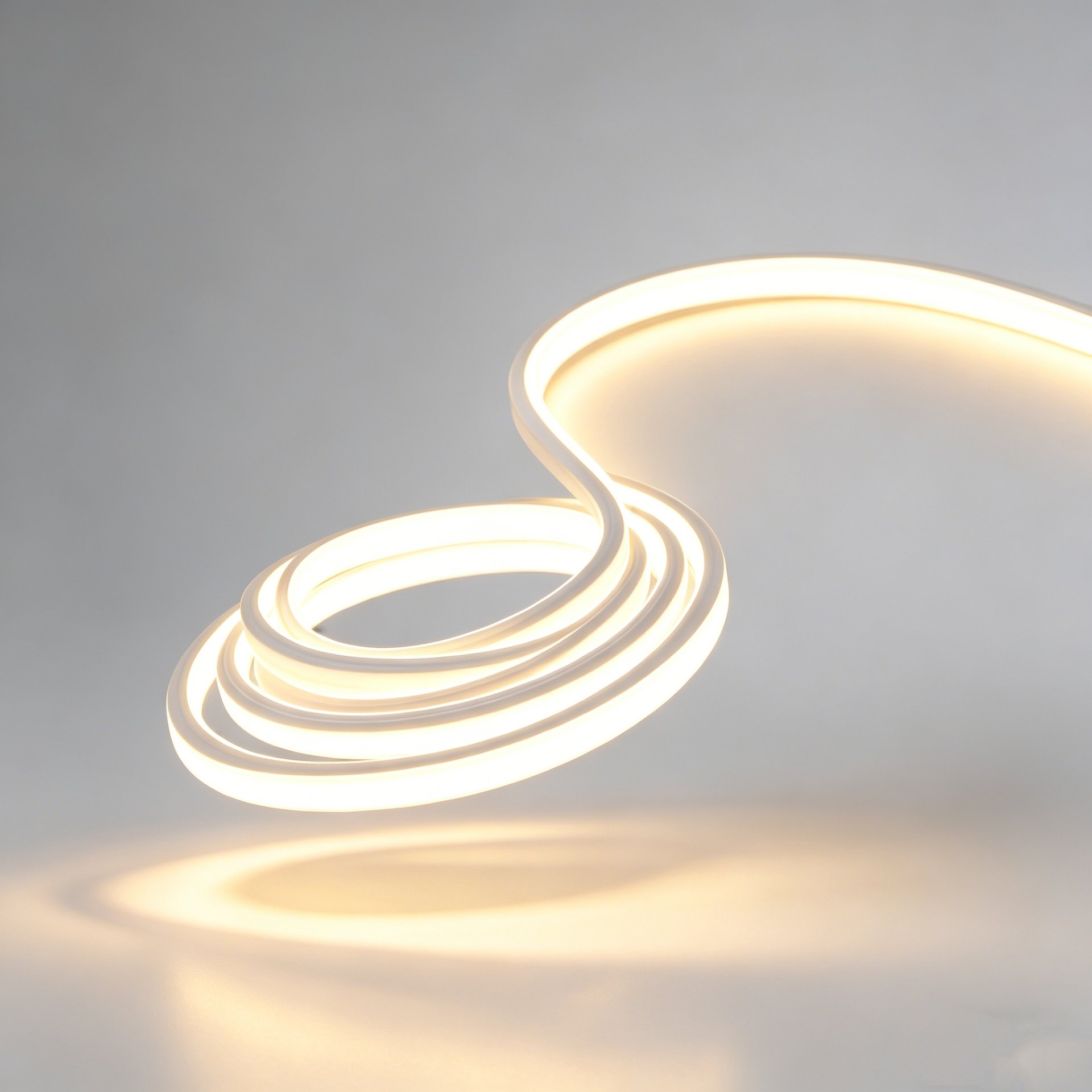
Silicone neon flex solves these problems, but it introduces new ones. Silicone neon flex is a flexible, extruded silicone tube with LEDs embedded inside. It is waterproof, it is UV-resistant, and it can bend into curves without breaking. But here is the trap: not all silicone is the same. If you buy cheap silicone neon flex, you will see yellowing within three months. The material degrades under UV exposure, the light output drops, and the installation looks cheap.
I have seen this happen on high-end hotel facades. The contractor chose a low-cost supplier to save money. Three months after installation, the white silicone turned yellow. The hotel had to rip it all out and reinstall with proper material. The cost of the reinstallation was five times the original savings.
Here is what you need to know about silicone material quality:
| Material Property | Why It Matters | What To Specify |
|---|---|---|
| Curing Method | Peroxide-cured degrades faster | Require platinum-cured silicone only |
| UV Stabilization | Prevents yellowing | Minimum 1000h UV aging test |
| Filler Type | Affects light diffusion and durability | Anti-yellowing silica fillers, not generic white carbon |
| Thermal Stability | LED heat accelerates aging | Test under operating temperature, not just ambient |
The second trap is light uniformity. Cheap silicone neon flex has visible LED dots. You see individual points of light instead of a continuous glow. This is a design failure. Proper silicone neon flex uses diffusion engineering, not just material transparency. You need to check the cross-section design, the LED spacing, and the optical diffusion layer. If the supplier cannot explain this, do not buy from them.
The third trap is batch consistency. Silicone extrusion is a manufacturing process. If the supplier does not control the mixing ratio, the curing temperature, or the extrusion speed, every batch will be slightly different. You will install a project with five batches of material, and each batch will have a different color temperature or brightness. This is not acceptable. You need to require batch locking, sample retention, and traceability. If the supplier cannot provide this, you will have a disaster.
Here is the real-world impact. I worked with a contractor who installed silicone neon flex on a commercial signage project. The initial samples were perfect. The first batch was perfect. The second batch arrived, and the color temperature was 200K off. The client rejected the installation. The contractor had to eat the cost of the material and the labor. The supplier blamed "normal manufacturing variation." The contractor lost money and reputation.
What are pendant and chandelier fixtures and when do they make sense?
You walk into a high-end restaurant or a hotel lobby. The lighting is not in the ceiling. It hangs. Pendant lights and chandeliers are suspended fixtures that provide both illumination and visual impact. They are decorative, they are functional, and they are expensive.
Pendant and chandelier fixtures are suspended lighting elements that hang from the ceiling on cords, chains, or rods. They are used in commercial spaces where lighting is part of the interior design statement, such as hotel lobbies, upscale restaurants, and retail flagship stores. They provide ambient or task lighting while serving as a visual focal point.
But pendant lighting has practical problems. First, installation is complex. You need structural support in the ceiling to handle the weight. If you are installing heavy chandeliers, you need to verify the ceiling load capacity. I have seen installations where the contractor assumed the ceiling could handle the weight, and the fixture started sagging within weeks.
Second, maintenance is a nightmare. If a pendant light fails, you need a lift or scaffolding to access it. In a hotel lobby with a 6-meter ceiling, that means shutting down the space, bringing in equipment, and paying for labor. If you are using custom or decorative bulbs, replacement parts may not be available. You need to plan for this upfront.
Third, glare is a major issue. Pendant lights hang at eye level. If the light source is exposed, it will blind people. You need to use diffusers, shades, or indirect lighting techniques. This is not optional. I have been in restaurants where the pendant lights were so bright that you could not look up without squinting. That is bad design.
| Design Factor | Why It Matters | What To Specify |
|---|---|---|
| Suspension Length | Affects both aesthetics and function | Adjustable cables, not fixed rods |
| Diffusion Method | Prevents glare | Frosted glass, fabric shades, or indirect optics |
| Bulb Accessibility | Reduces maintenance cost | Tool-free access, standard bulb bases |
| Structural Load | Prevents fixture failure | Verify ceiling capacity, use rated anchors |
If you are specifying pendant lighting for a commercial project, you also need to think about code compliance. Many jurisdictions require pendant lights to be a minimum height above the floor to prevent head strikes. You need to check local codes before you finalize the design.
What are wall-mounted accent lights and where do they work best?
You see wall-mounted lights in corridors, stairwells, and retail displays. They are fixtures that attach directly to the wall and provide either ambient lighting or directional accent lighting. They are simple, they are cost-effective, and they are often overlooked.
Wall-mounted accent lights are fixtures attached to vertical surfaces that provide localized illumination. They are used in commercial spaces for wayfinding (corridors, stairwells), accent lighting (retail displays, art installations), and supplemental ambient lighting (lobbies, waiting areas). They are ideal when ceiling space is limited or when you need to highlight specific architectural features.
But wall-mounted lights have hidden costs. First, installation requires cutting into walls and running electrical conduit. If you are working with concrete or masonry, this is expensive. Second, wall lights are vulnerable to physical damage. In high-traffic areas, people bump into them, lean on them, or vandalize them. You need to specify impact-resistant housings and vandal-proof mounting hardware.
Third, wall lights create uneven illumination if you do not space them correctly. If you place them too far apart, you get dark zones. If you place them too close, you get overlapping light pools that waste energy. You need to calculate the spacing based on the beam angle, the mounting height, and the desired lux level. This is not guesswork. You need photometric data from the manufacturer.
Here is what you need to check for wall-mounted fixtures:
| Specification | Why It Matters | What To Require |
|---|---|---|
| Mounting Method | Affects installation cost | Surface-mount vs recessed, check wall thickness |
| Impact Resistance | Prevents damage in traffic areas | IK08 or higher for public spaces |
| Beam Distribution | Determines spacing | Photometric IES files, not just marketing claims |
| Emergency Compatibility | Required for egress lighting | Battery backup option, code compliance |
If you are using wall lights for wayfinding or emergency egress, you also need to ensure they meet local fire and safety codes. This often means specifying fixtures with battery backup, emergency signage integration, and failsafe operation. If the fixture does not meet code, the project will fail inspection, and you will have to rip it out and start over.
Conclusion
Commercial lighting is not about buying fixtures. It is about matching the right tool to the job, understanding the failure modes, and specifying quality that lasts. Choose based on function, not just aesthetics, and always verify material quality and manufacturer capability before you commit.