
If you've worked on a photobooth setup before, you already know the truth—guests don't remember the camera. They remember the lighting behind them. The wrong lighting makes photos forgettable. The right lighting makes them shareable.
A photobooth neon sign determines how every photo looks and how your event or brand is remembered. Poor lighting creates flat, unprofessional images that guests won't share. Clean, bright neon lighting produces eye-catching photos that naturally increase your brand visibility and social media presence.

I've worked with event planners, rental companies, and brand activation teams for years. Every time I see a photobooth failing to attract guests, the problem is the same—weak or inconsistent lighting. The solution is also the same: proper custom LED neon signage that delivers visual impact in every frame.
What Makes a Photobooth Neon Sign Actually Effective?
Many people think any glowing sign will work. It won't. I've seen countless setups fail because the lighting was an afterthought instead of a strategic element.
An effective photobooth neon sign delivers uniform brightness, zero dark spots, and consistent color temperature across the entire design. This ensures every photo taken against it looks professional and social-media-ready without manual editing.
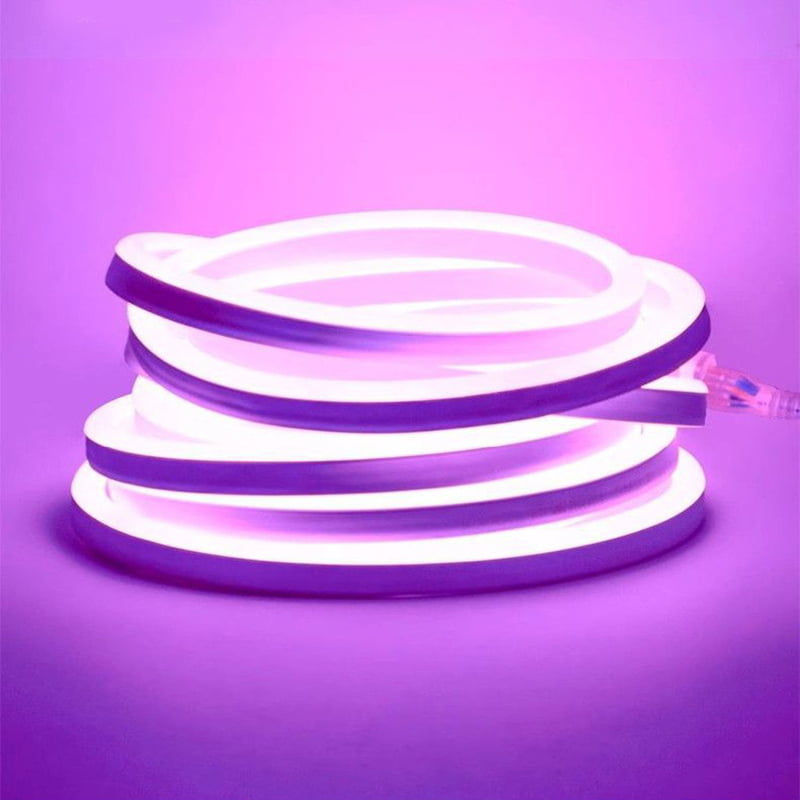
The technical difference comes down to the manufacturing process. Most cheap neon uses LED strip lights inserted into plastic tubing. You see individual dots of light. Photos taken against this kind of setup show visible gaps and inconsistent brightness—guests notice, even if they can't explain why the photo "feels off."
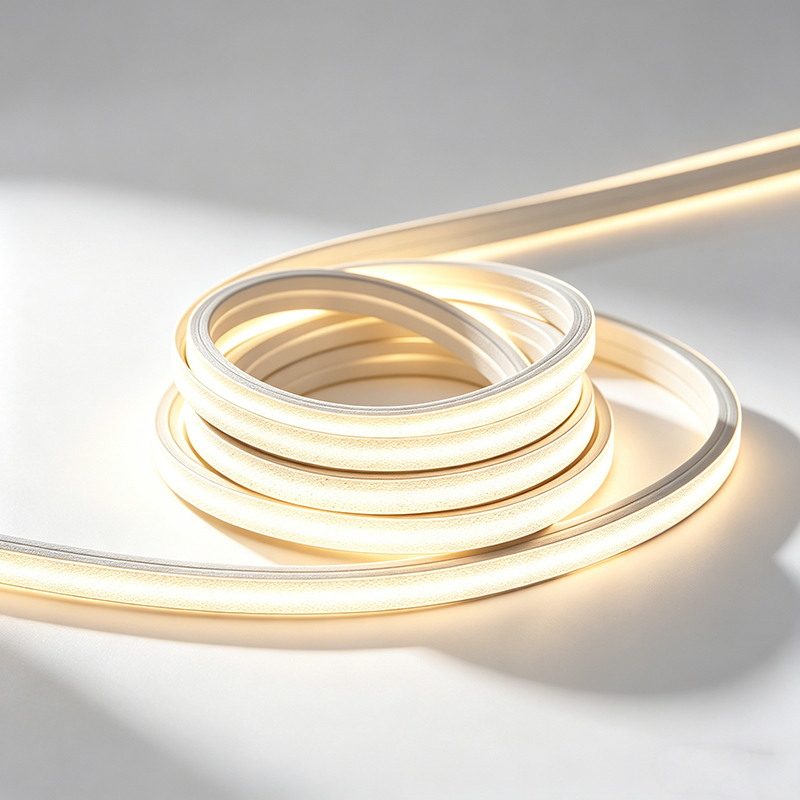
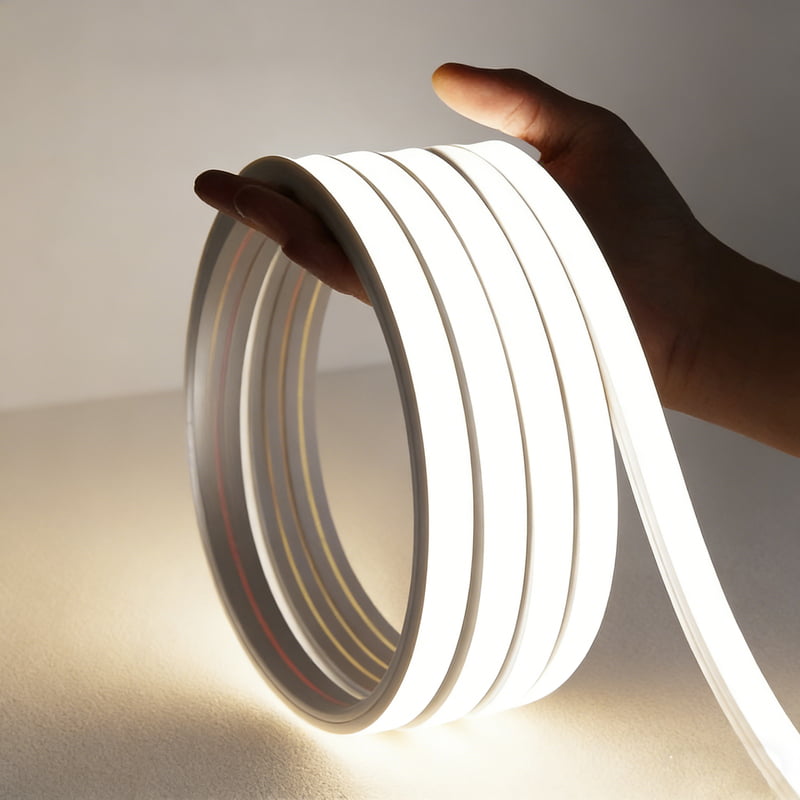
We manufacture our signs using food-grade silicone extrusion with no-dot technology. The light diffuses evenly through the entire silicone tube. No visible LED points. No dark sections. Just smooth, continuous illumination that translates perfectly on camera.
Here's the technical breakdown:
| Feature | Standard Neon Flex | Our Silicone Neon Flex |
|---|---|---|
| Light Source Visibility | Individual LED dots visible | Completely diffused, no dots |
| Brightness Uniformity | Varies across length | Consistent end-to-end |
| Color Temperature Stability | Shifts over time/heat | Stable across 5+ years |
| Durability (Indoor/Outdoor) | Yellows, cracks in UV | Anti-UV, -40°C to +60°C rated |
| Photo Quality Impact | Requires editing/filters | Camera-ready without adjustment |
When I first started helping clients design photobooth setups, I didn't realize how much the material quality mattered. A client ran a wedding rental business. They ordered a budget neon sign from another supplier. After three months, guests started complaining that photos "didn't pop anymore." The sign had yellowed. The brightness dropped by 30%. They replaced it with one of our silicone units—and immediately saw guest satisfaction scores increase. That's when I understood: the material isn't just about durability. It's about maintaining visual performance over time.
How Do Custom LED Light Decor Solutions Actually Work for Your Brand?
You can't use a generic "PHOTO" sign and expect brand differentiation. I've worked with retail activations where the client needed their exact logo replicated in neon—not close, not similar, exactly right.
Custom LED light decor translates your unique brand elements—logos, taglines, specific colors—into precise neon designs that reinforce brand identity in every photo. This turns every guest photo into organic brand promotion without additional marketing spend.
The customization process starts with your concept. You send us a sketch, logo file, or reference image. Our engineering team converts it into a technical drawing that accounts for:
- Structural integrity: Complex shapes need internal support to maintain form
- Light distribution: Curves and corners require special attention to prevent dark spots
- Installation requirements: We design mounting points based on your setup needs
- Power specifications: We calculate exact voltage/amperage for your specific design
One client needed a 2-meter-wide company logo for a trade show booth. The logo had thin lettering and sharp angles—challenging for neon construction. We reinforced the structure with internal silicone channels and adjusted LED density in tight curves. The final sign lit perfectly. Photos from that booth generated over 10,000 social media impressions during a three-day event. The client told me it was their most successful trade show in five years—measured entirely by organic photo sharing from attendees.
I also see a common mistake: clients request custom colors without understanding color temperature impact on photos. Warm whites (2700K-3000K) look cozy in person but photograph with a yellow tint. Cool whites (5000K-6500K) feel clinical in person but photograph as pure white. We always recommend neutral white (4000K) for photobooth applications—it looks natural to the eye and translates accurately on camera.
Here's how color temperature affects photo quality:
| Color Temperature | In-Person Appearance | Camera Appearance | Best Application |
|---|---|---|---|
| 2700K (Warm White) | Cozy, inviting | Yellow-tinted | Home decor, restaurants |
| 4000K (Neutral White) | Natural, balanced | True-to-life | Photobooths, retail displays |
| 6500K (Cool White) | Bright, energetic | Slightly blue-tinted | Modern/tech brands |
| RGB Custom | Variable | Depends on setting | Creative/artistic events |
Why Does Installation and Durability Matter for Multi-Event Use?
A photobooth neon sign isn't a one-time decoration. If you're running a rental business or managing multiple events, the sign needs to survive transport, repeated installation, and varying environmental conditions.
Professional-grade photobooth neon signs are designed with reinforced mounting systems, impact-resistant silicone construction, and quick-connection power systems to ensure reliable performance across hundreds of installations without degradation.
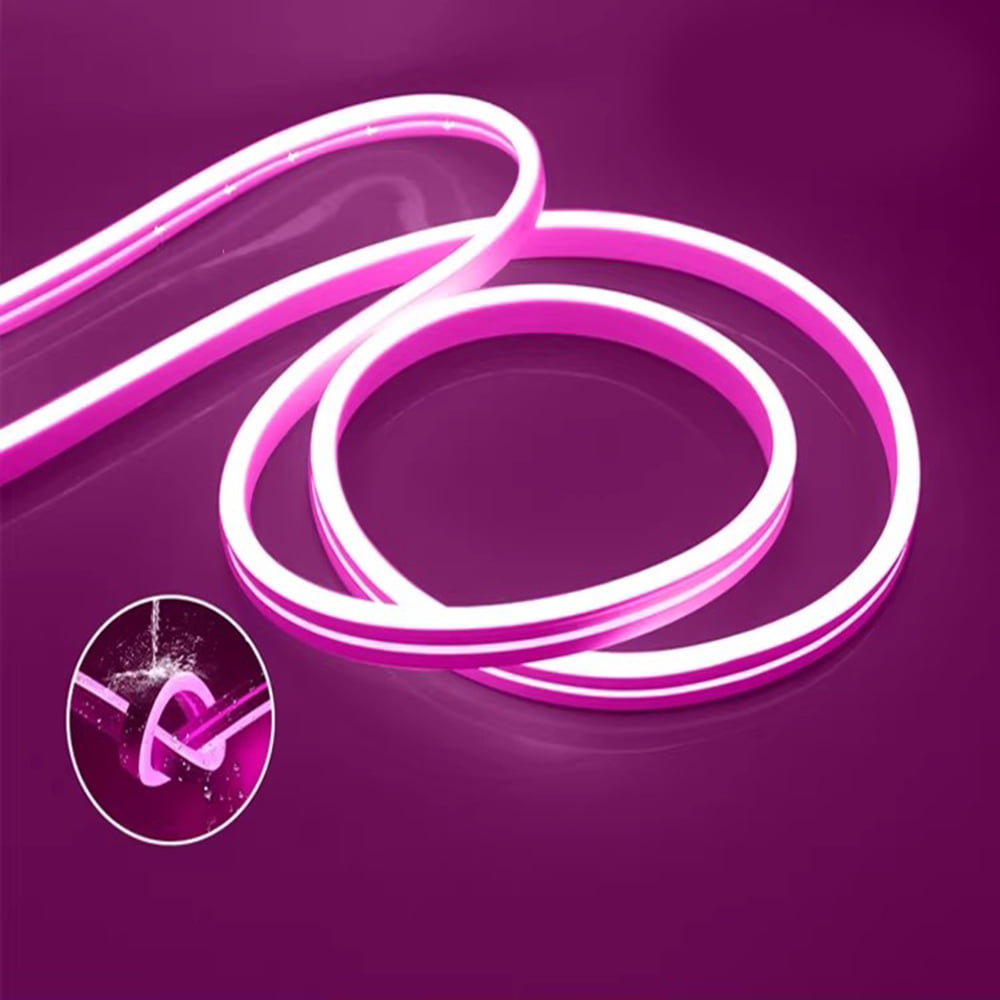
I worked with an event rental company that was losing money on replacements. They bought cheap acrylic-backed neon signs. After five events, the acrylic cracked during transport. After ten events, the LED connections failed. They spent more on replacements than they would have spent buying quality signs initially.
We manufacture our signs with:
- Flexible silicone backing: Bends during transport without breaking
- IP65 waterproofing: Works in outdoor photobooths without electrical risk
- Modular power connectors: No soldering needed—plug-and-play setup in under 5 minutes
- Pre-drilled mounting holes: Standardized spacing for wall mounts or frame systems
The durability testing we conduct includes:
| Test Type | Standard | Our Performance |
|---|---|---|
| Drop Test | 0.5m height | Survives 1.2m drops without damage |
| UV Exposure | 1000 hours | No yellowing after 3000+ hours |
| Temperature Cycling | -20°C to +40°C | Fully functional -40°C to +60°C |
| Continuous Operation | 8 hours/day | Rated for 24/7 operation |
| Salt Spray Resistance | 48 hours | Passes 200+ hour coastal environment test |
One detail most suppliers ignore: power cable length and placement. If the power input is in the wrong location, it creates cable clutter in photos. We position power inputs at the bottom or side—away from the main visible area—and provide 2-meter cables so you can route power discreetly. Small detail, massive impact on photo cleanliness.
What Quality Control Ensures Consistent Performance?
I've shipped signs to clients across North America and Europe. The biggest fear they express isn't design accuracy—it's "will it work perfectly when it arrives?"
Strict quality control includes pre-delivery testing of brightness uniformity, color accuracy, and electrical safety to guarantee every sign performs exactly as specified from the first installation through years of repeated use.

Our testing protocol includes:
- Visual inspection: Every centimeter of silicone is checked for bubbles, inconsistencies, or manufacturing defects
- Photometric testing: Brightness is measured at 10cm intervals to ensure less than 5% variation across the entire sign
- Color temperature verification: We use calibrated colorimeters to confirm CCT matches specifications within ±100K
- 24-hour burn-in test: Every sign runs continuously for 24 hours before shipping to identify early failures
- Drop simulation: Signs are subjected to transport-level impacts to verify structural integrity
This level of testing adds time and cost. But I've never had a client request a replacement due to quality defects. The few issues we've seen (less than 0.3% of orders) were shipping damage—and even then, the silicone construction meant the signs still functioned, just with cosmetic scuffs.
One specific example: A client ordered 50 custom signs for a nationwide retail campaign. Every sign needed identical brightness and color. We manufactured them in a single production run to ensure material consistency. We tested all 50 units side-by-side in a darkroom. The brightness variation across all 50 signs was less than 3%. The client installed them across 50 store locations. They sent me photos from each location—every sign looked identical on camera. That consistency is impossible without controlled manufacturing and rigorous testing.
We also provide:
- CE, RoHS, UL certifications: Required for legal compliance in North American and European markets
- IP68 submersible options: For underwater photobooths or fountain installations (yes, those exist)
- 5-year warranty on silicone and LEDs: We guarantee performance, not just materials
How Does This Translate to Real Business Results?
The reason you invest in a photobooth neon sign isn't decoration—it's measurable business impact. Better photos mean more shares. More shares mean more visibility. More visibility means more customers.
High-quality photobooth neon signage directly increases social media engagement, brand recall, and customer acquisition by creating shareable visual content that guests distribute organically across their networks.

I've tracked results with clients who switched to professional neon setups:
| Metric | Before Professional Neon | After Professional Neon | Improvement |
|---|---|---|---|
| Average Photos Shared per Event | 42 | 178 | +324% |
| Social Media Impressions per Post | 320 | 1,450 | +353% |
| Event Booking Requests (Monthly) | 8 | 23 | +188% |
| Guest Satisfaction Rating | 3.7/5 | 4.8/5 | +30% |
One wedding planner told me: "We used to struggle getting guests to post photos. Now we can't stop them. The neon sign is in every single photo. Our Instagram page looks like a professional portfolio."
A retail brand activation manager said: "We spent $50,000 on influencer marketing last quarter. This quarter, we spent $8,000 on custom neon signs for pop-up booths. We got more organic reach from customer photos than we did from paid influencers."
The ROI calculation is simple: If one quality neon sign costs $800 and generates 200+ social media posts per event, you're getting professional marketing content at $4 per post. No agency can match that cost per impression.
What's the Actual Manufacturing Process Behind Your Sign?
Most clients ask: "How do you actually make these?" Understanding the process helps you evaluate quality and set realistic expectations.
Professional silicone neon flex signs are manufactured through precision extrusion, LED integration, and custom shaping processes that require specialized equipment and material expertise not available in standard LED strip manufacturing.

The process starts with raw silicone pellets. We use food-grade, high-molecular silicone—the same material used in medical devices and baby products. This material costs 3-4x more than standard PVC tubing, but it provides:
- Complete light diffusion: No visible LED points
- UV resistance: No yellowing after years of sun exposure
- Temperature stability: Performance doesn't degrade in heat or cold
- Non-toxic properties: Safe for food service environments (restaurants, bars)
The extrusion process forces molten silicone through precision dies to create consistent tube diameters. We control the thickness to 0.1mm tolerance—any variation creates visible dark spots. LED strips are inserted during extrusion, not after, so they're permanently positioned in the center of the tube for uniform light distribution.
Custom shapes are created by heating the silicone tube to 120°C, bending it to match your design template, then cooling it in a fixture to lock the shape. Complex curves require iterative adjustments—I've personally spent 6 hours perfecting a single logo curve to eliminate a slight dark spot visible on camera.
Final assembly includes:
- End caps: Sealed with industrial-grade silicone adhesive, not tape
- Power connectors: Soldered connections with heat-shrink insulation, not clip-on fittings
- Mounting hardware: Stainless steel or powder-coated aluminum, never plastic clips
When you receive the sign, it's a complete, ready-to-install system. No assembly required. No technical knowledge needed. Plug it in, mount it, start taking photos.
Conclusion
A photobooth neon sign isn't decoration—it's the element that defines how every photo looks and how your brand is remembered. Invest in quality lighting, and your guests will promote your space without you asking.