

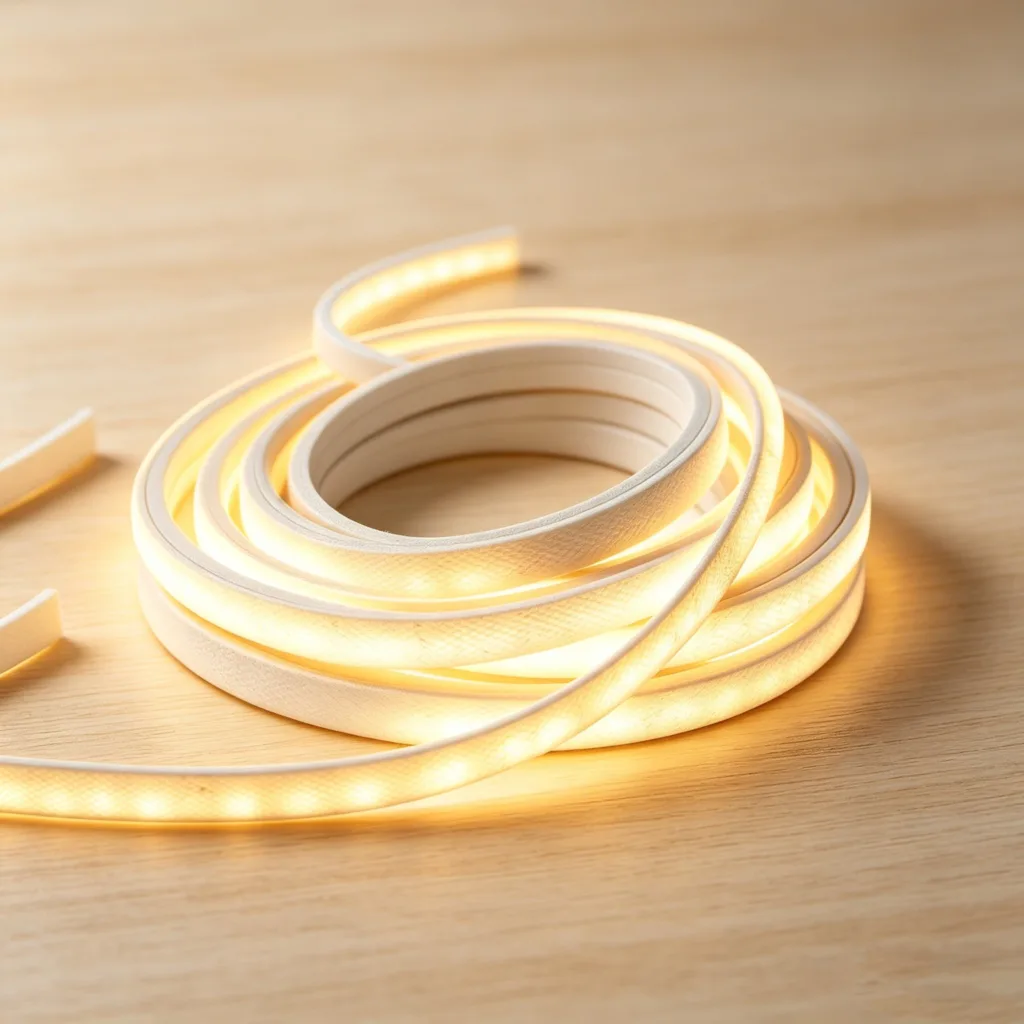
If you have ever ordered wholesale neon signs for your store, you probably know this frustration. You open the shipment box. You plug in the first piece. Then you notice flickering. Or dark spots. Or worse, half the batch looks different from the other half.
We solve this problem by treating silicone neon as an engineered product, not just assembled lights. Our factory delivers wholesale neon signs with stable brightness, precise shapes, and zero surprises—because every piece is built with materials science, not guesswork.

Most suppliers treat neon signs like decorations. We treat them like engineering systems. That difference shows up in your store when customers never complain about inconsistencies.
What Makes a Wholesale Neon Sign Actually Reliable?
You might think all neon signs work the same way. They glow. They look nice. They hang on a wall. But when you are selling these signs to customers, you need more than appearance.
A reliable wholesale neon sign must deliver uniform brightness across every centimeter, maintain consistent color temperature under different voltages, and resist performance degradation over thousands of operating hours. These qualities come from precise material selection and structural engineering, not from factory shortcuts.

Why Most Suppliers Fail This Standard
Many manufacturers use basic silicone compounds mixed with low-grade fillers. These materials look fine at first. But after 500 hours of use, they yellow. After 1,000 hours, brightness drops by 30%. After shipping to humid climates, the internal LEDs fail early.
We do not use those materials. Our silicone is food-grade, high-molecular polymer. It resists UV degradation. It handles salt spray without corrosion. It stays flexible from -40°C to +60°C without cracking.
This is not marketing language. These are measurable properties we test in every batch.
When you source wholesale neon signs from us, you are buying materials that engineers specify for outdoor infrastructure—not generic decorative plastics.
How We Ensure Uniform Brightness
Dark spots ruin the customer experience. They happen when LED spacing is inconsistent or when silicone extrusion varies in thickness.
We eliminate this problem with two methods. First, we use precision extrusion machines that maintain 0.1mm tolerance across every meter. Second, we calibrate LED chip placement using automated optical systems that detect misalignment before assembly.
The result is what we call "dotless" illumination. You cannot see individual LED points. You see a continuous, smooth glow. This is the difference between a cheap sign and a professional-grade product.
When your customer installs one of our signs, they never ask, "Why does this section look dimmer?"
Can You Actually Customize Wholesale Neon Signs Without Quality Loss?
You run a store. Your customers want specific logos. Specific colors. Specific lengths. So you ask your supplier for custom designs. And then you get one of two answers: "We cannot do that," or "Sure, but quality will vary."
True customization requires engineering flexibility, not just factory willingness. We modify silicone neon designs by adjusting extrusion dies, recalibrating LED density, and fine-tuning voltage curves—without compromising structural integrity or light performance.

What Custom Really Means in Manufacturing
When you ask for a custom shape, most factories bend existing stock into your design. This creates stress points. The silicone thins at sharp corners. The LEDs cluster unevenly. The final product works, but barely.
We approach customization differently. We start with your design file. Then we run structural simulations to identify weak points. If a 90-degree corner will cause light bleed, we propose a 110-degree alternative. If your voltage exceeds safe thermal limits, we adjust LED spacing to reduce heat buildup.
This is not about saying "yes" to everything. This is about making your custom design work correctly in the real world.
| Customization Type | Standard Factory Approach | Our Engineering Approach |
|---|---|---|
| Complex Curves | Bend existing stock, hope it holds | Recalculate extrusion die, test flexibility limits |
| Color Matching | Use closest available chip | Mix phosphor ratios to hit exact CCT |
| Voltage Adjustment | Change power supply, ignore heat | Rebalance LED density and thermal dissipation |
| Length Cutting | Cut anywhere, seal with glue | Plan cuts at circuit nodes, use injection-molded caps |
Every custom order goes through this process. That is why our wholesale neon signs do not fail in the field.
Real Example: Retail Chain Logo Consistency
Last year, a retail chain ordered 300 custom logo signs across 50 locations. They needed identical color temperature and brightness in every store. If one location looked warmer or dimmer, customers would notice brand inconsistency.
We built a test batch first. We measured CCT variance across 20 samples. The range was 47 Kelvin—well within perceptible limits. We adjusted the phosphor coating on the LED chips. The final production run had a variance of 12 Kelvin.
When the chain installed all 300 signs, they photographed every location. The brand colors matched perfectly. That is what engineering-driven customization delivers.
How Do You Know Your Wholesale Order Will Not Fail After Shipment?
This is the question that keeps wholesale buyers awake at night. You place a large order. You receive it. Everything looks fine. Then two months later, customers start complaining. The signs flicker. The colors shift. The waterproofing fails.
Quality control must happen at three stages: material inspection before production, process monitoring during fabrication, and full system testing after assembly. We implement all three, which is why our defect rate stays below 0.3% across multi-thousand-piece orders.

Material Inspection: The First Defense
We do not accept raw materials based on supplier certificates. We test every silicone batch for tensile strength, thermal resistance, and UV stability. If a batch fails, we reject it—even if it delays production.
LED chips undergo binning tests. We measure forward voltage, luminous flux, and color consistency. Only chips within a 3-step MacAdam ellipse enter our assembly line. This is tighter than industry standard.
Why does this matter for wholesale? Because it means every piece in your order uses identical components. There are no "good batches" and "bad batches." There is only one standard.
Process Monitoring: Real-Time Precision
During extrusion, we monitor silicone thickness every 10 centimeters using laser micrometers. If thickness varies beyond 0.15mm, the machine stops. An operator adjusts the die pressure. Production resumes only when measurements return to spec.
During LED placement, optical sensors verify spacing accuracy. If two LEDs are 2mm too close, the system flags the error. We correct it before the silicone encapsulation happens.
Most factories check finished products. We check every step. This eliminates defects before they become embedded in the final product.
Post-Assembly Testing: Simulating Real Use
After assembly, every sign enters an aging chamber. We run it at 60°C for 48 hours. This simulates months of outdoor use. If a solder joint will fail, it fails here—not at your customer's location.
We also conduct waterproof testing. We submerge signs in 1.5 meters of water for 72 hours. If the IP68 rating is real, water does not enter. If it is fake, we see condensation within 12 hours.
Then we do a final visual inspection. An operator checks every centimeter under 500 lux lighting. Any color shift, any brightness anomaly, any surface defect—the piece gets reworked or scrapped.
By the time your order ships, it has survived conditions harsher than what your customers will ever expose it to.
Why Do Our Wholesale Partners Keep Reordering?
Price matters. Lead time matters. But the real reason our clients come back is simpler. They know what they will get.
Consistency at scale is rare in manufacturing. Most suppliers can deliver quality in small batches, but as order volume increases, defect rates rise. We maintain the same quality standards whether you order 50 pieces or 5,000, because our systems are designed for repeatability, not flexibility.
How We Built Repeatability Into Production
We use the same extrusion dies for every product family. This eliminates shape variations between batches. We source silicone and LEDs from single-source contracts, not spot market purchases. This eliminates material inconsistencies.
Our production schedules follow strict sequencing. If you order a custom design today, and reorder it six months later, we use the same machine, the same operator team, and the same calibration settings. The second batch will match the first batch within measurable tolerances.
Most factories cannot do this. They change suppliers to save costs. They reassign operators to different lines. They lose calibration records. So every reorder becomes a gamble.
We treat repeatability as a technical requirement, not a customer service goal.
What This Means for Your Store
You can promise your customers consistent quality. You can build a brand reputation around reliability. You do not have to inspect every shipment or worry about surprise defects.
One of our partners runs an online store selling custom neon signs. They order 200 to 300 pieces per month. In the past two years, their return rate has been 0.2%. That is not because their customers are lenient. That is because the products work as specified.
Another partner supplies commercial projects. They bid on contracts based on our specs. They win those contracts because our products meet engineering requirements, not just aesthetic expectations.
When you source wholesale neon signs from us, you are not just buying lights. You are buying predictability.
Conclusion
Wholesale neon signs should not be a gamble. We deliver engineered silicone neon products with consistent quality, backed by materials science, precision manufacturing, and real-world testing—so you can sell with confidence.