

I've seen too many first-time buyers choose LED strips based on the brightest specs or the lowest price. Then six months later, they're dealing with flickering, color shifts, or complete failure.
Your first light strip purchase should prioritize reliability above everything else. Choose a manufacturer with proven quality control, technical support, and materials built to last — not just the cheapest option with impressive specs on paper.
If you're standing at this decision point right now, you're probably overwhelmed by technical terms you don't fully understand yet. That's normal. But here's what I want you to know: the choice you make today will either set you up for success or create ongoing headaches.
Why Does Reliability Matter More Than Specs?
Most first-time buyers focus on numbers. They compare lumens, voltages, and color temperatures across different suppliers. But I've watched projects fail even when the specs looked perfect on paper.
Reliability isn't just about whether the light turns on — it's about whether it stays consistent, maintains its color accuracy, and continues performing under real-world stress for years without degradation.
Light strips aren't standalone products. They're part of a larger system that includes power supplies, controllers, mounting channels, and sometimes complex wiring. When one component fails, it creates a domino effect. I've seen single strip failures force entire installations to be redone.
The real cost isn't the initial purchase price. It's the labor cost of replacement, the downtime during repairs, and the reputation damage if you're doing this for a client. A strip that costs 20% more but lasts three times longer is actually the cheaper option.
Here's what happens when reliability fails:
| Problem | Immediate Impact | Long-Term Cost |
|---|---|---|
| Flickering after 3 months | Customer complaints | Warranty replacements + labor |
| Color temperature shift | Visual inconsistency | Full strip replacement needed |
| Premature LED failure | Dark spots in installation | Reputation damage |
| Poor waterproofing | Water ingress damage | Electrical hazard + reinstallation |
| Inconsistent brightness | Uneven lighting effect | Project rejection by client |
When I talk to experienced contractors, they all say the same thing: they'd rather spend more upfront than deal with callbacks and repairs. Your first purchase sets the standard for how you approach every future project.
What Should You Actually Look for in Your First Strip?
Stop trying to decode every technical specification. I'm going to give you the practical checklist that actually matters when you're making your first purchase.
Look for manufacturers who offer material certifications, clear warranty terms, and responsive technical support — these three factors predict product reliability better than any spec sheet.
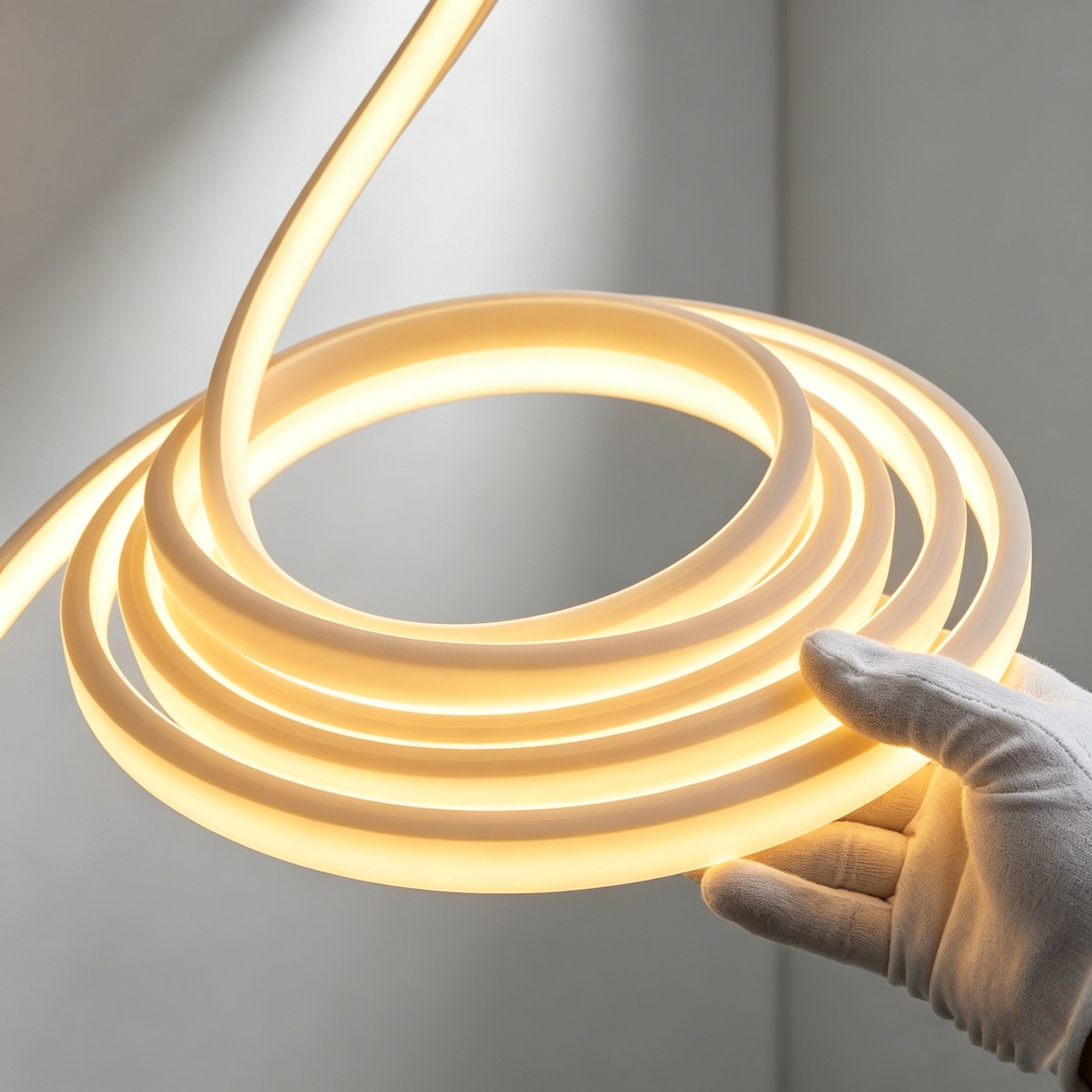
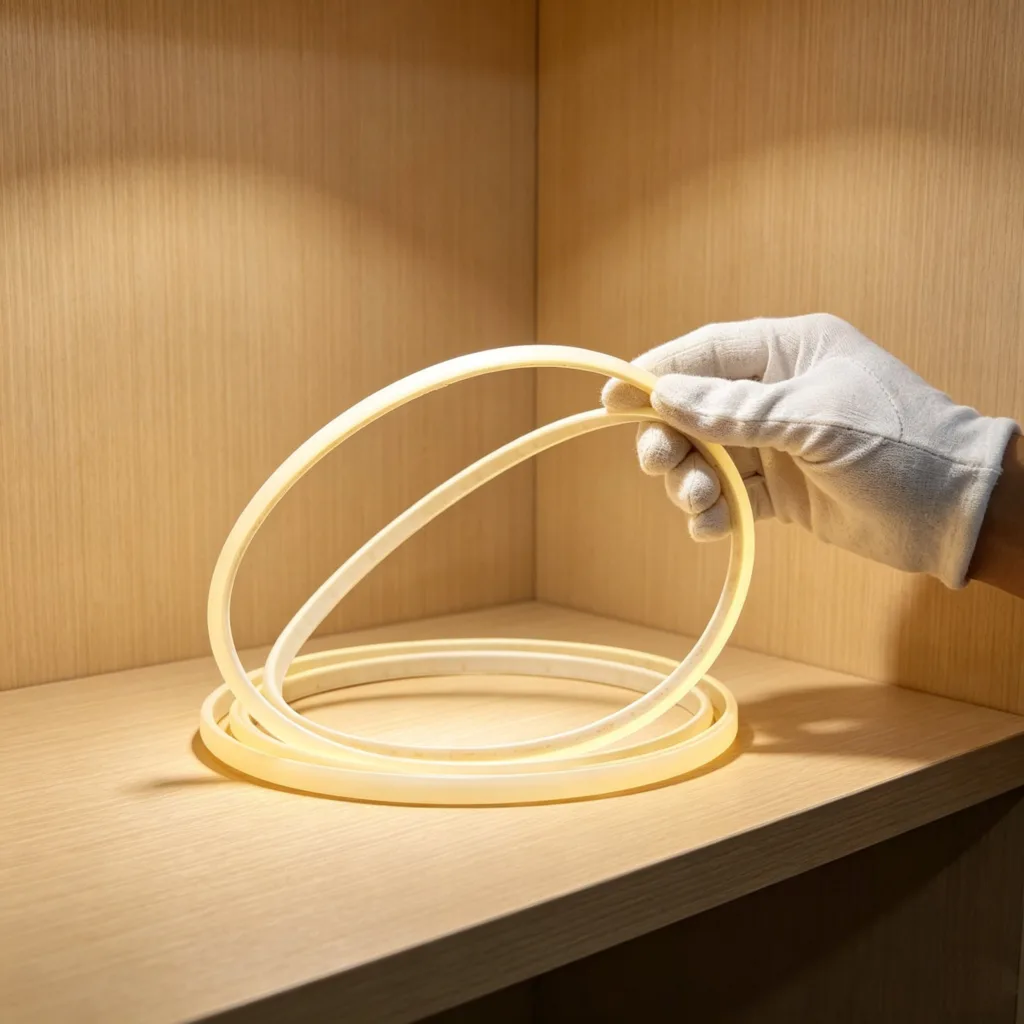
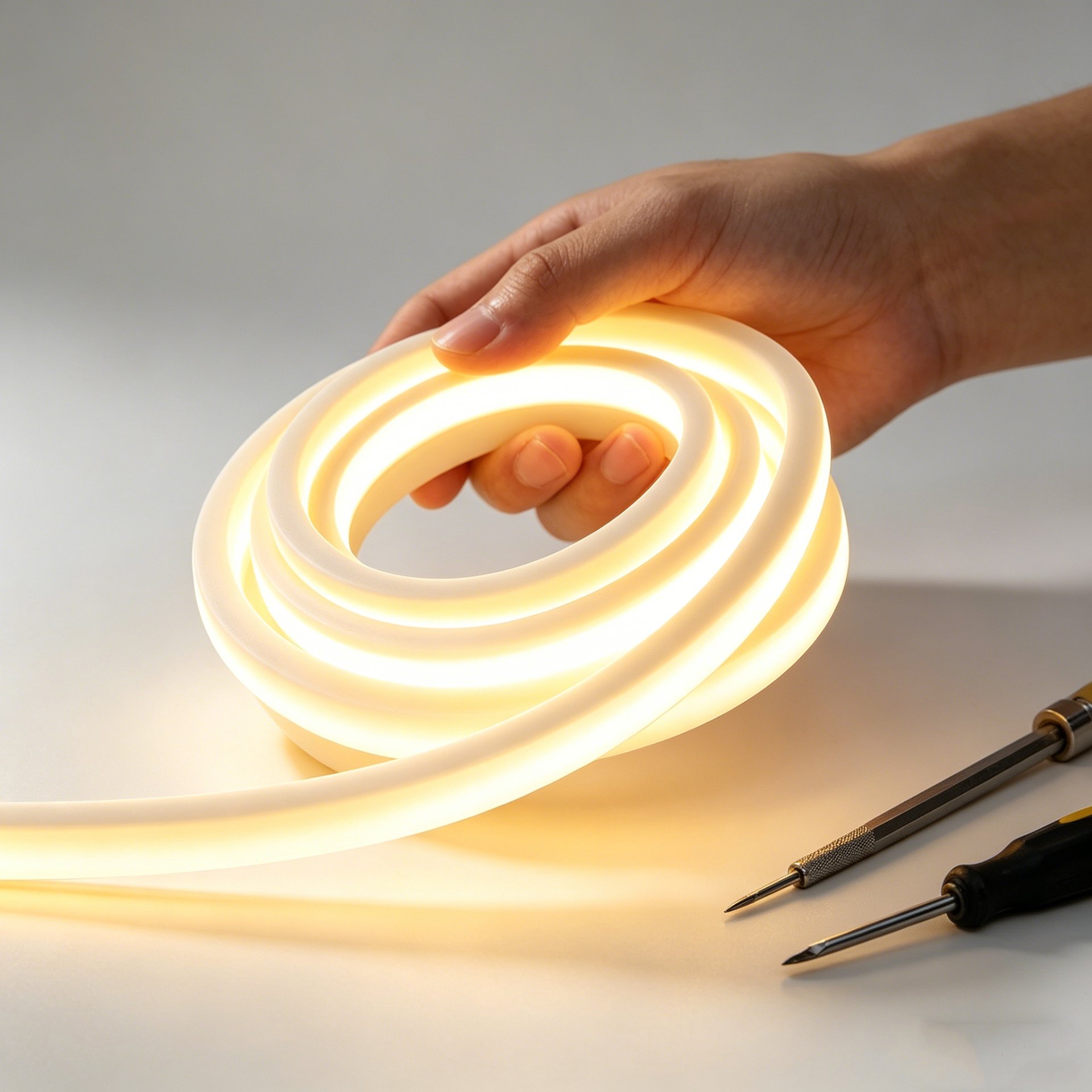
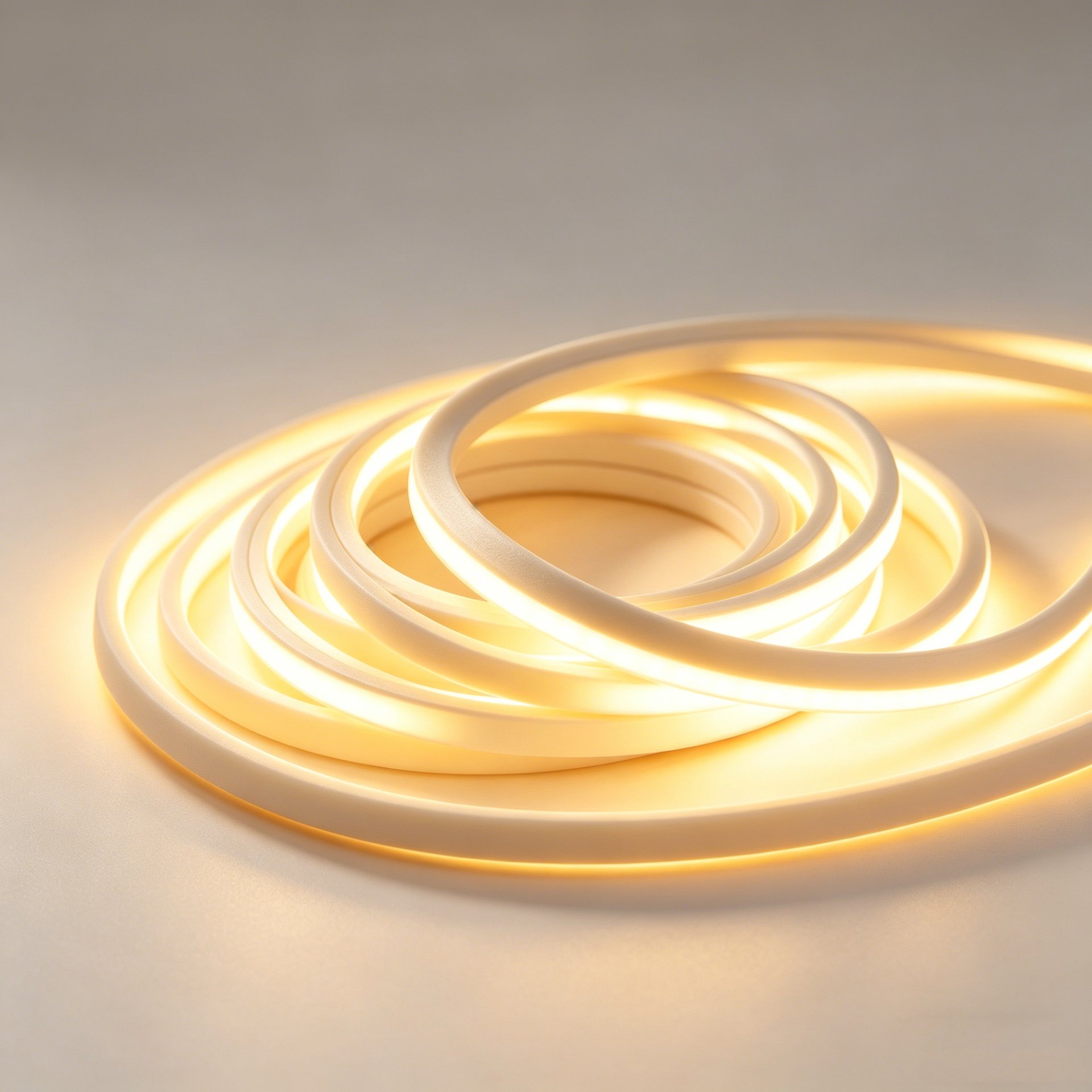
First, check the silicone material quality. We use 100% food-grade, high-molecular silicone because it resists UV degradation and temperature extremes. Cheaper silicone yellows within months and becomes brittle. Ask your supplier directly: what grade silicone do you use, and can you provide material certification?
Second, understand the testing process. Our strips go through salt spray testing, thermal cycling, and long-duration burn-in before shipping. These aren't just fancy terms — they simulate years of real-world use. If a manufacturer can't explain their testing protocol in simple terms, that's a red flag.
Third, evaluate their technical support structure. When you hit an installation problem at 8 PM on a Friday, can you reach someone who understands both the product and your application? We've helped clients troubleshoot everything from voltage drop calculations to custom mounting solutions. That support is part of what you're buying.
Here's a comparison of what to prioritize:
| Feature | Why It Matters | What to Ask |
|---|---|---|
| Material certification | Ensures safety and longevity | "Can you provide material test reports?" |
| Warranty terms | Shows manufacturer confidence | "What's covered and for how long?" |
| Customization capability | Matches your exact needs | "Can you modify cutting lengths or CCT?" |
| Technical documentation | Enables proper installation | "Do you provide detailed installation guides?" |
| Response time | Critical for project timelines | "How fast do you respond to technical questions?" |
Also pay attention to the small details that indicate manufacturing quality. Are the LED positions consistent? Is the silicone extrusion uniform with no visible air bubbles? Does the strip bend smoothly without kinking? These details reveal whether the manufacturer has tight process control.
How Do You Avoid Common First-Time Mistakes?
I've seen the same mistakes repeated by new buyers over and over. The good news is they're all completely avoidable if you know what to watch for.
The biggest mistake is choosing based solely on price comparison without understanding what you're actually comparing — different manufacturers often use different quality grades of components even when specs look identical.
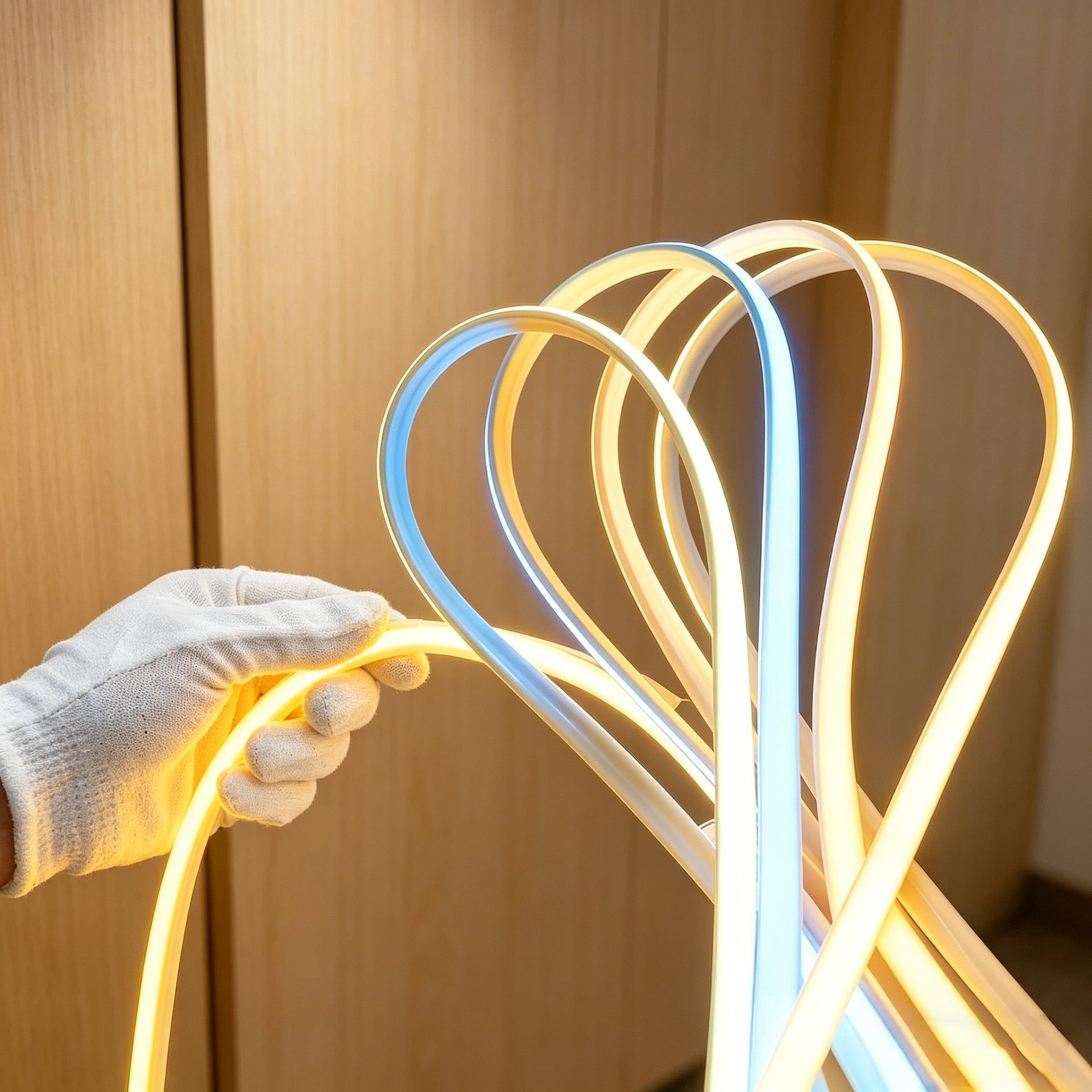
Mistake number one: assuming all "IP68 waterproof" ratings are equal. The IP rating tells you what tests were passed, but not how long the protection lasts. We've seen competing products with identical IP ratings where ours maintained waterproof integrity for five years while cheaper alternatives failed within months. Ask about long-term waterproof testing, not just initial certification.
Mistake number two: ignoring the installation ecosystem. Your strip needs compatible power supplies, proper mounting channels, and potentially controllers. Some buyers find a great strip at a low price, then discover they need to source six other components from different suppliers. We provide complete system guidance because a light strip alone isn't a solution.
Mistake number three: not planning for thermal management. LEDs generate heat, and in enclosed installations, that heat needs to go somewhere. First-time buyers often don't consider heat dissipation until they see premature failures. We help you understand when you need aluminum channels, spacing requirements, and ventilation planning.
Mistake number four: underestimating the importance of color consistency. You might think "warm white is warm white," but I've seen projects where strips from the same order had visibly different color temperatures. Our tight CCT binning (within 3-step MacAdam ellipse) ensures visual consistency across your entire installation.
Here's how we help you avoid these pitfalls:
| Our Approach | How It Protects You | What You Get |
|---|---|---|
| Pre-production consultation | Identifies issues before manufacturing | Customized product that fits your exact needs |
| System-level thinking | Ensures all components work together | Complete compatibility guidance |
| Strict quality batching | Maintains consistency across orders | Visually uniform installations |
| Installation support | Prevents common application errors | Step-by-step technical guidance |
| Post-sale follow-up | Catches problems early | Long-term performance assurance |
The real value isn't just in the product you receive. It's in the knowledge transfer that happens during the process. After working with us on your first project, you'll understand enough to make confident decisions on future purchases — whether you continue buying from us or not.
What Makes Our First-Time Buyer Experience Different?
We've worked with hundreds of clients making their first silicone neon strip purchase. What we've learned is that new buyers don't just need a product — they need education, support, and confidence.
We treat first-time buyers as long-term partners, not one-time transactions — our technical team invests time upfront to ensure you understand not just what to buy, but why and how to use it correctly.

When you contact us, you don't get a sales pitch. You get questions: What's your application? What's the installation environment? What's your experience level? We need to understand your situation before we can recommend the right solution. Sometimes we'll even suggest a simpler product than what you initially asked for because it's actually better suited to your needs.
Our engineering team has deep experience in silicone extrusion technology. This isn't just assembly work — we control the entire production process from raw material selection through final testing. That means when you ask technical questions, you're getting answers from people who actually understand the manufacturing process, not just sales representatives reading from a spec sheet.
We also provide customization that most first-time buyers don't realize is possible. Need a specific cutting length that doesn't match standard sizes? We can do that. Want a particular color temperature that's not in the catalog? We can tune it. Have a unique bending radius requirement? We can engineer for it. This flexibility means your first project doesn't have to compromise.
Here's what the process actually looks like:
| Stage | What We Do | What You Gain |
|---|---|---|
| Initial consultation | Understand your specific requirements | Clarity on what you actually need |
| Product recommendation | Match solution to application | Right product for your use case |
| Sample provision | Let you test before bulk order | Confidence in your choice |
| Pre-production review | Verify all details before manufacturing | No surprises when order arrives |
| Production updates | Keep you informed of progress | Peace of mind during wait time |
| Installation support | Guide you through setup process | Successful first installation |
| Follow-up check | Ensure everything performs as expected | Long-term relationship foundation |
Quality control is where we really differentiate ourselves. Every batch goes through multi-stage inspection. We check LED positioning accuracy, color temperature consistency, and silicone extrusion quality. Then we do electrical testing to verify performance under different load conditions. Finally, we do environmental stress testing to simulate long-term use. Only after all these checks do we ship.
This might sound like overkill for a "simple" light strip. But I've seen what happens when these steps get skipped. A 2% defect rate might sound acceptable until you realize that in a 1000-unit order, that's 20 failed strips scattered randomly across your installation. We maintain defect rates below 0.1% specifically to avoid these situations.
What Do Real Projects Actually Tell Us?
Numbers and specifications only tell part of the story. I want to share what we've learned from actual installations where buyers were making their first silicone neon strip purchase.
The projects that succeed aren't the ones with the highest specs or lowest prices — they're the ones where the buyer chose a partner who understood their inexperience and provided guidance throughout the process.

One client was a small signage company taking on their first architectural lighting project. They initially wanted the brightest strips we made because they assumed more lumens meant better results. After understanding their application — accent lighting for a hotel lobby — we recommended a lower-output strip with better color rendering. The result looked more premium, used less power, and generated less heat. They've since completed five more projects using the same approach.
Another client was a contractor installing outdoor pathway lighting. They were concerned about waterproofing and asked about IP ratings. Instead of just confirming our IP68 rating, we asked about their installation method. Turned out they were planning to use standard mounting clips that would create stress points. We recommended our flexible mounting system and explained proper strain relief techniques. Two years later, every strip is still performing perfectly.
A lighting designer came to us after a failed project with another supplier. The previous strips had worked initially but developed color shifts within three months. When we examined the failure mode, we realized the competitor used lower-grade phosphor coatings that degraded under UV exposure. Our high-grade phosphors are engineered specifically for long-term stability. The designer now specifies our strips for all their projects.
These stories share a common pattern. Success wasn't about selling the most expensive product or the one with the highest specifications. It was about understanding the real-world use case and providing a solution that matched it. That's what we mean by reliability — it's not just about the strip itself, but about the entire support ecosystem around it.
When clients tell us "everything worked as expected — no surprises," that's not luck. That's the result of proper specification, clear communication, and reliable manufacturing. Your first project should feel exactly like that.
What's Our Commitment to You?
Making your first light strip purchase shouldn't feel like gambling. It should feel like a confident business decision backed by expertise and support.
We commit to being your manufacturing partner, not just your supplier — which means we're invested in your project success because your success builds our reputation in the market.

Our commitment starts before you place an order. We'll spend time understanding your needs even if you're not ready to buy yet. We'd rather have you make an informed decision later than a rushed decision now that leads to problems.
During production, we maintain transparency. You're not just waiting in the dark wondering when your order ships. We provide updates at key milestones so you can plan your installation timeline confidently.
After delivery, we don't disappear. We check in to ensure installation went smoothly. If you hit any issues, we're available to troubleshoot. And if there's a quality problem — which is rare but possible — we address it immediately without bureaucratic hassles.
Long-term, we're here as your projects grow. Maybe your first order is 100 meters for a small installation. But if that project succeeds, your next one might be 1000 meters. We scale with you. And because we've learned your preferences and requirements from that first project, future orders become easier and faster.
This approach only works because we manufacture everything ourselves in Shenzhen. We're not middlemen marking up someone else's product. We're the actual factory, which means we control quality, can make modifications, and can respond quickly to issues.
Conclusion
Your first light strip purchase sets the foundation for every project that follows. Choose reliability, choose support, and choose a partner who treats your success as their own success.