
You stand in front of dozens of LED strip options. They all look similar. The specs sound impressive. But here's the question that matters: will this product still work as expected six months after installation?
When you're shopping for LED strips, reliability is not negotiable. The right choice protects your time, your budget, and your professional reputation. In this guide, I'll walk you through the key factors that separate dependable LED solutions from products that create problems down the line.

Most people focus on price and brightness when shopping for LED strips. But I've learned from working with contractors and designers that the real cost shows up later — when uneven lighting appears, colors shift, or entire sections fail unexpectedly.
What Makes an LED Strip Truly Reliable?
You might assume all LED strips are built the same way. They're not. The difference shows up in how they perform under real conditions.
Reliable LED strips maintain consistent light output, resist environmental stress, and continue working without degradation. This reliability comes from superior materials, precise manufacturing, and rigorous quality control — not just from meeting basic specifications.
I've seen projects where cheap LED strips looked perfect at installation. Three months later, the client called with complaints about color shifts and dark spots. That's when I realized: the materials used in manufacturing matter more than any marketing claim.
At Shenzhen Alister Technology Limited, we engineer our silicone neon flex strips with this reality in mind. We use 100% food-grade, high-molecular silicone extrusion. This material resists UV exposure, salt spray, and yellowing. Our strips maintain their appearance and performance from -40°C to +60°C.
Here's what this means in practical terms:
| Performance Factor | Standard LED Strips | Our Silicone Neon Strips |
|---|---|---|
| Temperature Range | Limited flexibility | -40°C to +60°C operation |
| UV Resistance | Degrades over time | Anti-UV formulation |
| Waterproof Rating | Often IP65 or less | IP68 rated |
| Light Uniformity | Visible LED dots | Dotless, 360° emission |
| Expected Lifespan | 2-3 years | 5+ years |
The technical team behind these products has years of hands-on experience in silicone materials, structural design, and circuit optimization. We don't just manufacture strips. We solve application challenges before they become your problems.
How Do You Choose Between Different LED Strip Types?
You walk into a lighting store or open a supplier catalog. You see rigid strips, flexible strips, silicone neon, and traditional rope lights. Which one actually fits your project?
The right LED strip type depends on your specific application requirements: installation environment, desired light effect, structural flexibility, and long-term maintenance needs. Each type serves different purposes, and choosing correctly prevents costly replacements.
I remember a project where a contractor chose standard flexible strips for an outdoor signage installation. The client wanted smooth, even lighting. Six months later, water infiltration caused section failures. The entire installation needed replacement.
This situation could have been avoided with proper material selection. Let me break down the options:
Rigid LED Strips These are mounted on aluminum or plastic channels. They provide excellent heat dissipation. They work well in straight-line applications like under-cabinet lighting or display cases. But they can't bend or flex. If your design involves curves or complex shapes, rigid strips create problems.
Standard Flexible LED Strips These are the most common type. They bend in one direction and stick to surfaces easily. They're cost-effective for basic applications. But they show visible LED dots. They're not fully waterproof unless you add extra protection. And they typically can't handle extreme temperatures or harsh environments.
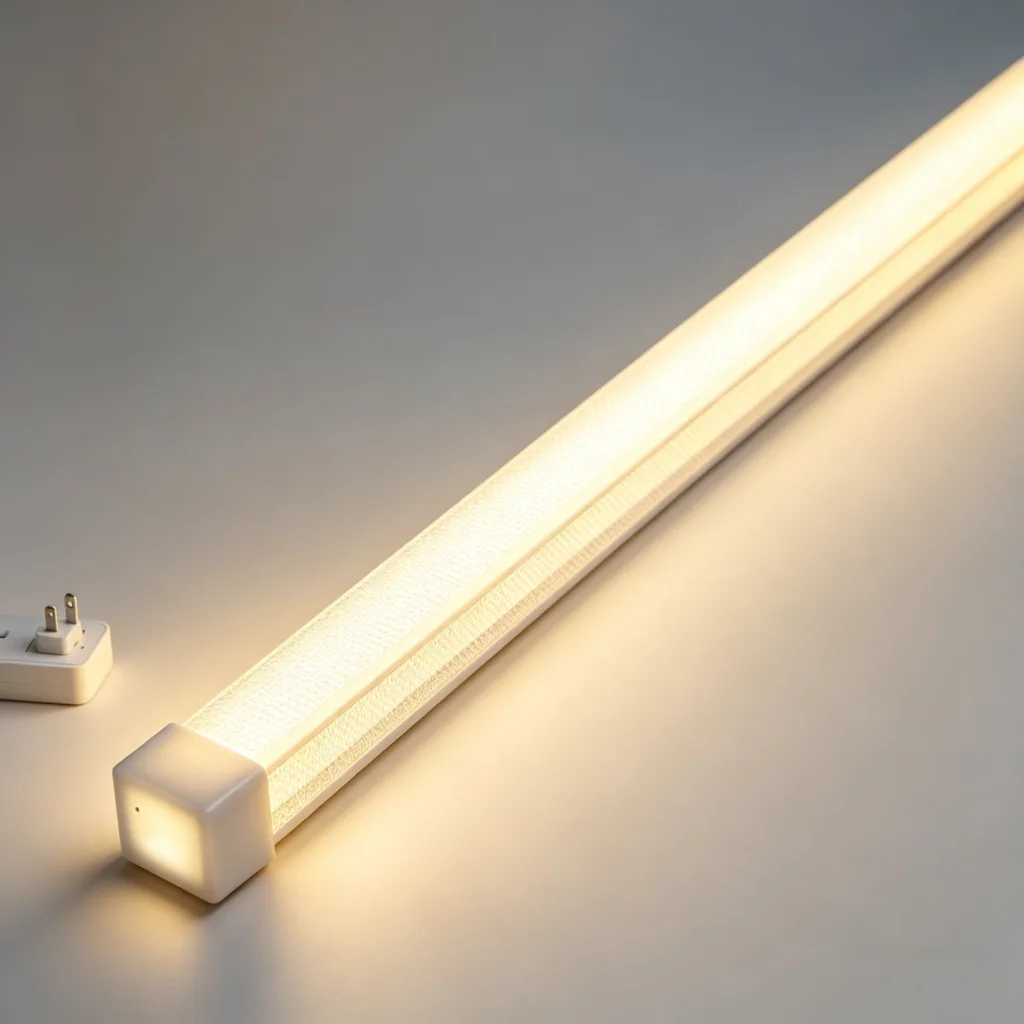
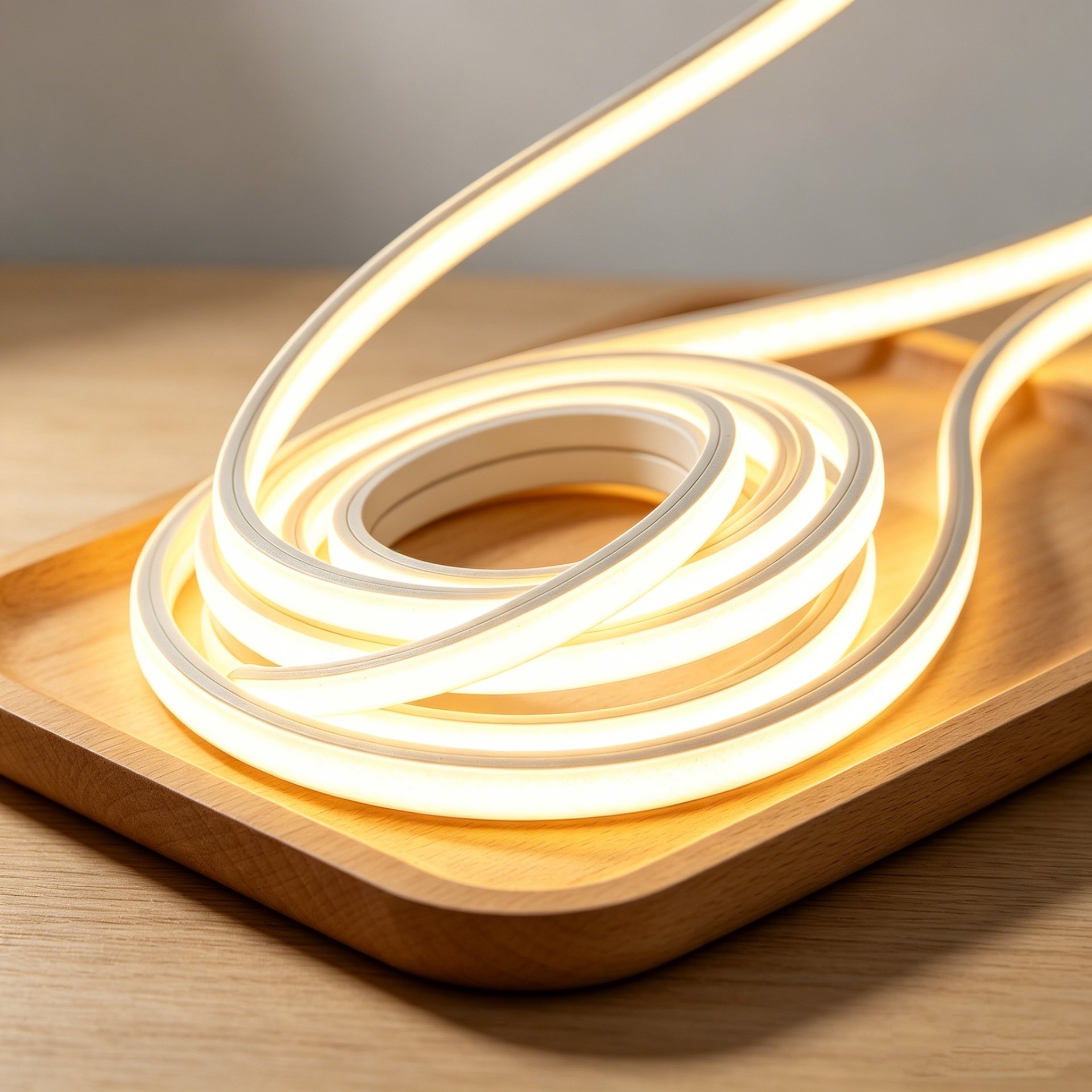
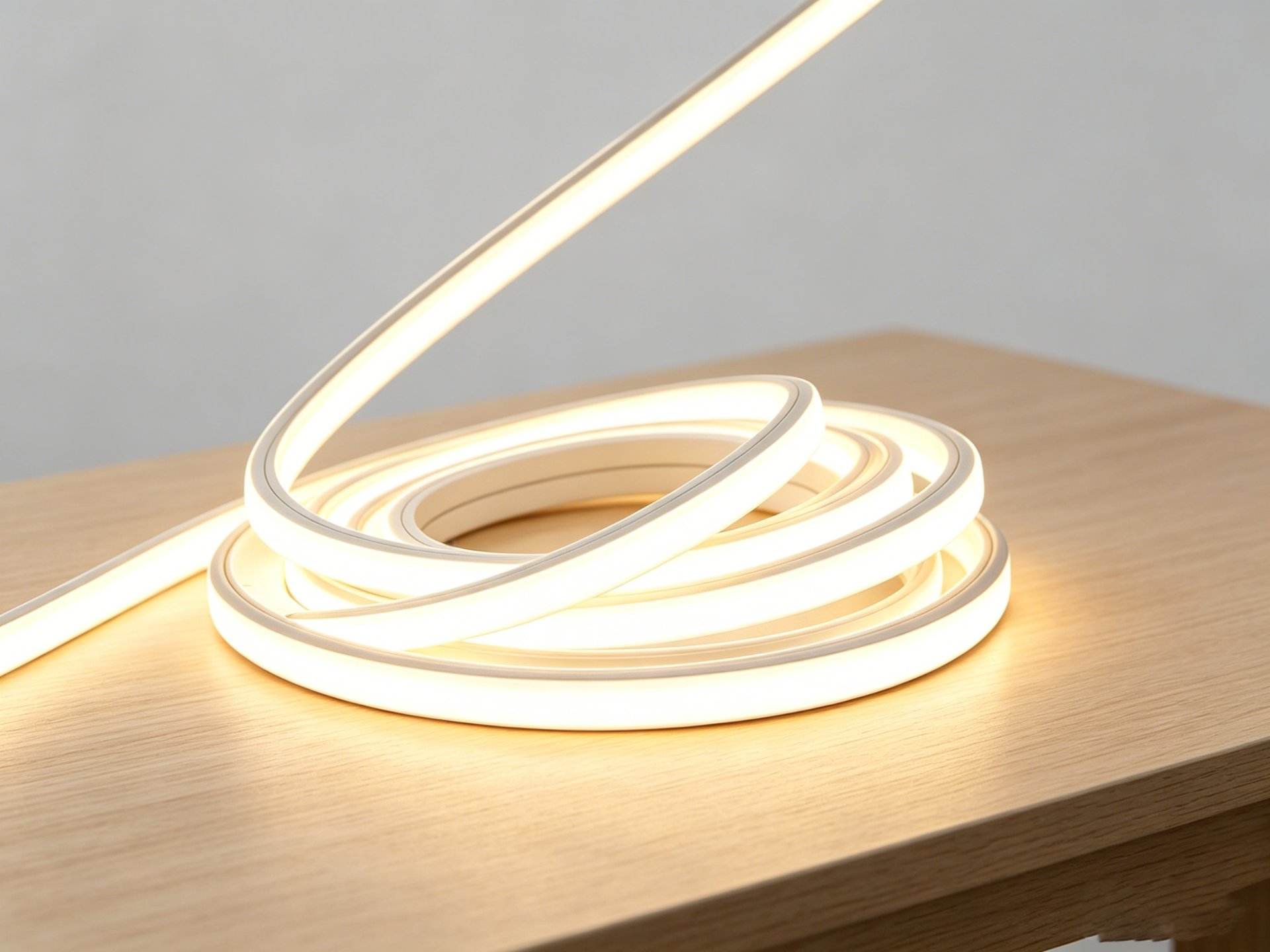
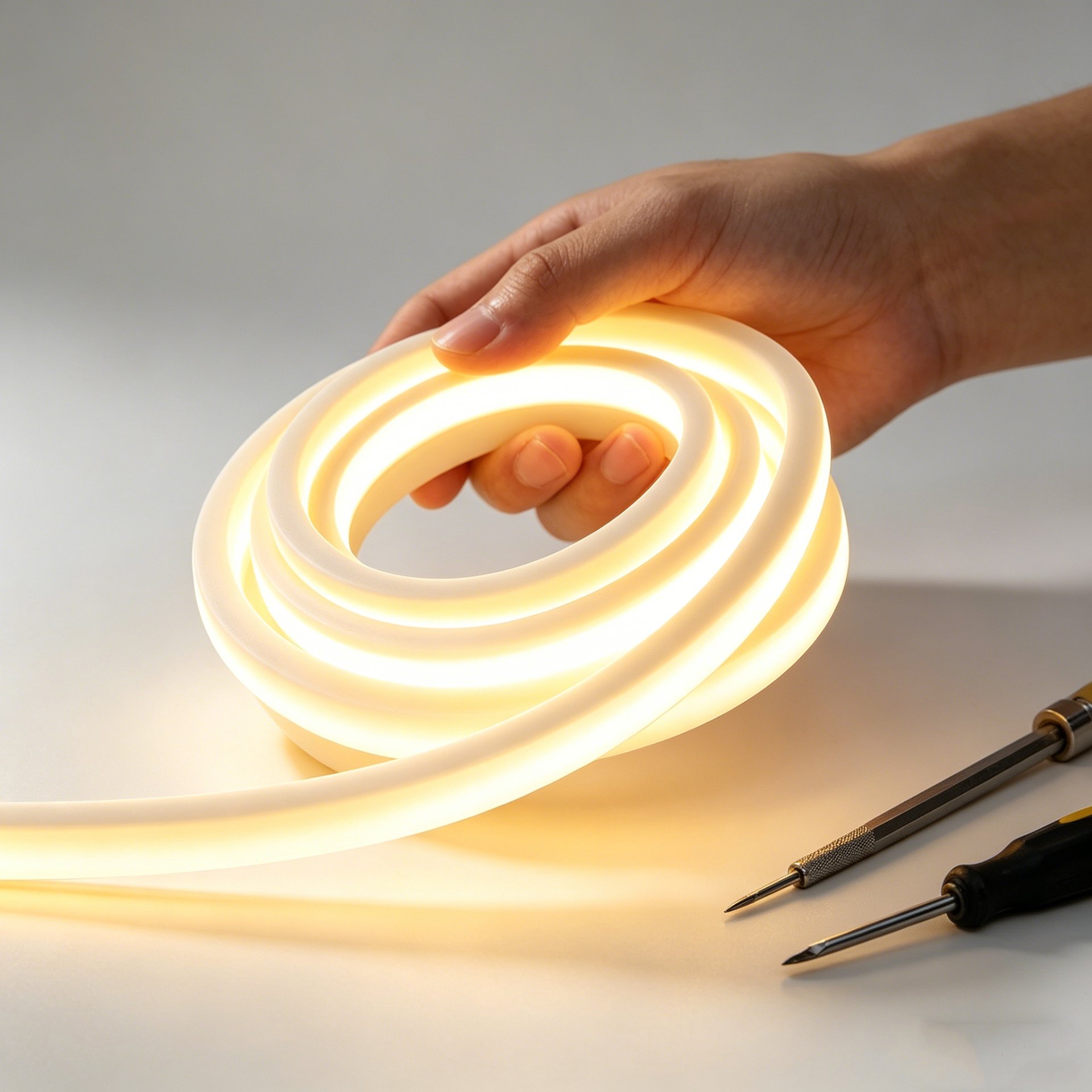
Silicone Neon Flex (Our Specialty) This is where we've focused our engineering efforts. Silicone neon flex combines flexibility with durability. The silicone extrusion creates a completely uniform light output with no visible dots. The material itself provides IP68 waterproofing without additional housings. It bends smoothly in multiple directions. And it maintains performance in environments where other LED strips fail.
For example, we recently worked with a lighting designer on a high-end hotel project. They needed curved lighting for architectural cove details. Standard strips would have shown visible dots and required complex installation. Our silicone neon flex installed smoothly, created the exact visual effect they wanted, and required no maintenance after two years of continuous operation.
What Technical Specifications Actually Matter?
You look at an LED strip datasheet. It lists lumens, watts, CCT, CRI, IP ratings, and dozens of other numbers. Which specifications actually impact your project's success?
The specifications that matter most are: color rendering index (CRI) for accurate color reproduction, IP rating for environmental protection, actual lumen output per meter for brightness consistency, and color temperature stability over the product's lifespan.
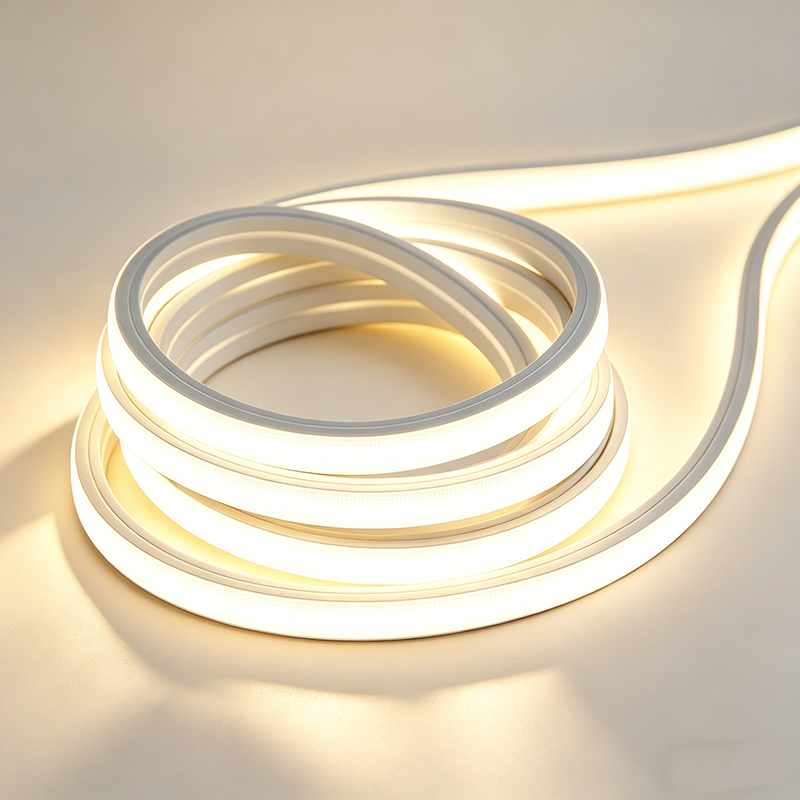
Many suppliers list impressive numbers that don't reflect real-world performance. I've tested products claiming high lumen output that measured 30% lower when installed. This happens because some manufacturers measure brightness under ideal laboratory conditions, not actual operating temperatures.
Here's what to focus on:
Color Rendering Index (CRI) This measures how accurately the light shows colors. A CRI of 80+ is acceptable for most commercial applications. But if you're lighting retail displays, artwork, or hospitality spaces where color accuracy matters, you need CRI 90+. We offer custom CRI specifications because we understand that different applications have different color requirements.
IP Rating (Ingress Protection) This tells you how well the strip resists dust and water. IP20 means basic protection — suitable only for dry indoor locations. IP65 resists water jets but isn't submersible. IP67 can handle temporary immersion. IP68, which we provide, handles continuous underwater operation. Don't trust a supplier who claims IP68 without proper testing documentation.
Lumen Output Consistency Two strips might claim 1000 lumens per meter. But one maintains that output over time while the other degrades to 700 lumens within a year. Ask about lumen maintenance ratings. Our silicone neon strips maintain over 90% of their initial output after 50,000 hours because we use high-quality LED chips and effective thermal management.
Color Temperature Stability You install LED strips at 3000K warm white. Six months later, they look slightly green or blue. This happens when manufacturers use low-grade phosphor coatings or when heat affects the LED chips. We address this through material selection and thermal design. Our strips maintain their specified CCT within ±100K throughout their lifespan.
Here's a comparison based on actual project data:
| Specification | What It Affects | What to Demand |
|---|---|---|
| CRI | Color accuracy | 90+ for commercial, retail, hospitality |
| IP Rating | Environmental resistance | IP67+ for outdoor, IP68 for underwater |
| Lumen Maintenance | Long-term brightness | >90% at 50,000 hours |
| CCT Stability | Color consistency | ±100K maximum variation |
| Operating Temperature | Installation flexibility | -40°C to +60°C for outdoor use |
How Does Customization Improve Your Project Outcomes?
You have a project with specific requirements. The standard 5-meter LED strip with fixed brightness doesn't quite fit. Do you compromise your design or search for a manufacturer who can customize?
Customization transforms LED strips from generic products into project-specific solutions. Custom cutting lengths, tailored brightness levels, specific color temperatures, and integrated control systems eliminate installation compromises and improve both aesthetics and functionality.
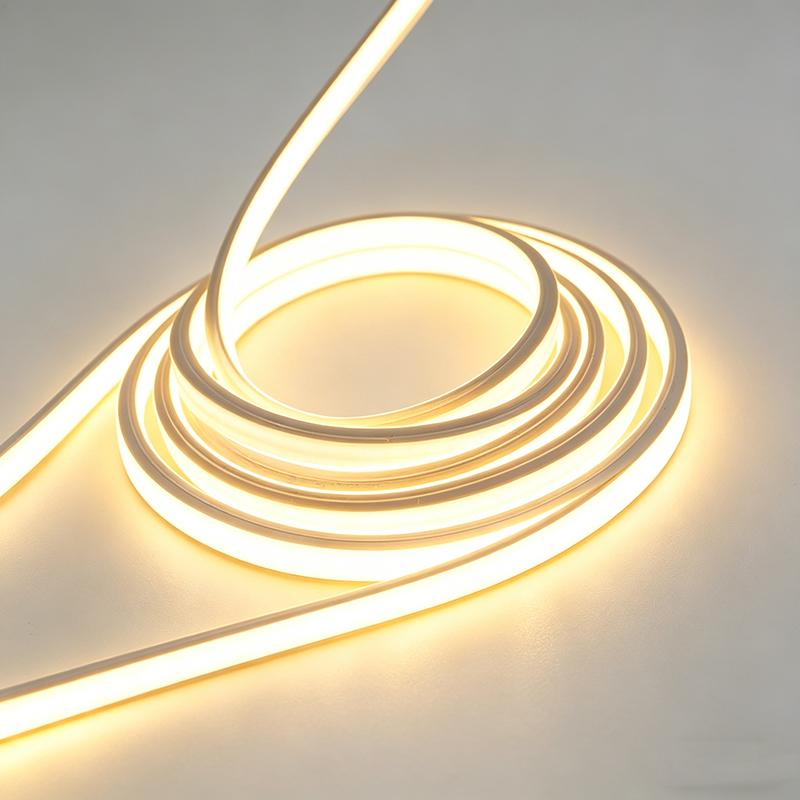
I worked with a signage manufacturer who needed strips that bent in specific directions to create complex logo shapes. Standard strips only bent one way. They would have needed multiple connection points, creating visible seams in the final installation.
We provided custom silicone neon flex with bidirectional bending capability. The manufacturer installed it as a single continuous piece. The result looked seamless. Installation time dropped by 40%. And the client was satisfied with the clean, professional appearance.
Here's what we can customize:
Cutting Lengths Standard LED strips come in 5-meter reels. You need 3.7 meters, or 12 meters, or 47 meters without visible connections. We manufacture to your exact specifications. This reduces waste, minimizes connection points, and creates cleaner installations.
Brightness and Color Temperature Your retail space needs 4000K neutral white at a specific lumen output. Your restaurant project requires warm 2700K with dimming capability. We adjust the LED chip configuration to match your exact requirements. No compromises.
Bending Direction and Shape Standard flexible strips bend in one plane. Complex designs often need bending in multiple directions, or specific curve radii, or custom corner solutions. Our engineering team can modify the silicone extrusion and internal structure to match your design requirements.
Control System Integration You're installing a large commercial project with SPI or DMX512 control. Standard strips aren't compatible with your system. We integrate the control interface directly into the strip, ensuring seamless operation without additional adapters or converters.
A lighting designer recently approached us with an unusual request. They needed ultra-slim silicone neon flex that could fit into a 10mm gap while maintaining uniform light output. Standard products were either too thick or showed visible LED dots in such a narrow profile. We engineered a custom solution with 8mm diameter and specialized LED chip placement. The project won a design award.
What Role Does Quality Control Play in LED Strip Performance?
You receive a shipment of LED strips. They look identical. But after installation, some sections are brighter than others. Some show color variations. This inconsistency creates visible problems in your finished project.
Strict quality control ensures every meter of LED strip performs identically. This consistency comes from controlled material sourcing, precise manufacturing processes, and comprehensive testing at multiple production stages — not just random sampling.
I've seen contractors struggle with LED strips from suppliers who don't maintain proper quality standards. They install a long run of lighting only to discover brightness variations between different reels. Fixing this requires removing and replacing sections — a costly, time-consuming process that damages client relationships.
At Shenzhen Alister Technology Limited, we approach quality control systematically:
Material Selection We source our silicone materials from certified suppliers who provide consistent chemical composition. This ensures uniform light transmission and consistent physical properties across all production batches. No yellowing. No degradation. No unexpected material behavior.
Production Process Control Our extrusion lines operate under strict temperature and speed parameters. Each batch undergoes dimensional verification. We monitor light output continuously during assembly. Any deviation from specifications triggers immediate correction before products reach the shipping stage.
Testing Protocol Every production run goes through multiple tests: electrical safety verification, waterproof pressure testing, lumen output measurement, color temperature validation, and accelerated aging simulation. We don't ship products until they pass all criteria.
Documentation and Traceability Each order includes full testing documentation. If any issue appears in the field, we can trace it back to specific production parameters and identify the root cause. This accountability ensures we continuously improve our processes.
Here's what this means for you:
| Quality Aspect | Without Strict Control | With Our Quality Control |
|---|---|---|
| Brightness Consistency | ±20% variation | ±5% maximum variation |
| Color Matching | Visible differences between batches | Consistent CCT across all batches |
| Waterproofing | Random failures | 100% IP68 verification |
| Long-term Stability | Unpredictable degradation | Documented 5+ year performance |
How Do You Evaluate Potential LED Strip Suppliers?
You search online for LED strip manufacturers. Dozens of companies appear. They all claim quality products, competitive prices, and excellent service. How do you determine which supplier will actually deliver reliable products and support?
Evaluating LED strip suppliers requires examining their technical capabilities, production facilities, quality certifications, customization flexibility, and post-sale support systems. The right supplier acts as a technical partner, not just a transaction facilitator.

A distributor once told me they switched from a low-price supplier after receiving three consecutive shipments with quality problems. The initial cost savings disappeared when they had to manage returns, replacement shipments, and damaged customer relationships. They realized that supplier selection required more than price comparison.
Here's what to investigate:
Technical Team Experience Does the supplier have engineers who understand your application requirements? Can they answer specific technical questions about thermal management, circuit design, and material properties? Or do they just forward inquiries to someone else?
When you contact us, you speak with engineers who have worked on hundreds of lighting projects. We understand the challenges you face because we've helped solve similar problems for other clients.
Manufacturing Capabilities Visit the factory if possible. Look at the equipment. Observe the production process. Check if they have in-house extrusion capabilities or just assemble purchased components. Ask about daily production capacity and lead times under different order volumes.
Our Shenzhen facility operates high-capacity silicone extrusion lines. We control every step from raw material to finished product. This vertical integration ensures consistency and allows rapid customization.
Certifications and Compliance Request copies of relevant certifications: CE, RoHS, UL, or others required for your target market. Verify these documents are current and cover the specific products you're purchasing. Some suppliers display certifications for one product line but ship uncertified alternatives.
We maintain current international certifications because we understand global market requirements. Our products meet North American and European standards without modification.
Customization Flexibility Present a specific customization request. Observe how they respond. Do they offer solutions? Do they explain technical constraints clearly? Or do they push you toward standard products regardless of your requirements?
We've built our business on customization. OEM and ODM services are not add-ons — they're central to what we do.
Communication and Support Evaluate their responsiveness. Do they answer questions completely? Do they provide technical documentation? Are they available when you need support?
You can reach us directly through WhatsApp at +86 182 1841 0153 or email at [email protected]. We respond to technical questions quickly because we know your projects have deadlines.
What Long-term Support Should You Expect?
You complete a successful installation. The LED strips perform perfectly. Six months later, the client wants to expand the lighting system. Or a small section needs replacement due to accidental damage. Can you get matching products?
Long-term supplier relationships provide product consistency, technical support for expansions or modifications, and access to matching materials for repairs. The right manufacturer maintains product specifications and supports installations throughout their operational lifespan.
A contractor shared a frustrating story with me. They installed a custom LED lighting system in a retail chain. Two years later, the client opened new locations. The contractor returned to their original supplier for matching products. The supplier had discontinued that product line and couldn't provide compatible strips. The contractor had to redesign the entire lighting system for the new locations, losing time and money.
This is why supplier selection matters beyond the initial purchase.
Product Consistency We maintain detailed specifications for every custom product we manufacture. When you need additional quantities months or years later, we can reproduce the exact specifications. Same color temperature. Same brightness. Same physical dimensions. Your installation stays consistent.
Technical Documentation We provide comprehensive documentation with every order: installation guidelines, wiring diagrams, control system specifications, and maintenance recommendations. This documentation helps during installation and serves as a reference for future modifications.
Application Support Sometimes you encounter unexpected challenges during installation or operation. You need someone who understands the product and can help troubleshoot. We provide ongoing technical support because we understand that successful projects require more than just delivering products.
Warranty and Reliability We stand behind our silicone neon flex products with clear warranty terms. But more importantly, we engineer products that rarely require warranty claims. Prevention is better than replacement.
A lighting designer told me they chose to work with us specifically because of our long-term support commitment. They said, "I need to know that when I specify your products in a project, you'll still be here to support it five years from now."
That's exactly how we operate.
Conclusion
Shopping for LED strips is not about finding the cheapest option — it's about selecting a reliable solution that performs consistently throughout your project's lifespan. The right choice protects your investment, your reputation, and your client relationships.