

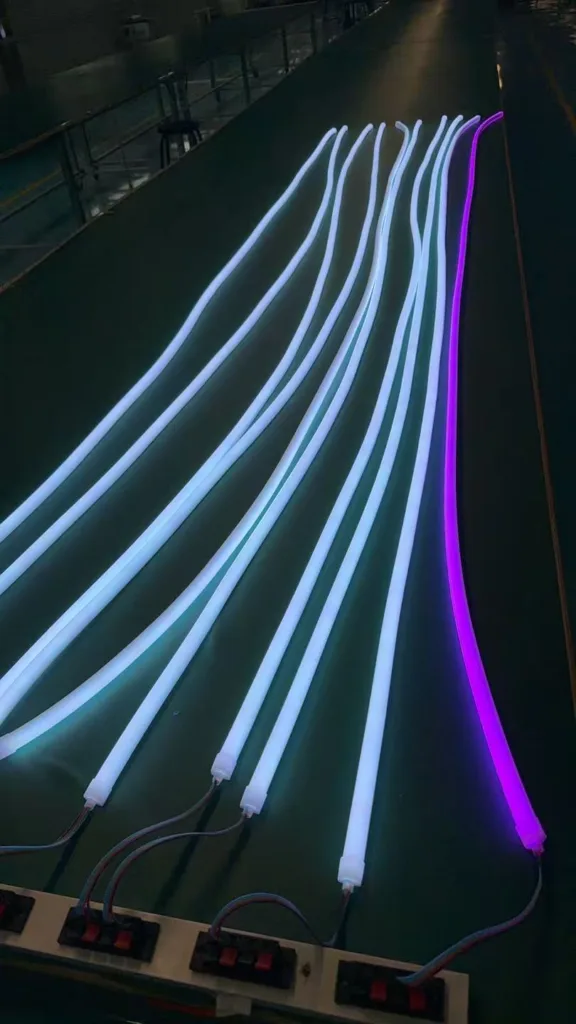
If you're asking whether LED strips waste more energy than LED bulbs, you're probably looking at the wrong numbers. Most people compare wattage or lumen-per-watt ratings and think they've done their homework. But I've watched enough commercial lighting projects fail to know this: the real problem isn't the light source—it's the system around it.
LED strips aren't less efficient than bulbs. They're just more demanding. The difference is that bulbs come as closed systems, while strips force you to design one yourself. And if you design it wrong, you don't just lose efficiency—you lose money, time, and your client's trust.

Here's what most specification sheets won't tell you: when an LED strip underperforms, it's rarely the LEDs that failed. It's the voltage drop you didn't calculate. The driver you undersized. The aluminum channel you thought would "handle it." Those invisible losses add up fast, and they show up in your energy bills, maintenance calls, and premature replacements.
What's the real difference between evaluating a "light" and evaluating a "lighting system"?
When I first started working with commercial clients, I made the same mistake everyone makes. I compared LED bulbs and LED strips by their datasheets. The strips had better lm/W numbers, so I thought they were the smarter choice for linear installations. Then I started getting calls.
The problem wasn't the LEDs. It was everything else. LED bulbs are what I call "closed efficiency systems." The manufacturer already optimized the driver, thermal path, and optics before the product left the factory. You screw it in, and it works at rated efficiency—or close to it.

LED strips are different. They're distributed load systems. That means efficiency depends on six things most people ignore:
Power conversion losses. Your AC-to-DC driver might be 90% efficient in the lab, but real-world conditions and cable runs can pull that down to 85% or worse.
Voltage drop. Every meter of strip adds resistance. If you're running a 5-meter strip without proper segmentation, the far end is dimmer—not because the LEDs are weak, but because they're starved for voltage.
Thermal interface design. Bulbs have engineered heat sinks. Strips rely on whatever aluminum channel you picked. If the contact between the strip and the channel isn't perfect, heat builds up. Heat kills efficiency.
Driver loading strategy. A driver running at 95% capacity sounds efficient, but it runs hotter and fails faster. A driver at 80% load often delivers better long-term system efficiency.
Control system overhead. If you're using PWM dimming or digital control protocols, those circuits add their own losses. Not huge individually, but they compound.
Installation quality. This is the one nobody talks about. A poorly installed strip with inconsistent thermal contact can lose 15-20% effective output compared to a properly mounted one.
I've seen projects where the datasheet promised 150 lm/W, but the installed system delivered 90 lm/W. The LEDs weren't lying. The system design was just incomplete.
| Component | Typical Loss Range | Impact on System |
|---|---|---|
| AC/DC Driver | 5-15% | Constant baseline loss |
| Voltage Drop | 3-12% | Increases with run length |
| Thermal Interface | 5-20% | Accelerates long-term degradation |
| Control Overhead | 2-8% | Depends on dimming method |
| Installation Quality | 10-25% | Highly variable, often invisible |
Why do some LED strip projects fail even when the specifications look perfect?
I remember a retail chain project that taught me this lesson the expensive way. The client wanted to modernize their lighting with a minimalist linear aesthetic. We proposed high-efficiency LED strips to replace all their bulb fixtures. The numbers looked great. Energy consumption would drop by 40%. Payback period was under two years.
Four months after installation, the complaints started. Some sections were dimmer than others. A few zones had shifted from neutral white to slightly greenish. The maintenance team reported that several drivers were running hot enough to trigger thermal protection.
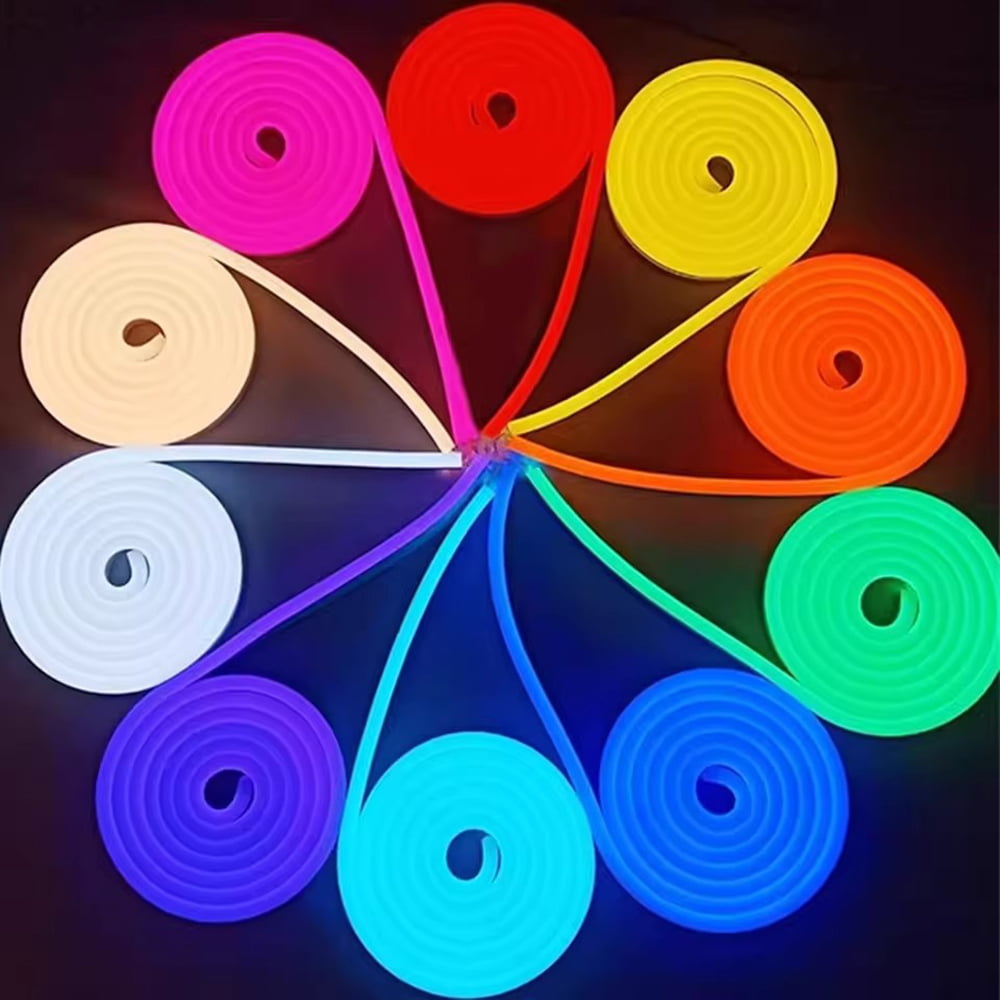
We sent a team to investigate. The LEDs themselves were fine. The problem was architectural. The electricians had treated the strips like extension cords—running 10-meter continuous lengths from single drivers, mounting them in channels without thermal paste, and pushing the power supplies to 98% rated load to "maximize efficiency."
Here's what actually happened:
Voltage drop created uneven brightness. The first meter of each strip was getting 24V. The last meter was seeing 21.8V. That 10% drop translated to visible dimming and color shift.
Driver overload shortened lifespan. Running drivers at 98% capacity meant they were operating at maximum junction temperature. They were technically "efficient," but they were aging at triple speed.
Poor thermal contact accelerated degradation. The installers assumed the aluminum channel would automatically conduct heat. It doesn't—not without proper interface materials and mounting pressure. Hot spots formed where the strip wasn't making full contact.
Cumulative losses compounded. Each inefficiency was small individually. Together, they created a system that was visibly failing within months.
The solution wasn't better LEDs. It was better system design. We redesigned the installation with segmented power distribution, parallel runs instead of series, drivers loaded to 80% capacity, and thermal interface tape. Same LEDs. Completely different performance.
That project cost the client an extra $15,000 to fix. The original "savings" were gone. The lesson was clear: LED strip efficiency isn't about the strip. It's about the system.
How should you actually evaluate LED strip systems for commercial projects?
If you're specifying lighting for real projects—not showrooms or test labs—you need a different framework. You can't just compare lm/W ratings and assume you're done. You have to think like a systems engineer.
First principle: calculate system efficiency, not component efficiency. The formula isn't just "LED output ÷ LED input." It's:
(Light output at the fixture) ÷ (Total power draw from the wall)
That includes your driver losses, cable losses, voltage drop, and thermal derating. Most people skip the last three. That's where efficiency disappears.
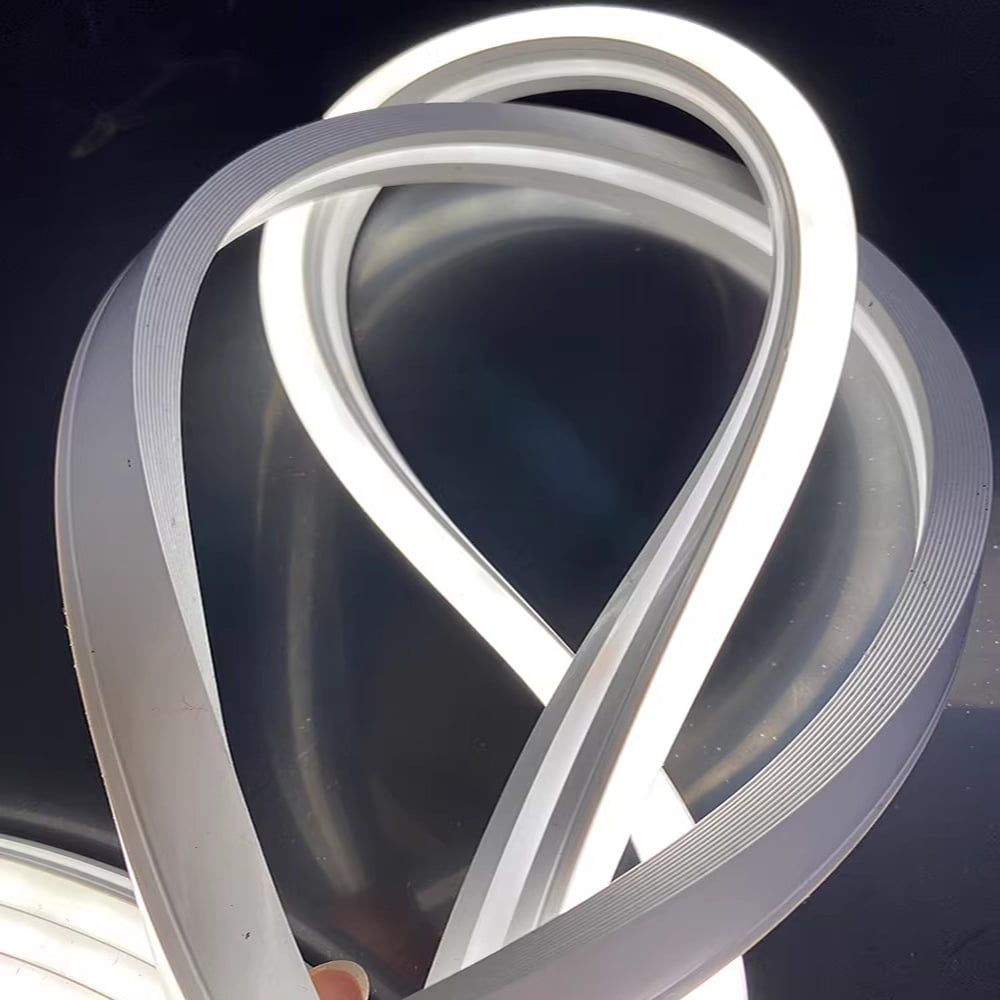
Second principle: design for voltage distribution, not just voltage rating. A 24V LED strip doesn't stay at 24V across its entire length. Physics doesn't work that way. For runs longer than 3 meters, you need one of three solutions:
| Solution | Application | Trade-off |
|---|---|---|
| Segmented parallel feeds | Long linear runs | More wiring, better performance |
| Both-end power injection | Medium runs (5-8m) | Balanced voltage, doubles connection points |
| Higher voltage systems (48V) | Very long runs | Reduces current, requires compatible drivers |
If you ignore voltage distribution, you're not designing a system. You're hoping for one.
Third principle: driver selection is more critical than LED selection. I see people spend hours comparing LED specs and then grab whatever driver fits the wattage. That's backwards. Your driver determines:
- Conversion efficiency (85% vs 92% is huge over 50,000 hours)
- Thermal stability (cheap drivers fail hot)
- Long-term reliability (quality drivers last 10+ years, cheap ones last 2-3)
- True dimming performance (some "dimmable" drivers flicker or have poor low-end range)
A $30 driver difference per fixture might seem expensive. But if it adds three years to your maintenance cycle, it pays for itself in the first service call.
Fourth principle: thermal design determines real-world efficiency. Junction temperature directly affects LED output and longevity. A strip rated at 150 lm/W at 25°C might deliver 120 lm/W at 65°C. And if your thermal interface is poor, you'll hit 65°C easily.
The way to prevent this:
- Use thermal interface materials (paste or tape) between strip and channel
- Size your aluminum extrusion for real heat loads, not minimum specs
- Allow air circulation around mounted fixtures
- Monitor installation quality during construction
Thermal design isn't optional. It's the difference between a 5-year system and a 10-year system.
Fifth principle: understand the hidden cost of "efficiency." Sometimes the most efficient system on paper becomes the most expensive in practice. I've seen projects where:
- High-efficiency strips required premium drivers that doubled upfront cost
- Tight thermal tolerances meant expensive installation supervision
- Maintenance access was difficult, making repairs cost 3x normal rates
- Early failures triggered warranty claims that ate all projected savings
Real efficiency includes total cost of ownership. Not just the electric bill.
What's the actual failure mode nobody talks about?
Here's the part that surprised me most after years in this industry: LED strips rarely fail catastrophically. They degrade invisibly.
A bulb either works or it doesn't. When it fails, you know. LED strips fade gradually. Color shifts slowly. Brightness drops imperceptibly over months. Most clients don't notice until the difference is dramatic—and by then, you've got inconsistent lighting across the entire installation.
This happens because system design errors don't kill LEDs. They just age them faster. That retail project I mentioned earlier? The LEDs that failed first weren't defective. They were the ones at the end of long voltage drops, running hotter, working harder, degrading faster.
The real cost wasn't replacement parts. It was:
- High-ceiling maintenance requiring lifts and crews
- Color matching new strips to aged ones (impossible without full zone replacement)
- Customer complaints about inconsistent lighting
- Reputation damage from a "failed installation"
Nobody budgets for that. But it's where efficiency problems actually hurt.
Conclusion
LED strips aren't less efficient than bulbs. They're just less forgiving. Bulbs are finished products. Strips are components in a system you have to design correctly—or they'll cost you more than they save.
The question isn't "which light is more efficient?" The question is: "Did I design the system to preserve that efficiency in the real world?"