

You might be asking "which companies sell high-quality LED tubes," but you've already stepped into a common trap. You're treating "supplier brand names" as a guarantee of reliability. The real question isn't about brand reputation. It's about who understands the full failure chain of LED tube systems.
High-quality LED tubes aren't defined by brand names. They're defined by thermal-electrical-structural coupling design, long-term material stability, and batch consistency control. The companies that truly deliver reliability are those who engineer against system-level failure modes, not just pass standard certifications.

Most project failures don't happen because tubes stop working. They happen because tubes degrade slowly under real conditions while still meeting test parameters. The gap between lab performance and field reality is where your project dies.
Are You Buying an LED Tube or a Disassembled Failure Risk?
An LED tube looks simple. You install it and it lights up. But engineering reality tells a different story. Each tube is actually four systems stacked together.
An LED tube is a layered system: optical distribution, thermal management, electrical stability, and structural integrity. When one layer fails, it triggers cascading degradation across the others.
The optical system controls diffusion, glare prevention, and lumen depreciation curves. The thermal system manages heat through the PC cover, aluminum substrate, and air gap design. The electrical system balances driver matching, current stability, and surge protection. The structural system handles end-cap sealing, mounting stress, and long-term deformation resistance.
Here's the problem. Many "high-quality brands" only excel at one layer. They pass tests but don't control coupled failure modes. I've seen tubes with excellent optics but weak thermal design. Six months later, light decay spirals out of control. Others achieve proper IP ratings but use incompatible materials between end caps and silicone sealant. After one year, micro-seepage begins.
Some tubes have stable drivers but lack voltage design margins. When installed across long cable runs, voltage drift kills performance. You think you bought an LED tube. Engineering sees a distributed failure pathway waiting to activate.
The companies that sell truly reliable tubes aren't just testing components. They're mapping how thermal expansion affects electrical contact pressure. They're tracking how UV exposure changes PC material chain length over 30,000 hours. They're modeling how mounting stress redistributes across temperature cycles.
| System Layer | Common Test Standard | Real Failure Mode | What Quality Companies Control |
|---|---|---|---|
| Optical | Initial lumen output | Non-uniform yellowing after 5000h | UV-stable phosphor binder systems |
| Thermal | 85°C aging 500h | Gradual hotspot formation | Coupled thermal simulation across PC/aluminum/air |
| Electrical | Surge test at rated voltage | Long-term ripple current accumulation | Driver load curves at 80-95% capacity |
| Structural | IP65 water spray test | Stress-induced micro-cracks at seals | Thermal expansion coefficient matching |
The difference between buying tubes and buying reliability is whether your supplier engineers against coupled degradation. I'll give you a real example that shows why this matters.
Why Do Perfect Samples Lead to System-Wide Field Failures?
I remember a North American retail chain project that haunts me. They specified a "premium brand" LED tube after rigorous testing. Every sample passed with perfect scores.
Sample testing passed 85°C aging for 500 hours, IP65 water resistance, light decay under 10%, and color consistency. But five months after installation, systematic failures emerged across multiple failure modes simultaneously.

The testing results looked flawless. The 85°C aging test showed no degradation. IP65 water resistance held up under spray testing. Light decay measured less than 10% after accelerated cycles. Color rendering stayed consistent across samples.
But between months five and seven after installation, everything changed. Yellowing appeared in patches, not uniformly, following batch boundaries we couldn't predict. End caps developed micro-cracks that let dust penetrate the sealed cavity. Mid-section brightness dropped on specific tubes as heat accumulation accelerated phosphor degradation.
Different mounting orientations created subtle color banding that wasn't visible in lab conditions. When maintenance teams replaced failed units, the visual difference between old and new batches became obvious to customers.
The post-mortem revealed something critical. The problem wasn't tube quality in isolation. Three design gaps overlapped to create systematic failure.
First, the PC cover material wasn't matched to the actual UV spectrum. Lab UV testing uses standardized lamp sources. Real daylight has a different spectral distribution. The material degraded under wavelengths that weren't tested.
Second, the end-cap sealant had a different thermal expansion coefficient than the tube body. Each heating and cooling cycle created micro-stress accumulation. After enough cycles, the stress exceeded material elastic limits and cracks formed.
Third, batch BIN control broke down somewhere in the supply chain. The manufacturer maintained tight control in their facility. But somewhere between production and final assembly, tubes from different production runs got mixed. The color temperature variation was within spec on paper but visible to human eyes in linear installations.
Laboratory compliance meant nothing. The engineering environment was uncontrolled from day one. The company that sold those tubes had great marketing and passed all standard tests. But they didn't control the failure physics that matter in real installations.
This is why asking "which companies sell high-quality tubes" misses the point. The better question is: which companies understand and control the physics of coupled degradation over 30,000 operating hours?
How Do You Screen for System Capability Instead of Brand Names?
Stop asking for company names. Start asking about system design validation. I'll walk you through five dimensions that separate real engineering capability from marketing claims.
Quality LED tube suppliers prove their capability through UV-thermal coupling validation, structural stress modeling, batch consistency protocols, driver load profiling, and installation tolerance design. These aren't test results—they're engineering processes.

UV and Thermal Aging Is Material System Validation, Not a Test Checkbox
Passing a UV test tells you nothing about long-term stability. What matters is whether the supplier validates their complete material system under coupled stress.
Real questions to ask: Does the PC material resist UV-induced chain scission over 20,000 hours? Is the light diffusion system stable under thermal cycling, not just at room temperature? Does the tube body undergo structural creep above 70°C under load?
Many "high-quality brands" pass UV tests because test conditions are too simple. They expose samples to standardized UV lamps for fixed durations. But they don't validate how UV degradation couples with thermal stress and mechanical load across their actual material stack.
I've seen tubes that passed 2000-hour UV exposure tests but yellowed after 6 months outdoors. The test lamp spectrum didn't match solar UV-B peaks. The material worked fine under test conditions but failed under real sunlight chemistry.
The companies that deliver reliability don't just test. They characterize their material system's degradation pathways. They know which wavelengths attack which chemical bonds. They model how thermal stress accelerates photo-oxidation. They validate that their stabilizer package works across the full operating envelope.
End-Cap Structure Determines Lifespan More Than IP Rating
IP65 or IP66 ratings are test results from a specific moment. Real failure comes from time-dependent processes that testing doesn't capture.
Thermal expansion creates micro-gaps that grow with each cycle. Stress migration occurs between silicone sealant and PC housing. Fatigue cracks form after repeated thermal cycling. These are progressive failure modes that IP testing doesn't reveal.
From my engineering experience, about 80% of LED tube water ingress problems aren't seal failures. They're structural design failures. The seal works fine when installed. But after 500 thermal cycles between -10°C and 45°C, material stress accumulation exceeds design margins.
The best suppliers don't just achieve IP ratings. They model stress distribution across temperature swings. They match thermal expansion coefficients between dissimilar materials. They design seals that maintain compression force after years of cyclic loading.
The Driver Isn't an Accessory—It's the Lifespan Controller
Most people treat the driver as a commodity component. But driver characteristics directly control LED degradation rates.
Ripple current determines light decay speed. The same LED running at 80% rated load versus 95% load will show a 2x difference in useful lifetime. Surge protection level determines outdoor survival probability.
I've tested identical tubes with different drivers. The difference in measured L70 lifespan exceeded 15,000 hours. Same LEDs, same thermal design, same housing. Only the driver changed.
Quality companies don't specify minimum driver performance. They integrate driver load curves into their degradation models. They know exactly how current ripple affects junction temperature distribution. They design thermal management around driver heat dissipation profiles, not generic assumptions.
Batch Consistency Matters More Than Peak Efficiency
Real engineering projects don't fear "dim lights." They fear visible inconsistency. The worst scenario is when the same wall shows color temperature banding. Or when replacement tubes don't match existing installations. Or when BIN control breaks down between production runs.
This isn't a product quality issue. It's a manufacturing system capability issue. The question is whether the company can maintain engineering-grade color locking across batches, facilities, and time.
Premium suppliers implement statistical process control on color coordinates, not just pass/fail sorting. They track drift in phosphor composition batch-to-batch. They maintain spectral libraries so future orders can match installations from two years ago.
I've worked with suppliers who keep samples from every production run archived with spectral data. When a customer needs replacement tubes 18 months later, they can reference the exact color coordinates and match within MacAdam 2-step ellipses.
Structural Tolerance Determines Your Long-Term Maintenance Cost
LED tubes are installed products, not free-standing fixtures. They must tolerate real-world installation variations. Can the design handle slight mounting misalignment? Does it allow for thermal deformation over time? Can stress redistribute without creating failure points?
Many failed projects trace back to designs that only consider installation day. They don't account for how the tube's physical state changes after 10,000 operating hours.
Mounting brackets create point loads. These loads cause stress concentration in the housing. As the PC material creeps under sustained stress and temperature, the stress distribution changes. Designs without stress relief features develop cracks at mounting points.
Temperature cycling causes dimensional changes. A tube that fits perfectly at 20°C might bind in its fixture at 60°C. If the design lacks thermal expansion accommodation, stress builds up. Eventually, something fails—maybe the end cap seal, maybe the internal wire connection, maybe the housing itself develops micro-cracks.
The companies that deliver reliable tubes don't just design for installation. They design for installation plus 50,000 hours of thermal cycling plus normal handling stress plus mounting tolerance variation plus eventual maintenance replacement. They test whether their tubes survive being installed slightly wrong by technicians in a hurry.
Which Companies Actually Control the Failure Model?
Stop shopping by brand recognition or price brackets. Focus on who controls the physics of degradation over your project timeline.
Real LED tube quality isn't about passing tests. It's about who can predict material behavior, structural response, and electrical stability across coupled failure pathways over 50,000 hours of real operating conditions.
If you select suppliers based on brand lists, you're choosing based on sample performance, pricing structure, or market perception. These might matter for procurement. They don't matter for engineering reliability.
What actually determines whether your LED tubes work properly in year three or year five? Three engineering capabilities separate reliable suppliers from marketing-driven brands.
First, can they validate long-term material system behavior instead of just collecting certifications? Certifications prove compliance at a moment in time. Material validation proves understanding of degradation mechanisms. There's a massive difference between passing a 2000-hour UV test and modeling how UV-induced chain scission couples with thermal stress to degrade optical performance.
Second, can they control batch consistency instead of just sorting individual samples? Sample performance proves capability on a good day. Batch consistency proves process control over time. Any manufacturer can hand-pick samples that pass every test. Only mature manufacturing systems can deliver the same performance across 10,000 units produced over six months.
Third, can they provide structural-level engineering advice instead of just selling parameter sheets? Parameter sheets tell you what the tube does. Engineering guidance tells you how to integrate it into your system. The best suppliers help you understand mounting stress, thermal management, driver matching, and installation tolerances.
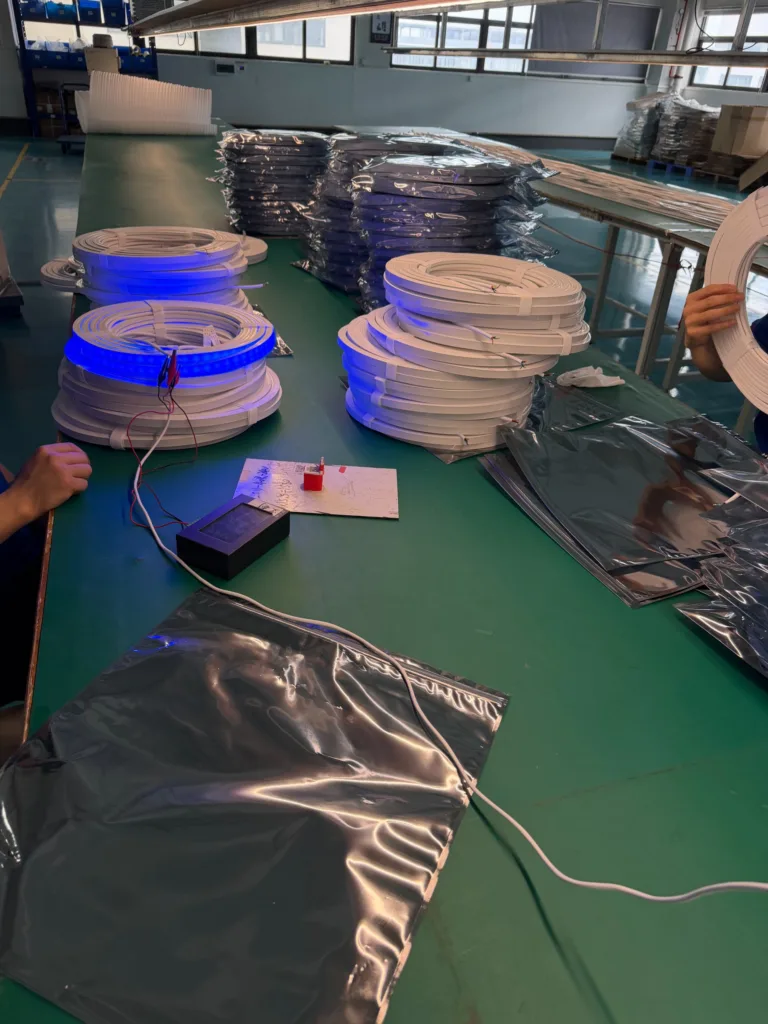
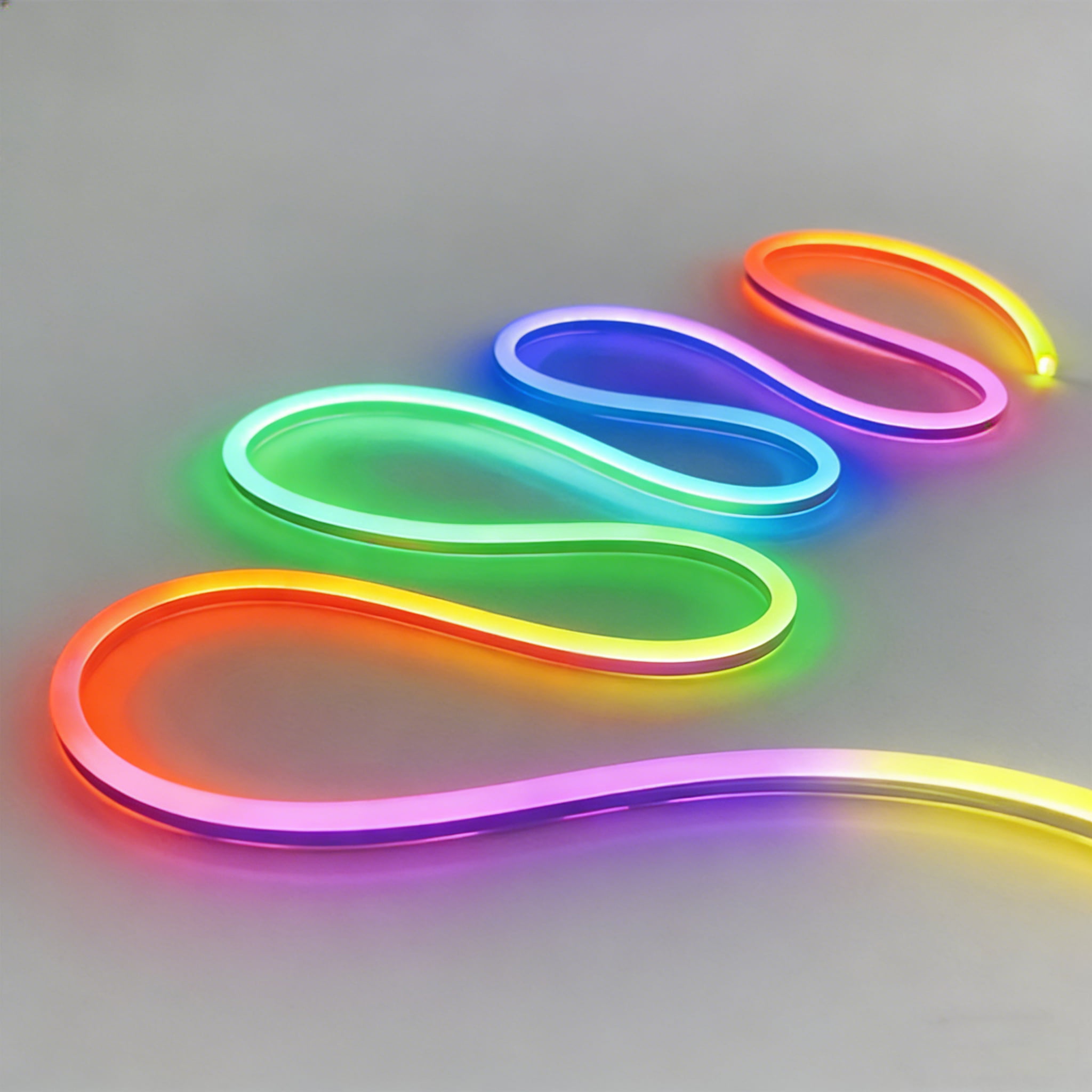
At Shenzhen Alister Technology Limited, we manufacture silicone neon flex systems, not traditional LED tubes. But the engineering philosophy is identical. We don't sell based on luminous efficacy numbers or IP ratings. We sell based on our understanding of how silicone material behavior couples with thermal stress and UV exposure over 50,000 hours outdoors.
We test our extrusion process to verify that molecular weight distribution stays consistent across production runs. We model thermal expansion at material interfaces to prevent stress-induced failures. We maintain spectral data on every batch so customers can match colors years later. We design mounting systems that tolerate installation variation without creating failure points.
The difference between adequate LED tubes and reliable LED tubes isn't about brightness or efficiency. It's about whether the supplier engineers against system-level degradation. It's about whether they understand that your tube doesn't fail because one component breaks. It fails because thermal stress changes electrical contact resistance which increases junction temperature which accelerates optical degradation which you notice as color shift or lumen depreciation.
The companies that sell truly high-quality LED tubes are those who map these coupled failure modes and design against them. They're the ones who can explain not just what their tubes do, but how their tubes degrade over time and why their engineering choices prevent premature failure.
That's the real answer to "which companies sell high-quality LED tubes." Not a list of brand names. But a set of engineering capabilities that predict and control long-term reliability.
Conclusion
High-quality LED tubes aren't defined by certifications or brand names. They're defined by suppliers who understand coupled degradation mechanisms, control batch consistency, and engineer against real failure modes across operational lifetimes.