

Many people treat energy-efficient LED lighting as a simple product selection game. They chase lower wattage, higher lumens, better lm/W ratios, and reduced electricity bills. But if you've managed commercial projects, retail chains, architectural facades, or long-term maintenance contracts, you know the truth is far more complex.
The real danger in energy-efficient solutions isn't high power consumption—it's using aggressive thermal design and extreme driver optimization to achieve short-term efficiency gains while silently advancing failure risks forward in time.
I've watched this pattern repeat across dozens of projects. A building owner upgrades to "energy-efficient" fixtures, celebrates the first year's utility savings, then spends the next three years fighting premature failures, color shifts, and inconsistent brightness zones. The question isn't whether LEDs can save energy—it's whether your energy savings come at the cost of long-term system stability.
The Real Engineering Problem: Is Energy Efficiency Actually a System Thermal Redistribution Challenge?
Most B2B lighting projects make the same fundamental error. They focus on three surface-level metrics: input power reduction, efficacy improvement, and utility bill decreases. But what truly determines lifespan is whether the entire system's thermal balance has been compromised.
Modern energy-efficient designs often sacrifice thermal management for efficiency gains. Higher driver efficiency means tighter packaging with less heat dissipation space. Better LED efficacy still generates elevated junction temperatures. Compact enclosures create worse thermal pathways. Thinner profiles reduce convection effectiveness.
I witnessed this firsthand on a European retail chain project. The engineering team replaced 40W downlights with 30W "energy-efficient" units—a 25% power reduction. The initial results looked perfect: lower utility costs, maintained illumination levels, smooth dimming performance. But after 12-18 months, maintenance calls tripled. The problem wasn't catastrophic failure—it was progressive thermal stress accumulation that manifested as gradual color shifts, accelerated lumen depreciation, and intermittent driver protection events.
The core issue becomes clear when you examine the thermal redesign. To achieve higher lm/W, manufacturers reduced driver redundancy, compressed heat sink volumes, increased power density per unit area, thinned material gauges, and altered thermal pathway structures. The result? Energy efficiency succeeded, but thermal system control failed. The upgrade transformed electrical costs into hidden thermal stress debt that compounded over time.
| Traditional Design | Energy-Efficient Design | Hidden Trade-off |
|---|---|---|
| 40W with thermal margin | 30W optimized efficiency | Reduced thermal headroom |
| Larger heat sink volume | Compact profile | Higher junction temperature |
| Conservative driver design | High-efficiency driver | Lower component redundancy |
| Thicker aluminum substrate | Lightweight construction | Increased thermal resistance |
| Stable 3-5 year lifespan | Accelerated aging after 18 months | Maintenance cost multiplication |
This reveals the fundamental tension in energy-efficient LED design. The engineering challenge isn't reducing power consumption—it's maintaining thermal equilibrium while operating at higher efficiency points. When you push efficacy higher without proportionally improving thermal management, you're not solving the energy problem. You're creating a time-delayed reliability problem that will surface during the system's second thermal cycle.
Why Energy-Efficient Upgrades Often Double Maintenance Costs Instead of Reducing Them?
I need to share a specific commercial lighting upgrade case that demonstrates this pattern perfectly. A North American retail chain implemented an energy-efficient LED replacement program across 200+ locations. The business case looked compelling: 25% energy reduction, 3-year payback period, improved sustainability metrics. The first six months exceeded expectations.
Then summer arrived.
The enclosed ceiling zones began experiencing thermal anomalies. Drivers started intermittent protection mode cycling. Color temperature drift appeared in specific fixture clusters. Brightness uniformity degraded across installation zones. By month 18, the maintenance team was replacing fixtures at rates higher than the old system.
The most critical failure mode wasn't complete fixture death—it was differential aging across installation batches. Different production runs entered varying degradation stages simultaneously, creating visible "brightness patches" across retail floors. Dimming consistency became impossible to maintain. The energy savings were real, but the hidden thermal stress costs overwhelmed them.
Post-project analysis revealed five specific engineering compromises made to achieve efficiency targets:
Driver Optimization Risks: To increase power conversion efficiency from 88% to 94%, the driver design reduced capacitor volumes by 30%, increased switching frequencies, and eliminated thermal derating margins. This improved short-term efficiency but reduced electrolytic capacitor lifespan by approximately 40% under sustained thermal cycling. The failure mode wasn't immediate darkness—it was intermittent operation that frustrated maintenance teams with unpredictable service calls.
Thermal Density Concentration: Higher efficacy LEDs (180 lm/W vs. 140 lm/W) reduced total system power but concentrated heat generation into smaller die areas. Junction temperature rose 8-12°C despite lower total wattage. Since LED lumen maintenance follows exponential decay curves relative to junction temperature, this seemingly minor thermal increase accelerated phosphor degradation and shortened L70 lifespan by thousands of hours.
Structural Weight Reduction: The "energy-efficient" fixtures used thinner aluminum substrates (0.8mm vs. 1.5mm) and reduced heat sink fin volumes by 35% to meet cost targets. Surface temperatures appeared acceptable during initial testing, but steady-state operation in enclosed ceiling environments pushed junction temperatures beyond design thresholds. The thermal pathway from LED junction to ambient air was fundamentally compromised.
Aggressive Current Optimization: To maximize lm/W metrics, LED drive currents were increased to the upper limits of manufacturer specifications. While this improved measured efficacy on test benches, it pushed phosphor conversion efficiency into non-linear operating regions where degradation accelerates rapidly. The "efficiency gain" existed primarily in specification sheets, not in real-world aging behavior.
Batch Consistency Failure: Most critically, the energy-efficient design reduced binning tolerances and eliminated flux reserves to minimize costs. This meant initial brightness matched perfectly, but different production batches aged along slightly different curves. After 5,000+ operating hours, these small differences compounded into visible brightness variations across the installation. The system didn't fail catastrophically—it failed aesthetically and functionally through progressive inconsistency.
The financial reality became brutal. The 25% energy savings delivered approximately $15,000 in annual utility reductions. But the accelerated maintenance cycle, emergency replacement calls, and eventual premature system-wide replacement generated over $60,000 in unplanned costs. The "energy-efficient" solution increased total cost of ownership by 180% compared to the original baseline system.
This case illustrates the central paradox of aggressive energy efficiency optimization. The engineering metrics that maximize lm/W and minimize input power often directly conflict with the thermal management principles that ensure long-term stability. Energy efficiency isn't inherently problematic—thermal instability disguised as efficiency is the actual failure mode.
What Makes Energy Efficiency Different From Long-Term Thermal Stability?
The fundamental misconception in LED lighting procurement is equating energy efficiency with long-term reliability. These are separate—and often opposing—engineering objectives. Energy efficiency measures instantaneous performance at a single operating point. Long-term stability measures system behavior across thousands of thermal cycles, temperature extremes, and aging degradation curves.
All high-efficiency LED solutions concentrate risk into five systematically underestimated variables that only manifest after extended operation periods.
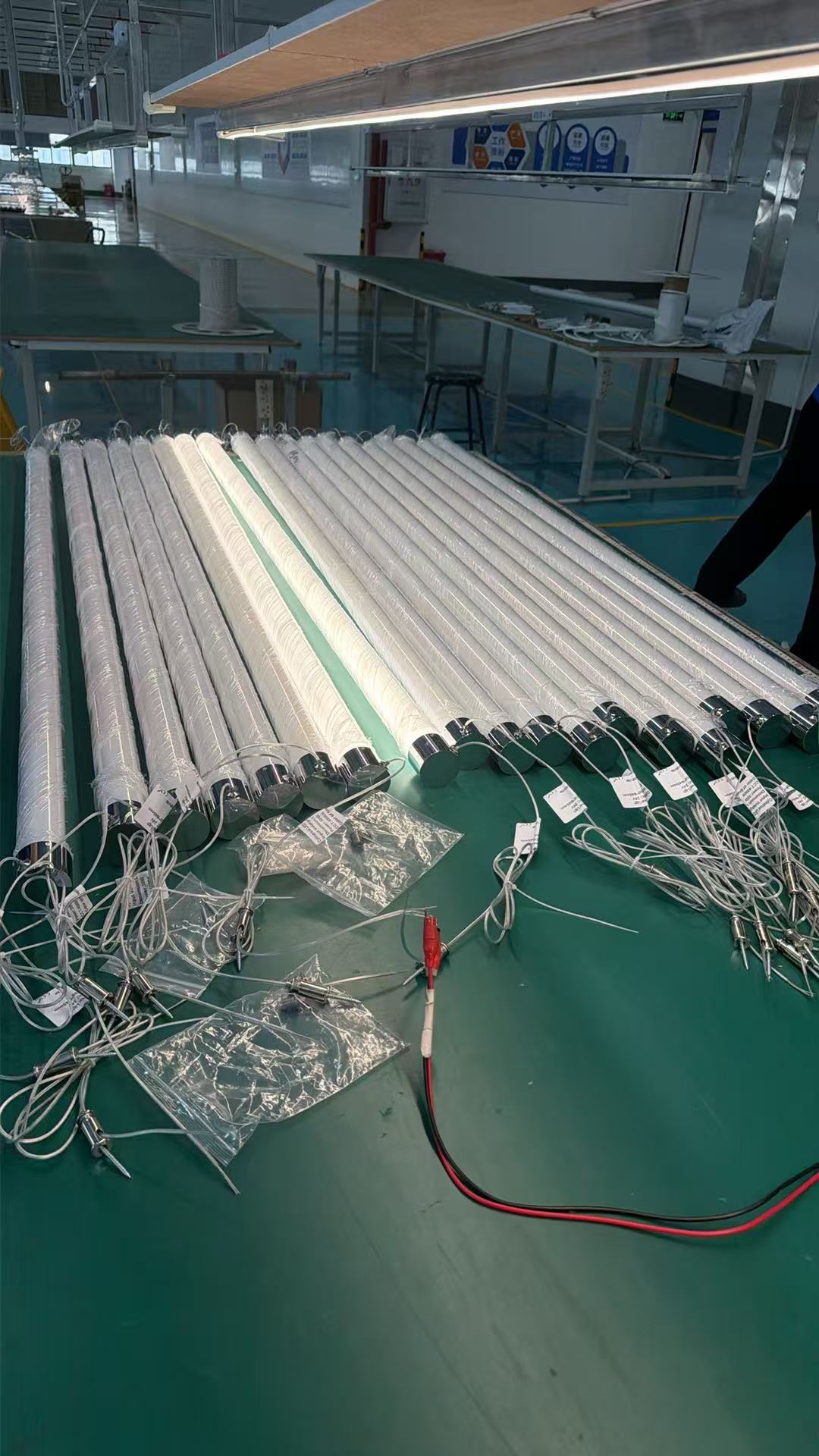
Invisible Thermal Density Increases: Higher efficacy doesn't eliminate heat—it concentrates heat generation into smaller active areas. A 180 lm/W LED generates approximately 38% less total waste heat than a 130 lm/W LED at the same lumen output, but that heat originates from a die area perhaps 25% smaller. The thermal flux density (W/mm²) actually increases. Junction temperature rises even though total system power drops. Since LED lifetime follows Arrhenius relationships with junction temperature, a 10°C increase can reduce L70 life by 20,000-30,000 hours. The efficiency gain masks the thermal penalty until after significant operating time has accumulated.
Driver Efficiency vs. Component Longevity Trade-offs: Achieving 95%+ driver efficiency requires aggressive design choices that conflict with long-term reliability. Manufacturers increase switching frequencies to reduce magnetic component sizes, use smaller electrolytic capacitors to meet cost targets, reduce thermal derating margins to maximize power density, and operate semiconductors closer to thermal limits. These strategies improve measured efficiency but reduce component stress margins. The most insidious failure mode is intermittent operation—drivers that don't catastrophically fail but enter protection modes unpredictably, creating maintenance calls that are difficult to diagnose and expensive to resolve.
Structural Optimization That Breaks Thermal Pathways: Energy-efficient designs prioritize lightweight construction, thin profiles, compact footprints, and minimal material usage. These choices directly conflict with thermal management fundamentals. Thinner aluminum substrates increase thermal resistance. Reduced heat sink volumes limit convection effectiveness. Tighter component spacing creates thermal coupling between heat sources. Sealed enclosures for higher IP ratings trap heat. The thermal pathway from LED junction to ambient air becomes progressively degraded with each structural optimization. Junction temperature increases don't appear immediately—they accumulate over months of operation until failure rates suddenly accelerate.
Efficacy Improvements That Accelerate Phosphor Degradation: Higher lm/W often comes from pushing LED drive currents into optimal efficiency zones that coincide with accelerated phosphor stress. Phosphor conversion efficiency peaks at specific current densities, then declines as current increases further. To maximize lm/W specifications, manufacturers operate near these peak points. But phosphor aging rates also accelerate in these same regions. The initial brightness boost comes at the cost of faster lumen depreciation over time. Color shift becomes the dominant failure mode rather than complete darkness. Fixtures remain functional but aesthetically unacceptable, forcing premature replacement.
Batch Consistency Collapse Under Aging: Energy-efficient designs typically reduce binning tolerances and eliminate flux reserves to minimize costs. Initial installations show perfect uniformity. But as different production batches age along slightly different degradation curves, brightness variations emerge. After 5,000-10,000 hours, these small differences compound into visible "brightness patches" across installations. The system doesn't fail catastrophically—it fails through progressive visual inconsistency that's unacceptable in commercial environments. Maintenance teams face impossible choices: replace individual fixtures and create worse color matching issues, or replace entire zones at massive cost.
| Efficiency Optimization | Short-term Benefit | Long-term Consequence | Failure Manifestation |
|---|---|---|---|
| Higher lm/W LEDs | Lower power consumption | Increased junction temperature | Accelerated lumen depreciation after 5,000+ hours |
| Compact driver design | Reduced fixture size | Elevated component temperatures | Intermittent protection mode events |
| Thin aluminum substrates | Lower material costs | Higher thermal resistance | Premature aging in enclosed environments |
| Aggressive LED currents | Maximum specification efficacy | Phosphor overstress | Color temperature drift and CCT shift |
| Reduced binning tolerances | Lower initial costs | Differential aging rates | Progressive brightness non-uniformity |
The critical insight is that energy efficiency and thermal stability require fundamentally different engineering approaches. Efficiency optimization pushes systems toward performance boundaries where small variations have large consequences. Thermal stability requires operating conservatively within safe design margins where variation has minimal impact. The conflict isn't theoretical—it's the primary cause of premature failure in "energy-efficient" commercial lighting installations.
How Should Professional Engineers Actually Approach Energy Efficiency Without Sacrificing Reliability?
Mature engineering teams never ask "Can we reduce power by 5W?" They ask "If we reduce power by 5W, how much will junction temperature increase, and what does that do to our L70 lifespan projections?" Energy efficiency must be evaluated as a system-level thermal management challenge, not a component-level specification optimization exercise.
The fundamental principle is that energy efficiency must be constrained by junction temperature limits, not driven by power reduction targets.
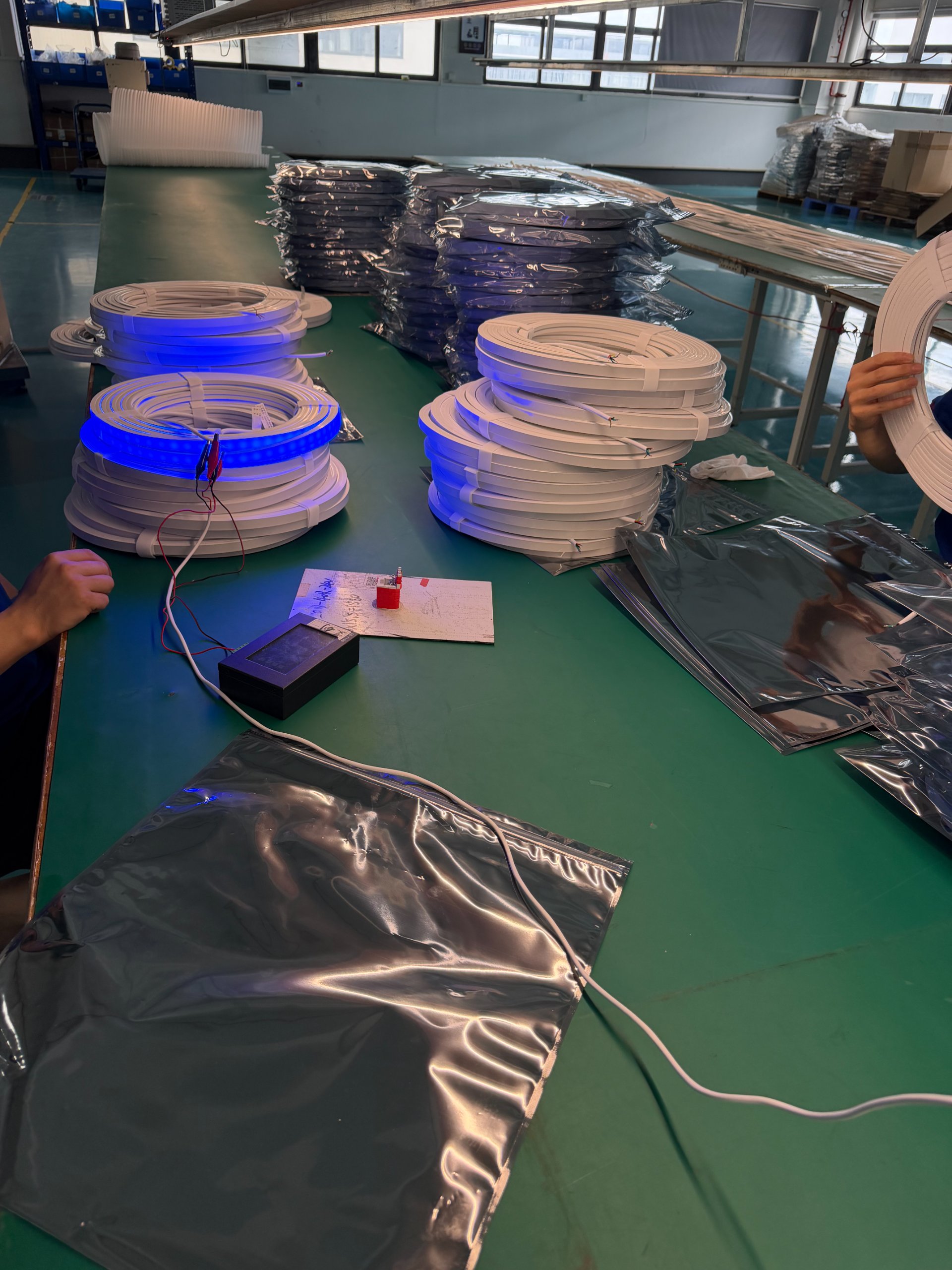
We at Shenzhen Alister Technology approach energy-efficient silicone neon flex design through five integrated thermal stability principles that prevent efficiency gains from becoming hidden reliability risks.
Junction Temperature Ceiling Constraints: Every efficiency improvement must demonstrate maintained or reduced junction temperature under worst-case operating conditions. We don't target maximum possible lm/W—we target maximum sustainable lm/W at specified junction temperature limits. Our silicone neon flex designs incorporate real-time thermal modeling that calculates steady-state junction temperatures across installation environments: enclosed channels, outdoor facades at 60°C ambient, underwater installations, and sealed IP68 conditions. If an efficiency improvement pushes junction temperature above our 85°C design ceiling, we reject it regardless of specification benefits. This constrains efficiency gains to thermally sustainable levels.
Driver Efficiency Bands Rather Than Maximum Efficiency Points: We deliberately design drivers to operate at 90-92% efficiency rather than pursuing 95%+ maximum efficiency. This approach maintains adequate thermal derating margins (15-20% below component maximum ratings), uses appropriately sized electrolytic capacitors for 50,000+ hour lifespans, operates switching frequencies in thermally stable ranges, and eliminates intermittent failure modes that create expensive maintenance calls. The 3-5% efficiency penalty costs approximately $2-3 per fixture annually in electricity, but eliminates $50-100 in premature replacement costs. The trade-off is overwhelmingly favorable for total cost of ownership.
Thermal Pathway Verification Under Real Installation Conditions: Energy-efficient designs must undergo thermal validation in actual installation configurations, not just open-air test bench conditions. Our silicone neon flex undergoes thermal cycling tests in aluminum channels, enclosed architectural profiles, direct burial conduits, and underwater submersion environments. We measure steady-state temperatures after 4+ hours of continuous operation at maximum rated power and 60°C ambient temperature. If junction temperatures exceed design limits, we modify thermal pathways: increase silicone wall thickness for better radial heat dissipation, adjust LED spacing to reduce thermal density, redesign end cap heat sinking, or reduce maximum rated power. Thermal stability takes priority over efficiency specifications.
LED Binning Integrated With Derating Strategy: We don't operate LEDs at manufacturer maximum current ratings to achieve specification sheet lm/W values. Instead, we derate LED currents by 15-20% below maximum ratings and select bin combinations that minimize color shift under aging. This approach accepts 10-15% lower initial efficacy in exchange for dramatically improved long-term color stability and lumen maintenance. After 10,000 hours, our silicone neon flex maintains tighter CCT tolerances (±150K) and higher lumen maintenance (>92% of initial output) than competitors who operate at maximum efficiency points. The initial "efficiency penalty" becomes a decisive long-term stability advantage.
Extended Thermal Cycling Validation: Energy-efficient solutions must demonstrate stable performance through accelerated thermal cycling that simulates years of real-world operation. We subject silicone neon flex samples to 1,000+ thermal cycles (-20°C to +80°C, 4-hour cycles) before qualification. This testing reveals failure modes that only appear after extended operation: solder joint fatigue, phosphor degradation, driver component drift, and color shift. Products that pass initial efficiency tests but fail thermal cycling validation never enter production. This quality gate eliminates designs that achieve efficiency through reliability compromise.
| Traditional Approach | Our Thermal-First Approach | Outcome Difference |
|---|---|---|
| Maximize lm/W specification | Constrain by junction temperature | Lower specification, higher reliability |
| Pursue highest driver efficiency | Target stable efficiency band | Reduced intermittent failures |
| Open-air thermal testing only | Real installation condition validation | Accurate long-term performance prediction |
| Maximum LED current operation | 15-20% current derating | Better lumen maintenance and color stability |
| Specification-based qualification | Thermal cycling requirement | Elimination of time-delayed failures |
This engineering philosophy fundamentally changes how we evaluate energy efficiency. We don't ask "How efficient can we make this?" We ask "What's the most efficient design that maintains stable junction temperatures across installation environments for 50,000+ hours?" The answer is usually 10-15% less efficient than maximum theoretical values, but delivers 200-300% better long-term reliability. That trade-off defines professional engineering judgment.
Conclusion
The real challenge in energy-efficient LED lighting isn't achieving high lm/W specifications or low power consumption numbers. It's determining whether your efficiency gains come from genuine thermal engineering improvements or from hidden reliability compromises that manifest as failures 12-24 months after installation. True energy efficiency must be evaluated five years into the future, not in the present specification moment.