
Most people judge a Commercial Lighting Company by checking their product range, pricing, certifications, and portfolio. But if you've managed real commercial projects, you know these criteria miss the point entirely.
The real differentiator isn't how many products they offer—it's whether they can control system-level failure pathways under sustained environmental stress. In commercial lighting, professional companies don't just sell fixtures; they engineer predictable, long-term performance across entire lighting ecosystems.

This distinction becomes critical when your architectural lighting installation starts showing uneven brightness six months after commissioning, or when facade illumination develops color shifts that turn a unified building design into a patchwork of mismatched zones.
What Makes Project Failure Inevitable? It's Not Product Quality—It's System-Level Risk Control
I've seen too many projects fail because clients confused "supplier competence" with "system engineering capability." This confusion costs millions.
The fundamental issue is that Commercial Lighting Company capabilities aren't measured by individual fixture performance, but by their ability to design lighting systems as structures that degrade predictably over time.
In real-world installations, the fixture is just the visible endpoint. What determines lifespan is system coupling across eight critical domains:
Material System Compatibility: Are thermal expansion coefficients matched across aluminum extrusions, silicone gaskets, and PCB substrates? We've analyzed projects where 0.3mm thermal mismatch created cascading seal failures across 200-meter facade runs.
Thermal Design Under Real Conditions: Does the thermal pathway design account for actual installation geometry? I've documented cases where specified heat dissipation failed because mounting brackets blocked airflow paths that only existed in laboratory conditions.
Structural Accommodation of Thermal Cycling: Can the mechanical assembly handle 40°C daily temperature swings without inducing fatigue stress? Most Commercial Lighting Company designs ignore that outdoor fixtures experience 14,600 thermal cycles annually.
Chemical Compatibility Over Time: Do adhesives remain stable against silicone plasticizers over 50,000 hours? We've seen bonding failures where material datasheets showed compatibility, but long-term migration testing was never performed.
Driver Performance Under Load: Does the power supply maintain regulation when operating at 85% capacity in 60°C ambient conditions? Specification sheets show ideal performance; real projects reveal thermal derating curves that suppliers never disclosed.
Batch Consistency Control: Is LED binning maintained across production runs spanning six months? I've witnessed projects where MacAdam ellipse drift turned uniform facades into visually segmented zones.
Installation Method Impact: Does the mounting system amplify mechanical stress? We've analyzed installations where contractor bracket modifications created point loads that accelerated housing deformation.
IP Protection Under Cycling: Can the ingress protection structure survive 500 wet-dry cycles without compromising seal integrity? Standard IP testing doesn't simulate the hygroscopic pumping that real installations experience.
Here's something only field engineers understand: Fixture failures rarely stem from the fixture itself—they result from systems designed without accounting for coupled degradation mechanisms.
The Most Common Project Disaster: Every Supplier Passes Testing, But The System Fails Slowly In The Field
Let me walk you through a scenario that happens more often than Commercial Lighting Company representatives admit.
A mixed-use development project distributed lighting packages across multiple suppliers—linear fixtures from one vendor, wall washers from another, landscape uplights from a third manufacturer.
During the approval phase, everything looked perfect. Every fixture passed photometric testing, achieved specified IP ratings, delivered accurate color temperatures, and demonstrated stable driver operation. The project commissioned successfully.

Then problems emerged between months three and six. Building facade illumination showed localized brightness variation. Different zones exhibited subtle color temperature shifts. Landscape areas developed intermittent flickering. Some fixtures displayed internal condensation fogging. Driver compartment temperatures varied significantly across installation zones.
By month twelve, the issues became undeniable. The entire building displayed visual fragmentation—identical facade sections showed different degradation curves, color temperatures stratified across regions, localized fixtures accelerated light output decline, and maintenance interventions provided only temporary relief.
Post-mortem analysis revealed the root cause wasn't individual fixture failure—it was system-level incompatibility. Different manufacturers used incompatible material systems. Silicone, aluminum, and PCB thermal expansion coefficients didn't align. Driver design safety margins followed different standards. IP structure responses to moisture cycling diverged. LED binning control protocols weren't standardized. Installation stress pathways differed fundamentally.
Every supplier met specifications individually, but the integrated system was incompatible with sustained environmental exposure.
The Professional Solution Framework: Real Commercial Lighting Company Capability Isn't About Products—It's About Unified Failure Modeling
I've learned that mature Commercial Lighting Company operations don't optimize individual products—they control four interconnected system domains.

Must Unify Material System Logic—Otherwise Projects Will Always Fragment During Degradation
The most insidious threat to outdoor lighting isn't catastrophic failure—it's differential aging rates across material systems.
Critical control parameters include aluminum alloy thermal expansion consistency, silicone compression set degradation curves, long-term compatibility between adhesive chemistries and sealing compounds, and thermal matching between PCB substrates and LED package materials.
When we neglect these factors, we don't see broken fixtures—we observe stratified system degradation. I've documented installations where material incompatibility created 15% brightness variation across facades that should have appeared uniform.
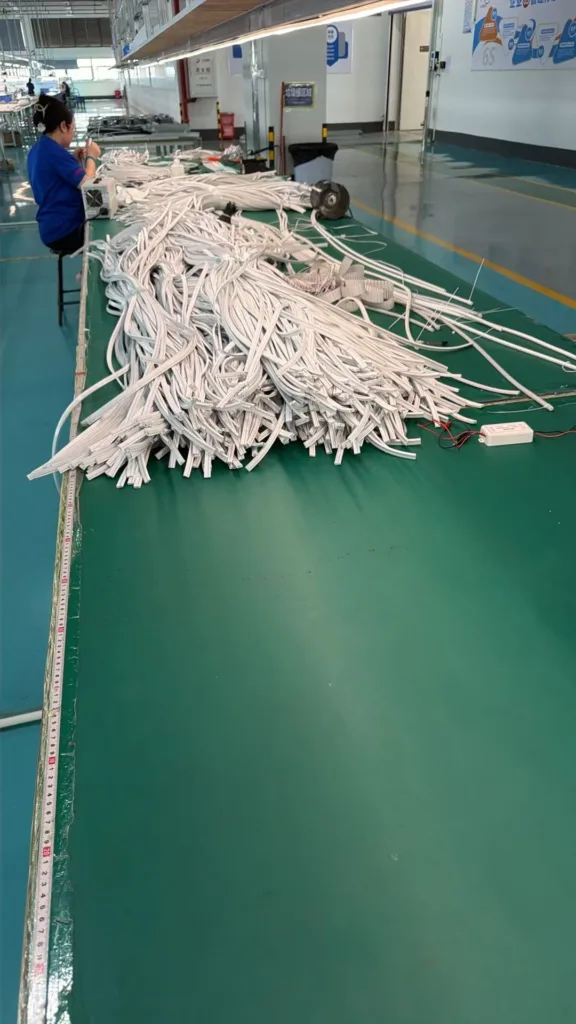
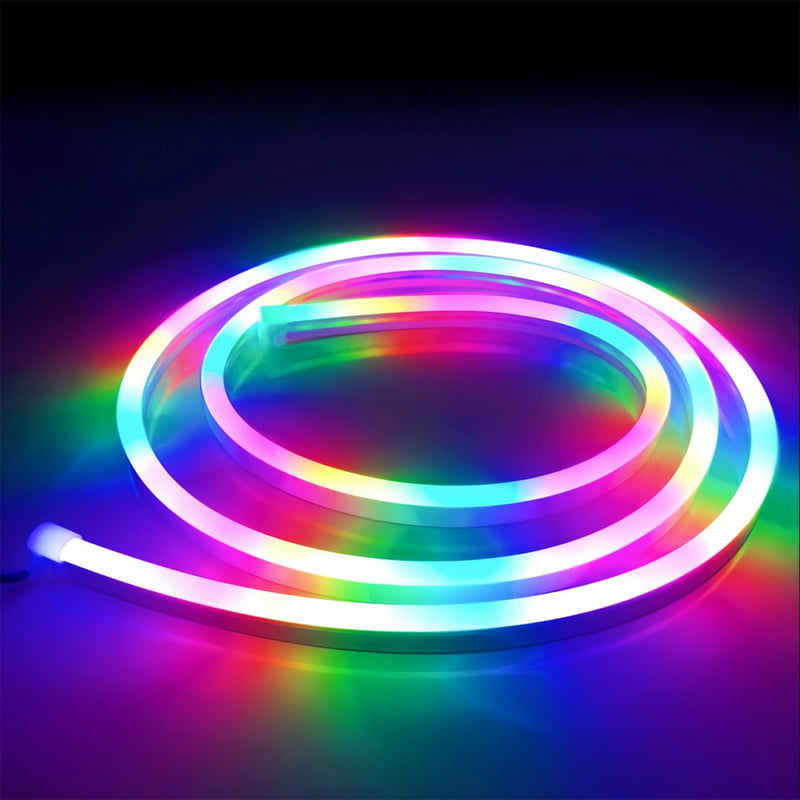
At Shenzhen Alister Technology Limited, we maintain material system consistency across our entire silicone neon flex product line. Our extrusion process uses food-grade, high-molecular silicone with controlled Shore hardness and verified thermal expansion coefficients. We've eliminated material system fragmentation by controlling the entire production chain—from raw silicone polymerization to final extrusion geometry.
| Material Domain | Standard Approach | System Engineering Approach |
|---|---|---|
| Thermal Expansion | Component-level specs | System-matched coefficients |
| Silicone Aging | Generic durometer rating | Compression set curve mapping |
| Adhesive Compatibility | Short-term bond testing | 5000-hour migration analysis |
| PCB-LED Matching | Separate optimization | Coupled thermal modeling |
Must Unify Thermal Pathway Design—Otherwise Light Output Degradation Will Never Be Uniform
Many project failures don't stem from excessive power dissipation—they result from inconsistent thermal pathways across installation zones.
Essential design unification includes establishing consistent heat dissipation logic across fixture types, ensuring mounting structures don't disrupt designed thermal routes, maintaining driver and LED operation within controlled temperature rise zones, and eliminating localized thermal accumulation points.
When thermal design lacks system-level consistency, the result isn't fixture failure—it's differential aging that creates visible brightness patterns across architectural surfaces.
I've analyzed projects where identical fixtures showed 30% variation in degradation rates simply because installation geometry altered heat dissipation efficiency. The fixtures weren't defective—the thermal design didn't account for real-world mounting conditions.
Our silicone neon flex products address this through inherent thermal management advantages. The continuous silicone extrusion provides uniform thermal conductivity along the entire length. Unlike aluminum-channel systems that create thermal discontinuities at connection points, our material system maintains consistent heat dissipation regardless of installation geometry. We've verified through thermal imaging that our installations maintain ±3°C temperature uniformity across 50-meter continuous runs.
Must Unify Batch and Optical Standards—Otherwise Visual Consistency Will Collapse
The invisible disaster in Commercial Lighting projects isn't fixture failure—it's the gradual collapse of photometric consistency that fragments architectural lighting designs.
Mandatory control protocols include LED binning batch locking, MacAdam ellipse step enforcement, driver current output consistency constraints, and optical component batch consistency management.
Without these controls, you don't see lighting—you see buildings divided into distinct chromatic zones. I've witnessed installations where 3-step MacAdam drift created visible color boundaries that destroyed unified facade designs.
This is where our manufacturing focus on silicone neon flex provides inherent advantages. Because we control the complete production process—from LED selection and circuit board assembly to silicone extrusion and final quality verification—we eliminate the batch variation that plagues multi-supplier lighting systems. Every production run uses LED bins locked within 2-step MacAdam ellipses, and our automated color temperature testing verifies consistency before shipment.
| Control Parameter | Typical Tolerance | Our Production Standard |
|---|---|---|
| LED Binning | 5-step MacAdam | 2-step MacAdam locked batch |
| CCT Variation | ±200K | ±100K across production run |
| Driver Current | ±5% | ±2% through calibrated feedback |
| Optical Consistency | Visual inspection | Spectroradiometric verification |
Must Unify Installation Structure Engineering—Otherwise Long-Term Maintenance Becomes Inevitable
The biggest weakness I've observed in Commercial Lighting Company operations: they sell fixtures but ignore structural stress analysis.
In real installations, the combination of wind loading, thermal cycling, and installation tolerances creates long-term structural fatigue that no component-level testing can predict.
Professional system engineering requires pre-designed stress release pathways, structural flexibility zones, installation tolerance absorption mechanisms, and long-term displacement compensation features.
When these aren't addressed, fixtures don't fail electrically—they fail mechanically. I've documented cases where perfectly functional LED systems became unusable because structural fatigue created misalignment that destroyed photometric performance.
Our silicone neon flex technology fundamentally solves this problem through material flexibility. Unlike rigid aluminum extrusions that concentrate stress at mounting points, silicone absorbs thermal expansion and mechanical loading through elastic deformation. We've designed mounting clip systems that allow controlled movement while maintaining optical alignment. Installation tolerance absorption happens through material compliance rather than precision machining.
Conclusion
Evaluating a Commercial Lighting Company isn't about product specifications, certifications, or pricing—it's about whether they can answer one critical question: When this system experiences six, twelve, or twenty-four months of UV exposure, thermal cycling, moisture loading, and mechanical stress, will its degradation be predictable or random? Because in commercial lighting projects, the most expensive element is never the fixtures themselves—it's the scaffolding access, business interruption during maintenance, brand reputation damage from visual inconsistency, structural disassembly costs, and complete photometric redesign that unpredictable failure demands.