
LED signs promise brilliant displays and energy savings. But after years of actual installations, I have seen the hidden truth: brightness alone never tells the whole story. The real question is not "how bright can it get," but "how long can it stay consistent."
LED signs offer high brightness and low energy consumption, but their true engineering challenge lies in maintaining uniform visual performance over time. The core issue is not whether the lights work, but whether the entire system—materials, thermal management, and power stability—can resist coupled degradation in outdoor environments for three to five years.

Most discussions stop at the surface benefits. But if you have managed real commercial signage projects, you know the difficult part starts after installation. The brightness you see during acceptance is rarely the brightness your client sees twelve months later.
What Is the Real Engineering Challenge Behind LED Sign Brightness?
LED brightness sounds simple. Higher lumens mean better visibility, right? But real projects fail not because the lights go dark, but because they decay unevenly across the surface.
The core problem is not brightness loss, but non-uniform system failure. Different modules age at different rates, creating visual inconsistencies that ruin brand identity long before the sign stops working.
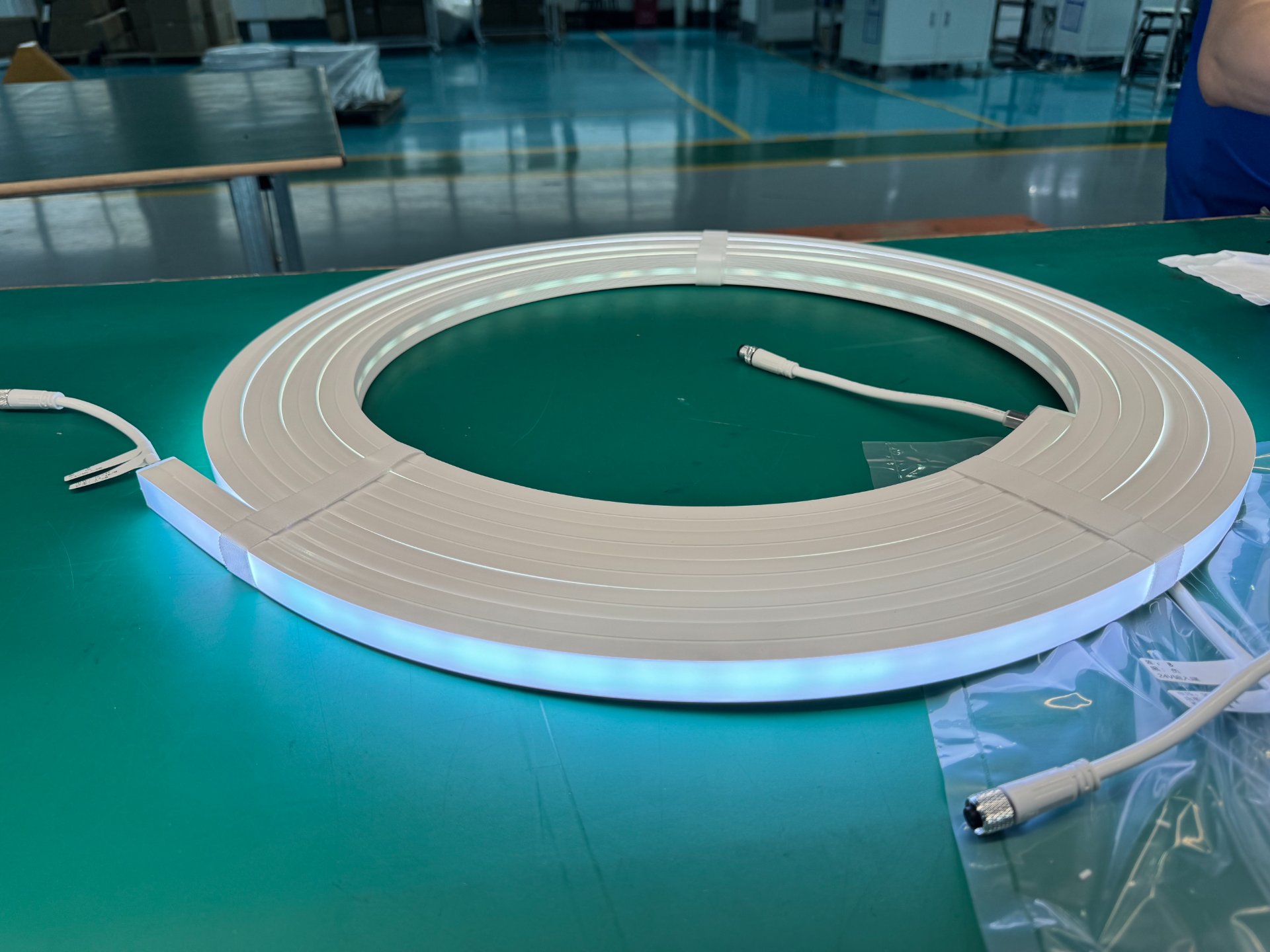
I have seen this happen in chain store projects repeatedly. The installation looks perfect at first. Every letter glows evenly, colors match the brand guideline, and the client approves immediately. Then four to nine months pass. Some edges start dimming. Certain modules shift color temperature. The acrylic face begins yellowing. None of these issues are catastrophic failures, but together they destroy the visual integrity.
Why LED Sign Systems Fail Gradually, Not Suddenly
The failure mode is never "the sign went dark." It is always "the sign looks dirty now," or "the new location does not match the old ones anymore." This happens because LED signs are not single components—they are coupled systems with three hidden failure paths.
| Failure Mode | Root Cause | Visual Impact |
|---|---|---|
| Uneven luminance decay | Different thermal stress on edge vs. center modules | Dark corners, bright center |
| Color shift between batches | LED bin variation amplified over time | Inconsistent brand identity across locations |
| Diffuser material degradation | UV + thermal cycling breaks down acrylic or PC | Yellowing, reduced light transmission |
| Localized hotspots | Poor thermal design causes accelerated aging | Premature failure in specific zones |
The testing lab validates short-term stability under controlled conditions. But real installations face coupled stress: UV radiation during the day, thermal cycling at night, humidity swings, and mechanical vibration. These factors do not add up linearly—they multiply the degradation rate.
Material compatibility determines eighty percent of the lifespan. The LED chip itself is usually not the problem. The real issues come from mismatched thermal expansion coefficients between the aluminum housing and the LED module, UV-unstable adhesives that yellow over time, and diffuser materials that lose optical clarity after prolonged outdoor exposure.
I have disassembled failed signs that still had functioning LEDs. The modules were fine, but the silicone sealant had crept, the acrylic had crazed, and the power supply had drifted slightly out of spec. None of these issues triggered an outright failure, but together they made the sign visually unusable.
How Do Energy Savings Compare to Long-Term System Costs?
Everyone talks about LED efficiency. Lower wattage means lower electricity bills, which sounds great on paper. But engineering economics work differently when you account for maintenance cycles and replacement costs.
LED signs do consume less power than neon or fluorescent systems, but the real cost factor is system longevity. If the sign needs replacement or refurbishment within three years due to material degradation, the upfront energy savings become irrelevant.

A typical LED sign might use sixty watts compared to a neon equivalent consuming one hundred fifty watts. Over one year, this saves around eight hundred kilowatt-hours. At commercial electricity rates, that is maybe eighty dollars annually. But if the LED sign needs a new diffuser panel and module replacement after thirty months, that repair can cost five hundred to twelve hundred dollars depending on size and complexity.
The Hidden Cost of Non-Uniform Aging
Chain brands face an even worse problem: visual inconsistency across locations. When one store's sign starts looking dingy while another location still looks fresh, customers notice. Brand perception suffers. Marketing teams complain. Facilities managers scramble to coordinate replacements.
But you cannot just replace one sign and expect it to match the others. LED bins change over time. Suppliers update their materials. Even if you order from the same manufacturer, the color temperature and brightness might not match your original batch perfectly.
I worked on a project where a retail chain had installed two hundred LED signs over eighteen months. By month twenty-four, they had three visually distinct generations of signage across their locations. The earliest installations had yellowed slightly. The middle batch had shifted toward cooler color temperatures. The newest ones looked perfect. The brand manager was furious, and the contractor ended up eating the cost of a coordinated refresh.
| Cost Factor | Initial Projection | Actual Outcome After 3 Years |
|---|---|---|
| Energy savings per sign | $80/year | $240 total saved |
| Replacement diffuser panel | Not budgeted | $400 per sign |
| Labor for field service | Not budgeted | $200 per sign |
| Brand consistency impact | Not measured | Negative customer perception |
This is why energy savings alone is a misleading metric. The total cost of ownership includes the system's ability to maintain visual consistency over the warranty period. A slightly higher initial investment in UV-stable materials and better thermal design can eliminate the need for midlife refurbishment entirely.
Does IP Rating Actually Protect LED Signs in Real Environments?
IP68 waterproofing sounds reassuring. The specification promises dust-tight and submersible performance. But real outdoor environments do not operate like certification test chambers.
IP68 ratings validate short-term water immersion under controlled conditions, but they do not account for long-term moisture ingress through material interfaces, thermal cycling that creates micro-gaps, or UV degradation that compromises seal integrity over time.

I have seen IP68-rated signs fail within eighteen months because the silicone gasket degraded under UV exposure. The seal was perfect during factory testing, but after twelve months of direct sunlight and temperature swings from minus ten to plus forty degrees Celsius, the gasket hardened and cracked. Water entered through the screw holes, corroded the connections, and caused localized failures.
The Real Waterproofing Challenge: Material Compatibility Over Time
Waterproofing is not a binary pass-fail test. It is a time-dependent degradation curve influenced by multiple factors:
- Silicone sealant UV stability
- Thermal expansion mismatch between metal housing and plastic lens
- Screw penetration stress concentration
- Condensation formation inside the enclosure due to thermal cycling
The worst failures happen when moisture enters the system slowly over months. A small amount of water trapped inside the housing creates a microclimate that accelerates corrosion and LED phosphor degradation. The sign does not fail immediately—it just starts looking dim and discolored in certain areas.
Field testing reveals that signs installed in coastal environments face accelerated aging due to salt spray, even if they pass IP68 certification. The chloride ions accelerate corrosion on connectors and circuit boards, leading to resistance increases that cause localized overheating.
What Material Engineering Decisions Determine LED Sign Longevity?
Material selection is where most projects succeed or fail, but it rarely gets the attention it deserves. People focus on LED specifications and power supply ratings, but the material system surrounding those components determines how long the sign remains visually usable.
The critical material interfaces are: LED module to housing (thermal path), housing to diffuser (optical stability), and sealant to substrate (moisture barrier). Failure at any of these interfaces cascades into system-level degradation.
Acrylic diffusers are common because they are cheap and easy to thermoform. But acrylic yellows under UV exposure, especially the lower-grade formulations used in budget signs. After twelve to eighteen months outdoors, the yellowing reduces light transmission and shifts the perceived color temperature warmer. The sign still works, but it looks dingy.
Polycarbonate offers better UV resistance, but it is more expensive and harder to process. Some manufacturers use UV-stabilized coatings on acrylic to split the difference, but coating adhesion becomes the new failure mode. If the coating delaminates unevenly, you get splotchy discoloration that looks worse than uniform yellowing.
Thermal Management: The Invisible Performance Driver
LED signs do not need active cooling, but they do need thermal design. Heat buildup inside the enclosure accelerates LED phosphor degradation and shortens power supply lifespan. The challenge is that outdoor signs face wildly variable thermal loads depending on sunlight exposure, wind conditions, and ambient temperature.
| Thermal Design Feature | Impact on System Longevity |
|---|---|
| Aluminum extrusion housing | Distributes heat evenly, reduces hotspots |
| Internal air gap between LED and diffuser | Allows convective cooling but risks condensation |
| Thermal interface material between module and housing | Critical for heat transfer, degrades over time |
| Housing geometry (surface area to volume ratio) | Determines passive cooling effectiveness |
I have tested signs where the center modules ran fifteen degrees hotter than the edge modules because the housing design created a thermal trap. Those center modules aged twice as fast, creating visible brightness variation within eighteen months.
The worst mistake is assuming that low power consumption means low heat generation. Even a sixty-watt LED sign generates significant heat when packed into a compact enclosure. Without proper thermal design, that heat accelerates every failure mode: adhesive breakdown, sealant degradation, LED phosphor aging, and power supply capacitor stress.
How Does Power Supply Stability Affect Long-Term Visual Consistency?
Power supplies do not just fail catastrophically—they drift gradually. A small voltage variation or ripple increase might not shut down the system, but it creates cumulative stress that manifests as visual inconsistency over time.
Power supply stability is not about whether the sign turns on, but whether it delivers identical performance across all modules after two years of operation. Voltage drift as small as five percent can cause noticeable brightness variation between modules.

Commercial-grade power supplies are usually rated for fifty thousand hours, which sounds adequate for a five-year outdoor installation. But that rating assumes controlled temperature and steady load. Real installations face thermal cycling, voltage transients from grid fluctuations, and mechanical vibration. These factors reduce effective lifespan significantly.
The Compounding Effect of Power Drift and LED Bin Variation
Even high-quality LEDs have manufacturing variation. Suppliers bin their products by color temperature and luminous flux to maintain consistency within a production run. But over time, small differences in forward voltage and thermal resistance cause binned LEDs to age at slightly different rates.
When you combine LED bin variation with power supply drift, you get multiplicative degradation. A power supply that drops from twelve volts to eleven point eight volts might cause one LED bin to dim by ten percent while another bin dims by fifteen percent. The sign still functions, but the visual uniformity collapses.
I have measured this effect in field installations. Signs that looked perfectly uniform during commissioning showed five to eight percent luminance variation across modules after two years. The difference was subtle enough that clients could not quantify it, but obvious enough that they complained about "the sign looking old."
Why Do Batch Consistency Issues Ruin Multi-Location Projects?
Single-location projects can tolerate some performance variation. But chain brands need every location to look identical, and that is where most LED sign projects fail. Batch consistency is not just a quality control issue—it is a supply chain management challenge.
Multi-location LED sign projects fail when manufacturers cannot lock down LED bin specifications, material formulations, and assembly processes across production runs spanning months or years. Visual inconsistency between locations destroys brand identity faster than any single sign failure.
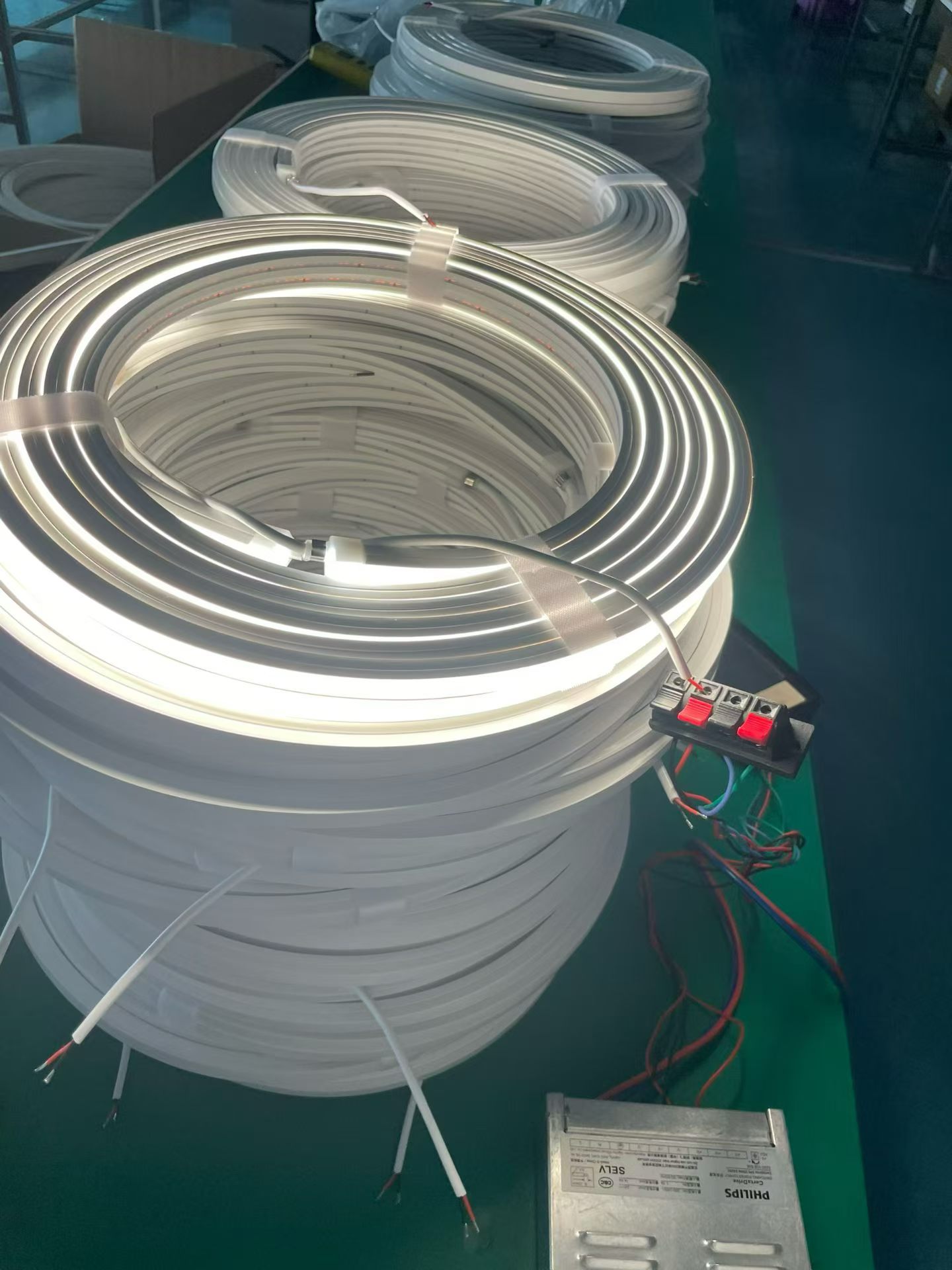
A typical chain rollout might span twelve to eighteen months. The first batch of signs gets installed at pilot locations. Three months later, the second batch ships to the next wave of stores. By the time the rollout completes, the original installations are aging while the newest signs are fresh from the factory.
The Engineering Challenge of Long-Term Procurement Stability
Manufacturers optimize for cost reduction, which means they source components from multiple suppliers and switch formulations whenever better pricing becomes available. That acrylic sheet in batch one might come from supplier A, while batch two uses supplier B's material, which has slightly different UV stability.
LED suppliers update their products constantly. The bin you specified six months ago might not exist anymore. The manufacturer substitutes a "comparable" bin, but the forward voltage is slightly different, and the color temperature has shifted thirty Kelvins. That difference is negligible on paper but visible when installed next to older signs.
| Batch Variation Source | Impact on Visual Consistency |
|---|---|
| LED bin updates | Color temperature and brightness mismatch |
| Acrylic supplier change | Different yellowing rates, optical clarity variation |
| Adhesive formulation update | Uneven aging, potential delamination |
| Assembly process drift | Inconsistent module alignment, light leakage variation |
I worked with a manufacturer who guaranteed batch consistency for one year. After that, they could not promise that new orders would match previous deliveries. For a multi-year rollout, that guarantee is useless. You need suppliers who maintain formulation control and component traceability for three to five years minimum.
Conclusion
LED signs offer real benefits in brightness and efficiency, but engineering success depends on long-term system stability, not initial performance. Material integrity, thermal design, and batch consistency determine whether your sign still looks good after three years or becomes a maintenance liability that damages brand perception.