

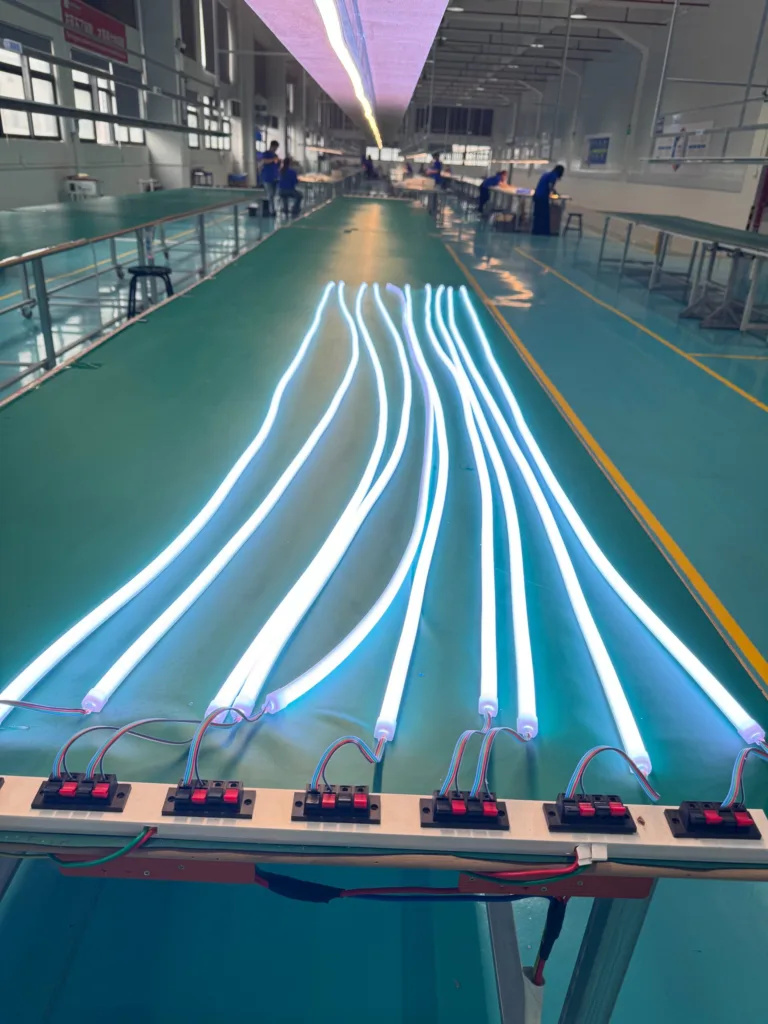
Here is a problem I see all the time. You think choosing LED strip lights is about lumens and color temperature. But the real issue that decides if your project succeeds or fails is whether your entire power-thermal-structural system stays stable over years of continuous operation.
Industrial-grade LED strips fail 90% of the time not because the LEDs die, but because power supply fluctuation, thermal management design, and material aging rates create system-wide parameter drift that you cannot reverse. Your specifications say "24V / 5m / 14.4W" on paper, but what actually happens on site is copper trace heating, silicone thermal expansion, driver ripple, voltage drop at the end, and IP enclosure breathing effects stacking up until your system destabilizes within 6-18 months.

I have been manufacturing industrial-grade LED strip lights for years now. Every failed project I investigated had the same root cause. It was never a single component failure. It was always a mismatch between laboratory testing conditions and real-world thermal cycling, structural constraints, and UV aging.
What Is the Real Problem Hidden Beneath "Industrial Grade" LED Strip Specifications?
Most engineers focus on the wrong metrics. They look at wattage, IP rating, and lumen output. But those numbers tell you nothing about long-term system stability.
The core of UltraBright™ Industrial Series is not "can it light up" but whether three factors are designed together: long-term power load margin (not just rated power), whether the thermal dissipation path is restricted by structure, and whether different materials (PCB, silicone, adhesive, terminals) have matching thermal expansion coefficients.
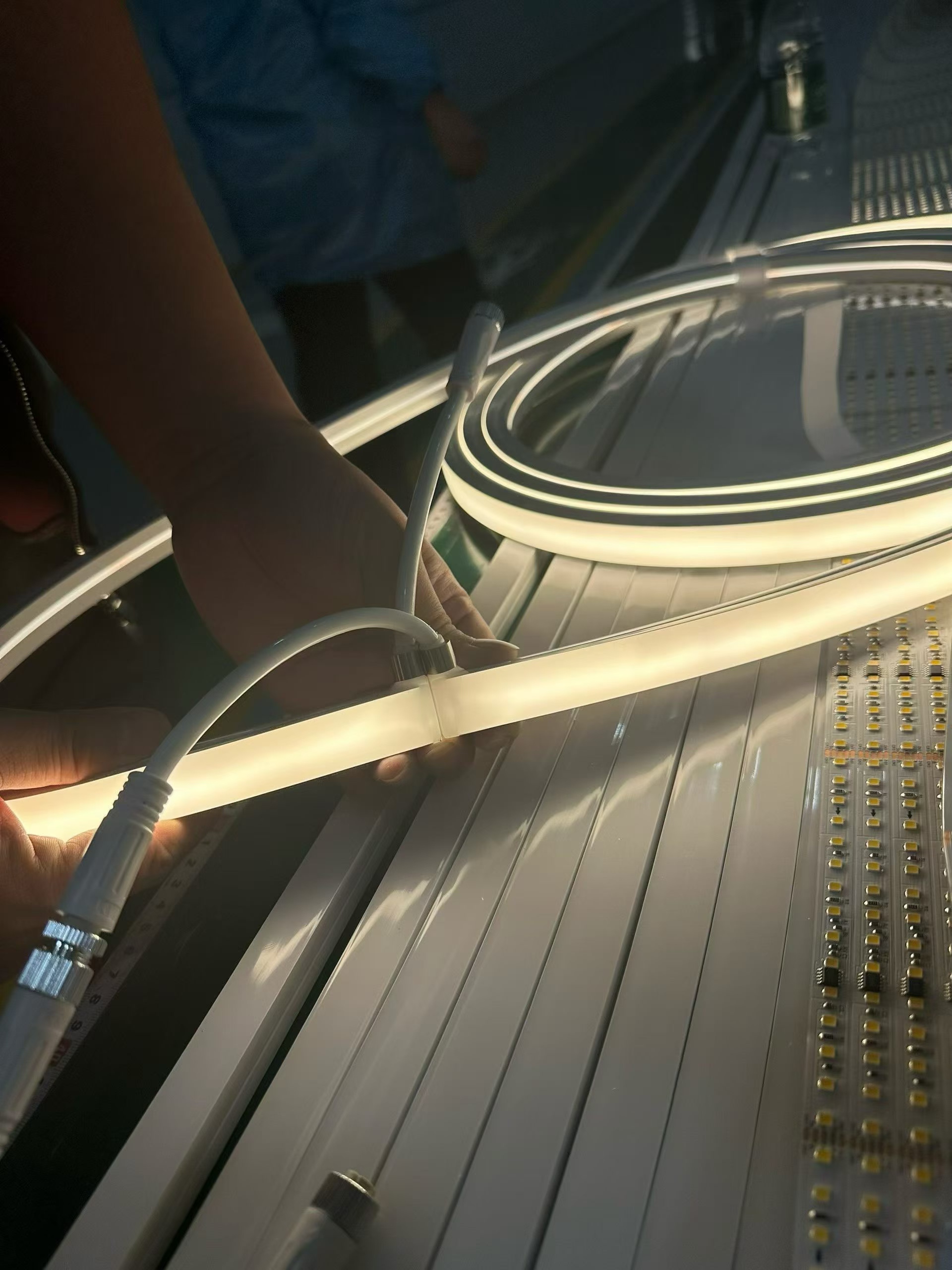
Here is what actually causes failure in most industrial installations. Copper foil fatigue increases resistance year by year. Drivers expand output ripple in high temperatures. Silicone hardness shifts under UV and thermal cycling. Structural mounting points create micro-stress concentration. The symptoms you see (light decay, color shift, dimming at the end, local flickering) are just surface manifestations. The root cause is never in the light source itself. It is in system design.
Let me break this down further. When you test LED strips in a laboratory, you run them at constant temperature for 72 hours. But real installations face day-night thermal cycles, structural constraints, UV exposure, and humidity variation. Laboratory conditions and actual failure mechanisms are completely disconnected. This is why samples pass all tests but fail within months after installation.
The key difference with UltraBright™ Industrial Series is that we design for the real failure modes, not the test conditions. We validate against thermal cycling, not static temperature. We test material compatibility under combined UV-heat-mechanical stress, not single-variable conditions. We measure long-term parameter drift, not short-term performance.
Why Do Most Industrial LED Strip Projects Fail After 4-6 Months?
I saw a typical failure case last year. An outdoor industrial park facade used "industrial-grade 24V IP67 LED strips." Sample testing was perfect. Full load for 72 hours with no issues. Laboratory test at 45°C showed less than 5% light decay. Waterproof test passed IP67.
But 4-6 months after installation, cascading problems emerged: mid-section yellowing, obvious brightness drop at the end (but driver showed no alarm), local dimming at mounting clip positions in the third month during summer, and segmented color banding by month six.
We disassembled the failed sections. It was not a single fault. It was systemic problems stacking up. The power driver operated at 92-98% load continuously with no margin. The aluminum profile heat dissipation design did not account for continuous thermal accumulation. Silicone and thermal pad interface aged over time. PCB copper foil developed micro-cracks from thermal cycling. Different batches had slight binning drift.
The most critical finding was this. The driver was rated for the load, but had no real-world derating for continuous operation. The aluminum channel provided a thermal path, but the mounting method created thermal trapping zones. The silicone was UV-resistant, but its interaction with the adhesive and PCB coating was never tested under combined stress.
This is the fundamental problem. You cannot solve industrial-grade reliability by picking better individual components. You need to design the entire electro-thermal-mechanical system as one integrated unit. Power supply derating, thermal path optimization, material compatibility, and batch consistency must all be controlled at the engineering level, not the component level.
I have seen this pattern repeat in dozens of projects. The failure is never random. It is always predictable from the system design. Once you understand the real failure mechanisms, you can design around them. That is what we do with UltraBright™ Industrial Series.
How Should Power Supply Margin Be Calculated for Industrial LED Strip Installations?
Here is a mistake almost everyone makes. They size the power supply based on total wattage of the LED strips. If you have 100 watts of LED strips, you buy a 120-watt driver and call it "20% margin."
But industrial projects need power supplies sized for long-term aging curves, not just wattage. You need at least 30% continuous margin (not startup surge margin), ripple rejection prioritized over efficiency, and high-temperature derating curves matched to actual site conditions.

Let me explain why this matters. Power supplies age. Output voltage drifts. Ripple increases as capacitors dry out. If you run at 92% load from day one, within 18 months you will be at 98% load as the driver ages. At that point, output regulation fails. Voltage ripple increases. LED current becomes unstable. You see flickering and color shift.
The UltraBright™ specification requires all partner installations to maintain power supplies below 70% rated continuous load. This sounds wasteful. But it is the only way to guarantee stable output over five years. We also require ripple specifications, not just wattage ratings. Many cheap drivers have high ripple under load. This causes LED junction temperature to spike and recover rapidly, accelerating phosphor degradation.
High-temperature derating is another critical factor. Most drivers are rated at 25°C ambient. But industrial installations often see 40-50°C ambient, especially in enclosed spaces or direct sun exposure. A driver rated for 120W at 25°C might only deliver 90W stably at 50°C. If you sized it for 100W load, you are now overloading it in real conditions.
| Power Supply Factor | Standard Approach | UltraBright™ Industrial Approach |
|---|---|---|
| Load Margin | 20% peak surge | ≥30% continuous operation |
| Derating Basis | Nameplate wattage | Aged output at max ambient temp |
| Ripple Specification | Usually ignored | <5% at full load, 50°C ambient |
| Validation Test | Short-term overload | 1000-hour thermal cycling |
This is not about buying bigger drivers. It is about understanding how power supply parameters change over time and temperature. If you do not design for aging, you are designing for failure.
What Is the Difference Between "Heat Dissipation" and "Thermal Management" in LED Strips?
Most people think aluminum channels solve the heat problem. They do not. Aluminum channels provide a thermal conduction path. But thermal management means designing how heat moves from the LED junction through the PCB, through the mounting interface, into the aluminum, and finally into the air.
Industrial thermal design requires separating three heat paths: source-to-structure, structure-to-air, and localized thermal trapping. Many failures come from thermal lockup where heat accumulates in specific zones because the structure blocks convection or the mounting method creates thermal resistance.
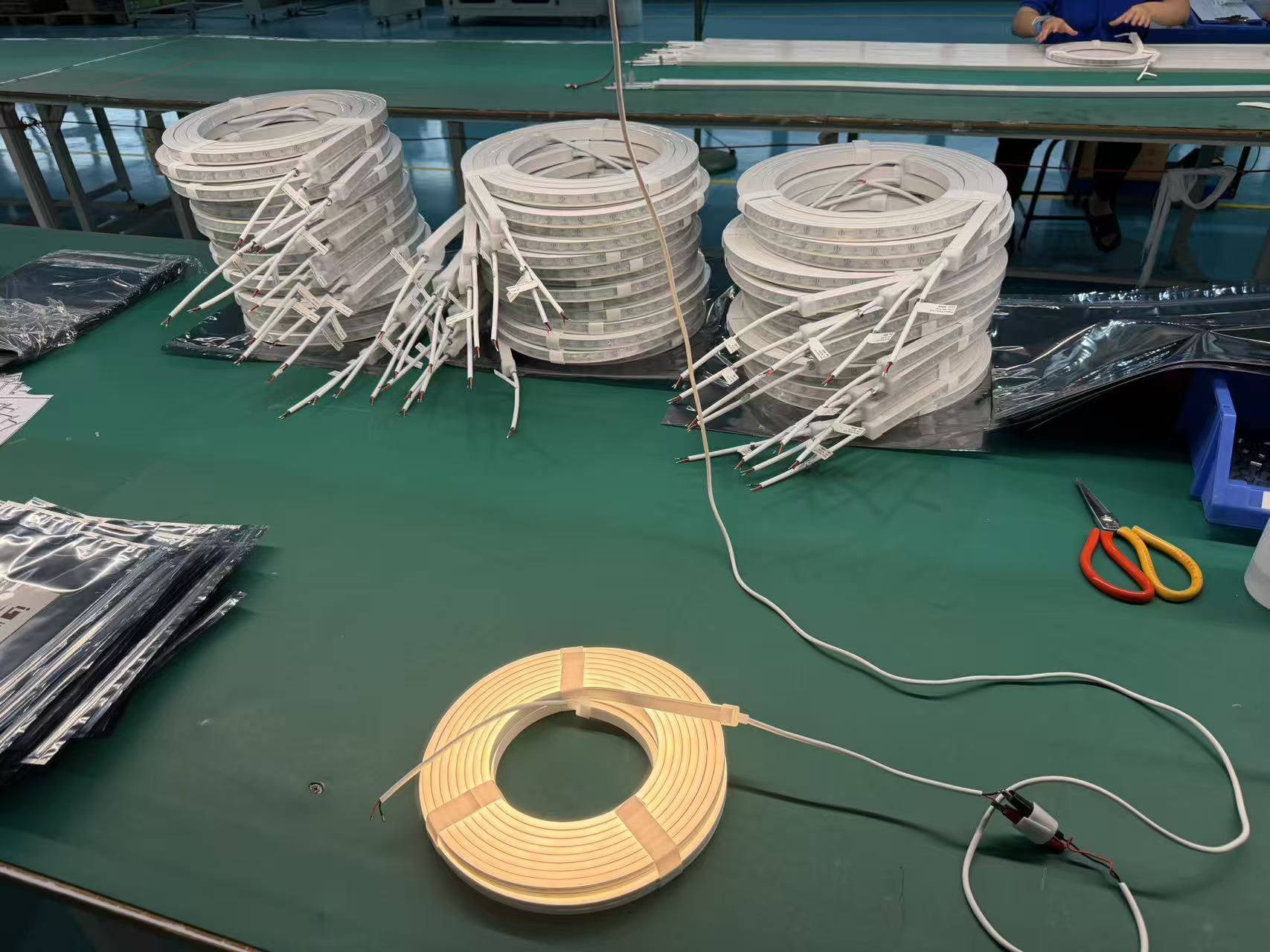
Here is a common failure mode I see repeatedly. LED strips mounted in aluminum channels with silicone fully potted. The silicone provides excellent waterproofing. But it also creates a thermal insulation layer between the PCB and the aluminum. Heat cannot transfer efficiently. The LED junction temperature rises. Phosphor degrades faster. You see color shift and early lumen depreciation.
The solution is not "better silicone" or "thicker aluminum." It is redesigning the thermal interface. UltraBright™ Industrial Series uses a dual-path approach. The PCB has direct metal contact with the aluminum at specific thermal anchor points. The silicone fills the gaps for waterproofing but does not block the primary thermal path. This requires precision in manufacturing. The tolerance between the PCB height and the aluminum channel depth must be controlled to ±0.1mm.
Bending zones are another critical area. When you bend an LED strip around a corner, the copper foil experiences mechanical stress. This stress is worse at elevated temperatures. The combination of thermal cycling and mechanical strain causes copper fatigue. Micro-cracks develop. Resistance increases. Local heating increases. The crack propagates. Eventually, the circuit opens.
We solve this by reducing copper foil density in bending zones and using thicker, more ductile copper. This increases manufacturing cost. But it extends lifetime by 3-5x in applications with frequent thermal cycling. The key insight is that thermal management is not about removing heat. It is about controlling where heat goes and ensuring materials can survive the thermal-mechanical stress that results.
Why Is Material Compatibility More Important Than Individual Material Quality?
I have seen this problem destroy projects that used expensive, high-quality materials. The silicone was premium grade. The adhesive was industrial grade. The PCB coating was conformal-coated. But they were never tested together under long-term stress.
Industrial LED strips fail when materials interact in unexpected ways. Silicone does not fail alone. It fails because of reactions with adhesive, PCB coating, and terminal metals under UV, heat, and humidity. UV alone is manageable. Heat alone is manageable. But UV + thermal cycling + mechanical stress creates failure modes that do not show up in single-variable testing.
Let me give you a specific example. We had a batch of LED strips where the silicone passed all UV aging tests. But after six months outdoors, the adhesive interface turned brown and delaminated. Investigation showed that UV exposure caused the silicone to outgas volatile compounds. These compounds reacted with the adhesive. The reaction accelerated at elevated temperatures. None of this appeared in separate tests of the silicone or adhesive.
The solution required changing both materials and validating them together. We now run combined UV-thermal cycling tests with the full material stack: PCB, coating, adhesive, silicone, and terminal contacts. The test runs for 1000 hours at 65°C with 8-hour UV exposure per day. This simulates approximately three years of outdoor exposure.
Silicone hardness is another critical parameter that most people ignore. Silicone hardens over time due to UV exposure and thermal cycling. As it hardens, it stops absorbing mechanical stress. Instead, stress transfers to the PCB and solder joints. We have seen cases where silicone hardness increased from Shore A 45 to Shore A 70 over 18 months. At that hardness, the silicone no longer flexes. Thermal expansion stress cracks the PCB.
| Material System Risk | Standard Approach | UltraBright™ Validation |
|---|---|---|
| Silicone-Adhesive Interface | Separate material tests | Combined aging test, 1000h at 65°C + UV |
| PCB Coating Compatibility | Generic conformal coating | Validated against silicone outgassing |
| Silicone Hardness Drift | Initial hardness spec only | Track hardness change over 18-month cycle |
| Terminal Corrosion | Salt spray test | Galvanic compatibility + sealed environment test |
This is why UltraBright™ Industrial Series specifies not just material grades, but material system compatibility. We test interactions, not individual components. This catches failure modes that standard testing misses.
How Does Batch Consistency Affect Long-Term Installation Stability?
Here is a problem that only shows up in large projects. You install phase one with batch A. Everything works perfectly. Six months later, you install phase two with batch B. The color temperature is slightly different. Not enough to fail inspection. But enough that customers notice.
Batch consistency in industrial LED strips is not about meeting specifications. It is about maintaining identical performance across multiple production runs separated by months or years. Color binning, voltage-current curves, and thermal characteristics must stay within tight windows even as component suppliers change or manufacturing processes evolve.
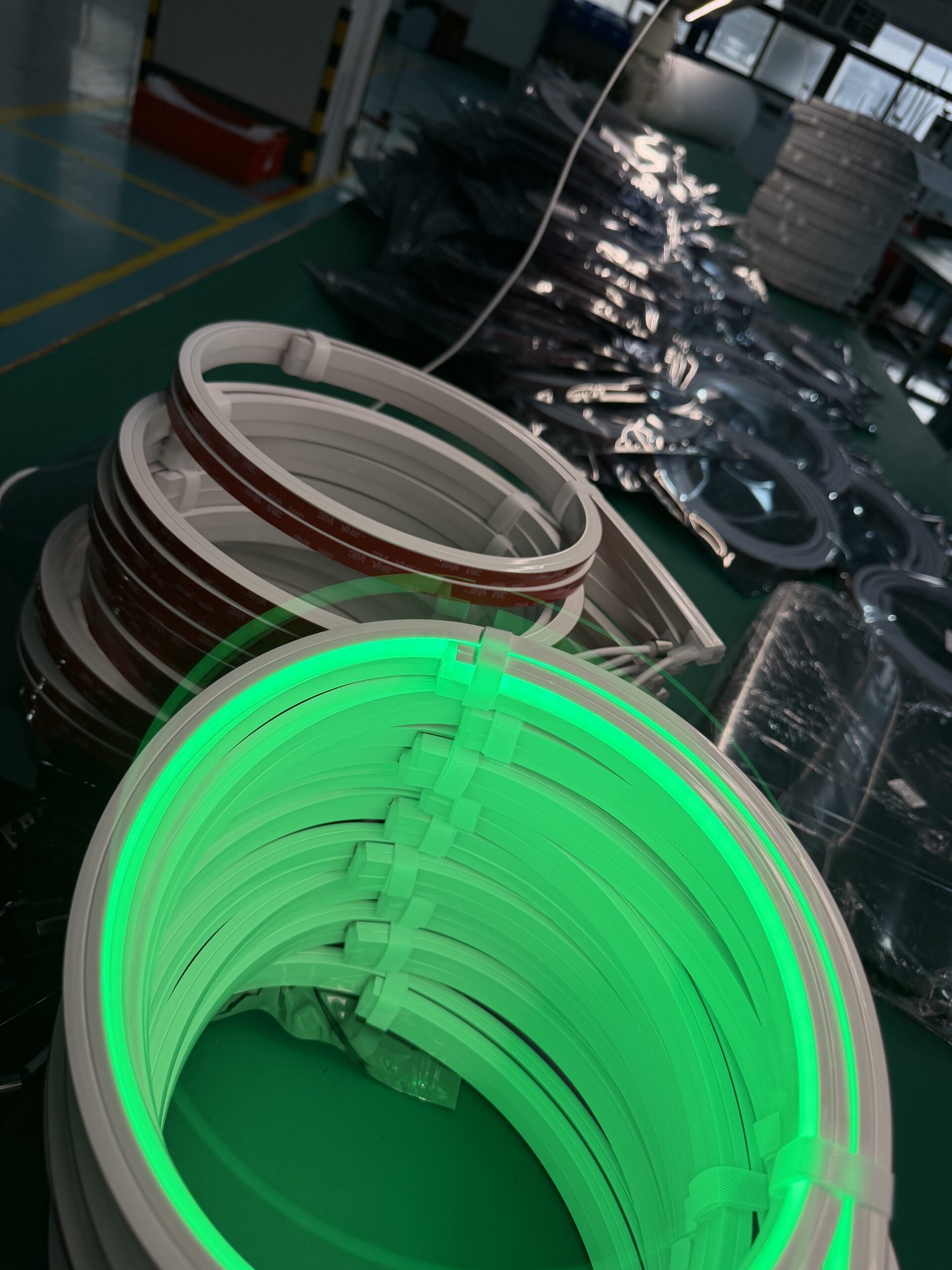
The fundamental problem is that LED manufacturing has inherent variation. Even from the same supplier, different production weeks have different binning distributions. Most manufacturers sort LEDs into bins and use whatever bins are available. This means batch A might be 3000K ±5 SDCM and batch B might be 3000K ±7 SDCM. Both meet specifications. But they do not match visually.
For UltraBright™ Industrial Series, we solve this by maintaining bin-locked inventory. We purchase large quantities of specific bins and hold them in controlled storage. When a project requires multiple phases, we allocate LEDs from the same locked batch. This guarantees consistency across installation phases.
Voltage-current curves are another hidden variation. Different LED batches have slightly different forward voltage. If you mix batches on the same power supply, current distribution becomes uneven. Some segments draw more current. They run hotter. They age faster. Within 12-18 months, the color shifts.
We prevent this by characterizing every batch and matching V-f curves within ±0.05V at rated current. This requires additional testing and sorting. But it eliminates long-term drift from uneven current distribution. We also provide batch traceability. Every reel has a unique identifier linked to the specific LED bin, PCB lot, and silicone batch. If an issue emerges, we can trace it back to the exact production run.
Thermal characteristics are the final piece. PCBs from different suppliers or different production runs have slightly different copper weight or insulation thickness. This changes thermal resistance. Even with identical LEDs and power supplies, different PCB batches run at different junction temperatures. This accelerates aging inconsistently across the installation.
Conclusion
UltraBright™ Industrial Series LED Strip Lights solve the real problems that cause industrial installations to fail. We design for long-term system stability, not laboratory test conditions. Power margins, thermal management, material compatibility, and batch consistency are engineered together as one integrated system. This approach costs more upfront. But it eliminates the returns, re-work, and customer complaints that destroy project profitability. When you need LED strips that still perform identically after five years of continuous operation, you need a manufacturing partner who understands that industrial-grade means engineering for real-world failure modes, not just meeting specifications on paper.