
I've been working in industrial lighting for years, and I see the same mistake over and over. Projects look perfect on paper, pass all initial tests, then suddenly start failing three to six months after installation. The worst part? Everyone blames the LED strips, but that's almost never the real problem.
The real issue with wholesale neon signs isn't brightness, color accuracy, or even price—it's that most buyers treat the power supply, LED body, and mounting structure as separate components instead of understanding them as an interconnected thermal-electrical-material system that evolves over time.
Let me show you what actually kills wholesale neon sign projects, and more importantly, how to prevent it from happening to yours.
What's Actually Killing Your Neon Signs?
I need to be direct about something most suppliers won't tell you.
When you order wholesale neon signs, you're not just buying lights. You're buying a long-term thermal-electrical coupling system. The LED strip, power supply, and installation environment all interact with each other constantly. Heat accumulates, voltage drops, materials age—all at the same time.
Here's what I've learned from working with hundreds of wholesale projects: the failures almost always trace back to power supply design, not LED quality.
Your power supply isn't an accessory—it's a lifespan amplifier. Choose the wrong one, and you're programming your entire system to fail, just slowly enough that you won't notice until it's too late.

Most buyers focus on matching wattage. They ask: "Is this 100W power supply enough for my 80W LED strip?" That's the wrong question.
The real question should be: "How will this power supply perform at 60% load, in 40°C ambient temperature, after three years of continuous operation?"
Because here's what actually happens in the field:
Your power supply operates under light or heavy load for extended periods. This changes its output ripple characteristics. That ripple causes premature LED degradation, even though everything seems "matched" on paper.
Small voltage fluctuations cause LED driving current to become unstable. This creates brightness variations between different batches of signs, even from the same production run.
Thermal cycling causes potting compound fatigue. Your IP65 rating starts dropping in year two, long before anyone notices water ingress.
EMI interference appears in long wire runs, causing localized flickering or dark zones that testing never predicted.
Power supply efficiency decreases over time, raising overall system temperature. This accelerates both silicone degradation and LED package aging simultaneously.
Let me share a real scenario I encounter constantly in wholesale projects.
You manufacture a batch of neon signage for a retail chain. Everything passes inspection perfectly. The power supply has 80% load rating with plenty of headroom. LED brightness is uniform across all units. IP65 testing passes. The signs run continuously for 72 hours with zero issues.
Three months later, reports start coming in. Brightness inconsistencies. Dark zones at the far end of runs. Color banding across installations.
You inspect the returned units and find the LED strips are fine. The real problem? The power supply has thermally drifted. Not failed—drifted. Its output voltage has dropped slightly under sustained thermal stress. Multiple parallel circuits create load imbalances. LEDs operate in nonlinear driving states at lower voltages. Small forward voltage differences between LED batches get amplified into visible problems.
The customer sees brightness variations and color bands. They blame LED quality. But the actual failure is in power system design, not component quality.
This is why lab testing misses these issues completely. Labs don't simulate three months of continuous operation with real thermal loading, dust accumulation, and grid voltage fluctuations.
How Should Power Supplies Actually Be Selected?
I want to explain the engineering approach we use for serious wholesale neon sign projects.
Forget about matching wattage ratings. That's amateur hour. Here's what matters.
Load curve analysis over time
Don't just look at whether you need 100W, 200W, or 300W. Look at the efficiency curve at 60% load. Study the derating behavior above 40°C ambient. Analyze voltage drift after 1000 hours of continuous operation.
Real failures don't come from momentary overload. They come from chronic drift that accumulates invisibly.
Voltage drop compensation design
Most neon sign failures I've investigated trace back to voltage drop issues in long installations with multiple parallel connections and undersized wire gauge.
The correct approach isn't making the power supply "adequate." It's ensuring every LED segment remains within stable forward voltage windows even under worst-case conditions.
Otherwise you'll see the classic problems: far-end dimming, color temperature shift, and localized flickering.
| Voltage Drop Factor | Impact on System | Long-term Consequence |
|---|---|---|
| Long distance runs | Increased resistance | Progressive dimming at endpoints |
| Multiple parallel points | Uneven current distribution | Brightness inconsistency between sections |
| Insufficient wire gauge | Higher heat generation | Accelerated insulation degradation |
| Temperature cycling | Resistance variation | Unpredictable performance drift |
IP rating versus actual longevity
This is a critical misunderstanding in the industry. Many buyers think IP67 means outdoor reliability. That's not what IP ratings measure.
IP ratings only tell you the initial sealing state. They don't predict long-term performance under UV exposure, thermal cycling, and material fatigue.
What you actually need to evaluate: permanent set characteristics of potting compounds, elastic degradation of seals after UV and thermal stress, thermal stress fatigue pathways in power supply housings.
Because reality works like this: IP ratings mean "no water entered on day one." They don't mean "no water will enter in year three."
System-level matching, not component selection
Industrial-grade projects require calculating all these factors together: LED forward voltage bin variations, copper trace voltage drop, ambient temperature profiles, heat dissipation capacity of mounting structures, power supply efficiency changes under varying loads.
If you don't account for these interactions, you're not designing a system. You're ordering independent parts and hoping they work together.
Thermal management determines everything else
Here's something most people miss completely. The real aging accelerator for LED strips isn't the LEDs themselves. It's the system temperature rise caused by the power supply.
Every 1% drop in power supply efficiency can raise system temperature by 2-3°C. This directly affects silicone yellowing rates, LED package light decay, potting compound hardening, and waterproof structure fatigue.
Your anti-yellowing guarantees and lifespan claims all trace back to power supply thermal management. If you get this wrong, nothing else matters.
What Makes Our Manufacturing Approach Different?
At Shenzhen Alister Technology, we design wholesale neon sign systems using industrial thermal-electrical coupling analysis.
We don't just test whether a sign lights up. We model how the power supply, LED strip, and mounting environment interact over three years of continuous operation.
Our power supply specifications include long-term drift data, thermal derating curves, and voltage stability profiles under sustained loading. This isn't standard in the industry, but it should be.
We use food-grade, high-molecular silicone extrusion that maintains material properties from -40°C to +60°C. This isn't marketing language—it's material engineering designed to match power supply thermal characteristics over time.
Our quality control doesn't stop at initial IP testing. We validate seal elasticity after thermal cycling, measure potting compound compression set after aging, and verify power supply output stability after extended operation.
When you work with us for wholesale neon signs, we're not selling you LED strips and power supplies. We're engineering complete systems designed to maintain performance for five-plus years in real-world conditions.
You can reach us directly at +86 182 1841 0153 or [email protected] to discuss your specific wholesale project requirements.
Why Do Projects That Pass Testing Still Fail?
This frustrates me more than anything else in the industry.
You've probably experienced this yourself. Your wholesale neon signs pass every acceptance test perfectly, then start developing problems months later. Everyone involved gets confused and angry because the testing was thorough.
The problem isn't the testing. It's what the testing measures.
Standard testing checks instantaneous performance under controlled conditions. It doesn't measure system drift over time under varying thermal and electrical stress.
Real failures develop slowly through coupled interactions: power supply efficiency drops slightly, raising system temperature. Higher temperature accelerates material aging and electrical resistance changes. These create voltage distribution problems. LED driving characteristics shift out of optimal range. Brightness variations appear gradually.
None of this shows up in 72-hour testing or initial IP verification.
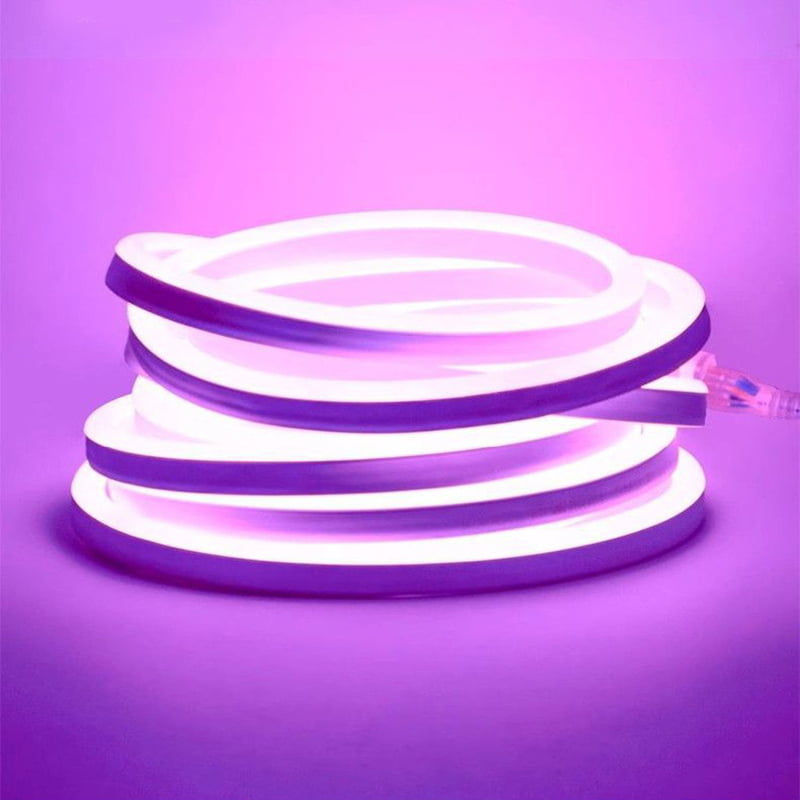
This is why we perform extended thermal cycling tests, measure power supply output drift over time, and validate material properties after aging simulation. We're testing the system's evolution, not just its initial state.
The wholesale neon sign projects that succeed long-term aren't necessarily using the brightest LEDs or the highest IP ratings. They're using properly engineered power systems that maintain stable performance as materials and electrical characteristics change over years of operation.
What Questions Should You Actually Ask Suppliers?
Based on my experience, here are the questions that separate professional suppliers from order-takers:
How does your power supply output voltage drift over 1000 hours of continuous operation? Can you provide actual measured data, not just manufacturer specifications?
What's the efficiency curve at different load levels and temperatures? Most suppliers only know the rated efficiency at optimal conditions.
How do you compensate for voltage drop in long runs and multiple parallel connections? Do you have load distribution analysis or just rule-of-thumb wire sizing?
What's the permanent compression set of your potting compounds after thermal cycling? This determines actual long-term waterproofing, not initial IP ratings.
Can you provide system-level thermal analysis showing LED junction temperature under different mounting conditions? This determines actual lifespan more than any component rating.
If a supplier can't answer these questions with specific data, they're selling components, not engineered systems. Your wholesale project needs the latter.
Conclusion
In wholesale neon signs, power supplies aren't power accessories—they're lifespan regulators for your entire system. Choose wrong and your signs won't fail immediately; they'll drift for three months, require repairs at six months, and generate warranty claims by year one. Real engineering makes them look unchanged after three years.