

Most business owners look at LED lighting upgrades and see one thing: lower electricity bills. But after working with hundreds of commercial projects—from retail chains to office complexes—I've learned something that completely changed how I evaluate lighting investments. The biggest benefit isn't what you save on your monthly utility statement. It's what you avoid spending over the next five years on maintenance, downtime, and emergency replacements.
Energy-efficient LED lighting delivers three critical advantages for commercial operations: up to 75% reduction in energy consumption, significantly lower maintenance costs due to extended lifespan (50,000+ hours), and improved workplace productivity through better light quality. However, the real financial impact comes from avoiding the hidden operational costs that traditional lighting systems generate through frequent failures, color shifts, and thermal management issues.

I remember the moment this became clear to me. A hotel chain approached us after their "budget-friendly" LED retrofit started failing after just 18 months. They had saved money upfront, yes. But the maintenance invoices, guest complaints, and emergency callouts were costing them three times what they saved on electricity. That project taught me something fundamental: true energy efficiency isn't about pushing systems to their performance limits—it's about building reliability into every watt you save.
What Makes LED Lighting Truly Energy-Efficient Beyond the Power Meter?
When most people talk about energy-efficient lighting, they pull out a calculator and start running numbers. Kilowatt-hours consumed. Monthly savings. Payback period. Return on investment. These metrics matter, obviously. But they only tell part of the story.
Energy-efficient LED lighting reduces operational costs through multiple channels: direct electricity savings (typically 50-80% compared to traditional sources), reduced HVAC load due to lower heat generation, extended replacement intervals that minimize labor costs, and improved light quality that reduces visual fatigue and increases productivity. The cumulative effect typically delivers 3-5 year payback periods for most commercial installations.

Let me break down what "energy-efficient" actually means in real commercial environments. I've seen projects where the LED system consumed 40% less power than the old fluorescent setup—impressive on paper. But within two years, the facility manager was climbing ladders every week replacing failed drivers. The "efficient" system became operationally expensive because it was designed at the thermal limit. No buffer. No margin for error.
Here's what we've learned from analyzing dozens of commercial installations:
| Performance Factor | Standard LED | Engineered Energy-Efficient LED | Impact on Total Cost |
|---|---|---|---|
| Luminous Efficacy | 140-160 lm/W | 160-180 lm/W | 10-15% energy savings |
| Driver Thermal Design | 80-90% load | 70-85% load | 50% longer driver life |
| Color Stability (5000h) | ±100K shift | ±50K shift | Avoids premature replacement |
| System Warranty | 2-3 years | 5+ years | Reduces maintenance budget |
The difference between "efficient" and "reliable efficiency" lies in thermal management. Every LED system generates heat. The question is: where does that heat go? In enclosed fixtures, ceiling cavities, or architectural coves, heat becomes trapped. If your LED driver is running at 95% capacity in a 45°C ambient temperature, you're gambling with component lifespan. Capacitors age faster. Solder joints weaken. Thermal interfaces degrade.
This is why we always recommend operating drivers at 70-85% of their rated capacity. Yes, it requires slightly larger drivers. Yes, it adds a small amount to the initial investment. But it's the difference between a system that runs for 50,000 hours and one that starts failing at 25,000 hours. The energy savings remain identical. The maintenance costs diverge dramatically.
Another critical aspect that rarely gets discussed: power quality. Energy-efficient LED systems with high power factors (>0.9) and low total harmonic distortion (<20%) don't just save electricity—they reduce stress on your building's electrical infrastructure. I've seen office buildings where a proper LED upgrade actually allowed them to defer costly electrical panel upgrades. That's a six-figure hidden benefit that never shows up in a simple energy calculation.
How Does Maintenance Cost Impact the True ROI of LED Lighting?
This is where most energy calculations completely fall apart. They assume the lights will run flawlessly until they reach their rated lifespan. Reality is messier.
LED lighting maintenance costs stem primarily from driver failures (60-70% of issues), not LED chip degradation. In commercial environments, drivers operating above 85% capacity at elevated ambient temperatures can fail within 15,000-25,000 hours—far below the LED module's 50,000+ hour rating. This creates a maintenance burden that can exceed energy savings by 200-300% in poorly designed systems.
I witnessed this firsthand at a large shopping mall renovation project. The project team selected high-efficacy LED fixtures (190 lm/W—extremely efficient on paper). Initial installation went smoothly. Energy consumption dropped by 65%. Finance department was celebrating. Then summer arrived.
Within the first year, they started seeing failures. Not massive, system-wide failures—just enough to be annoying. A fixture here. A driver there. By year two, the facility team was replacing components weekly. The pattern was clear: every fixture installed in areas with limited airflow was failing prematurely. The LED chips were fine. The drivers were cooking themselves to death.
Let me show you what this looked like in actual numbers:
| Cost Category | Year 1 | Year 2 | Year 3 | 5-Year Total |
|---|---|---|---|---|
| Electricity Savings | +$28,000 | +$28,000 | +$28,000 | +$140,000 |
| Maintenance Labor | -$3,200 | -$12,800 | -$18,500 | -$52,000 |
| Replacement Parts | -$1,800 | -$8,400 | -$14,200 | -$38,000 |
| Business Interruption | -$0 | -$4,500 | -$8,200 | -$18,500 |
| Net Benefit | +$23,000 | +$2,300 | -$12,900 | +$31,500 |
The project still delivered positive returns—barely. But the actual ROI was 78% lower than projected. Why? Because the energy model never accounted for thermal stress in real-world installation conditions.
This is why driver selection matters just as much as LED efficiency. A quality LED driver with thermal protection, controlled output ripple, and proper load derating will outlast a cheap driver by 3-5 times. That's not speculation—that's data from our own project tracking. When we analyze failed installations, driver issues account for roughly 70% of premature failures. LED degradation? Maybe 15%. The rest is installation errors or physical damage.
The maintenance burden also includes hidden costs that never make it onto a spreadsheet. What's the cost when a retail store has to close a section for ceiling access during peak shopping hours? What's the brand impact when your hotel lobby has mismatched color temperatures because replacement products came from a different production batch? These aren't direct maintenance costs, but they're real business impacts.
We now build maintenance cost modeling into every project proposal. Not just "lamp life = 50,000 hours." We factor in ambient temperature conditions, duty cycle, installation environment, and driver specifications. It's more work upfront. But it's also why our clients aren't calling us two years later asking why their "energy-efficient" lighting system is hemorrhaging maintenance costs.
Why Does Color Consistency Matter More Than Most Energy Calculations Suggest?
Here's a problem that catches businesses off guard: their lights are still working, still saving energy, but the space looks wrong. This is the color stability trap, and it's more expensive than most people realize.
LED color shift occurs when phosphor coatings degrade under thermal stress, causing color temperature to drift by 200-500K over time. In commercial spaces with mixed installation dates, this creates visible color banding that impacts brand perception and customer experience—problems that force premature replacement despite functional operation. Proper thermal management and phosphor selection can reduce color shift to under 50K over 50,000 hours.
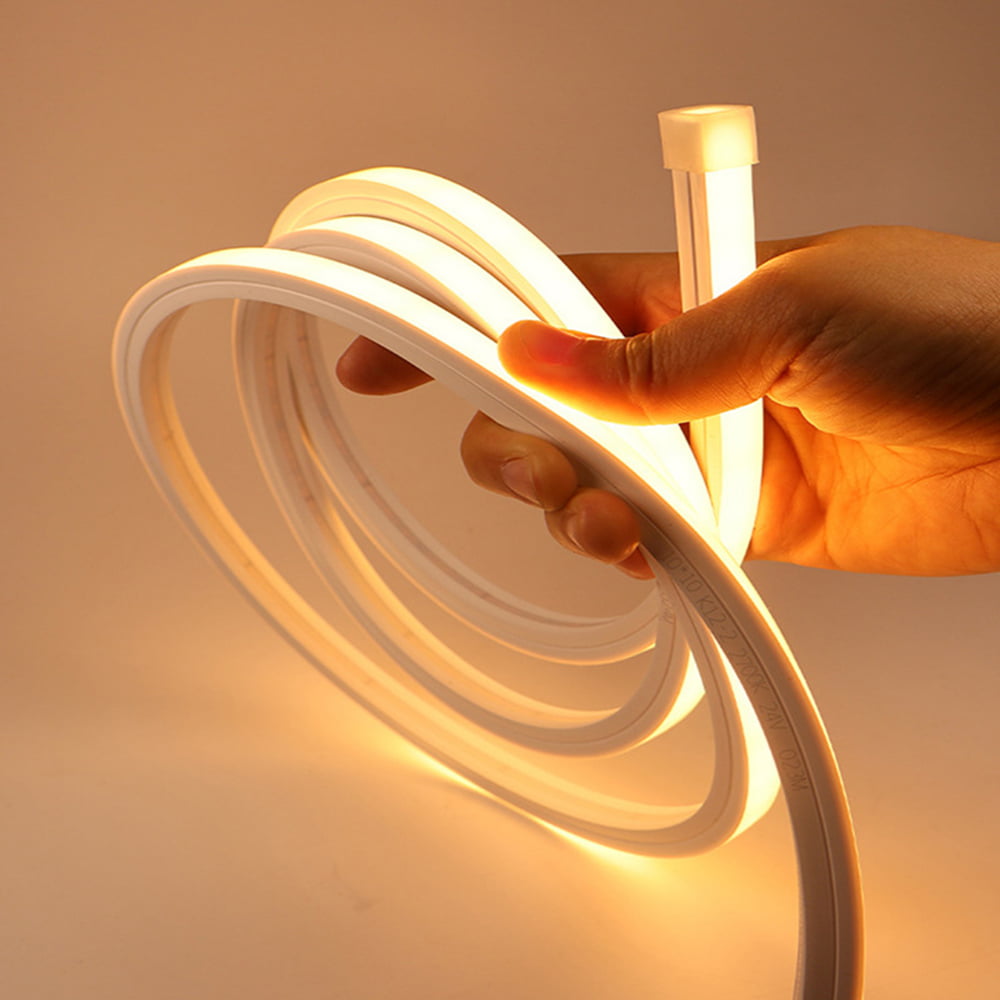
I learned this lesson the expensive way on a restaurant chain project. We installed beautiful, efficient LED cove lighting throughout their locations. Energy savings were excellent. Six months later, the regional manager called me. "Something's wrong with the lighting in three locations. The warm white looks different from the others. Customers are noticing."
We tested the fixtures. All operating within specification. CCT measurements showed shifts from 3000K to 3200K—technically still "warm white." But in a direct comparison, the difference was obvious. The problem? Those three locations had southern exposures with higher ambient temperatures. The phosphor coatings were aging faster under thermal stress.
The solution required replacing all fixtures in those locations—not because they failed, but because they no longer matched. That's a maintenance cost that never appears in energy calculations. And it's completely preventable with proper thermal design and phosphor selection.
Color consistency depends on several factors most energy audits ignore:
Phosphor Formulation: Different phosphor mixtures age differently. Premium LED manufacturers use specialized phosphor blends that maintain color stability under thermal cycling. Budget options often use simpler phosphors that shift more rapidly.
Junction Temperature Management: Every 10°C increase in LED junction temperature can increase color shift rates by 30-40%. This is why thermal design isn't just about preventing failure—it's about maintaining optical performance.
Initial Binning: LEDs are sorted into "bins" based on their exact color characteristics. Premium projects specify tight bin tolerances (3-step MacAdam ellipse or better). Loose binning saves money upfront but creates matching nightmares during future maintenance.
Batch Consistency: When you need to replace components years later, can you get the same bin? We've seen projects where lighting specified by color temperature alone resulted in visible differences between original and replacement fixtures, even when both were technically "3000K."
For our commercial projects, we now specify not just CCT, but also Duv (distance from the Blackbody curve), R9 values (red rendering), and commit to maintaining bin consistency for five years. This adds complexity to our supply chain management. But it's infinitely cheaper than replacing entire installations because new fixtures don't match existing ones.
The brand impact of color inconsistency is particularly severe in retail, hospitality, and premium office environments. I've seen boutique hotels where color shifts in lobby lighting created an "aged" appearance that contradicted their luxury positioning. The lights were functioning. Energy was being saved. But the customer experience was degraded. That's a failure, even if every technical specification shows "pass."
What Should a Truly Effective Energy-Efficient LED Project Include?
After managing dozens of commercial LED projects—both successful and problematic—I've developed a clear framework for what separates real performance from paper specifications.
Effective LED energy projects require five critical elements: thermal design margin (drivers at 70-85% load), validated real-world testing beyond lab conditions, strict color consistency protocols (locked bins, Duv specifications), comprehensive total cost of ownership modeling including maintenance and downtime, and supply chain commitments for long-term component matching. These factors typically add 15-20% to initial investment but reduce total 10-year costs by 40-60%.
Let me walk you through how we approach this now, because the methodology matters as much as the technology.
First: Thermal Design with Safety Margins
We stopped chasing maximum luminous efficacy years ago. Instead, we prioritize thermal stability. This means selecting LED modules and drivers that operate comfortably below their rated maximums. A driver rated for 100W running at 75W will last dramatically longer than one running at 95W. The energy efficiency is identical. The reliability isn't.
We also conduct thermal analysis using actual installation conditions—not lab environments. If the fixture will be installed in a ceiling cavity with fiberglass insulation, we test that scenario. If it's going into an architectural cove with limited airflow, we model that environment. Laboratory testing at 25°C ambient tells you almost nothing about real-world performance in a 40°C ceiling space.
Second: Driver Quality and Load Derating
I'll be blunt: most LED failures are driver failures. And most driver failures are preventable. We specify drivers with these characteristics:
| Requirement | Standard Approach | Our Specification | Why It Matters |
|---|---|---|---|
| Load Factor | 90-100% | 70-85% | Extends capacitor life 2-3x |
| Thermal Protection | Basic over-temp | Multi-stage thermal management | Prevents cascading failures |
| Power Factor | >0.85 | >0.95 | Reduces infrastructure stress |
| Surge Protection | 2kV | 4kV+ | Critical for commercial buildings |
The cost difference between a basic LED driver and a premium driver is often less than $10 per fixture. Over a 50,000-hour lifespan, that's essentially free insurance. Yet we constantly see projects where someone saved 5% on component costs and created 200% higher maintenance costs.
Third: Color Consistency Protocols
For any project over 100 fixtures, we establish strict color management:
- Lock specific LED bins (not just CCT ranges)
- Specify maximum Duv deviation (typically ±0.002)
- Document exact phosphor formulations
- Secure commitment for 5-year supply chain consistency
- Conduct side-by-side visual verification before installation
This seems excessive until you experience the nightmare of trying to match fixtures three years after initial installation. We've learned to treat color specifications like precision manufacturing tolerances, because that's functionally what they are.
Fourth: Real-World Validation Testing
Before we approve any product for a major installation, we run it through abuse testing that simulates years of operation:
- Extended burn-in at elevated ambient temperatures (45-50°C)
- Rapid thermal cycling (simulating on/off patterns)
- Voltage variation testing (±10% of nominal)
- Humidity exposure (for outdoor/damp locations)
- Vibration testing (for industrial environments)
Products that pass laboratory testing but fail field conditions get eliminated before they become project liabilities. This testing adds 4-6 weeks to project timelines. It's also saved clients millions in avoided maintenance costs.
Fifth: Total Cost of Ownership Modeling
We build financial models that include:
- Energy savings (the easy part)
- Maintenance labor at realistic hourly rates
- Component replacement costs
- Business interruption costs (store closure, office disruption)
- Color matching challenges and potential full replacement needs
- Warranty coverage and manufacturer stability
When you model the complete picture, the lowest initial cost is rarely the lowest total cost. We've had projects where spending 25% more on fixtures reduced 10-year total cost by 40%. That's not possible if you only look at purchase price and energy consumption.
This comprehensive approach typically adds 15-20% to initial project costs. But it also delivers systems that run for their full rated lifespan without drama, excessive maintenance, or premature replacement. The ROI calculation isn't "Did we save money on electricity?" It's "Did we minimize total cost of lighting over ten years while maintaining consistent visual quality?"
That's a fundamentally different question. And it requires fundamentally different project methodology.
Conclusion
Energy-efficient LED lighting delivers its greatest value not through electricity savings alone, but by eliminating the hidden costs that emerge over years of operation. When thermal management, driver reliability, and color stability are engineered properly, businesses avoid the maintenance cycles, emergency replacements, and visual inconsistencies that often negate initial energy benefits. True efficiency means building systems that perform reliably for their full rated lifespan—because the cheapest light to maintain is the one that never needs servicing.