

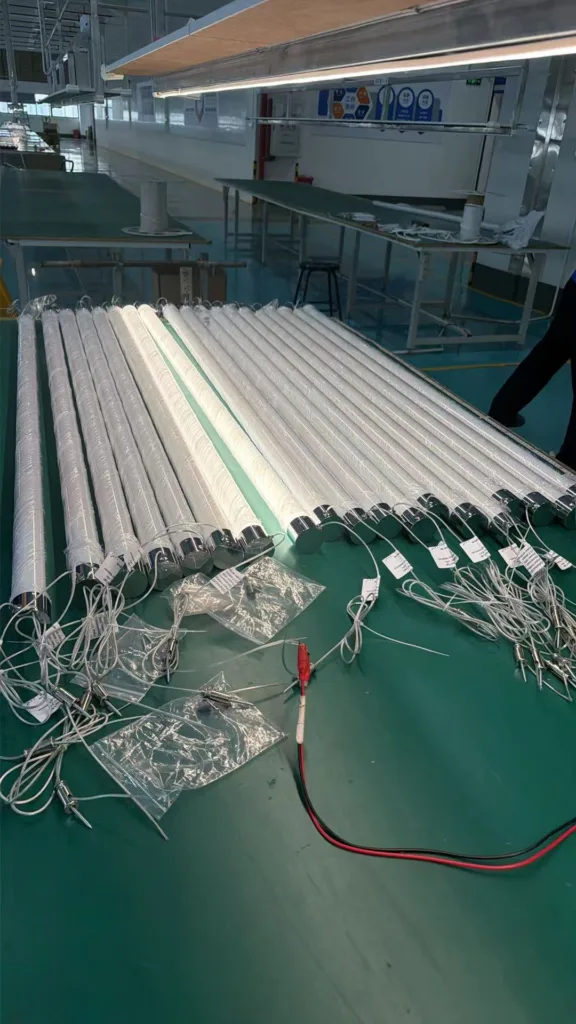
Indoor LED projects fail more often than you think. The reason is rarely about the lights themselves. It is about the system breaking down over time. This creates visible problems that cost far more than broken fixtures.
When you choose an Indoor LED Light Manufacturer, you are not just buying lights. You are committing to a five-year relationship. The biggest risk is not product failure. It is product inconsistency across batches, time, and locations.

If you manage commercial lighting projects, you know this problem well. A store looks perfect at opening. Two years later, half the lights look yellow while the rest stay white. Some sections dim faster than others. The space no longer matches the original design. This is the hidden cost of poor manufacturer selection.
Why Do Indoor LED Systems Fail Even in Perfect Conditions?
Indoor environments are controlled. There is no rain. No salt spray. No extreme UV exposure. The temperature stays stable. The humidity is manageable. You would expect indoor LED lights to last longer than outdoor systems. But they often do not.
I have seen this pattern repeat across dozens of retail chains. Hotels. Office buildings. Shopping malls. The lights work fine in the lab. They pass all the tests. They meet all the specifications. Then they go into production environments and start showing problems.
The issue is not about single-point failure. It is about system-wide drift. LED chips age at different rates. Driver circuits behave differently under sustained loads. Heat dissipation varies by installation location. Color shifts happen unevenly across product batches.
When I worked on a European retail chain expansion, we installed the same model fixtures across 200 stores. The first batch performed beautifully. Consistent color temperature. Even brightness. Clean visual experience. We ordered the same model for the next phase. Same specifications. Same certifications. Same supplier.
Eighteen months later, the complaints started. Stores that opened early had noticeably warmer light than stores that opened later. The difference was not dramatic in absolute terms. But when customers walked from one section to another, they noticed. The brand team noticed. The architects noticed.
We pulled samples and tested them. Every fixture met the datasheet specifications. The problem was in the manufacturing process changes. The LED supplier had switched phosphor batches. The driver manufacturer had changed capacitor suppliers. The assembly line had adjusted reflow profiles. Each change was minor. Each change was within tolerance. But together, they created a different aging curve.
This is the core problem with indoor LED projects. You are not managing single products. You are managing an ecosystem that needs to age consistently over years. That requires a manufacturer who understands long-term system stability, not just short-term product compliance.
| Risk Factor | Impact Timeline | Visibility | Repair Cost |
|---|---|---|---|
| LED color drift | 18-36 months | High | Full replacement |
| Driver failure | 24-48 months | Immediate | Unit replacement |
| Thermal degradation | 12-24 months | Gradual | System redesign |
| Batch inconsistency | 6-18 months | High | Full project redo |
The table shows why batch consistency matters more than individual product quality. A single failed driver costs a few dollars to replace. A visible color mismatch across an entire commercial space costs hundreds of thousands to fix because you cannot replace just one section. You have to redo the whole installation to maintain visual uniformity.
What Causes LED Systems to Age Differently?
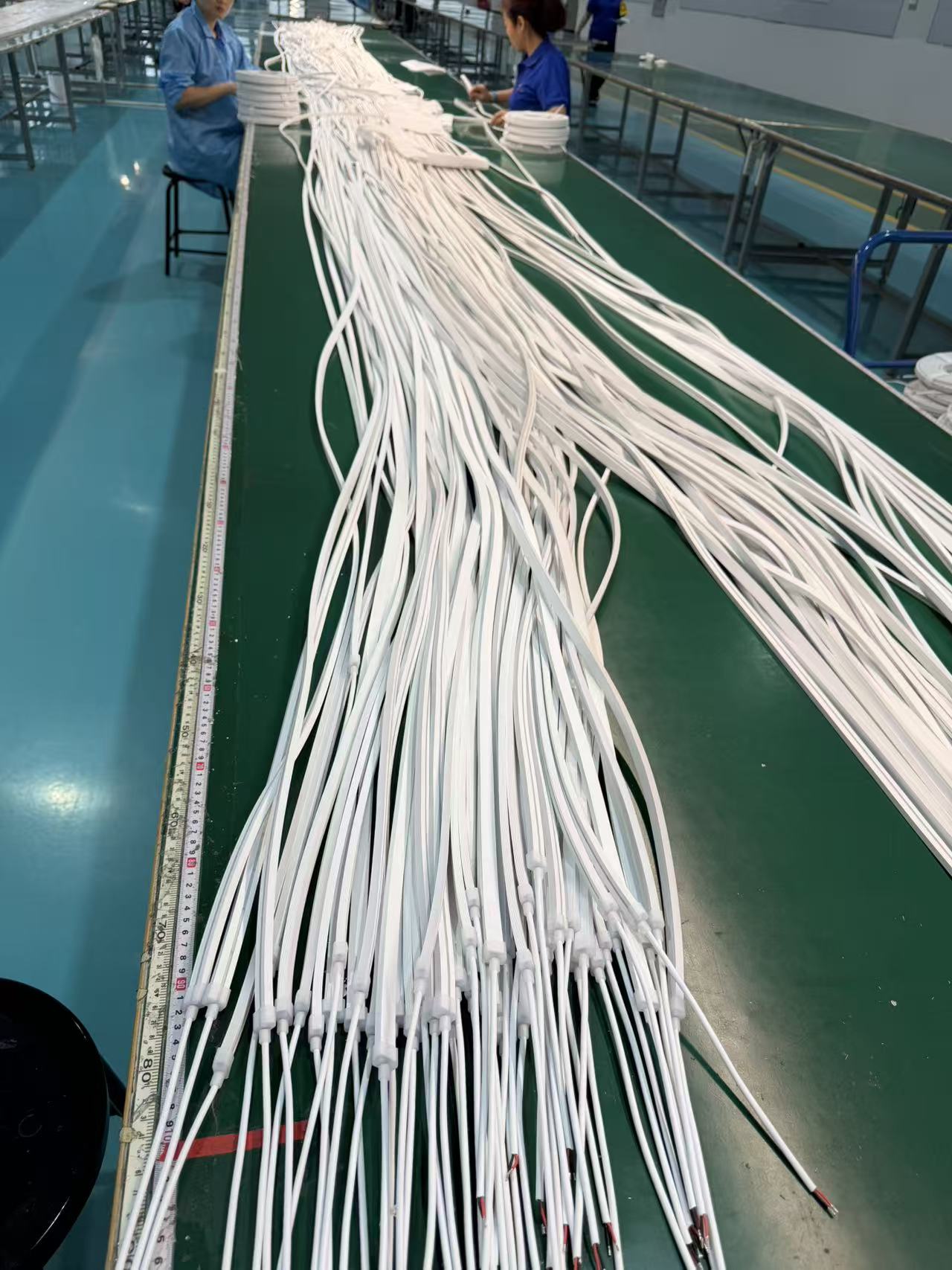
Most specifications focus on L80 or L90 ratings. These measure how long it takes for light output to drop to 80% or 90% of the original value. That matters. But it does not tell the full story.
The real problem in commercial spaces is not brightness loss. It is color shift. Two fixtures can both maintain 90% of their original brightness. But if one shifts warm and the other shifts cool, they look completely different to the human eye. This is especially true in retail environments where color consistency affects product presentation.
LED color stability depends on several factors. The phosphor chemistry. The encapsulation material. The chip junction temperature. The current density. Small variations in any of these create different aging patterns. When you mix LED batches from different production runs, you mix aging curves. The lights start out identical. They end up looking different.
I learned this the hard way on a hotel renovation project. We specified a high-CRI LED system for the guest rooms. The fixtures looked perfect at installation. Six months later, guests started complaining that some rooms felt "off." The lighting was not broken. It just felt inconsistent. Some rooms had a slight green tint. Others had a slight pink tint. The shifts were small. But in a hospitality environment, small shifts create big problems.
We investigated and found that the manufacturer had changed LED suppliers mid-project without notifying us. Both suppliers met the same CRI specification. Both met the same CCT specification. But their Duv values and their aging characteristics were different. The result was visible color variation that developed over time, not at installation.
This is why serious Indoor LED Light Manufacturers lock down their supply chains for large projects. They do not just control the final product. They control the components. They track LED bins. They maintain relationships with phosphor suppliers. They test long-term color stability, not just initial output.
Why Driver Quality Determines System Lifespan
Most buyers focus on LED brands. They ask about Samsung. Osram. Lumileds. Nichia. These are important choices. But the driver matters just as much.
In my experience, the first component to fail in an indoor LED system is rarely the LED chip. It is the driver. Especially in concealed installations. Recessed ceilings. Cove lighting. Display cases. Tight spaces where heat cannot escape.
Drivers contain electrolytic capacitors. These capacitors age based on temperature and ripple current. When a driver runs hot, the electrolyte evaporates. The capacitance drops. The output current becomes unstable. The light starts flickering. Or dimming. Or failing completely.
I have seen projects where the LED chips were still in perfect condition after five years. But 30% of the drivers had failed. The replacement cost was not just the driver price. It was the labor cost. Accessing recessed fixtures. Coordinating with building management. Disrupting operations. The total cost per failure was five to ten times the component cost.
A quality Indoor LED Light Manufacturer designs for thermal management from the start. They do not just pick a driver that meets the wattage requirement. They calculate the actual operating temperature in the installation environment. They add thermal headroom. They use drivers with 105°C-rated capacitors instead of 85°C-rated ones. They test the entire assembly under sustained load, not just initial power-on.
This is not about over-engineering. It is about matching the design to the real-world use case. A driver that works perfectly in an open-air lab environment can fail quickly in a sealed ceiling cavity where the ambient temperature reaches 45°C.
The Hidden Impact of Thermal Design
Many people assume that indoor LED fixtures do not need serious thermal management. The ambient temperature is controlled. The environment is stable. Heat should not be a problem.
This assumption is wrong.
I have measured LED junction temperatures in seemingly benign installations and found them running 20-30°C hotter than expected. The reason is always the same. Poor heat dissipation. The fixture might have adequate heat sinking in open air. But when you install it in a plaster ceiling cavity, or mount it in a decorative aluminum channel, or place it behind a diffuser, the thermal pathway breaks down.
Heat does not disappear. It accumulates. When LED junction temperature rises from 65°C to 85°C, the degradation rate accelerates. The color shift accelerates. The driver stress increases. The entire system ages faster than the datasheet predicts.
One of the most common failure modes I see is fixtures that work perfectly for 18 months, then start showing problems. The timing is not random. It reflects the thermal stress accumulation over time. The electrolytic capacitors in the driver have been operating at elevated temperatures. The LED phosphor has been stressed by sustained junction temperature. The solder joints have experienced thermal cycling. Eventually, something gives.
Professional Indoor LED Light Manufacturers do not just test photometric performance. They build thermal models. They measure junction temperature in realistic installation configurations. They validate heat sink efficiency. They specify maximum ambient temperature ratings that account for real installation conditions, not just open-air lab conditions.
What Should You Look for in a Manufacturing Partner?
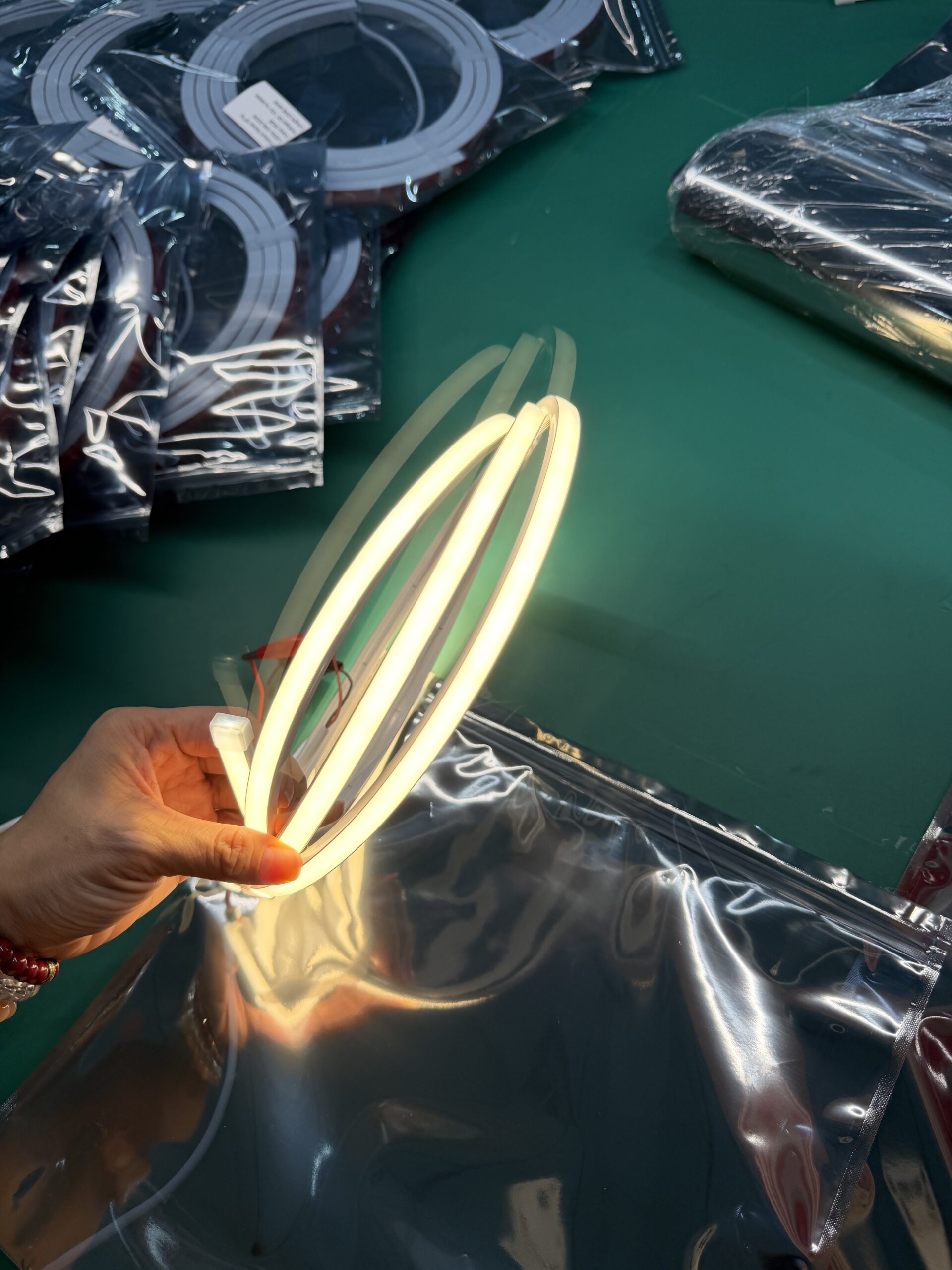
When I evaluate manufacturers for large projects, I do not start with the product datasheet. I start with the process documentation. How do they manage LED binning? How do they lock down component suppliers? How do they handle engineering changes? How do they test long-term stability?
These questions reveal whether a company is optimized for one-time sales or long-term relationships. Many manufacturers can deliver a perfect first batch. Very few can deliver a consistent tenth batch three years later.
Binning Control and Color Consistency
LED chips come from the factory in bins. These bins group LEDs by forward voltage, luminous flux, and color coordinates. A single production run might generate dozens of different bins. The manufacturer has to decide which bins to use and how to mix them.
For architectural and commercial projects, binning control is critical. You cannot mix 3-step MacAdam ellipses with 5-step MacAdam ellipses and expect consistent appearance. You cannot mix bins with different Duv values and maintain color neutrality. You need tight control at the component level.
A professional Indoor LED Light Manufacturer maintains bin records for every project. They lock down the LED bin range for the initial order. They reserve inventory from the same production lot for future orders. They test every incoming LED batch for color consistency before assembly. They reject batches that fall outside the specified range, even if they meet the general specification.
This level of control costs money. It requires inventory management. It requires supplier relationships. It requires testing infrastructure. But it is the only way to guarantee that lights installed in year one will match lights installed in year three.
Driver Design and Load Management
Many manufacturers select drivers based on matching the rated power. If the LED array draws 20W, they use a 20W driver. This works in theory. It fails in practice.
Real-world reliability requires thermal headroom. A driver running at 90% of its rated capacity will fail much sooner than a driver running at 70% of its rated capacity. The difference in lifetime can be 2x to 3x. The difference in cost is maybe 15%.
When we design systems for long-term commercial installations, we typically spec drivers with 20-30% capacity margin. A 20W LED array gets a 25-30W driver. This reduces thermal stress. It reduces component stress. It extends lifetime. It reduces maintenance costs over the project lifespan.
The same principle applies to surge protection and EMI filtering. Many low-cost drivers meet the minimum requirements for CE or UL certification. But they do not include the additional protection circuits that prevent nuisance failures in real electrical environments. A quality manufacturer includes these features as standard, not as optional upgrades.
Change Management and Long-Term Support
The hardest question to answer about any manufacturer is: "Will they still be making this product in five years?"
For architectural projects, this matters enormously. Buildings have 20-30 year maintenance cycles. Retail chains expand over decades. Office buildings get renovated multiple times. You need to be able to get replacement parts that match the original installation.
This requires active change management. When a component supplier discontinues a part, the manufacturer needs to qualify a replacement that maintains the same performance characteristics. When a process changes, the manufacturer needs to validate that the output remains consistent. When a new batch of LEDs arrives, the manufacturer needs to test them against the reference standard from the original project.
Very few manufacturers maintain this level of process discipline. It requires documentation. It requires testing. It requires engineering resources. But it is the difference between a project that ages gracefully and a project that becomes a maintenance nightmare.
I worked with one manufacturer who maintained a "frozen specification" program for large commercial clients. Once we locked down a product configuration for a project, they committed to maintaining that exact configuration for ten years. If a component became unavailable, they would notify us six months in advance and provide qualification data for the replacement. If we needed additional units three years later, they would pull from reserved inventory or manufacture new units to the original specification.
That level of commitment costs more upfront. But it eliminates the risk of having to replace an entire installation because you cannot get matching fixtures. In a 500-unit project, that risk mitigation is worth far more than a 5% price difference.
How Do You Evaluate Long-Term Consistency?
When you meet with a potential Indoor LED Light Manufacturer, the conversation should go beyond product specifications. You need to understand their process capability and their commitment to long-term consistency.
Here are the questions I always ask:
Do you maintain LED bin records for every production batch? Can you guarantee color consistency across orders placed months or years apart? How do you handle component obsolescence? What is your process for engineering change notifications? How do you test long-term color stability? What is your driver selection criteria? How do you validate thermal performance in realistic installation conditions?
The answers reveal a lot. Some manufacturers will give you confident, detailed responses backed by documentation. Others will give you vague assurances. The difference tells you whether they understand the requirements of large commercial projects.
I also ask for reference projects. Not marketing case studies. Real project references where I can contact the actual client and ask about long-term performance. Did the manufacturer deliver consistent batches over time? Were there any color consistency issues? How did they handle warranty claims? Would the client use them again?
Testing Beyond Initial Specifications
Most product testing focuses on initial performance. Does it meet the lumen output? Does it meet the CCT specification? Does it meet the CRI requirement? These are important. But they do not predict long-term behavior.
Professional manufacturers run accelerated aging tests. They operate fixtures at elevated temperatures for thousands of hours. They measure color shift over time. They stress-test drivers under high ripple current. They thermal cycle assemblies to validate solder joint reliability.
These tests take time and cost money. But they reveal problems before they reach customers. A manufacturer who invests in long-term testing is a manufacturer who stands behind their products beyond the initial sale.
When I visit factories, I always ask to see the test lab. Not the demonstration room with the fancy lighting displays. The actual test lab where they run reliability testing. The equipment tells you a lot about their capabilities. Integrating spheres for photometric testing. Thermal chambers for stress testing. Spectrum analyzers for color measurement. LM-80 test setups for long-term aging data.
If a manufacturer cannot show you this infrastructure, they are probably outsourcing critical validation to third parties. That is not necessarily bad. But it means they have less direct control over quality and less visibility into long-term performance issues.
What Are the Real Costs of Poor Manufacturer Selection?
The financial impact of choosing the wrong Indoor LED Light Manufacturer extends far beyond the initial product cost. When you experience batch inconsistency or premature failures, the costs multiply quickly.
Direct replacement costs. Labor costs. Project management costs. Downtime costs. Reputation costs. These add up to 5-10 times the original product value in many cases.
I have seen projects where a client saved 15% on the initial purchase by choosing a lower-cost supplier. Two years later, they spent 300% of the original project value to replace the entire installation because of visible color inconsistency. The fixtures were not broken. They just looked different enough that the space was no longer acceptable.
This is the hidden risk in indoor LED projects. The failure mode is not catastrophic breakdown. It is gradual, inconsistent degradation that creates visible problems before it creates functional problems. By the time you notice the issue, the only solution is full replacement.
In contrast, when you work with a manufacturer who maintains tight process control and component consistency, the project ages gracefully. Lights installed in year one still match lights installed in year five. Warranty claims are minimal. Maintenance is routine. The client is happy. The architect is happy. You are happy.
That difference in total cost of ownership far outweighs any initial price difference. A premium Indoor LED Light Manufacturer is not charging more because they want higher margins. They are charging more because they are investing in the process controls and component quality that deliver long-term consistency.
Conclusion
Choosing an Indoor LED Light Manufacturer is not about finding the cheapest source for lights that meet a specification. It is about selecting a partner who can deliver consistent performance over years of operation and multiple phases of expansion. The real cost of a lighting system is not the purchase price. It is the total cost of ownership over a decade of use. That is where quality manufacturing and process discipline create value.