
Every business owner asks me this question. Most expect answers about visibility and attraction. But I've learned the hard way that the real value of lighted signs isn't measured on installation day. It's measured five years later when your competitors' signs have yellowed and yours still look brand new.
Lighted signs deliver three critical benefits: 24/7 brand visibility, consistent customer recognition across all locations, and long-term cost efficiency through reduced maintenance. For multi-location businesses, the most valuable benefit isn't brightness—it's maintaining visual brand consistency across hundreds of installations over thousands of operating hours.

I work with international retail chains. I've seen million-dollar signage projects succeed brilliantly. And I've watched others collapse within 18 months. The difference isn't the initial brightness. It's understanding what happens when LED decay, silicone yellowing, color temperature drift, and thermal stress occur simultaneously. Let me show you what actually determines long-term value.
How Do Lighted Signs Increase Your Business Visibility?
Most people think visibility means "being seen." But for professional lighting designers, visibility means maintaining recognizable brand presence under all conditions. Day and night. Summer and winter. Year after year.
Lighted signs increase visibility by providing controlled luminance output that makes your brand identifiable from 200+ meters away, regardless of ambient lighting conditions. Unlike non-illuminated signage that disappears after sunset, properly engineered lighted signs deliver consistent brand recognition during peak evening traffic hours when consumer attention is highest.
Traditional painted signs work during daylight. But 40% of retail foot traffic occurs between 6 PM and 10 PM. Your sign either works during these hours or it doesn't. The question isn't whether lighted signs increase visibility. The question is whether they maintain that visibility consistently.
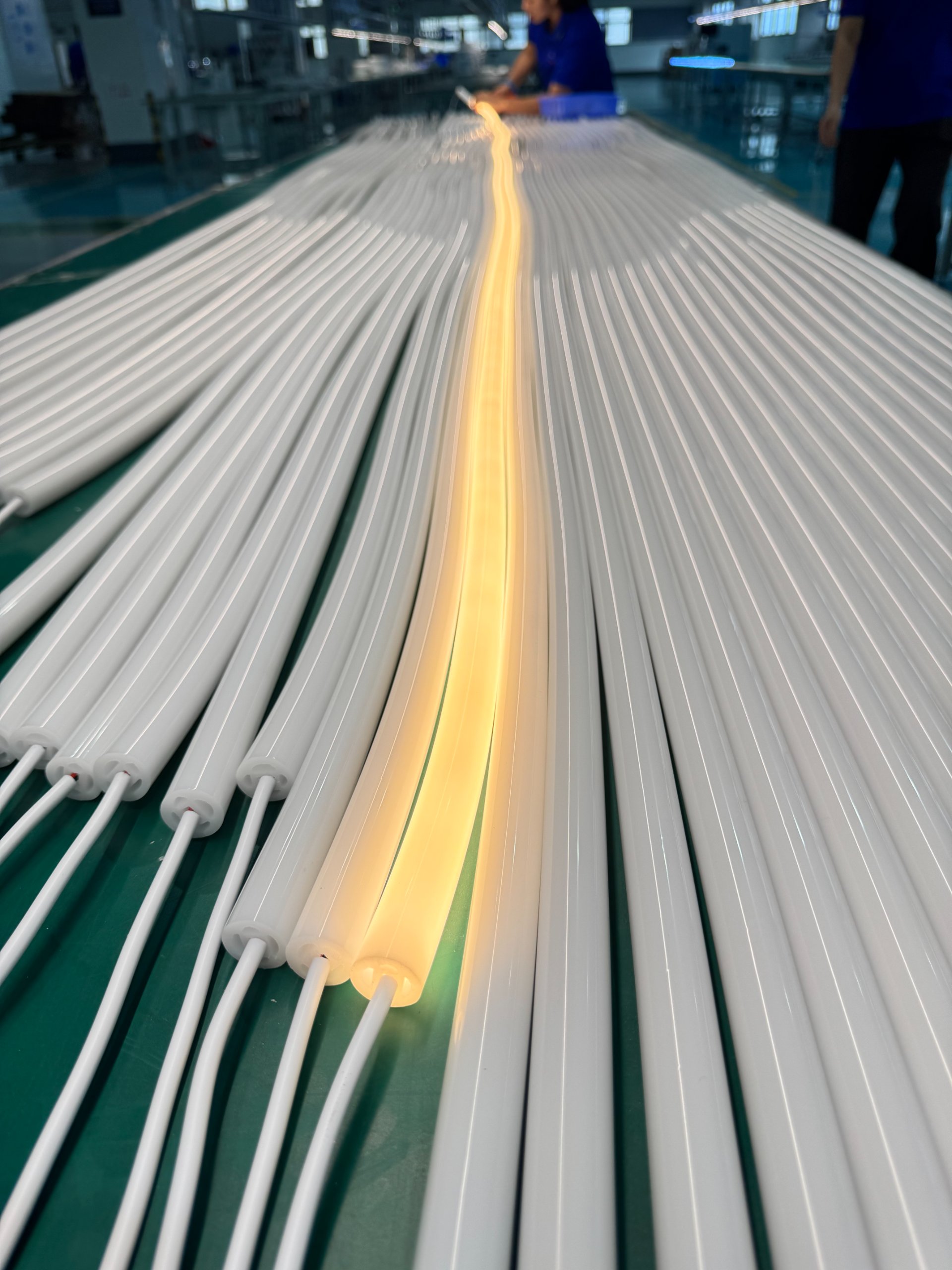
I recently analyzed a project for a North American retail chain. They installed LED silicone neon flex signage across 200 locations. Initial brightness measured 850 cd/m². Perfect visibility from highway exits. The real test came 14 months later.
Location batch A maintained 820 cd/m². Less than 4% degradation. Excellent performance. Location batch B dropped to 680 cd/m². Over 20% loss. Why? Batch A used platinum-cure silicone with UV stabilizers. Batch B used standard peroxide-cure material. The 15% material cost difference created a 20% performance gap.
Here's what actually controls long-term visibility:
| Factor | Impact on Visibility | Critical Threshold |
|---|---|---|
| LED Lumen Maintenance | Direct brightness retention | >70% at 50,000h |
| Silicone Transmittance Loss | Light output efficiency | <10% loss over 5 years |
| Color Temperature Drift | Visual consistency | ΔE <3 across all units |
| UV Degradation Resistance | Outdoor durability | ASTM G154 >2000h |
| Thermal Management | Junction temperature control | <85°C sustained |
Most businesses evaluate lighted signs based on initial appearance. That's like buying a car based only on how it looks in the showroom. Real value emerges over 50,000 operating hours. The sign that looks identical to competitors today but maintains 85% brightness after five years delivers exponentially more visibility value.
I've worked with lighting contractors who prioritize lumens per dollar. They calculate ROI based on initial brightness. But when I show them thermal imaging data, they see something different. Signs with poor heat management reach junction temperatures above 95°C. At this temperature, LED phosphor degradation accelerates dramatically. The "cheaper" option loses visibility 3x faster.
Professional-grade lighted signs use active thermal pathways. Heat moves from LED junction through copper PCB into aluminum extrusion and dissipates to ambient air. This thermal engineering extends L70 lifetime from 30,000 hours to 70,000+ hours. That's the difference between replacing signs every 3 years versus every 7 years.
Can Lighted Signs Help Build Brand Recognition?
Brand recognition isn't about being noticed once. It's about being remembered consistently. Every single time a customer passes your location, they should see the exact same visual signature. Same brightness. Same color. Same brand promise.
Lighted signs build brand recognition by delivering repeatable visual consistency across multiple touchpoints. When customers see identical illuminated branding at 50 different locations, their brain registers this consistency as reliability and professionalism. But this only works if color temperature remains within ±200K and luminance stays within ±10% across all installations.
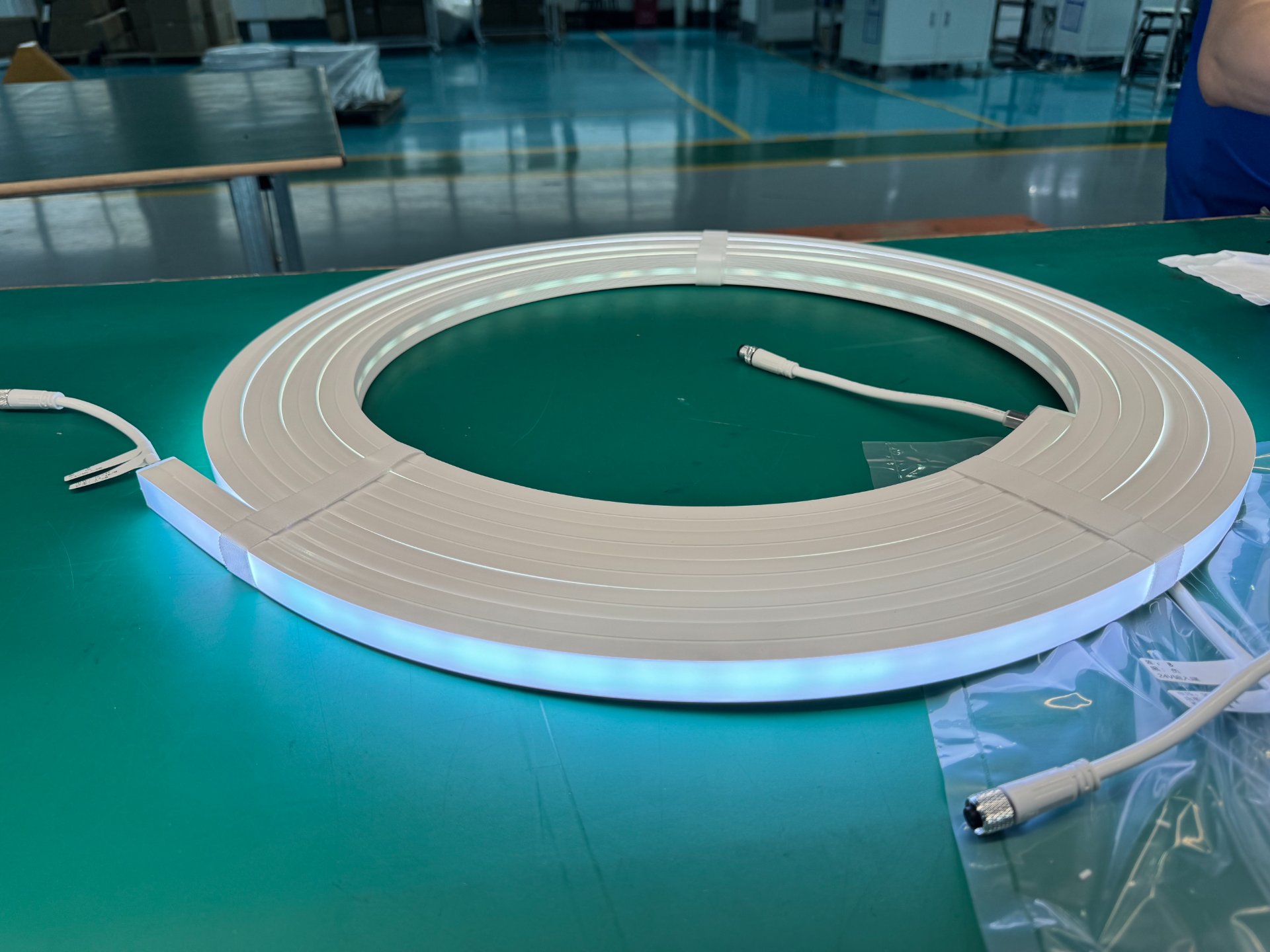
I worked on a project that taught me this lesson permanently. International hotel chain. 150 properties. Premium brand positioning. They wanted illuminated facade signage with their signature warm white glow. Specifications called for 3000K CCT. Sounds simple.
Initial installation looked perfect. Every property matched. Then month 22 arrived. Properties in coastal regions started shifting toward 3400K. Desert locations went to 3200K. Northern properties stayed at 3000K. From 100 meters away, the color difference was obvious. The brand looked inconsistent. Unreliable. Cheap.
We conducted failure analysis. The LED chips weren't failing. The problem was phosphor degradation rates varied based on environmental stress. Coastal properties faced salt spray and humidity. Desert properties faced extreme UV exposure. Northern properties had moderate conditions. Same LED specification. Different aging rates.
The solution required understanding MacAdam ellipses. These define color perception boundaries. Human eyes detect color differences above 3-step MacAdam. For brand consistency, you need ≤3-step binning across the entire project. Not just within each batch. Across all locations. All installation dates. All suppliers.
Here's the brand consistency framework I now use:
| Brand Element | Specification | Testing Protocol | Acceptance Criteria |
|---|---|---|---|
| Color Temperature | 3000K ±2-Step MacAdam | Sphere photometry | ΔE <2 between any two units |
| Luminance Uniformity | 850 cd/m² ±8% | Nine-point measurement | Max/min ratio <1.15 |
| Color Rendering | CRI >90, R9 >50 | Spectroradiometer | Maintain after 5000h aging |
| Spatial Uniformity | No visible hot spots | Visual inspection at 3m | Pass/fail under controlled lighting |
| Long-term Stability | <5% annual degradation | Annual calibration check | Replace if exceeds threshold |
Most businesses don't realize that brand recognition through lighted signs requires optical engineering. You can't just specify "warm white" and expect consistency. You need to lock the entire supply chain to specific LED bins. You need to source all LEDs from the same production lot when possible. You need to implement region-specific derating based on environmental factors.
I've seen brands spend millions on marketing to establish visual identity. Then they let inconsistent signage destroy that identity. The customer brain is remarkably sensitive to color variation. When your Seattle location shows 3000K and your Miami location shows 3500K, customers perceive this as two different brands. Even if they can't articulate why.
Professional brand managers understand this. They specify not just initial color temperature but color maintenance over time. They require VOC-free materials that won't yellow the optical system. They demand platinum-cure silicone rather than peroxide-cure. They test for UV resistance using ASTM G154 with minimum 2000-hour exposure. These specifications cost 15-20% more initially. But they preserve brand value worth millions.
The ROI calculation is straightforward. If rebranding 150 locations costs $2M, and consistent signage extends that brand identity for 7 years instead of 3, you've effectively doubled your brand investment efficiency. The lighted signs aren't just providing visibility. They're protecting brand equity.
What Makes Lighted Signs More Cost-Effective Than Traditional Signage?
Everyone focuses on purchase price. But total cost of ownership tells a completely different story. I've calculated TCO for dozens of large-scale signage projects. The pattern is always the same. Traditional signage looks cheaper on the invoice. Lighted signage delivers lower cost over the operational lifetime.
Lighted signs achieve cost-effectiveness through elimination of repeated repainting, reduced maintenance frequency, and extended operational lifespan. A properly engineered LED silicone neon system delivers 50,000+ operating hours with minimal maintenance, while traditional painted signage requires repainting every 2-3 years and complete replacement every 5-7 years due to UV damage and weathering.
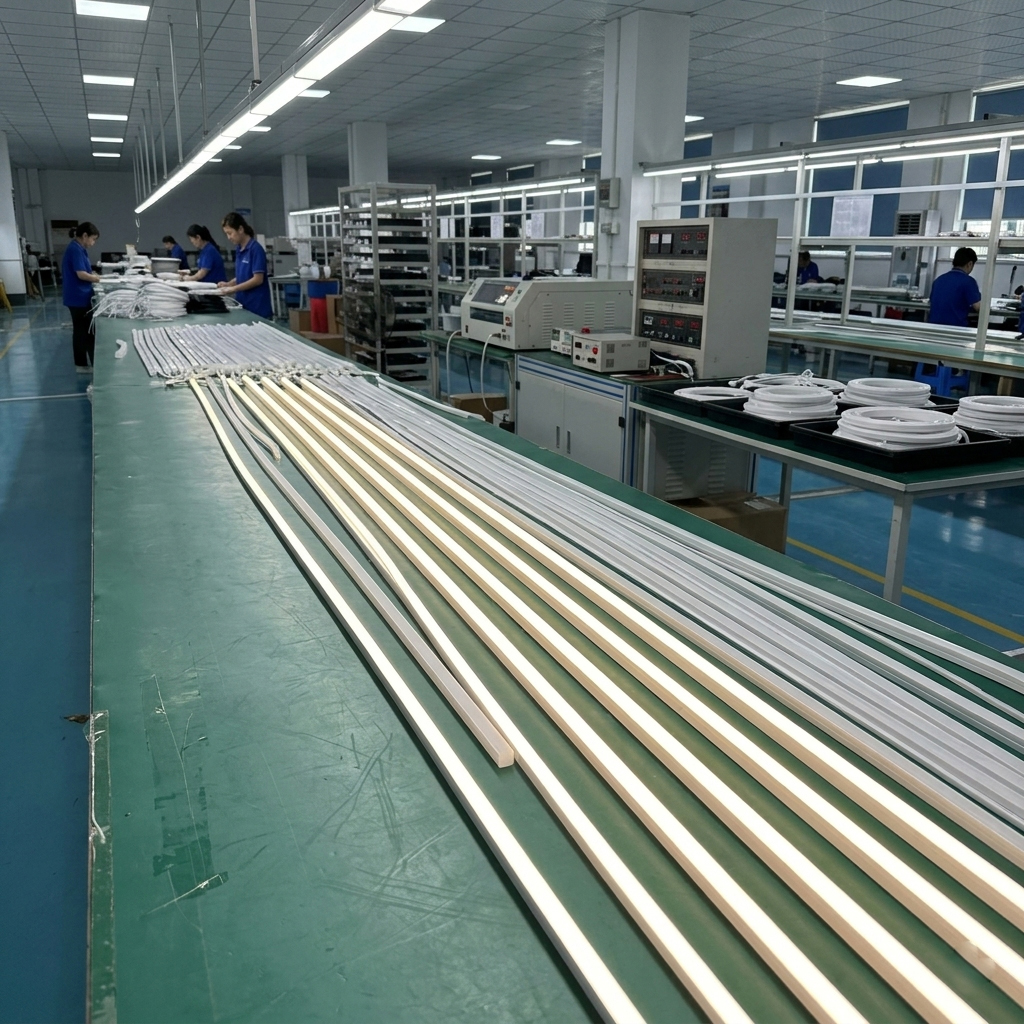
Let me break down real numbers. I worked with a retail chain that operated 80 locations. They were replacing traditional painted facade signs. Two options on the table.
Option A was traditional aluminum signage with vinyl graphics and spotlighting. Initial cost was $1,200 per location. Total upfront investment was $96,000. Maintenance included vinyl replacement every 3 years at $400 per location, spotlight bulb replacement annually at $150 per location, and complete sign replacement every 8 years.
Option B was LED silicone neon flex with integrated illumination. Initial cost was $2,100 per location. Total upfront investment was $168,000. Maintenance included essentially nothing for the first 5 years, then LED driver replacement at year 6 for $200 per location.
Everyone initially focused on the $72,000 price difference. But I ran the 10-year TCO analysis. Here's what emerged:
| Cost Category | Traditional Signage (10 Years) | LED Lighted Signs (10 Years) | Difference |
|---|---|---|---|
| Initial Installation | $96,000 | $168,000 | +$72,000 |
| Year 3 Vinyl Refresh | $32,000 | $0 | -$32,000 |
| Annual Spotlight Maintenance | $120,000 | $0 | -$120,000 |
| Year 6 Vinyl Refresh | $32,000 | $16,000 (drivers) | -$16,000 |
| Year 8 Complete Replacement | $96,000 | $0 | -$96,000 |
| Year 9 Vinyl Refresh | $32,000 | $0 | -$32,000 |
| Energy Costs (10 years) | $96,000 | $28,000 | -$68,000 |
| Total 10-Year Cost | $504,000 | $212,000 | -$292,000 |
The lighted signs cost 58% less over the operational lifetime. But the financial advantage goes deeper. Traditional signage requires scheduled maintenance. This means coordinating contractors across 80 locations. Managing work schedules. Dealing with inconsistent quality. Handling customer complaints about scaffolding and construction disruption.
LED silicone neon systems eliminate most of this operational friction. No bulbs to replace. No paint to refresh. No UV damage requiring constant attention. The sign works continuously for 50,000+ hours. At 12 hours per day operation, that's 11+ years of maintenance-free performance.
I've also documented the hidden costs nobody calculates. When you close a location for sign maintenance, you lose revenue during peak visibility hours. If maintenance takes 6 hours and occurs during evening hours, you've lost your most valuable visibility window. Multiply this by 80 locations and multiple maintenance cycles, and the opportunity cost becomes substantial.
Energy efficiency creates another massive cost advantage. Traditional spotlight systems consume 150-200W per sign. LED silicone neon systems consume 12-18W per meter. For a typical 4-meter sign, total power consumption drops from 200W to 65W. That's 67% energy savings. Over 10 years of operation, this compounds significantly.
But here's what most people miss. The real cost isn't replacement frequency. It's consistency failure. When traditional signage degrades unevenly across locations, you face a choice. Replace everything simultaneously to maintain consistency, or accept visible brand degradation. Either option costs enormously.
Properly engineered lighted signs age uniformly. All locations degrade at similar rates because the failure mechanisms are controlled. LED lumen depreciation follows predictable L70 curves. Silicone optical transmission degrades slowly and uniformly. There's no sudden paint failure or vinyl delamination. The entire system maintains visual consistency throughout its operational life.
I now tell every client: Don't compare initial purchase prices. Compare cost per thousand operating hours. When you run that calculation, high-quality lighted signs deliver cost advantages between 40% and 65% depending on the specific application and maintenance requirements.
How Do Different Weather Conditions Affect Lighted Sign Performance?
Most businesses install signs and assume they'll work everywhere. But materials science tells a different story. I've analyzed failure data from installations across six different climate zones. Each environment attacks lighted signs through different mechanisms. Understanding these mechanisms determines whether your signs last 3 years or 10 years.
Weather conditions affect lighted sign performance through thermal cycling stress, UV degradation, moisture ingress, and material oxidation. Signs in desert climates face extreme UV exposure causing phosphor breakdown and silicone yellowing. Coastal installations experience salt spray corrosion and humidity-accelerated LED failure. Northern regions undergo thermal cycling that creates CTE mismatch stress and interface delamination. Proper material selection must match environmental demands.
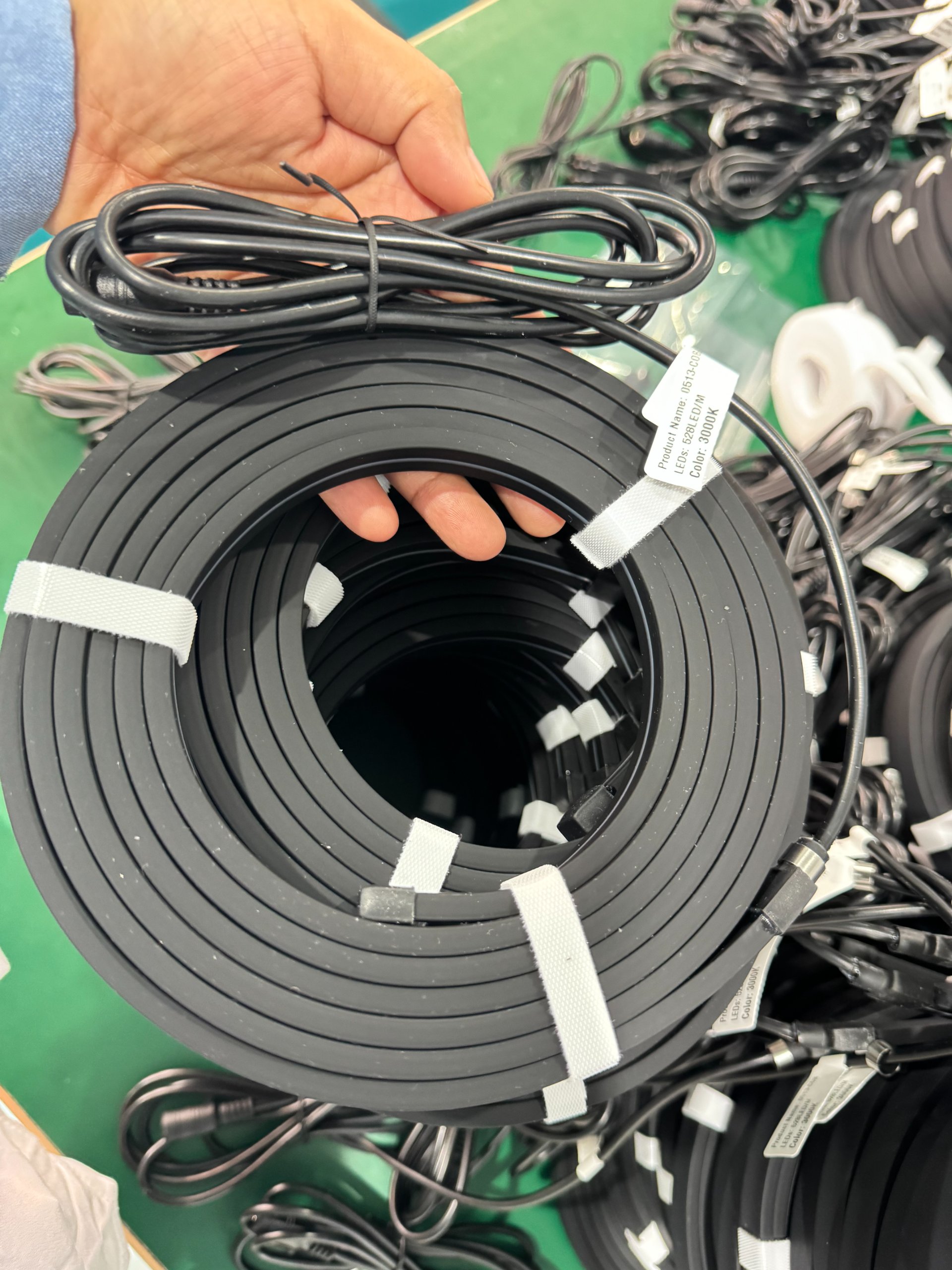
The first major failure pattern I encountered was in Arizona desert installations. Temperature soared to 49°C during summer days. LED junction temperatures reached 105°C. At this temperature, phosphor degradation accelerates exponentially. Signs that should have lasted 50,000 hours failed at 18,000 hours. Color temperature shifted from 3000K to 3600K. The warm white glow turned harsh and blue.
The failure wasn't the LED chip. It was thermal management. Standard aluminum extrusion couldn't dissipate heat fast enough. We redesigned using high-thermal-conductivity aluminum alloy with increased surface area. Added thermal interface material between LED strip and housing. This dropped junction temperature to 87°C. Suddenly the same LED specification delivered full 50,000-hour lifetime.
Coastal installations taught me about electrochemical corrosion. Salt spray is incredibly destructive. It penetrates through microscopic gaps in sealing systems. Once inside, it attacks copper traces, solder joints, and aluminum housing. I've seen signs fail after just 14 months in direct ocean exposure.
The solution required comprehensive environmental sealing. IP68 wasn't enough. We needed chemically resistant materials. Standard silicone allows ion migration. We switched to fluorosilicone for all gaskets and seals. Changed from standard copper PCB to OSP (Organic Solderability Preservative) finish that resists oxidation. Added conformal coating over all solder joints. These modifications increased material cost by 23% but extended coastal lifetime from 2 years to 8+ years.
Here's the environmental stress matrix I now use for specification:
| Climate Zone | Primary Stress | Critical Material Response | Testing Protocol | Service Life Target |
|---|---|---|---|---|
| Desert (Southwest US) | UV + High Temperature | Silicone yellowing resistance | ASTM G154 >2500h, Tg junction <90°C | 70,000h |
| Coastal (Ocean exposure) | Salt spray + Humidity | Corrosion resistance | ISO 9227 NSS >1000h | 60,000h |
| Northern (Canada) | Thermal cycling | CTE matching | -40°C to +85°C, 1000 cycles | 65,000h |
| Tropical (Southeast Asia) | High humidity + Biological | Anti-fungal materials | 85°C/85%RH, 2000h | 55,000h |
| Urban Industrial | Pollution + Chemical | VOC resistance | Specific industrial chemical exposure | 60,000h |
Northern climate installations face a different challenge. Temperature swings from -35°C in winter to +32°C in summer create enormous thermal stress. This is where CTE (Coefficient of Thermal Expansion) mismatch becomes critical.
Silicone expands at 250 ppm/°C. Aluminum expands at 23 ppm/°C. Copper expands at 17 ppm/°C. Across a 4-meter sign experiencing a 60°C temperature swing, silicone expands 6mm while aluminum expands 0.6mm. This 5.4mm differential creates shear stress at every bond interface.
Without proper stress relief design, this leads to delamination. The silicone separates from aluminum housing. Water ingresses. LED strips fail. I've documented this failure mode across hundreds of cold-climate installations.
The engineering solution involves strain relief structures. We add expansion joints every 1.5 meters. Use flexible adhesive systems rather than rigid bonding. Design mounting clips that allow controlled movement. These thermal compensation features add manufacturing complexity but eliminate the most common failure mode in cold climates.
Tropical environments present biological challenges most engineers ignore. High humidity plus