

Everyone talks about energy-efficient lighting. But most people focus on the wrong numbers. They calculate lumens per watt. They measure payback periods. They compare electricity bills. I focus on something else. I focus on what happens three years after installation. Because that's when most "efficient" systems start to fail.
Yes, energy-efficient artificial light options exist, but the most efficient solution isn't always the one with the highest lumens per watt. True efficiency comes from systems that maintain performance over 50,000+ hours while minimizing total cost of ownership—including maintenance, replacement, and downtime expenses that often exceed initial energy savings.
I have seen too many projects fail. Not because they consumed too much power. But because they pushed efficiency too far. Let me explain why chasing maximum light output per watt can be the most expensive mistake in commercial lighting.
What Makes Artificial Lighting Truly Energy-Efficient?
Most specifications start with a simple metric. Lumens per watt. Higher numbers look better on paper. But they hide the real cost. The cost that appears two years later when your hotel facade starts showing dark patches. When your retail signage develops color shifts. When your architectural lighting requires expensive maintenance visits.
True energy efficiency in commercial lighting means maintaining 90%+ lumen output after 50,000 hours while operating within thermal design limits. This requires LED junction temperatures below 85°C, driver load factors under 80%, and materials rated for continuous high-temperature exposure—factors rarely disclosed in efficiency specifications.
The Hidden Cost of Maximum Light Output
I once worked on a large commercial complex facade project. The design team selected the highest-efficiency LED system available. Laboratory data looked perfect. Light output exceeded expectations. Power consumption was minimal. Sample testing passed every requirement. The installation went smoothly.
Six months later, problems began. Some sections dimmed. Color temperature started drifting. Within one year, visible brightness bands appeared across the facade. Night-time aesthetics deteriorated significantly. The entire system required replacement.
Post-mortem analysis revealed the issue. The LEDs hadn't failed. The system had been running too hot. To achieve maximum efficiency, the LEDs operated near their design limits continuously. PCB temperatures exceeded safe thresholds. Driver circuits ran at full capacity. Silicone materials endured sustained high temperatures.
The results were predictable:
- Accelerated lumen depreciation
- Phosphor degradation
- Color temperature drift
- Silicone aging
- Connection point fatigue failure
The electricity savings? Less than one-tenth of total project cost. The maintenance expenses? Far beyond budget projections.
| Performance Metric | High-Efficiency Design | Balanced Design |
|---|---|---|
| Initial Lumen/Watt | 180 lm/W | 150 lm/W |
| Junction Temperature | 95°C | 75°C |
| 1-Year Lumen Maintenance | 88% | 97% |
| 3-Year Color Shift | Δuv > 0.006 | Δuv < 0.003 |
| Total Cost of Ownership (5yr) | $142/meter | $98/meter |
This table demonstrates why we never specify systems based solely on initial efficiency numbers. The balanced design costs more upfront but saves 31% over the product lifecycle.
How Do Driver Systems Impact Long-Term Efficiency?
Many projects calculate energy consumption precisely. But they ignore power supply load margins. Design teams match driver capacity to theoretical power requirements. This appears most efficient. It minimizes upfront costs. It passes sample testing. It clears acceptance inspection.
LED driver efficiency peaks at 70-80% rated load, not at maximum capacity. Operating drivers above 85% load accelerates capacitor aging by 300%, increases output ripple, and reduces mean time between failures from 50,000 hours to under 30,000 hours—making "optimized" driver sizing a false economy in continuous-operation installations.

The 70% Load Rule I Always Follow
Real problems emerge during continuous operation. In high-temperature environments, drivers operating above 90% capacity age rapidly. Electrolytic capacitors degrade faster. Output stability decreases. This causes LED flickering, color drift, and partial light loss.
Many people blame the LED strip. The actual failure point is the power system. The root cause traces back to design-phase over-optimization. No safety margin was included.
For any project expecting 10+ hour daily operation, I specify drivers at 70-80% of rated capacity. This seems wasteful. It increases initial costs by 15-20%. But it extends driver lifespan by 200-300%. In architectural lighting, where access requires expensive lift equipment, this margin pays for itself after the first avoided maintenance visit.
Consider a hotel facade project:
- Driver replacement cost: $45 per unit
- High-altitude access equipment: $800 per day
- Labor for 50-unit section: $1,200
- Business disruption cost: $2,500
- Total intervention cost: $4,545
Versus:
- Upgraded driver premium (50 units): $450
- Five-year maintenance interventions avoided: 2-3
- Net savings: $8,640-$13,185
The mathematics are clear. Thermal margins aren't waste. They're insurance against the most expensive failures.
Why Does Material Selection Matter for Efficiency?
High-efficiency designs often increase light density. This concentrates more energy in smaller spaces. Higher energy density means higher heat generation, stronger UV exposure, and greater material stress. This demands careful material system evaluation.
Food-grade silicone extrusion for LED housings must maintain Shore A hardness within ±5 points and UV transmission stability within 3% after 10,000 hours at 80°C to prevent yellowing, cracking, and light output loss that negates initial efficiency gains in outdoor installations.

What Real Anti-Yellowing Means
Many manufacturers claim "anti-yellowing" properties. Their testing validates short-term performance. But five-year field performance tells a different story. I have seen too many projects where silicone housings yellowed within 18 months, reducing light transmission by 15-20%.
The issue isn't the silicone grade alone. It's the combination of:
- Continuous UV exposure
- Elevated operating temperatures
- Chemical compatibility with LED phosphors
- Compression set under thermal cycling
- Adhesive system interactions
Quality silicone extrusion uses platinum-catalyzed curing and molecular UV stabilizers. These additions cost 30-40% more than standard grades. But they maintain optical clarity and mechanical properties throughout the rated lifespan.
For outdoor architectural projects, material degradation represents hidden energy waste. When silicone yellows and reduces transmission by 18%, your "efficient" 150 lm/W system effectively drops to 123 lm/W. You're consuming the same power but delivering 18% less light. This is permanent efficiency loss that no amount of cleaning can recover.
Can Color Consistency Affect Energy Efficiency?
Large-scale installations magnify subtle variations. High-efficiency LEDs often use aggressive binning strategies to maximize yield. Different production batches show wider color tolerance ranges. In small applications, this matters little. In extensive architectural lighting, it becomes critical.
Commercial facade lighting requires LED color bins within 3-step MacAdam ellipses and batch-to-batch CCT variation under 100K to prevent visible color banding that forces premature replacement—the single largest hidden cost in "efficient" lighting systems where material waste from early replacement exceeds a decade of electricity savings.
The Color Banding Disaster I Witnessed
I worked with a luxury hotel chain on their global facade lighting standard. Initial specifications emphasized energy efficiency and cost reduction. The selected system achieved both targets. Sample installations looked perfect.
Problems appeared during the tenth installation. Lighting sections from different production batches showed subtle color differences. Individual sections appeared uniform. But when installed adjacently, color steps became visible. The effect intensified at night.
The hotel brand rejected the installation. Not because of performance failure. But because color inconsistency damaged their luxury positioning. The entire facade required replacement with tighter-binned LEDs.
Lessons learned:
- 3-step MacAdam ellipse bins are minimum for commercial facades
- Batch tracking and bin-locking are non-negotiable
- Color consistency costs 8-12% more but prevents 100% replacement
- High-efficiency bins often show wider color variation
- Architectural specifications must include colorimetric requirements
For continuous installations exceeding 50 meters, we now require:
- Bin certification documentation
- Batch consistency guarantees
- Colorimetric test reports at installation temperatures
- Sample sections from actual production batches
This adds complexity and cost. But it prevents the most expensive failure mode in architectural lighting—aesthetic rejection requiring complete system replacement.
What Is Total Cost of Ownership in Lighting Systems?
Energy consumption represents only one cost component. Professional installations must account for lifecycle expenses. These include maintenance access, labor, downtime, and brand impact. In many projects, electricity costs become the smallest expense category.
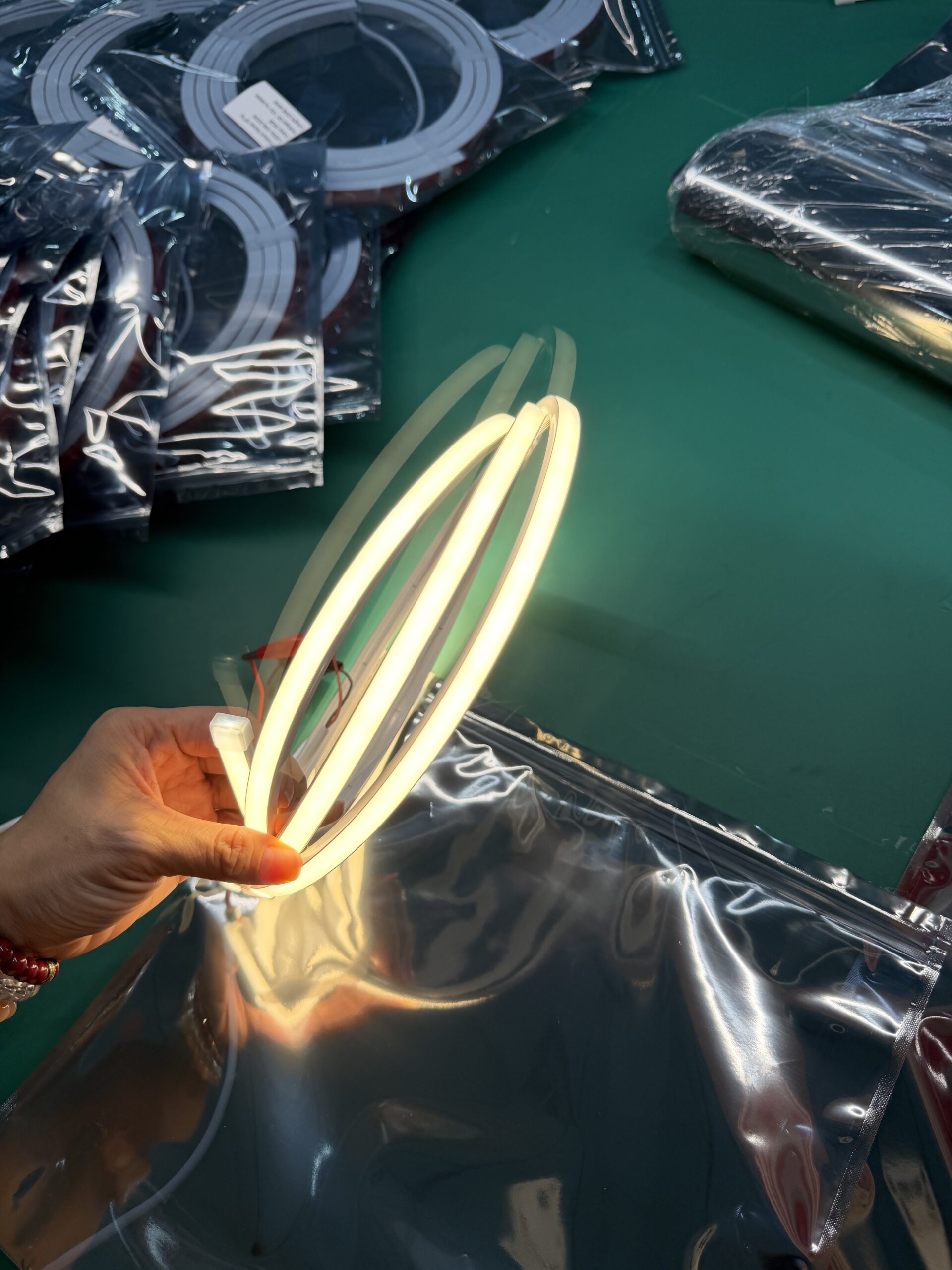
Total cost of ownership in commercial lighting includes: energy consumption (15-25%), equipment replacement (20-30%), maintenance labor (25-35%), access equipment (15-20%), and business disruption (10-15%). Optimizing only energy consumption while sacrificing reliability increases total ownership costs by 40-60% over 5-year operational periods.
The Real Math of Maintenance Costs
Consider a retail chain with 50 locations, each using 200 meters of facade lighting:
High-Efficiency / Low-Reliability System:
- Initial cost: $85/meter × 10,000m = $850,000
- Annual energy: 120W/m × 10h/day × 365 × $0.12 = $52,560
- 5-year energy cost: $262,800
- Maintenance interventions (Years 2-5): 3 visits × 50 locations = 150 visits
- Average maintenance cost per visit: $1,800
- Total maintenance: $270,000
- 5-year total: $1,382,800
Balanced Efficiency / High-Reliability System:
- Initial cost: $115/meter × 10,000m = $1,150,000
- Annual energy: 135W/m × 10h/day × 365 × $0.12 = $59,130
- 5-year energy cost: $295,650
- Maintenance interventions (Years 2-5): 0.5 visits × 50 locations = 25 visits
- Average maintenance cost per visit: $1,800
- Total maintenance: $45,000
- 5-year total: $1,490,650
The "efficient" system appears cheaper. But only when you ignore maintenance reality. The balanced system costs $107,850 more over five years. But it delivers:
- Consistent brand appearance across all locations
- No customer-facing downtime
- Reduced operational complexity
- Predictable maintenance scheduling
- No emergency intervention costs
For a retail brand, consistent facade appearance has measurable value. One location with deteriorated lighting affects customer perception chain-wide. This brand impact exceeds any electricity savings.
How Do I Specify Truly Efficient Lighting Systems?
After managing dozens of large-scale installations, my specification process prioritizes long-term performance over peak efficiency numbers. This approach costs more initially. But it delivers lower total ownership costs and eliminates unexpected failures.
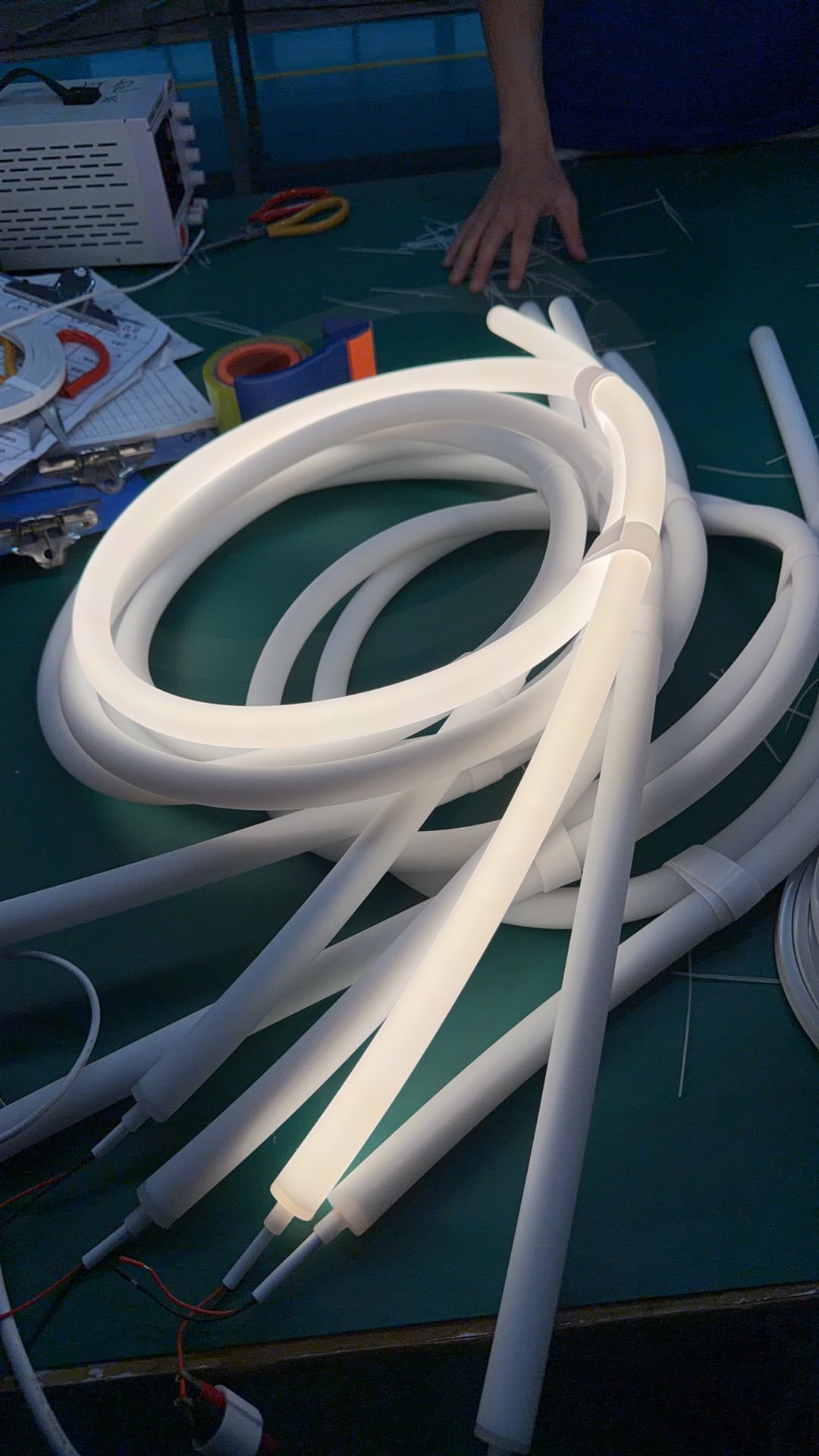
Professional lighting specifications should mandate: LED junction temperature limits (≤85°C), driver load factors (70-80%), lumen maintenance guarantees (L90 at 50,000h), color bin documentation (3-step MacAdam), and material aging test reports (1,000h at 80°C)—creating systems that maintain efficiency throughout their rated lifespan rather than achieving peak performance that rapidly degrades.
My Five Non-Negotiable Specification Requirements
1. Thermal Management Verification I require detailed thermal analysis documentation showing:
- PCB copper weight (minimum 2oz)
- Thermal resistance calculations
- Junction temperature under worst-case conditions
- Heat dissipation pathways
- Thermal imaging test results
Maximum allowed junction temperature: 85°C at 40°C ambient. This typically requires derating LED drive current by 15-20% compared to manufacturer maximum specifications. The efficiency penalty is acceptable. The reliability gain is essential.
2. Driver Load Factor Limits All driver specifications must show:
- Rated capacity
- Actual operational load
- Load factor percentage
- Efficiency curve at operating point
- Capacitor life calculation at operating temperature
Maximum allowed load factor: 80%. For 24/7 operations: 70%. This margin requirement increases driver costs by 18-25%. But it extends mean time between failures from 30,000 hours to 60,000+ hours.
3. Material System Documentation Silicone housing specifications must include:
- Shore A hardness certification
- UV aging test results (1,000h minimum)
- Compression set values
- Temperature range validation
- Chemical compatibility reports
We only accept food-grade, platinum-cured silicone with molecular UV stabilizers. This material costs 35-40% more than standard grades. But it maintains optical transmission and structural integrity throughout the rated lifespan.
4. Color Bin Control LED binning requirements include:
- 3-step MacAdam ellipse maximum
- Batch-to-batch CCT variation under 100K
- Production date tracking
- Bin certification documentation
- Sample color measurement reports
For projects exceeding 100 meters continuous length, we require bin-locked production runs. This ensures color consistency across the entire installation, preventing the color banding issues that force premature replacement.
5. Warranty Structure and Performance Guarantees Warranty terms must specify:
- Lumen maintenance targets (L90 at 50,000h minimum)
- Color shift limits (Δuv < 0.004)
- Failure rate thresholds (<0.5% annual)
- Response time commitments
- Replacement part availability guarantees
Standard manufacturer warranties cover defects but not performance degradation. We negotiate extended performance warranties that guarantee maintained light output and color consistency throughout the rated lifespan.
Conclusion
Energy-efficient lighting isn't about maximum lumens per watt. It's about systems that maintain performance for 50,000+ hours while minimizing total ownership costs. The most efficient solution balances initial output with thermal management, driver reliability, material longevity, and color consistency—because the cheapest electricity bill means nothing when you're paying for premature system replacement.