

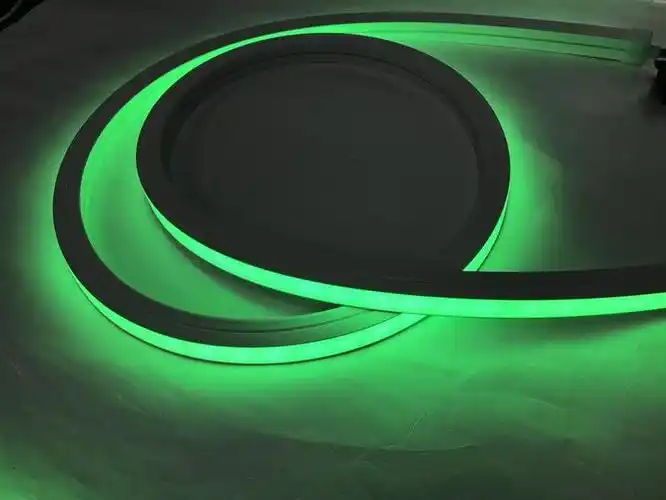
When you search "LED Neon Flex supplier from China," you probably check prices first. Then certifications. Then lead times. That makes sense. But there's something more important hiding beneath all those details.
The real question isn't whether you can buy quality LED Neon Flex from China. It's whether you can buy the same LED Neon Flex 18 months from now when your project needs more.
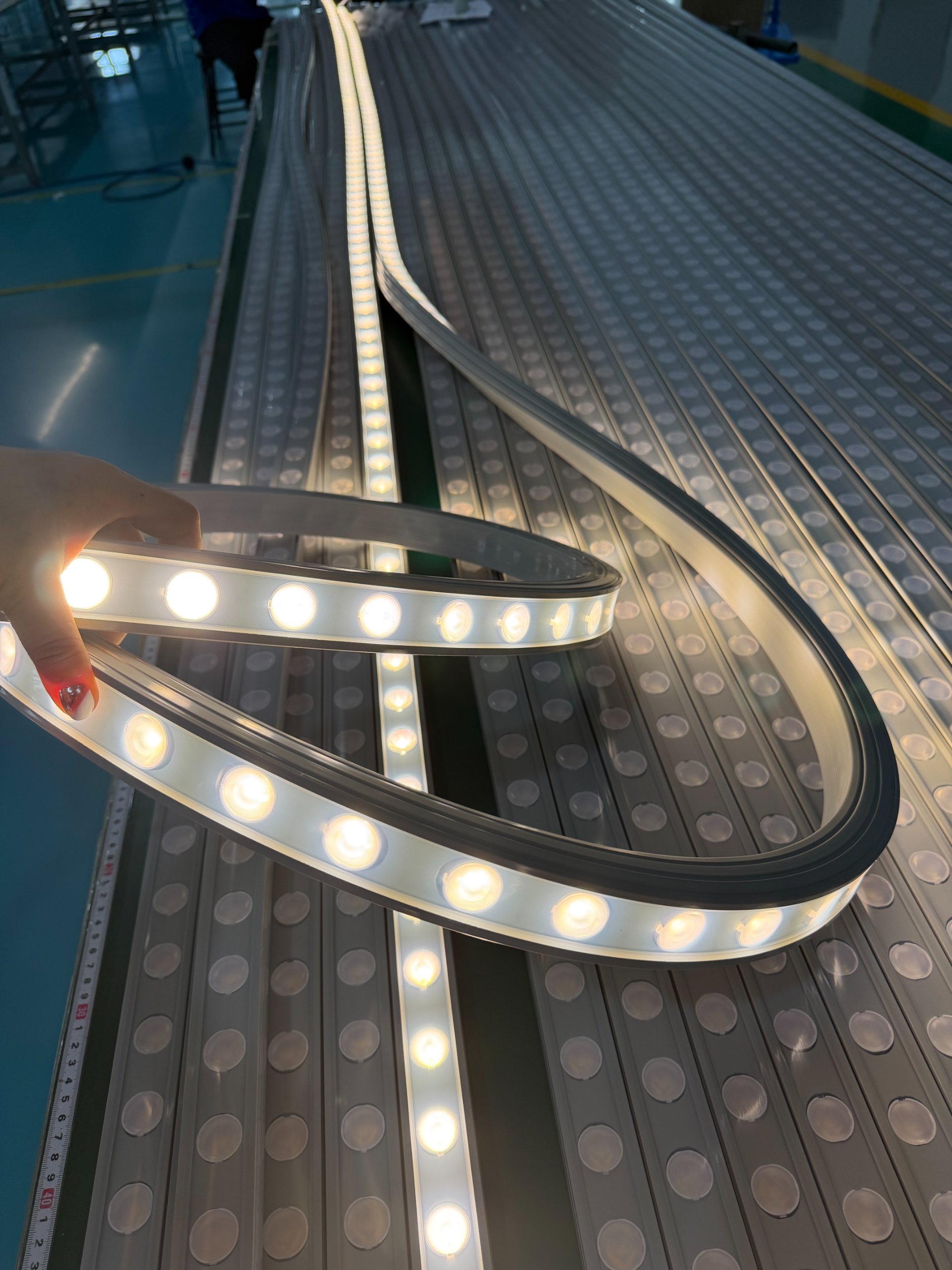
I've watched projects fail not because the initial product was bad. They failed because batch three looked different from batch one. The building owner didn't care about certifications. They cared that half their facade glowed warm white and half glowed cool white.
What makes a Chinese LED Neon Flex supplier actually reliable?
Many buyers focus on the wrong metrics. They check if the factory has ISO certificates. They verify IP ratings. They test samples. All important. But not sufficient.
A reliable supplier doesn't just make good products. They make the same product, consistently, across multiple production runs separated by months or years.

I participated in a commercial real estate project once. Multiple countries. Over 6,000 meters of LED Neon Flex. The supplier passed every test during sampling. First batch? Perfect. Second batch? Slight color shift. Third batch? The color banding became visible from street level.
We investigated. The LEDs met specifications. The silicone passed QC. The PCB worked fine. But the supplier had quietly changed:
| Component | What Changed | Impact |
|---|---|---|
| LED Batch | Different bin supplier | Slight CCT shift |
| Silicone Compound | New raw material vendor | Different UV resistance profile |
| PCB Copper | Alternative sourcing | Minor thermal performance change |
| Diffusion Agent | Modified ratio | Light distribution variance |
Each change alone seemed harmless. Combined, they created a consistency nightmare. You can't fix color banding with maintenance. You replace everything. That's when "cheap" becomes very expensive.
Why do lab tests fail to predict real-world performance?
Here's what I learned the hard way. IP68 means something specific. It tests immersion under controlled conditions. Clean water. Constant temperature. Measured pressure.
Real installations face UV radiation plus salt spray plus thermal cycling plus mechanical stress. All at once. For years.
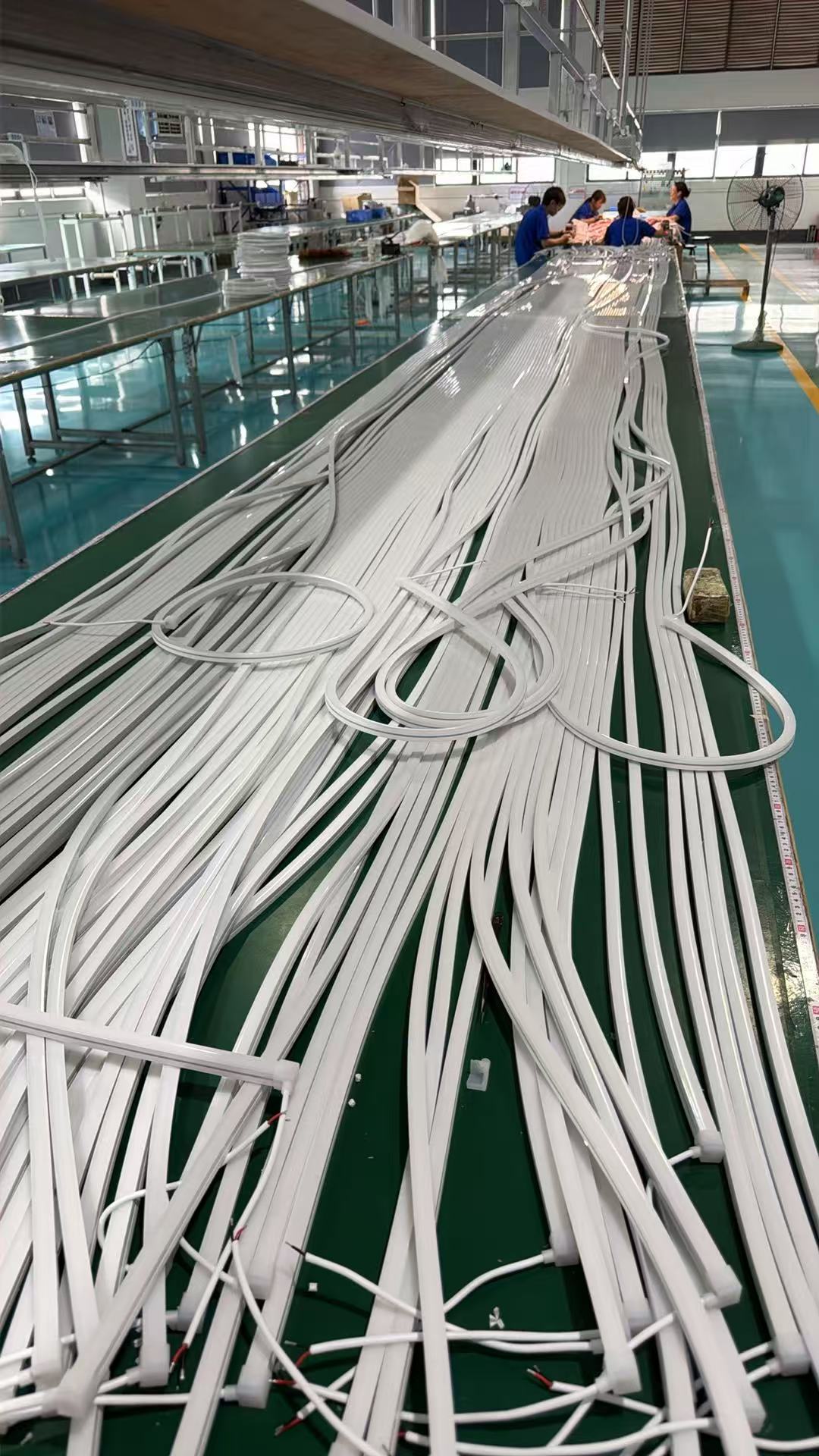
A beachfront hotel project taught me this. Sample phase went smoothly. Installation looked great. Eleven months later, the sunrise-facing sections started yellowing. Then cracking. Then water ingress.
The waterproof rating hadn't changed. The certifications still hung on the wall. But the silicone molecular structure had degraded under combined UV exposure and salt air. The lab tested UV. The lab tested salt spray. The lab never tested both together for 12 months straight.
That gap between "certified" and "durable" costs real money. The supplier wasn't lying about their specs. They just didn't understand what their product would face.
Can you prevent this supply chain drift?
Yes. But you need to ask different questions. I don't start with "do you have CE certification?" anymore. I start with material traceability.
A mature supplier can tell you:
- LED bin locking protocol: How they ensure color consistency across production runs
- Silicone compound control: Whether they use the same molecular weight and additive ratios
- PCB supplier stability: If the copper foil and FR4 substrate come from controlled sources
- Diffusion material management: How they maintain optical consistency in the silicone extrusion
These aren't exciting topics. They don't make good marketing. But they determine whether your architectural lighting looks professional or patchy three years from now.
What about extrusion process stability?
This matters more than most people realize. I've seen projects develop light spotting not because the LEDs failed. The spotting came from wall thickness variations in the silicone extrusion.
When the extrusion die wears slightly, the silicone wall gets thinner in spots. Thinner walls mean more light transmission. Thicker walls create darker bands. At night, under full power, a 0.3mm wall thickness variation becomes visible from 50 meters away.
Good suppliers monitor:
| Parameter | Why It Matters | Typical Tolerance |
|---|---|---|
| Wall thickness | Direct impact on light uniformity | ±0.15mm |
| Extrusion speed | Affects material density | ±2% |
| Curing temperature | Influences long-term stability | ±3°C |
| Pull rate | Controls dimensional consistency | ±1.5% |
These numbers seem technical. But they're the difference between "looks perfect in samples" and "looks consistent across 2,000 meters of facade installation."
Does IP rating really predict waterproof lifespan?
Not exactly. IP68 tells you the product can survive immersion. It doesn't tell you how long the seal will last under UV degradation, thermal cycling, and mechanical stress.
Waterproof failure rarely starts with water getting in. It starts with material aging.
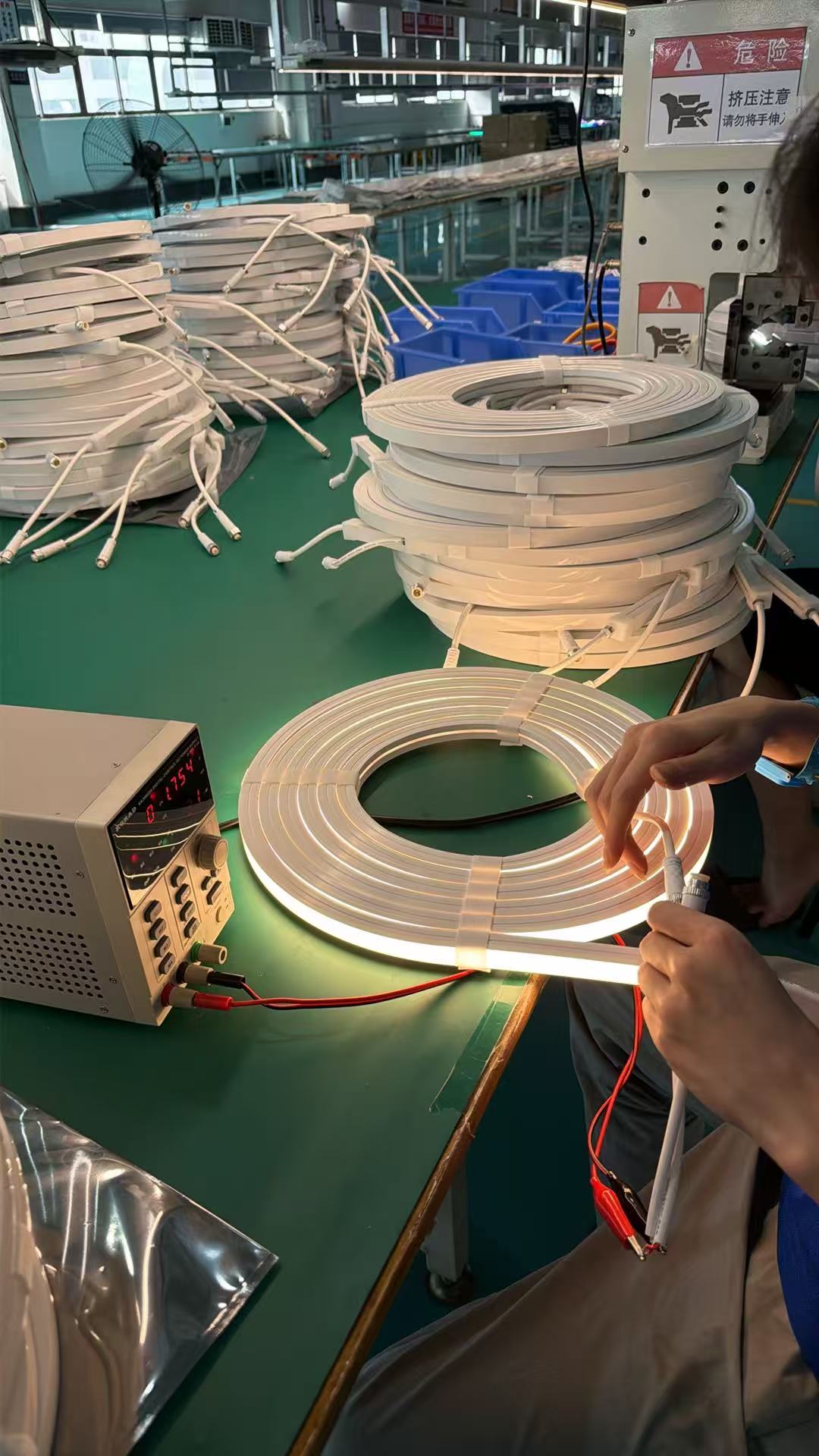
I tracked a landscape project that failed after 14 months. No visible damage. No obvious ingress points. Water somehow penetrated the end caps and corrupted the PCB.
Investigation revealed the issue. The silicone had undergone photooxidation. UV radiation broke down the polymer chains. The material became slightly more porous. Not enough to see. Enough to let moisture migrate through molecular gaps.
The end cap seal was still intact. The IP rating hadn't changed. But the bulk material properties had degraded beyond specification.
That's why I now ask suppliers about:
- UV stabilizer type and loading: Not just "UV resistant"
- Thermal oxidation resistance: How the material handles heat aging
- Compression set testing: Whether the silicone maintains elasticity after stress
- Hydrolytic stability: If moisture exposure accelerates degradation
These factors predict long-term performance better than any IP rating.
How should LED Neon Flex handle thermal expansion?
This kills more installations than people admit. Silicone expands when heated. Metal mounting structures expand differently. Linear installations can span 20+ meters continuously.
If you rigidly fix LED Neon Flex every 30cm with hard mounting clips, you're building stress concentrators. The stress has to go somewhere. It goes to:
- Corner joints (the weakest structural point)
- Wire exit points (where waterproofing is most vulnerable)
- PCB solder joints (creating intermittent electrical failures)
Smart suppliers design mounting systems that allow controlled movement. They recommend:
| Installation Type | Recommended Fixing | Why |
|---|---|---|
| Straight runs | Every 50cm with flexible clips | Allows longitudinal expansion |
| Curved sections | Every 30cm with radius-matched guides | Prevents stress concentration |
| Vertical drops | Top mounting only | Gravity handles positioning |
| Underwater | Weighted channel system | Accommodates pressure and movement |
This isn't just installation guidance. It's system design. A supplier who understands this won't just sell you product. They'll help you avoid the failures they've seen before.
What happens when you need replacement units years later?
This scenario plays out constantly. A building opens. LED Neon Flex performs perfectly. Three years pass. A facade section needs replacement after a maintenance accident. You contact the supplier.
If they can't match the original color temperature and brightness, you're replacing the entire facade. Not just the damaged section.

I worked with a hotel chain. Same LED Neon Flex supplier for all properties. Year four, one location needed a 50-meter replacement. The supplier sent new stock. The color was visibly different. Not dramatically. Just enough that nighttime photos showed a clear boundary between old and new sections.
The hotel paid for 300 meters of replacement to fix a 50-meter problem. Not because the new product was bad. Because it wasn't the same product.
This is why I now evaluate suppliers on:
- Component sourcing stability: Do they control their LED and silicone supply chain?
- Archive sample policy: Can they reference production runs from 2+ years ago?
- Bin inventory management: Do they stock LEDs from multiple bins to match historical orders?
- Formula documentation: Are extrusion parameters recorded and retrievable?
These capabilities separate manufacturers from assembly shops. Manufacturers control their process. Assembly shops depend on whatever components the market offers today.
Should you trust lower-priced Chinese suppliers?
Price reflects capability more than people want to admit. When a supplier offers LED Neon Flex at 40% below market average, they're not just being generous. They're either:
- Using lower-grade silicone compounds (which yellow faster and crack earlier)
- Accepting wider LED bin tolerances (which creates color inconsistency)
- Operating without process controls (which means no consistency between batches)
- Unable to support long-term supply (because they don't manage their supply chain)
None of these are necessarily dishonest. They're just different business models. If you need 100 meters for a temporary installation, a price-focused supplier works fine.
If you're lighting a $50M architectural project that needs to look perfect for a decade, that same supplier will eventually cost you multiples of what you saved.
How do you actually evaluate a Chinese LED Neon Flex supplier?
I use a three-phase verification now. Most buyers skip straight to phase three. That's why they end up with consistency problems.
Phase One: Supply Chain Transparency
Ask to see their component traceability system. A mature supplier can show you:
- LED procurement records with bin specifications
- Silicone compound batch testing documentation
- PCB manufacturer certification and lot tracking
- Quality hold procedures for incoming materials
If they can't produce this documentation, they don't control their inputs. That means they can't control their outputs either.
Phase Two: Process Validation
Request to observe a production run. Watch for:
| Observation Point | What Good Looks Like | Red Flags |
|---|---|---|
| Extrusion setup | Written parameters, verified before start | Operators "eyeballing" settings |
| Quality checkpoints | Documented measurements at fixed intervals | Random spot checking |
| Material handling | Climate-controlled storage, FIFO system | Components stored randomly |
| Testing protocols | Every reel tested before packing | Batch sampling only |
Manufacturing discipline predicts product consistency. Sloppy processes create variable products.
Phase Three: Long-term Support Verification
Ask about their oldest active customer relationship. If they've been supplying the same client for 5+ years and that client has done multiple repeat orders, that's evidence of consistency.
Request references from projects that needed replacement stock. Talk to those buyers. Ask specifically about color matching and performance consistency.
Conclusion
The best Chinese LED Neon Flex supplier isn't the one with the lowest price or the most certificates. It's the one who can deliver the same product batch after batch, year after year, because they control their entire supply chain.