

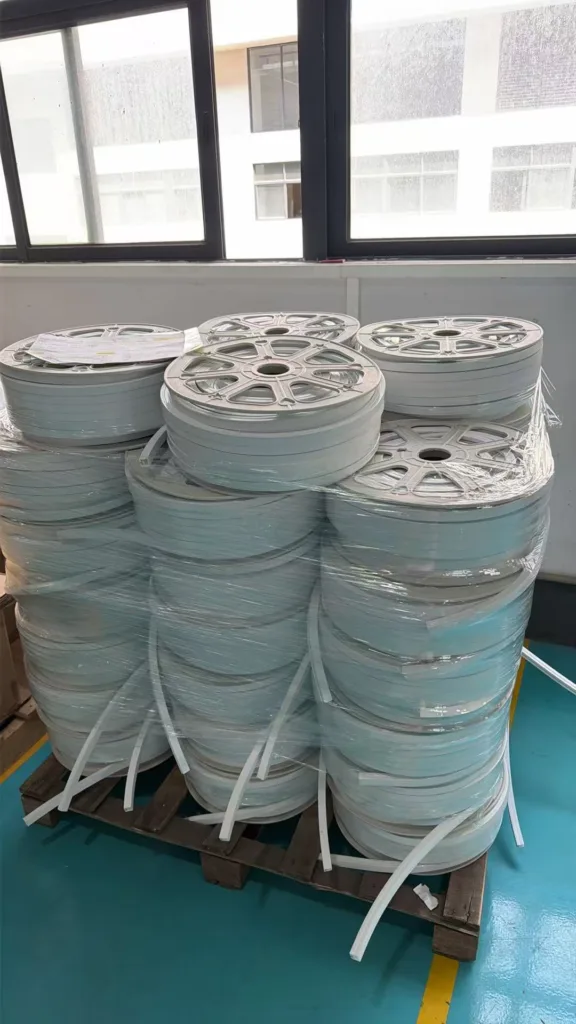
LED neon rope light cuttable options appear in nearly every large-scale architectural lighting specification. The word looks simple. But on an 8.6-kilometer facade installation, that single descriptor — misunderstood by one team member — can trigger a chain reaction that ends in returns, rework, and contract disputes.
LED neon rope light cuttable means a product can be trimmed at defined cutting marks, known as the Cutting Unit, to fit a required length. It does not mean the light can be cut at any arbitrary point. The minimum Cutting Unit is a fixed electrical circuit segment. Cutting outside those marks can break the circuit, compromise the seal, and void the product's IP rating — making "cuttable" a precise engineering parameter, not a freeform installation convenience.
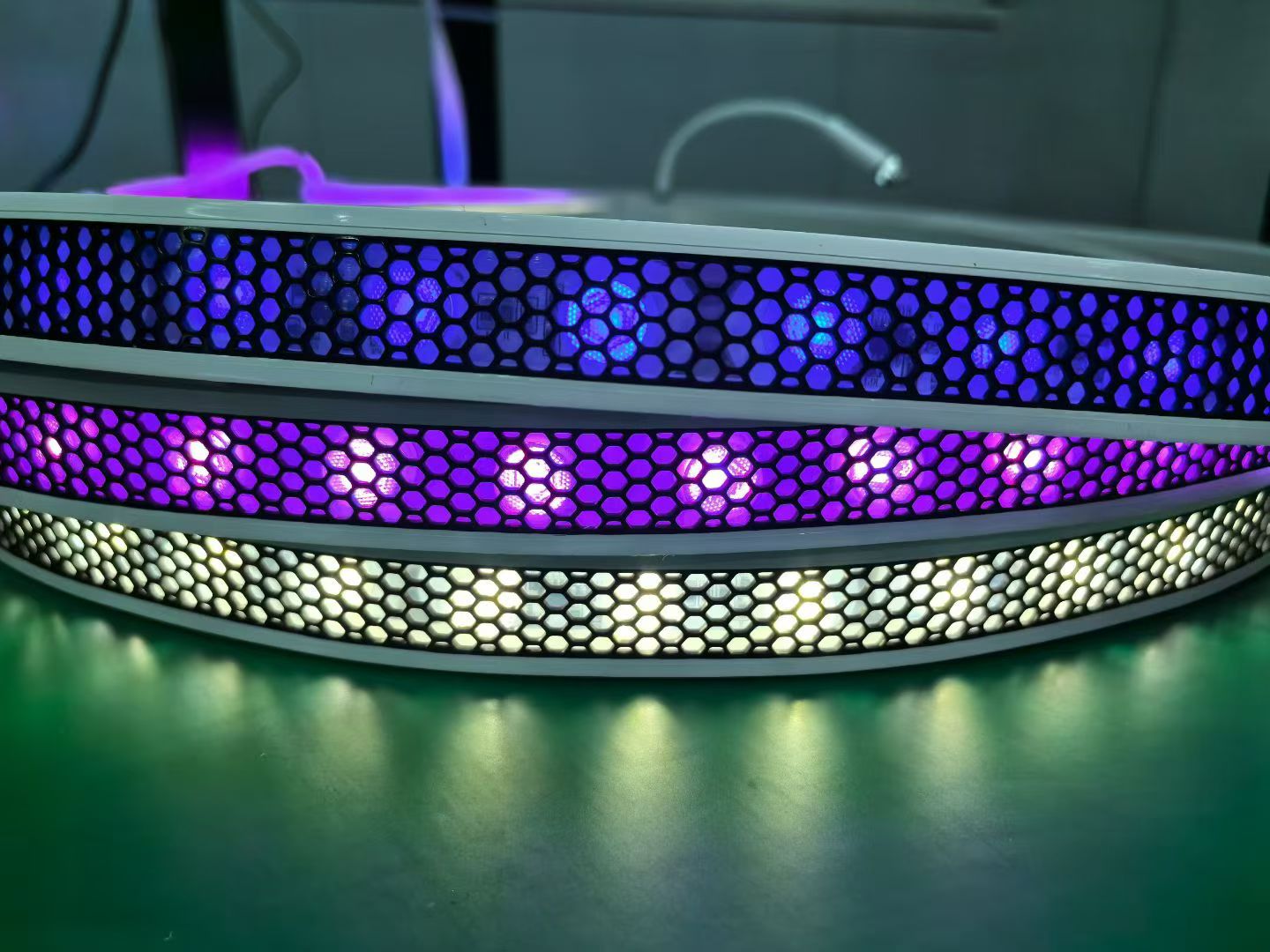
That distinction sounds technical. In practice, it separates projects that install cleanly from projects that spend the final three weeks firefighting. The sections below walk through exactly why that gap exists, how it plays out on real jobs, and what experienced procurement and project teams do differently.
What Does "Cuttable" Actually Mean on a Product Data Sheet?
Most specification writers list the word without reading the footnote. That footnote is where the real engineering lives.
Cuttable on a product data sheet means the product has been designed with repeating circuit segments that can be separated at marked intervals. Each segment is a self-contained electrical loop. Cutting at the correct mark preserves both segments. Cutting anywhere else breaks the loop, and the trimmed section will not illuminate.
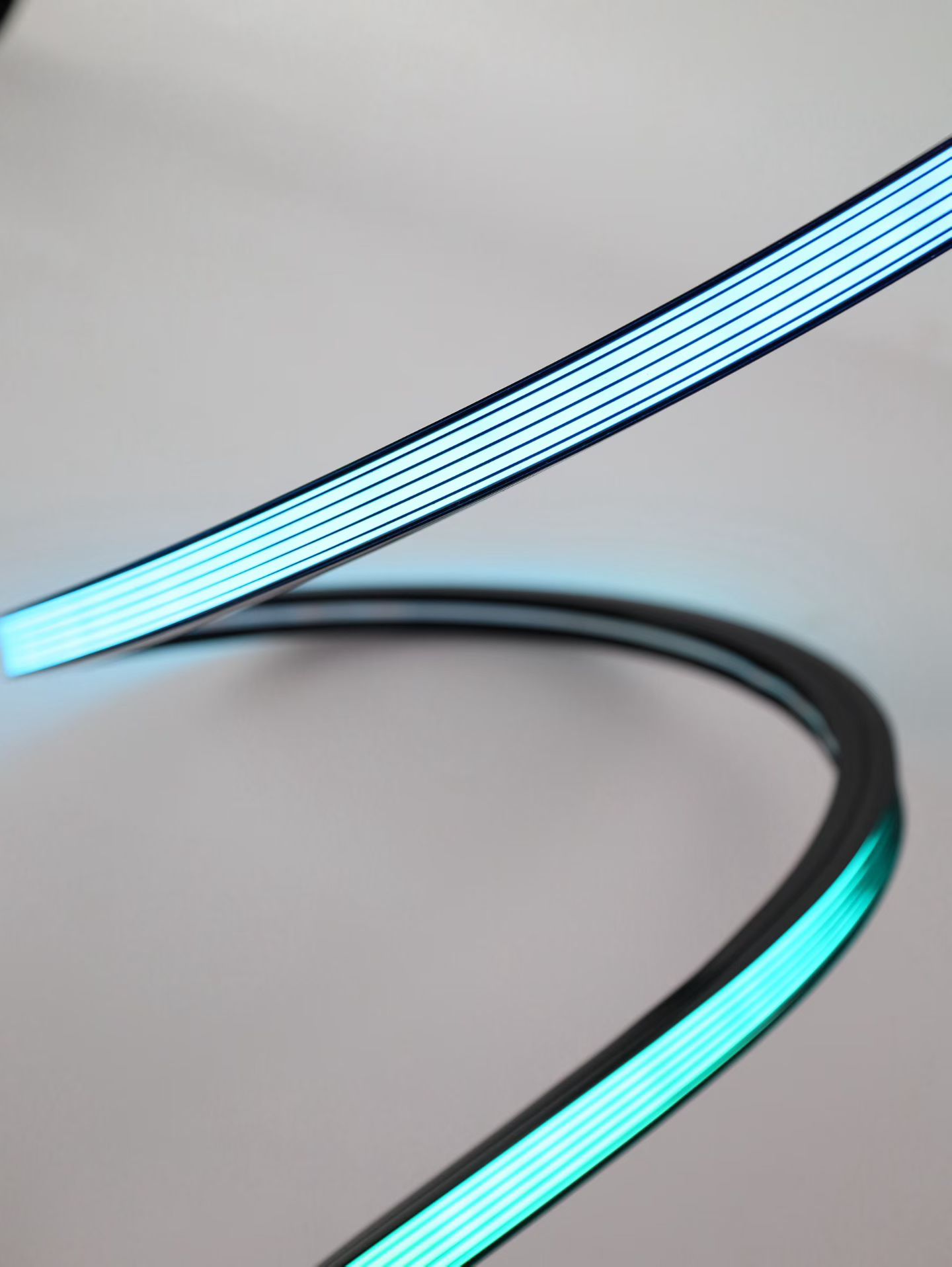
The Three Numbers You Need Before You Write a Specification
Every cuttable LED neon rope light product should be evaluated against three specific figures:
| Parameter | What It Means | Why It Matters |
|---|---|---|
| Minimum Cutting Unit | The shortest removable segment, e.g. 50 mm or 100 mm | Determines the length resolution the product can achieve |
| Cutting Mark Interval | Physical distance between cut points along the strip | Must align with your architectural dimension tolerance |
| Reconnection Compatibility | Whether cut ends can be rejoined with supplied connectors | Defines whether complex runs can be assembled in sections |
Why the Exact Cutting Unit Changes Your Design Logic
Suppose your architectural drawing specifies a run of 7.35 m. The product's Cutting Unit is 100 mm. Your actual options are 7.3 m or 7.4 m. That 50 mm gap seems trivial on paper. Multiply it across hundreds of individual runs on a large commercial facade, and you have dozens of decision points that need a defined resolution method before the first worker picks up a blade on site.
I have reviewed project specifications where the only listed requirement was:
LED Neon Flex: Cuttable
No Cutting Unit. No tolerance. No end-cap treatment method. No site cutting protocol. The word cuttable appeared on a procurement checklist, got ticked, and the conversation ended there.
That is exactly where the risk enters the project.
Cuttable vs. Field-Cuttable vs. Pre-Cut: Understanding the Vocabulary
Different suppliers use different terms. Buyers should clarify exactly which scenario applies:
- Cuttable — can be trimmed at defined marks; most common
- Field-Cuttable — designed for on-site trimming by installers, with tooling instructions
- Pre-Cut — factory-cut to specified lengths before shipment; no site cutting required
- Continuous/Non-Cuttable — must be installed at full reel length
For large architectural projects with many irregular dimensions, the practical choice is often a combination: pre-cut sections for the longest standardized runs, field-cuttable product for adjustment zones, and factory-sealed end caps on every terminated segment.
How Did a Single Misunderstood Word Derail an 8.6 km Facade Project?
This is a project I want to walk through in detail. It illustrates how a specification error at concept stage compounds across every subsequent phase.
A large commercial complex facade project specified LED neon rope light as "cuttable" without defining the Cutting Unit. Architectural CAD dimensions did not align with the product's physical cut intervals. By the time the mismatch was discovered, mass installation had begun. The result was unplanned joints, inconsistent luminance, delayed acceptance, and a multi-party dispute over responsibility.
Phase 1: The Design Team Worked From Architecture, Not From Product Specs
The designers produced accurate CAD-derived segment lengths:
- 4.35 m
- 6.72 m
- 8.18 m
- 11.46 m
These lengths were architecturally precise. They were not cross-referenced against the product's Cutting Unit. The design team was solving a geometry problem. They assumed the product would solve the cutting problem.
Phase 2: Procurement Read "Cuttable" and Closed the Evaluation
The procurement checklist included one line for this product parameter:
Cuttable: Yes ✓
Nobody asked:
- What is the minimum Cutting Unit?
- Which positions are marked for cutting?
- What connector system is used after cutting?
- How is the IP rating restored at a cut end?
The supplier had published this information in their technical documentation. The procurement team did not request it. This is not unusual. It is, however, a correctable process failure.
Phase 3: Installers Encountered the Real Product on a Real Building
Site dimensions differed slightly from design drawings — as they almost always do. One documented example:
- Design length: 6.72 m
- Field measurement: 6.67 m
- Installer decision: "Cut 50 mm — the spec says it's cuttable."
The cut was made at a non-marked position. The trimmed section would not power on. The installer improvised a splice. Then another. As the project scaled across 8.6 km, improvised splices accumulated across dozens of runs.
Phase 4: The Compounding Effects
Each unplanned splice introduced:
- An additional connection point
- A potential ingress vulnerability
- A visual discontinuity risk
- An additional inspection obligation during acceptance
What began as a 50 mm discrepancy became a systemic installation pattern. By the time the general contractor reviewed the cumulative junction count, the number was far beyond what the original installation plan had anticipated.
Phase 5: The Responsibility Dispute
Four parties, four positions:
- Client: "The product spec said Cuttable. Why can't it match our dimensions?"
- Procurement: "We purchased a Cuttable product. That requirement was met."
- Supplier: "Our technical data clearly defines the Cutting Unit. That data was available before order."
- Installer: "The drawings didn't show cut node positions. We worked with what we had."
Every position had a degree of validity. The root problem was that no single document — not the specification, not the procurement scope, not the installation drawing — had translated "Cuttable" into an executable engineering requirement.
How Should a Project Team Define Cuttable as an Engineering Requirement?
The contrast case is instructive. A second large-scale landscape project with the same basic requirement — LED neon rope light cuttable — produced a clean installation and a dispute-free acceptance.
The difference was a five-step process applied during the design phase: the project team defined the Cutting Unit before finalizing dimensions, reconciled architectural lengths against cut intervals, built a full mock-up including actual cuts and end treatments, locked site cutting rules into the installation specification, and wrote cuttability into the acceptance criteria.
Step 1: Raise the Question Before Procurement Begins
The engineering lead on the second project asked one question during the technical review:
"What is the actual Cutting Unit for this product?"
Procurement could not answer. The supplier provided product structure documentation. The team identified the cut interval immediately and flagged the alignment issue before any design was finalized.
This question should appear on every LED neon rope light evaluation checklist.
Step 2: Design With Three Variables, Not One
Standard lighting design calculates: architectural length → product quantity.
Correct design for a cuttable product calculates: architectural length + Cutting Unit + installation node positions.
Where the architectural dimension does not divide cleanly into the Cutting Unit, the design document must specify:
- Which direction the excess is absorbed
- Whether a joint is acceptable at that location
- How the end cap or connector is treated
- Who approves any non-standard segment
Step 3: Run a Real Mock-Up — Cut It, Connect It, Install It
The second project's mock-up requirement was explicit. The sample had to demonstrate:
- Product cut at specification marks
- End cap applied per supplier method
- Field connector installed
- Section powered on and inspected
- IP rating restoration verified
- Visual continuity checked across the joint
Lighting a sample strip for colour approval is not a mock-up. A cuttability mock-up is a complete installation sequence performed on representative segment lengths before mass production begins.
Step 4: Write Site Cutting Rules Into the Installation Specification
The final installation document contained a section titled Cutting Protocol, which specified:
- Permitted: Cuts at marked Cutting Unit positions only
- Required tool: [Specified cutting instrument]
- End treatment: Factory end cap or approved field connector
- Authority: Any cut outside standard positions requires written sign-off from the technical lead
- Prohibition: No improvised cuts, splices, or untreated ends
This removed discretion from site workers — appropriately. A large-scale installation is not the place for individual judgment calls on electrical trimming.
Step 5: Define Acceptance Criteria That Include Cut Quality
The acceptance checklist for the second project included:
| Acceptance Item | Standard |
|---|---|
| Cut positions | Must align with marked Cutting Unit positions |
| End caps | Applied per approved method on all terminated ends |
| Connectors | Matching approved connector type only |
| Visual continuity | No dark segments, no brightness steps across joints |
| IP integrity | No visible damage to outer jacket at cut positions |
| Documentation | As-built drawing showing all cut and joint positions |
This is what it looks like when "cuttable" becomes an engineering parameter rather than a marketing feature.
What Are the Most Dangerous Gaps in Lighting Specifications for Cuttable Products?
Seven specification failures appear repeatedly in projects that experience site problems with cuttable LED neon rope lights.
The most dangerous gaps are: writing only "Cuttable" without a defined Cutting Unit; failing to cross-check architectural dimensions against product cut intervals; omitting end treatment requirements; leaving cutting authority undefined; skipping real cut-and-connect mock-up testing; not defining who approves non-standard cuts; and excluding cut quality from the acceptance criteria.

Specification Gap Breakdown
Gap 1: Writing only "Cuttable" The term alone communicates nothing about cut interval, cut tolerance, or reconnection method. It reads as a product attribute, not a project requirement.
Gap 2: No minimum Cutting Unit specified If the project contains irregular dimensions — curved facades, angled transitions, variable-length segments — and the product's Cutting Unit is coarser than the required resolution, the mismatch is structural, not incidental.
Gap 3: Sample testing without cutting Approving a product sample without performing a cut-connect-install-inspect cycle means the sample test only validated appearance and initial illumination. It did not validate the installation process.
Gap 4: No defined cutting authority If any installer can cut at any time, improvised cuts will happen. If only a specified technician may cut, the workflow and scheduling must reflect that. The specification must be explicit.
Gap 5: End treatment left to site judgment An untreated cut end on an outdoor-rated IP65 or IP67 product immediately downgrades the protection at that point. End cap method and connector type should be called out by product number in the specification.
Gap 6: Architectural dimensions not reconciled with Cutting Units This is the root cause in the failure case above. It requires one coordination step: compare the design dimension list against the product's Cutting Unit, identify every dimension that does not divide cleanly, and assign a resolution method to each.
Gap 7: Acceptance criteria that only check illumination If the site team knows acceptance means "does it light up," that is the standard they will work to. The specification should require more.
What Should a Project Manager Ask When Evaluating a Cuttable LED Neon Rope Light Supplier?
Five questions separate a supplier evaluation from a product browsing session.
A project manager evaluating LED neon rope light cuttable options should ask: What is the exact Cutting Unit? Which positions are marked for cutting? What is the approved end treatment method after cutting? How does the product's IP rating recover at a cut end? And what technical documentation is available before ordering samples?
The Five Questions in Detail
Question 1: What is the exact Cutting Unit?
This is non-negotiable information. If a supplier cannot provide a specific dimension — not "flexible" or "as required" — the product has not been designed with cuttability as an engineering feature.
Question 2: Which positions are physically marked for cutting?
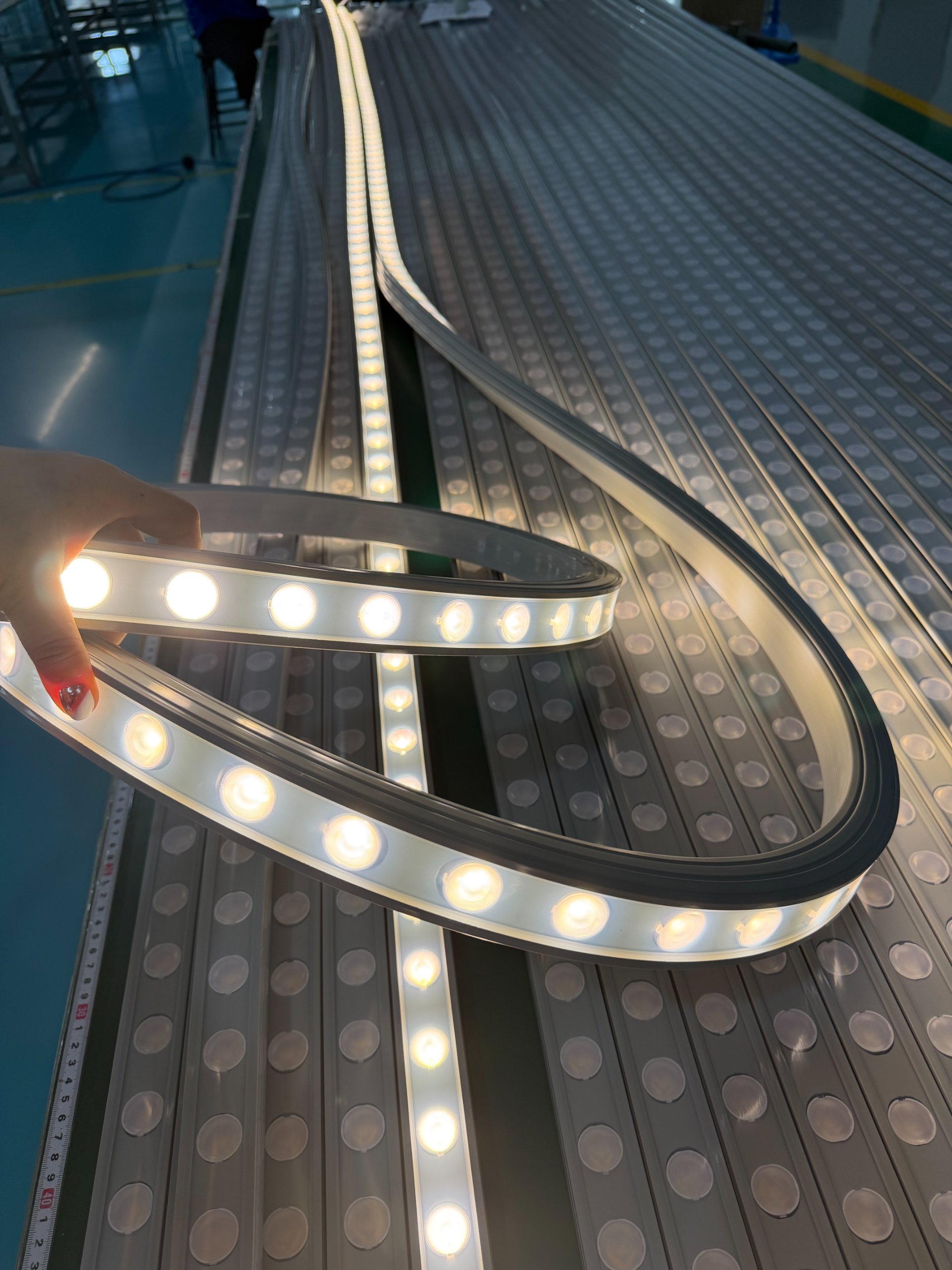
Good product design places visible cut marks at every permitted interval. The marks should be printed, engraved, or otherwise permanently indicated on the product. Ask to see a photo of the actual product showing the cut marks.
Question 3: What is the approved end treatment after cutting?
The answer should specify a product: a model number for the end cap, a connector type, or a defined sealing method. "Use appropriate connector" is not an adequate answer for a project specification.
Question 4: What happens to the IP rating at a cut end?
This matters on any exterior application. The supplier should be able to explain how the rated protection is maintained or restored after cutting. Ask to see the testing documentation for this claim. Treat certifications as documents to be verified, not marketing assertions.
Question 5: What technical documentation is available before we order samples?
A manufacturer who supports large-scale projects should be able to provide cut structure drawings, cutting and connection installation guides, and product specification sheets that explicitly state the Cutting Unit — before you commit to a sample order.
From my experience working with project buyers sourcing LED neon rope light for large installations in Europe and North America, the buyers who ask these five questions during initial supplier contact resolve site cutting problems at the design table. Those who skip them resolve the same problems on scaffolding.
Frequently Asked Questions
What is a Cutting Unit in LED neon rope light?
A Cutting Unit is the minimum repeating circuit segment at which an LED neon rope light can be trimmed without disrupting the electrical circuit. It is measured in millimetres — commonly 25 mm, 50 mm, or 100 mm depending on the product design. Cutting between marked positions will break the circuit in that segment.
Does cutting LED neon rope light affect its IP rating?
Yes. Cutting exposes the internal circuit and silicone body. The IP rating at the cut end is no longer valid until an appropriate end cap or connector is applied and sealed per the manufacturer's method. For outdoor applications, end treatment after cutting is mandatory, not optional.
Can LED neon rope light be cut and rejoined on site?
Some products support field reconnection using compatible connectors. Others require factory-terminated ends. Buyers should confirm reconnection compatibility before specifying field cutting for large projects. The connector type and sealing method should be part of the approved installation procedure.
How do I specify a cuttable LED neon rope light correctly in a tender document?
At minimum, state the Minimum Cutting Unit, the permitted Cutting Positions, the required end treatment method, the cutting authority (who may perform cuts on site), and the acceptance criteria for cut quality. Do not rely on the word "Cuttable" alone.
What is the difference between pre-cut and field-cuttable LED neon rope light?
Pre-cut product is trimmed to specified lengths at the factory, with sealed ends, before shipment. Field-cuttable product is delivered in reels and trimmed on site. Pre-cut reduces site risk but requires accurate length data before ordering. Field-cuttable preserves flexibility but demands a strict site cutting protocol and trained installers.
Conclusion
LED neon