

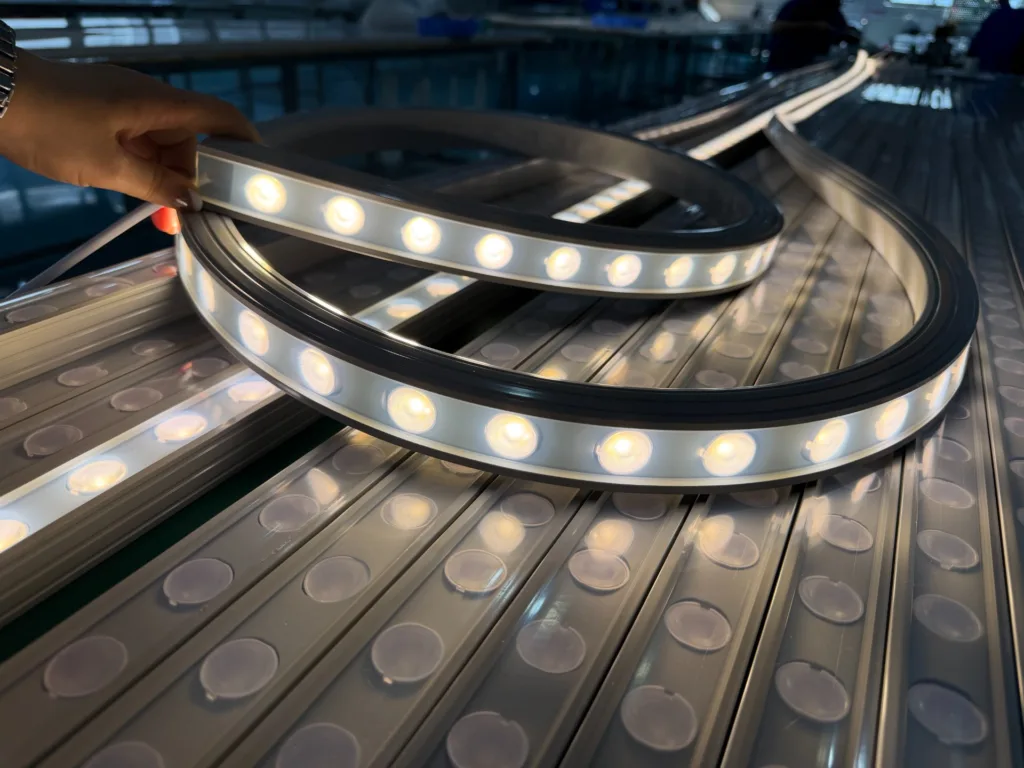
Outdoor LED lighting projects look straightforward on paper — buy the right fixtures, install them outside, and you're done. But in large-scale architectural facades, commercial complexes, hotels, landscape installations, and international engineering projects, the failures rarely come from the lighting itself. They come from a single, systematic mistake made weeks or months before the first fixture is ever mounted.
The core question every outdoor LED lighting project must answer before procurement begins is this: has the team accurately defined what "outdoor" actually means for this specific installation? "Outdoor" is not a single environment. It is a spectrum of exposure conditions — direct rain, standing water, irrigation spray, dust, UV radiation, temperature cycling, coastal salt air, and drainage constraints — all of which require different product specifications, installation methods, and acceptance criteria. Projects that treat "outdoor use" as a complete engineering definition consistently produce the most expensive failures in the lighting industry.
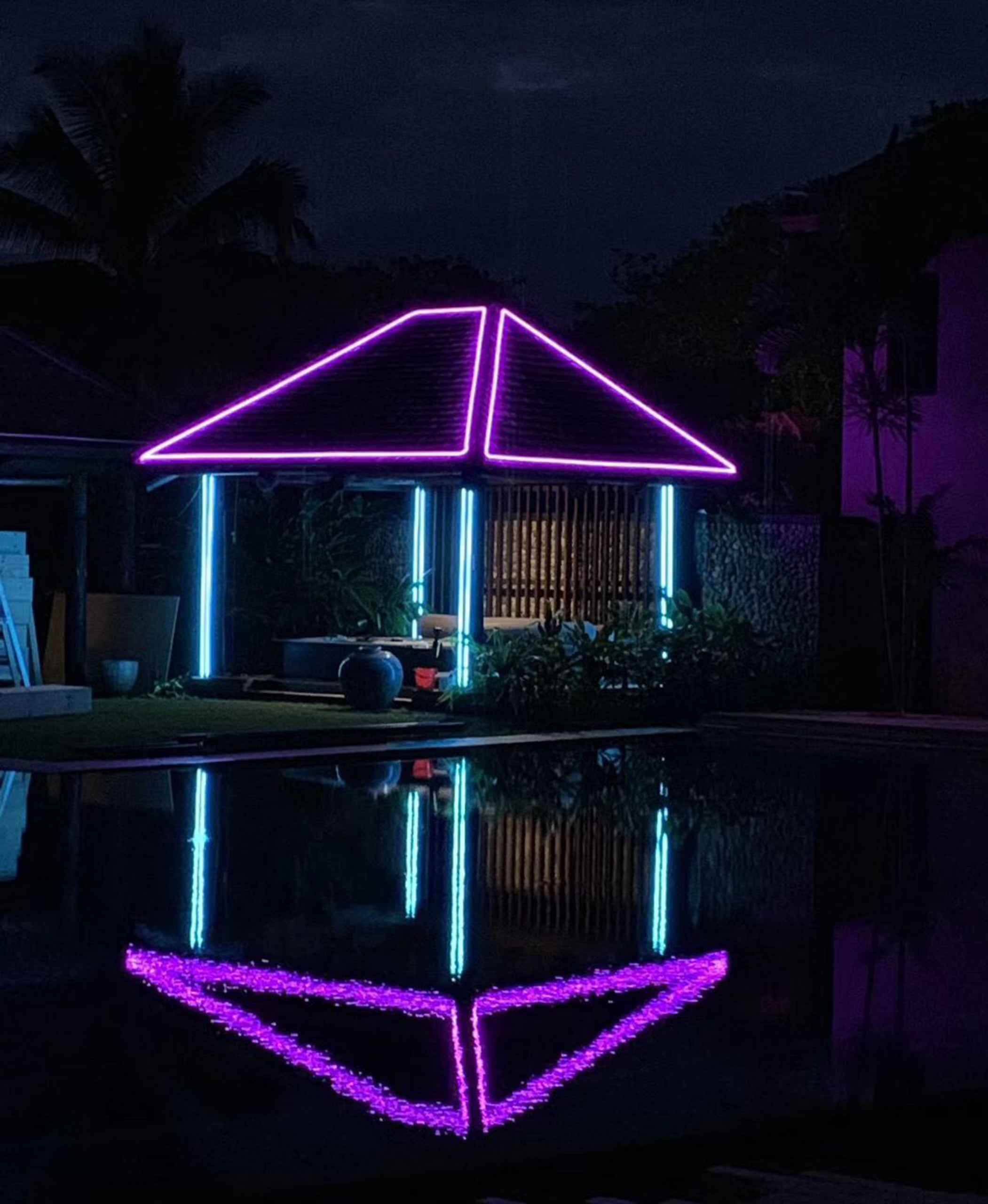
Most project teams don't realize this gap exists until the installation is already underway. The sections below break down exactly how this failure develops, what it costs, and how disciplined procurement teams prevent it before a single meter of LED strip leaves the factory.
Is "Outdoor" a Complete Product Specification?
Most procurement teams assume the answer is yes. That assumption is one of the most expensive mistakes in large outdoor LED lighting projects.
"For outdoor use" is a marketing classification, not an engineering specification. It tells a buyer almost nothing about whether a product is appropriate for a specific installation location, exposure condition, connection method, or maintenance environment. Projects that rely on this phrase as their primary technical criterion invite scope disputes and field failures that could have been prevented entirely at the design desk.
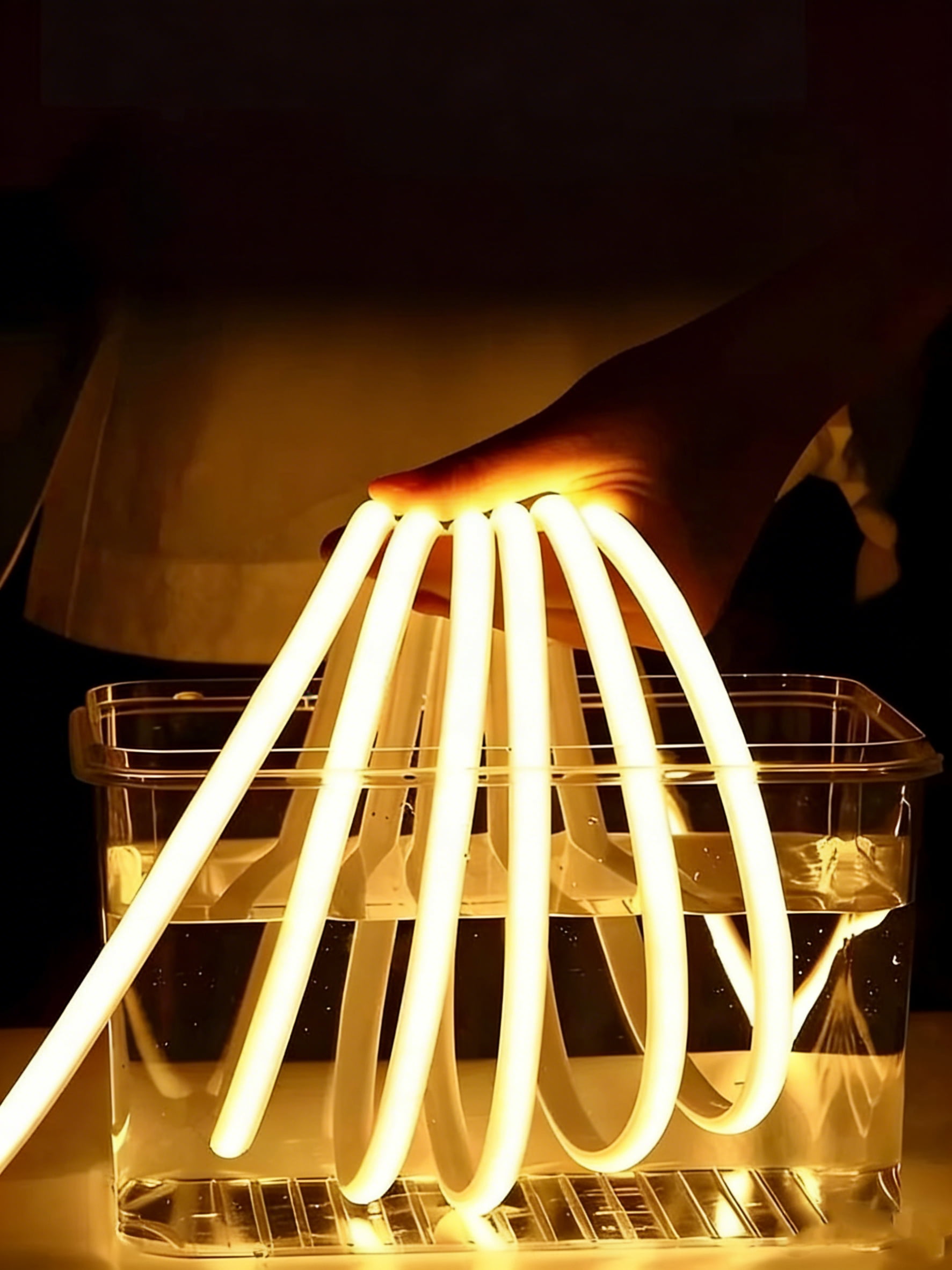
Understanding why this happens — and exactly what should replace that phrase — requires looking at the full chain of decisions that connect a design document to a finished installation.
Why "Outdoor" Feels Like Enough
The product market reinforces the illusion. Labels are simple:
- Indoor
- Outdoor
- Waterproof
- IP65 / IP67 / IP68
This creates a shortcut logic that feels entirely reasonable:
Outdoor project → Outdoor product → IP-rated → Ready to install.
For small residential projects, this shortcut sometimes works. For large commercial or architectural projects, it introduces a gap between what the product specification says and what the installation environment actually demands.
What "Outdoor" Fails to Define
A specification that only says "for outdoor use" leaves all of the following undefined:
| Environmental Factor | Why It Matters |
|---|---|
| Direct rainfall exposure | Determines minimum IP rating for the housing |
| Standing water risk | Determines whether IP68 is needed and for how long |
| Irrigation or spray contact | Changes connector and cable entry requirements |
| UV exposure intensity | Affects material selection and jacket longevity |
| Surface temperature cycling | Influences adhesive and mounting system choices |
| Wind load on facade | Impacts mechanical fixing specification |
| Drainage path around fixtures | Determines acceptable connection point locations |
| Salt air or coastal proximity | Changes corrosion protection requirements |
None of these factors appear in the phrase "for outdoor use." Every one of them can cause a project-level failure if left unaddressed.
How Do Outdoor LED Lighting Projects Actually Fail?
The failure path is almost always the same, regardless of project size or geography.
It begins with a design document that describes the requirement as "Outdoor LED Lighting" and specifies an IP rating — typically IP65, IP67, or IP68. It ends with a field dispute involving the owner, the general contractor, the lighting supplier, and the installation team, each pointing to a different definition of responsibility.
The intermediate steps follow a predictable sequence:
- Design documents specify "Outdoor LED Lighting, IP68."
- Procurement sources products that match that description.
- Suppliers provide compliant products — compliant with the specification as written.
- Sample approval is based on bench illumination tests indoors.
- Bulk order is placed and delivered.
- Installation begins on site.
- Field conditions differ from the implied test conditions.
- Connection points, drainage paths, or installation nodes create exposure risks that the product IP rating was never meant to address alone.
- Anomalies appear after the first rain event.
- Remediation begins. Scope disputes follow.
The Critical Distinction Most Teams Miss
The product often meets its stated specification perfectly. The problem is that the project never defined the correct specification in the first place.
This distinction matters enormously for responsibility assignment. A supplier who delivers IP68-rated outdoor LED strip lighting has fulfilled their obligation under the purchase order. If the installation nodes concentrate water at unprotected connector points, and no one specified the connection system requirements, the product specification and the installation system are simply misaligned.
That misalignment does not fix itself in the field. It escalates.
What "Outdoor" Looks Like Across Real Installation Zones
The same commercial complex can contain multiple distinct outdoor environments within a single project boundary:
Architectural Facade (Zone A)
- Direct rain impingement
- High solar gain on dark cladding surfaces
- Wind-driven moisture at panel joints
- Long drainage runs across product mounting surfaces
Ground-Level Landscape (Zone B)
- Irrigation spray from adjacent planting systems
- Foot traffic and cleaning equipment contact
- Sediment accumulation in low-profile channels
Rooftop (Zone C)
- Sustained ponding after heavy rainfall
- Extreme surface temperatures (60°C+ in summer)
- Rapid thermal cycling between day and night
Water Feature Perimeter (Zone D)
- Continuous splash exposure
- Potential submersion during maintenance flooding
- High humidity in enclosed feature cavities
These are not the same outdoor environment. They should not carry the same product specification. Projects that treat them identically will encounter problems in at least one zone.
What Should an Outdoor LED Lighting Specification Actually Contain?
A technically complete specification for outdoor LED lighting answers five questions before procurement begins.
Question 1: Where exactly is this product installed?
Not "outdoors." Specifically: architectural facade, rooftop channel, ground-level recessed slot, water feature perimeter, semi-enclosed canopy, or another precisely described location.
Question 2: What environmental exposures will the product face?
Confirmed answers for each zone:
- Direct rainfall? Yes / No
- Standing water potential? Duration?
- Irrigation or spray contact?
- UV exposure level?
- Temperature range (min/max)?
- Salt air or industrial atmosphere?
Question 3: How will the product be installed?
- Aluminum extrusion channel
- Surface-mounted clip system
- Recessed slot in cladding
- Embedded in concrete or render
The same product in different mounting configurations faces completely different moisture ingress risks.
Question 4: Where are the connection points, and what is their exposure level?
This is the most frequently overlooked question in large projects. Teams focus on the IP rating of the light engine. They forget to ask:
What is the IP rating of the connector? The cable entry? The junction box? The field-cut end cap?
The entire connection chain must be evaluated, not just the luminaire housing.
Question 5: What are the acceptance criteria?
"The light turns on" is not an acceptance criterion for outdoor LED lighting in a large architectural project. A proper acceptance definition includes:
- Verified installation condition against approved method statement
- Connector and cable entry inspection
- Drainage path confirmation
- Visual consistency across the full installation run
- Batch traceability to approved sample
Can IP Ratings Alone Define Outdoor LED Lighting Requirements?
No. IP ratings are one input into an outdoor specification. They are not a substitute for one.
The IEC 60529 standard defines IP ratings as tests performed on the product housing under laboratory conditions. IP68 means the product housing withstood continuous immersion at a defined depth and duration under controlled test parameters. It does not mean:
- The connector system is rated to the same level
- The cable entry point maintains that rating after field installation
- The end cap applied in the field preserves the housing rating
- The mounting method does not compromise the seal under thermal cycling
For outdoor LED lighting in large projects, the IP rating of the luminaire body is a necessary starting point. It is not a sufficient end point.
What IP Ratings Do Not Address
| Factor | IP Rating Covers? |
|---|---|
| Connector water ingress | No — connector has its own IP rating |
| Field-cut end cap sealing | No — depends on installation practice |
| Cable gland at junction box | No — separate component, separate rating |
| Thermal cycling stress on seals | Partially — standard test is static |
| UV degradation of jacket | No — separate UV resistance standard |
| Mechanical impact from cleaning | No — IK rating is a separate standard |
A project specification that lists only "IP68" and nothing else has defined approximately 30% of what the installation system actually needs.
What Does a Successful Outdoor LED Lighting Procurement Process Look Like?
I've seen projects approach this well, and the difference in outcomes is significant. The most disciplined teams treat "outdoor" as the beginning of a definition process, not the end of one.
Step 1: Environmental Zoning
Before specifying any product, the technical lead maps all installation areas into environmental zones. Each zone receives a documented description of:
- Expected exposure type
- Worst-case moisture scenario
- Temperature range
- UV and chemical exposure
- Access and drainage conditions
This turns "outdoor" into a set of specific engineering inputs.
Step 2: Connection System Review
The team then maps every connection point in the installation — luminaire body, field connectors, cable entries, junction boxes, power supply enclosures — and assigns an IP requirement to each component. The lowest-rated component in the chain defines the system's actual protection level, not the highest.
Step 3: Representative Mock-up
The approved sample is installed in a representative mock-up that replicates the actual building node — including the mounting channel, connection method, cable routing, drainage path, and adjacent materials. The mock-up is then evaluated for:
- Water ingress pathways under simulated rain
- Low-point accumulation risk
- Connector accessibility for inspection and replacement
- Thermal movement effects on seals
This step consistently catches installation system problems that bench testing misses entirely.
Step 4: Locked Specification and Batch Control
Once the mock-up is approved, the specification is locked. Any supplier-proposed substitution — even a "direct equivalent" — requires a documented technical review against the approved specification. Procurement teams that skip this step routinely receive substituted products that differ in ways the project team cannot evaluate without technical support.
Step 5: Defined Acceptance Criteria
The acceptance standard is written before installation begins, not after anomalies appear. It references the approved installation method, the approved connection system, the approved batch traceability, and the defined visual and performance criteria.
Frequently Asked Questions
What IP rating do I need for outdoor LED strip lighting?
The appropriate IP rating depends on the specific installation environment, not a general outdoor category. IP65 suits dry-area facades with indirect weather exposure. IP67 covers temporary immersion. IP68 is required for sustained or permanent submersion. The connector, cable entry, and end caps must be specified separately — they are not covered by the luminaire body's IP rating.
Why do outdoor LED lighting projects fail even when the product meets its IP rating?
Most failures occur at connection points — field connectors, cable entries, junction boxes, and end caps — that were not specified to the same protection level as the luminaire housing. The IP rating of the fixture body does not guarantee the IP rating of the full installation system. Projects that specify the product but not the complete connection chain create gaps that field conditions eventually exploit.
What should a technical specification for outdoor LED lighting include beyond IP rating?
A complete outdoor LED lighting specification should define: installation location and environmental zone, specific exposure conditions (rain, submersion, spray, UV, temperature range), connector and cable entry protection requirements, mounting method and thermal movement allowance, field termination requirements, and acceptance criteria for the full installed system.
How should outdoor LED lighting samples be tested before bulk procurement?
Samples should be evaluated in a representative installation mock-up that replicates the actual building node, including mounting channel, connection method, cable routing, and drainage path. Bench illumination testing confirms the product works. Mock-up testing confirms the installation system is appropriate for the specific outdoor application.
Who is responsible when an outdoor LED lighting installation fails after rain exposure?
Responsibility depends on where the system gap occurred. If the luminaire meets its specified IP rating but the connector system was not specified or was incorrectly installed, the gap is in the specification or installation scope, not the product. Clear contracts must define responsibility for the luminaire, the connection system, the installation method, and the field termination — separately. Projects that combine these into a single "outdoor rated" requirement make responsibility assignment after failure extremely difficult.
Conclusion
The central risk in outdoor LED lighting projects is not buying the wrong product. It is defining the requirement incompletely and only discovering that incompleteness after installation is underway. "Outdoor" describes an application category. It does not describe the environment, the connection system, the installation method, or the acceptance standard that a specific project actually requires.
Every large outdoor LED lighting project benefits from five actions before procurement: environmental zoning, connection chain specification, representative mock-up testing, locked technical approval, and defined acceptance criteria. Projects that complete these steps systematically prevent the most expensive class of field failures in the lighting industry — those that occur not because the product was wrong, but because the project never fully defined what "outdoor" meant.
If you are specifying or procuring outdoor LED lighting for a commercial, architectural, or infrastructure project and need a manufacturer who can support technical specification review, sample evaluation, and application-specific product selection, contact our team at Ailisit. We work directly with lighting companies, contractors, and project procurement teams to match products to verified application conditions — not just application categories.