
Specifying custom LED neon flex signs for an outdoor project looks straightforward — until the installation fails and nobody can agree on who is responsible. Most procurement teams focus on visual output and price, while the real risk quietly builds inside the specification document. Get the definition right early, and you avoid the most expensive problems in outdoor lighting projects.
Custom LED neon flex signs are flexible LED light sources encased in silicone or PVC extrusions that mimic the appearance of traditional glass neon. For outdoor applications, buyers must specify not just the product itself, but the complete installation system — including ingress protection rating, connection method, mounting position, drainage path, and acceptance criteria — before procurement begins. Selecting an "outdoor-rated" product without defining the actual environmental conditions is one of the most common and costly mistakes in large-scale lighting projects.
The product category is well understood. The specification process is not. Understanding what separates a successful outdoor neon flex installation from a costly rework starts with one question: have you actually defined what "outdoor" means for your specific project?
What Are Custom LED Neon Flex Signs, and Why Does Customization Matter?
Off-the-shelf products rarely match the demands of large commercial, hospitality, or architectural projects. When the design calls for a specific color temperature, bend radius, cross-section profile, or voltage configuration, standard catalog items create compromise. That compromise often shows up during installation — or worse, after handover.
Custom LED neon flex signs are products manufactured to a buyer's defined specifications, including dimensions, LED chip type, color temperature, beam angle, ingress protection level, voltage (12V, 24V, or high-voltage), silicone profile shape, and connection configuration. Customization allows the product to match the architectural intent, electrical system, and environmental exposure of a specific project rather than forcing the project to adapt to a standard product.
Customization is not just about aesthetics. It directly affects installation compatibility, long-term performance, and maintenance access. The sections below break down each dimension of this product category and what buyers need to verify before committing to a supplier.
What Types of Custom LED Neon Flex Signs Are Available?
Buyers entering the market for the first time often encounter an overwhelming number of product variants. Understanding the taxonomy prevents mismatched procurement and simplifies supplier comparison.
Custom LED neon flex signs are broadly categorized by voltage (12V, 24V, or high-voltage/220V), LED type (SMD or COB), silicone profile shape (top-bend, side-bend, or 360-degree), and ingress protection rating (IP65, IP67, or IP68). Each combination is suited to different installation environments and design requirements. A product selected without aligning these parameters to the actual application will create problems that no amount of field adjustment can fully correct.
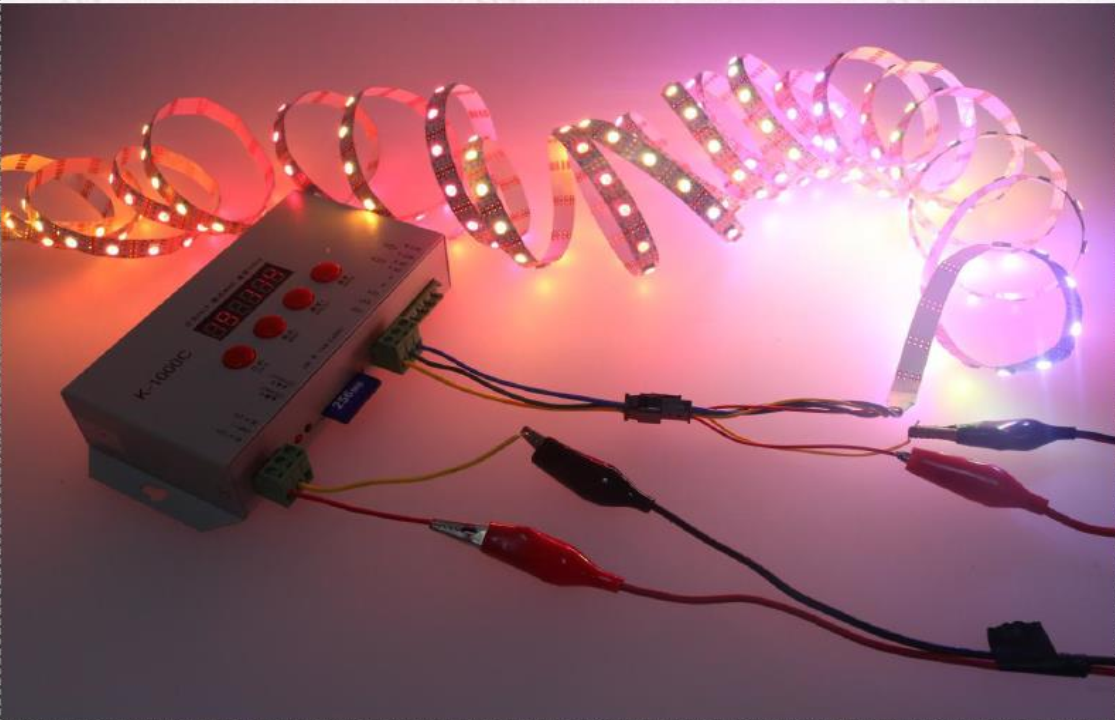
Voltage Options
| Voltage | Typical Run Length | Best For |
|---|---|---|
| 12V DC | Up to 5m per run | Small signage, display cases, short architectural details |
| 24V DC | Up to 10m per run | Medium runs, commercial interiors, outdoor signage |
| High Voltage (110V/220V AC) | Up to 50m+ per run | Large building facades, long continuous runs, commercial exteriors |
Low-voltage products (12V and 24V) require driver placement every few meters on long runs. High-voltage products support longer continuous runs but carry different electrical safety and certification requirements — a critical factor for projects in North America, Europe, or Australia.
LED Technology: SMD vs. COB
- SMD neon flex uses discrete LEDs mounted at regular intervals. Individual LEDs may be visible at close range if dot pitch is insufficient. Suitable for signage viewed from a distance.
- COB neon flex uses a continuous chip-on-board strip, producing a uniform, dotless light line. Preferred for architectural applications and premium commercial environments where light quality at close viewing distances matters.
Profile Shape
- Top-bend: Bends in the vertical plane. Used for letter outlines and horizontal architectural lines.
- Side-bend: Bends in the horizontal plane. Used for curved architectural features and wave patterns.
- 360-degree: Emits light in all directions. Used for rope-light replacement and freestanding installations.
Ingress Protection
IP65, IP67, and IP68 are not interchangeable for outdoor use. The rating defines the test condition — not the real-world installation condition. This distinction is critical, and I will return to it in detail below.
How Should Outdoor Specifications for Custom LED Neon Flex Signs Be Written?
This is where most large projects accumulate their highest risk. A specification that reads "Outdoor LED neon flex, IP68" looks complete. It is not.
A correct outdoor specification for custom LED neon flex signs must define the installation location and orientation, environmental exposure conditions (rain, standing water, UV, temperature range, cleaning methods), required ingress protection for the full installation system (not just the light body), the connection and termination method, the mounting structure, and the acceptance criteria. Writing "For Outdoor Use" or citing only an IP rating is not a complete engineering specification.
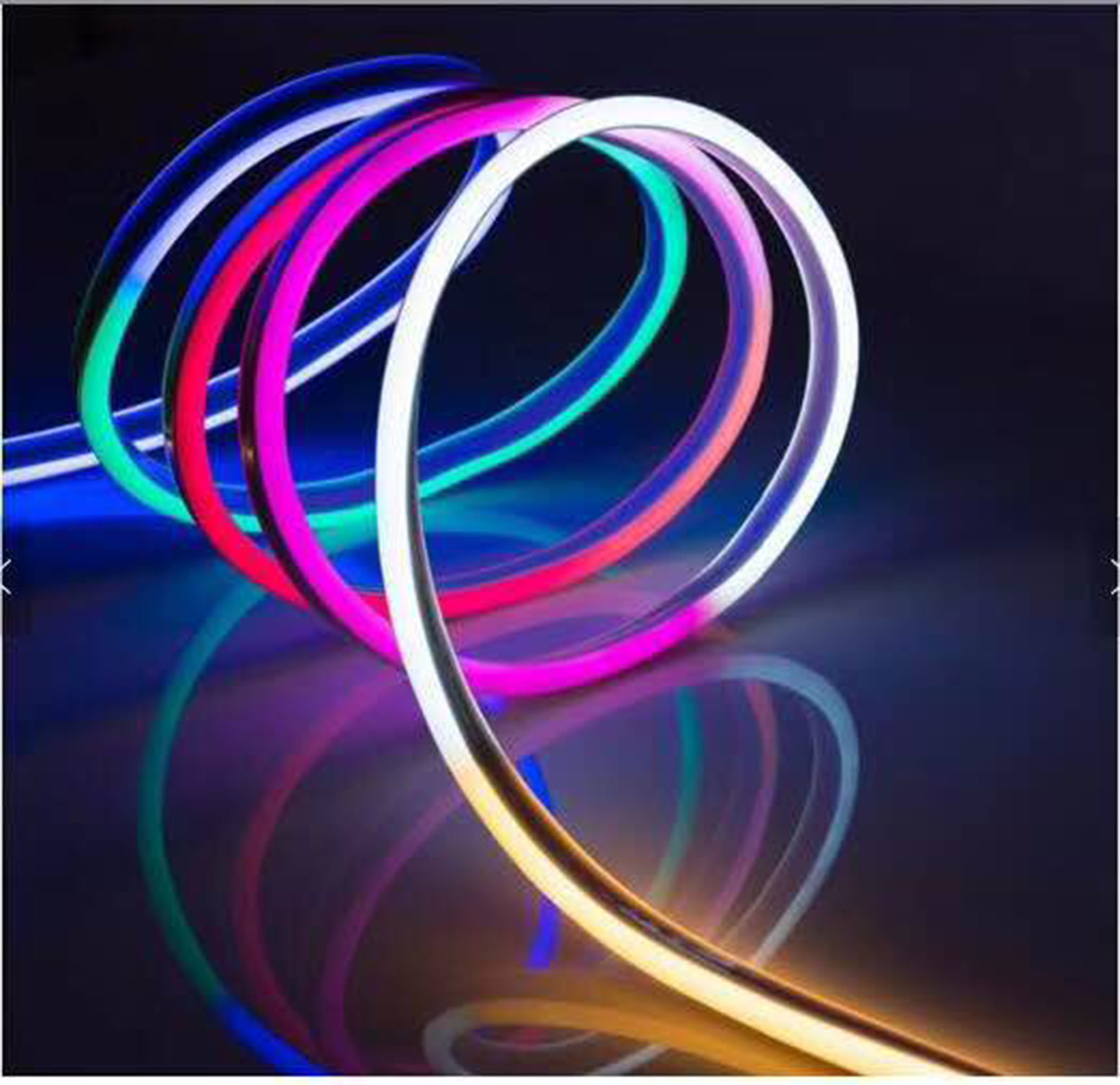
Why "Outdoor" Is Not a Specification
Consider two installations that both qualify as "outdoor":
- A building facade at 15 meters elevation, exposed to direct rain but with positive drainage, no ponding, and no irrigation contact.
- A ground-level landscape border subject to irrigation spray, occasional ponding, foot traffic, and pressure washing.
Both are outdoors. The environmental exposure is entirely different. The product, mounting method, connection strategy, and maintenance protocol must differ accordingly.
I have seen procurement teams select the same product for both conditions because the specification said "IP68 Outdoor." The product may have been perfectly adequate for one application and marginal for the other — but nobody defined the difference before ordering.
The Five Questions Every Outdoor Specification Must Answer
Before issuing a purchase order for outdoor custom LED neon flex signs, the project technical lead should be able to answer all five of the following:
- Where exactly is the product installed? (Facade, rooftop, ground landscape, water feature edge, semi-covered canopy, etc.)
- What environmental conditions will the product face? (Direct rain, ponding, irrigation spray, UV exposure, temperature cycling, cleaning equipment, salt air, etc.)
- How will the product be mounted? (Aluminum channel, clip system, embedded slot, surface bracket, etc.)
- Where are the connection points, and what is their exposure level? (Connectors, end caps, cable entry points, junction boxes — all require individual assessment)
- What are the acceptance criteria? (Define what "pass" looks like — not just "lights on")
If any of these questions cannot be answered before procurement, the specification is incomplete. Proceeding to supplier selection at that stage transfers project risk downstream, where it becomes far more expensive to resolve.
Environmental Zoning: A Practical Tool
One approach that works well in large mixed-use projects is dividing the installation area into environmental zones before writing the product specification.
| Zone | Description | Typical IP Requirement | Connection Attention Level |
|---|---|---|---|
| Zone A | Direct rain exposure, vertical surface | IP65 minimum | Medium |
| Zone B | Semi-covered, no direct rain | IP54 minimum | Low |
| Zone C | Potential standing water, ground level | IP67 minimum | High |
| Zone D | Irrigation spray or water feature proximity | IP67–IP68 | Very High |
| Zone E | Submerged or long-term water contact | IP68 required | Critical |
Assigning zones forces the design team to think about each installation position individually. It also makes supplier briefing much more precise and reduces the risk of a single product being misapplied across multiple conditions.
The Connection System Problem
In my experience reviewing outdoor lighting project failures, the most common failure point is not the light body. It is the connection system.
A product rated IP68 is tested as a sealed unit. The moment a field connection is made — a male-to-female connector, a cut end with an end cap, a cable entry point, a junction box — the system integrity depends entirely on how that connection is designed, specified, and installed.
The weakest point in any outdoor LED neon flex installation is usually the connection, not the light body.
Specifications must explicitly address:
- Connector type and IP rating (matching the environmental zone, not just the product)
- End cap sealing method (factory-sealed vs. field-applied)
- Cable entry direction (downward-facing entries dramatically reduce ingress risk vs. upward-facing)
- Junction box placement (away from low points and drainage paths)
- Cable gland specification (IP-rated glands at every enclosure entry)
If the specification is silent on these points, the installation contractor will make independent decisions — and those decisions may not match the environmental zone requirements.
What Certifications Should Custom LED Neon Flex Signs Carry for Export Markets?
Certification requirements vary by destination market. Failing to confirm the correct certifications before production leads to customs delays, rejected shipments, or products that cannot be legally sold in the target market.
Custom LED neon flex signs exported to the EU typically require CE marking and RoHS compliance. Products for the US market may require UL or ETL listing. Australia requires SAA certification. Saudi Arabia requires SASO. RoHS and REACH compliance are increasingly expected across all markets as standard baseline requirements. Buyers should verify that certifications cover the specific product configuration ordered, not just a generic product family.
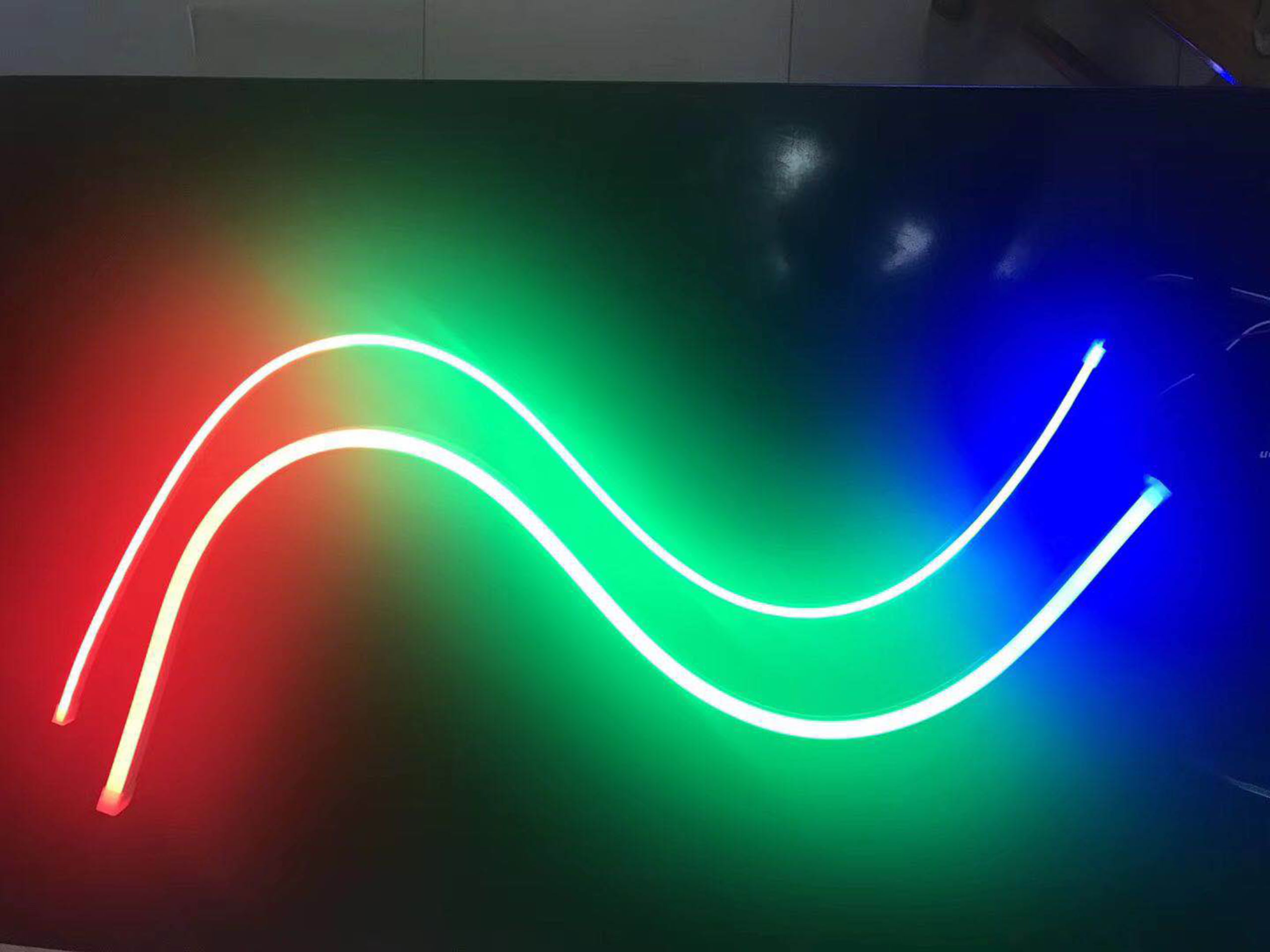
Certification Verification Checklist
Before accepting a certification claim from a supplier, buyers should confirm:
- Certificate scope: Does the certificate cover the exact voltage, wattage, and configuration ordered — or a different product variant?
- Certificate validity: Is the certificate current, and has the product changed since it was issued?
- Issuing body: Is the certification issued by an accredited third-party laboratory, or is it a self-declaration?
- RoHS/REACH: Does the supplier provide material composition data or a Declaration of Conformity?
- Factory audit: Has the manufacturing facility been audited against the relevant standard?
Certifications are documents that buyers should independently verify against their specific product configuration and destination market requirements. A certificate that covers a 24V product does not automatically extend to a 220V variant of the same form factor.
How Should Buyers Evaluate Suppliers of Custom LED Neon Flex Signs?
The product category attracts a wide range of manufacturers, from vertically integrated factories with in-house extrusion, LED assembly, and testing to trading companies reselling products they do not control. The difference matters significantly for large outdoor projects.
Buyers evaluating suppliers for custom LED neon flex signs should assess manufacturing capability (in-house silicone extrusion and LED assembly vs. outsourced), quality control processes (incoming material inspection, in-line process control, outgoing testing), sample verification capability, OEM/ODM experience, certification portfolio, and ability to maintain batch consistency across large production runs.
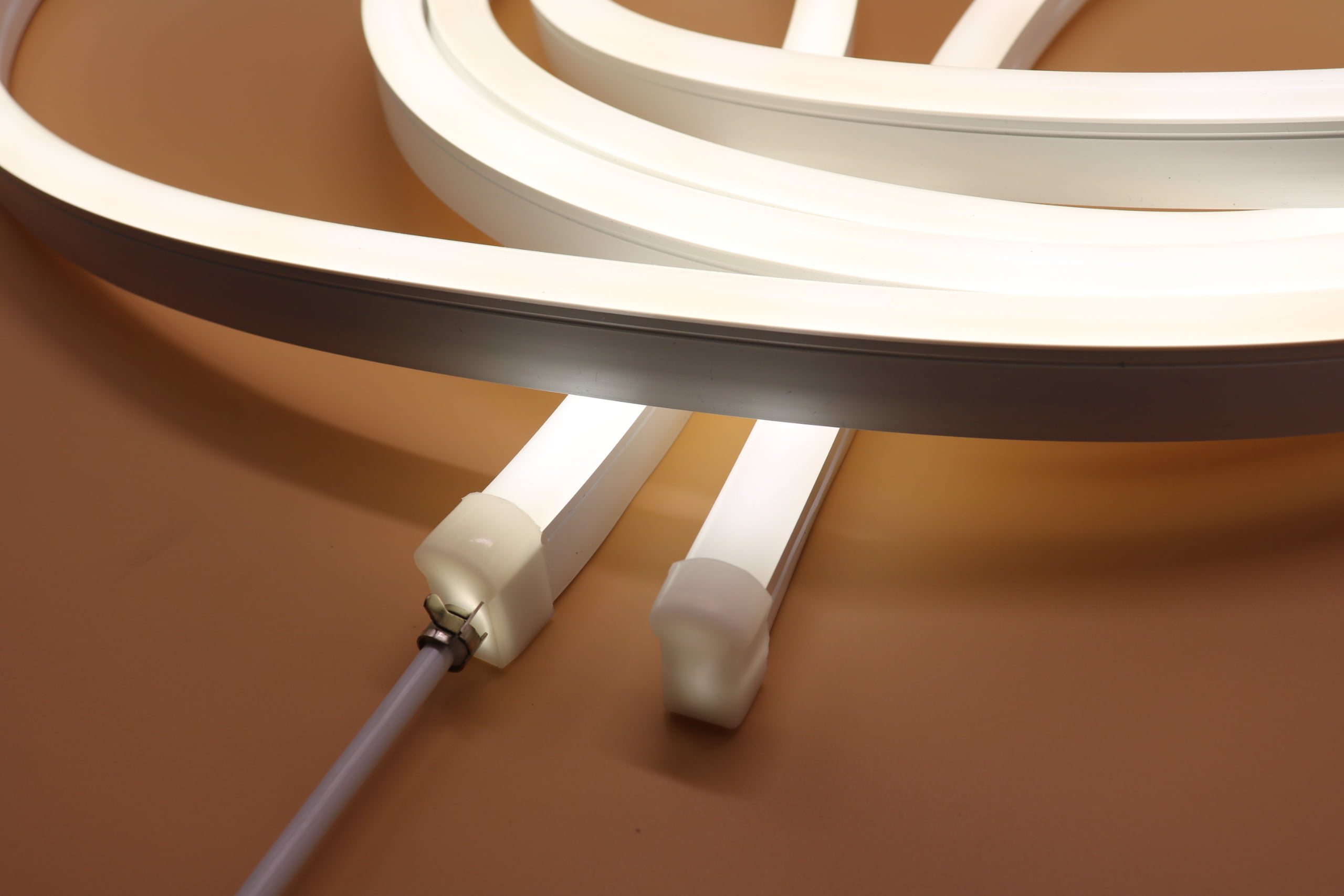
Key Supplier Evaluation Dimensions
Manufacturing Control
Does the supplier control their own silicone extrusion tooling? Custom profiles require custom molds. A supplier who owns their tooling can modify dimensions, adjust wall thickness, and maintain consistency across batches. A trading company sourcing from multiple factories cannot guarantee the same control.
LED Chip and Component Sourcing
The LED chip determines lumen output, color consistency, and long-term lumen maintenance. Ask suppliers which chip brands they use (e.g., Epistar, Sanan, Nichia, Seoul Semiconductor) and whether they can provide binning data for color consistency across a large batch.
Batch Consistency for Large Projects
Architectural and facade projects are particularly sensitive to color and brightness inconsistency. A building wrapped in neon flex from two production batches with different Duv (deviation from the blackbody locus) values will show visible color variation. Buyers should ask:
- What is the supplier's MacAdam ellipse tolerance?
- Can they guarantee color consistency within a single large order?
- How do they handle production batches for projects spanning multiple months?
Sample and Mock-Up Policy
A capable supplier should be able to produce:
- A product sample matching the specified profile, color temperature, and electrical configuration
- A representative installation mock-up including connectors, end caps, and mounting hardware
If a supplier can only provide a loose sample for bench testing and cannot support a system-level mock-up, that is a meaningful limitation for large outdoor projects.
Communication and Technical Support
OEM/ODM projects require sustained technical dialogue between the buyer's design team and the supplier's engineering team. Evaluate whether the supplier can provide specification sheets, dimensional drawings, lumen/watt performance data, and input on installation compatibility — not just product photos and a price list.
Frequently Asked Questions
What is the difference between IP67 and IP68 for outdoor LED neon flex signs?
IP67 indicates protection against temporary immersion in water up to 1 meter for 30 minutes. IP68 indicates protection against continuous immersion beyond 1 meter, with the exact depth and duration specified by the manufacturer. For outdoor applications with potential standing water or drainage accumulation, IP68 is generally preferred — but the connection system must match the same protection level.
Can custom LED neon flex signs be cut and reconnected in the field?
Most LED neon flex products have defined cut points at regular intervals. Cutting and reconnecting is possible but requires compatible connectors, proper end cap sealing, and field joints rated for the installation environment. Field connections made with incorrect components or poor sealing technique are a leading cause of outdoor installation failures. Always clarify the field-joining system with the supplier before installation begins.
How long do custom LED neon flex signs typically last?
LED neon flex products in typical commercial applications are rated for 30,000 to 50,000 hours of operation under rated conditions. Actual service life depends on operating temperature, drive current, installation ventilation, and environmental exposure. Products installed in high-temperature environments or driven above rated current will experience accelerated lumen depreciation. Buyers should request L70 lumen maintenance data (the point at which output falls to 70% of initial) from suppliers for accurate lifecycle comparison.
What customization options are typically available from manufacturers?
Standard customization options include: silicone profile shape and dimensions, LED type (SMD or COB), color temperature (warm white, neutral white, cool white, tunable white, RGB, RGBW, single color), voltage (12V, 24V, 110V, 220V), wattage per meter, IP rating, reel length, connector type, end cap configuration, and packaging. Some manufacturers also support custom color matching, custom mold development for unique cross-sections, and OEM/ODM branding. Lead time and minimum order quantities vary by customization complexity.
What documents should a buyer request before placing a large order?
At minimum, buyers should request: a product specification sheet covering all electrical and optical parameters, dimensional drawings for the silicone profile, certification documents (CE, RoHS, UL, or market-specific), a sample for physical verification, production capacity confirmation, and a quality control process overview. For outdoor projects, also request the IP test report for the specific product configuration ordered — not a generic certificate for the product family.
Conclusion
Custom LED neon flex signs offer architects, specifiers, and lighting designers a powerful tool for building facades, commercial signage, hospitality environments, and landscape lighting. But the product is only as reliable as the specification behind it. Selecting a product marked "outdoor-rated" without defining the actual installation environment, connection system, and acceptance criteria is the single most common source of large-project failures in this category.
The correct approach starts with environmental definition — not product selection. Identify the installation zones, define the exposure conditions for each, specify the full installation system including connections and mounting, require system-level sample verification, and establish clear acceptance criteria before procurement begins. Every decision made correctly at the specification stage eliminates a category of risk that would otherwise compound through installation, handover, and warranty disputes.
If you are sourcing custom LED neon flex signs for a commercial, architectural, or export project and want to discuss product specifications, environmental requirements, or OEM/ODM capabilities, we are glad to support your technical evaluation process. Contact us to request samples, specification sheets, or a product consultation.