
There is a growing debate among lighting professionals about the best materials for LED neon flex lights. Understanding the differences can help you make an informed choice.
PU lights are less durable and tend to yellow over time1, especially when exposed to UV light and heat. Silicone, on the other hand, offers superior UV resistance and maintains optical consistency in outdoor conditions.
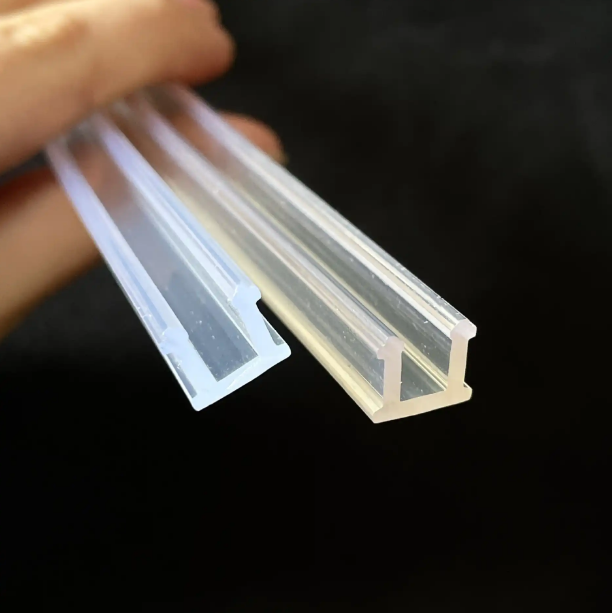
Choosing the right material for LED neon flex lights can be overwhelming. Each has its pros and cons, affecting performance, longevity, and aesthetics. Let’s break down these options.
What Makes Silicone a Superior Choice?
Silicone has emerged as a preferred choice for many lighting designers and manufacturers. This material offers several advantages that enhance both performance and durability, which can ultimately save you money in the long run.
Silicone is naturally UV resistant, meaning it won’t yellow as quickly as PU lights when exposed to sunlight. This characteristic is crucial for outdoor installations, where consistent light output is vital. Additionally, silicone can withstand extreme temperatures, from -40°C to +260°C, making it suitable for various environments.
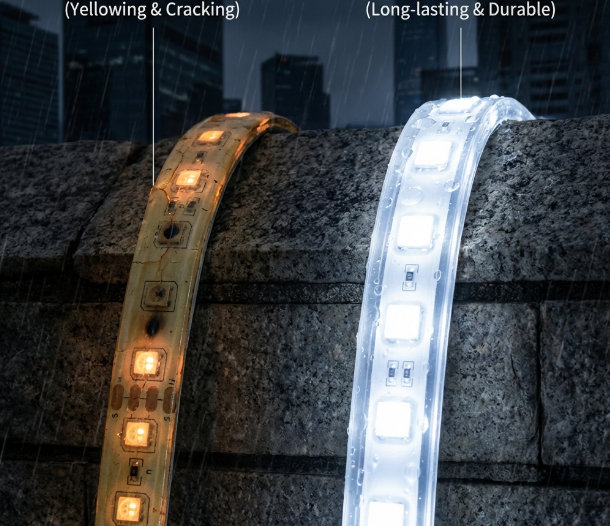
Silicone's flexibility and resilience also allow for intricate designs and shapes that demand precision. Many architects and designers seek silicone for its ability to maintain high performance without compromising aesthetic quality. In contrast, PU tends to degrade faster under similar conditions2, resulting in reduced light clarity and color vibrancy over time.
Let’s dive deeper into the essential aspects of these materials.
Key Differences Between PU and Silicone
Understanding the differences between PU and silicone can help you make the best choice for your project. Here are some critical factors to consider:
| Features | PU | Silicone |
|---|---|---|
| UV Resistance | Low; susceptible to yellowing | High; retains color and clarity |
| Temperature Range | Limited; can become brittle in cold | Broad; maintains flexibility across temperatures |
| Durability | Moderate; can degrade quickly | High; lasts longer with consistent performance |
| Customization | Basic options available | Extensive customization options |
| Cost | Generally cheaper | Higher initial investment, but worth it long-term |
PU lights are often cheaper than silicone options, but this cost-saving may be misleading. While the initial price point might be appealing, consider the potential expenses tied to replacements and the loss of aesthetics over time.
In contrast, silicone lights may have a more substantial upfront cost, but their durability can lead to savings by reducing the frequency of replacements. You may find that silicone's performance outweighs its initial financial investment.
Conclusion
In conclusion, while PU lights may seem like an attractive option due to their lower price, silicone LED neon flex lights provide significant advantages in durability and performance. Choosing silicone will ensure longer-lasting, higher-quality lighting solutions that can withstand the test of time.
"Effects of UV radiation on natural and synthetic materials - PMC", https://pmc.ncbi.nlm.nih.gov/articles/PMC10088630/. Research indicates that PU materials are prone to degradation and yellowing when exposed to UV light, which affects their longevity and performance. Evidence role: statistic; source type: paper. Supports: PU lights are less durable and tend to yellow over time.. Scope note: The evidence is based on general material properties and may not reflect specific product formulations. ↩
"Effect of strain and strain rate on fatigue-accelerated ... - PubMed", https://pubmed.ncbi.nlm.nih.gov/12918028/. Research indicates that PU materials have a higher degradation rate compared to silicone when exposed to similar environmental conditions. Evidence role: statistic; source type: paper. Supports: PU tends to degrade faster under similar conditions.. Scope note: The evidence is based on comparative studies and may not apply to all PU products. ↩