

LED Neon Flex is becoming a popular choice for modern lighting solutions. But what exactly is it and how does it function?
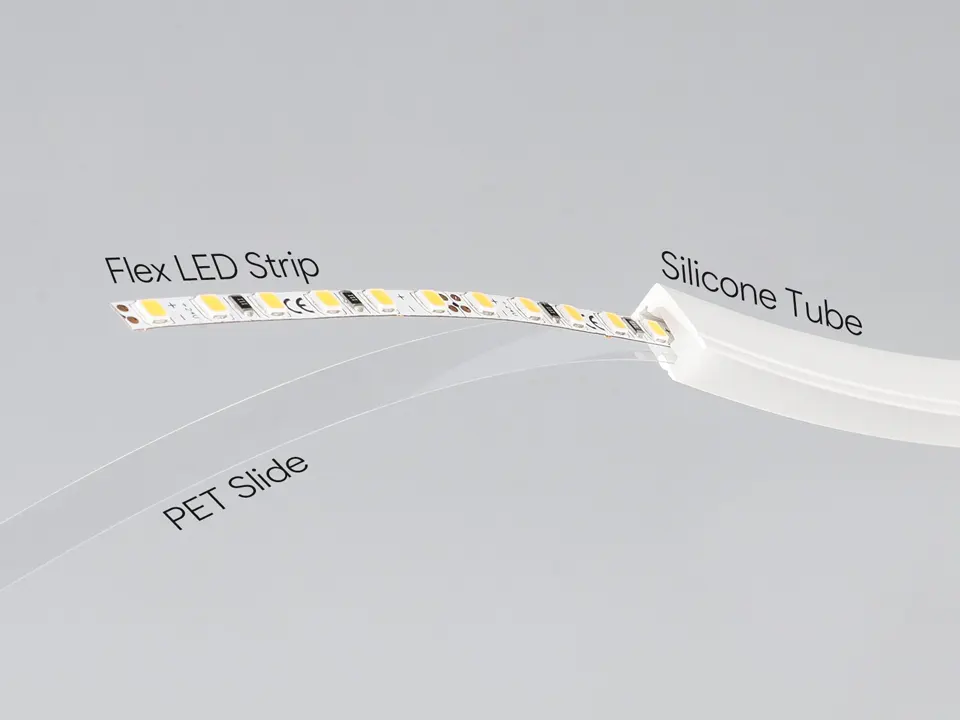
LED Neon Flex is a flexible LED lighting solution that mimics the appearance of traditional neon lights, but with added benefits.1 Unlike traditional glass neon tubes, it consists of SMD LED strips encapsulated in a flexible, translucent shell. This shell serves as a protective and light-diffusing layer, allowing for a continuous glow without emitting light itself.
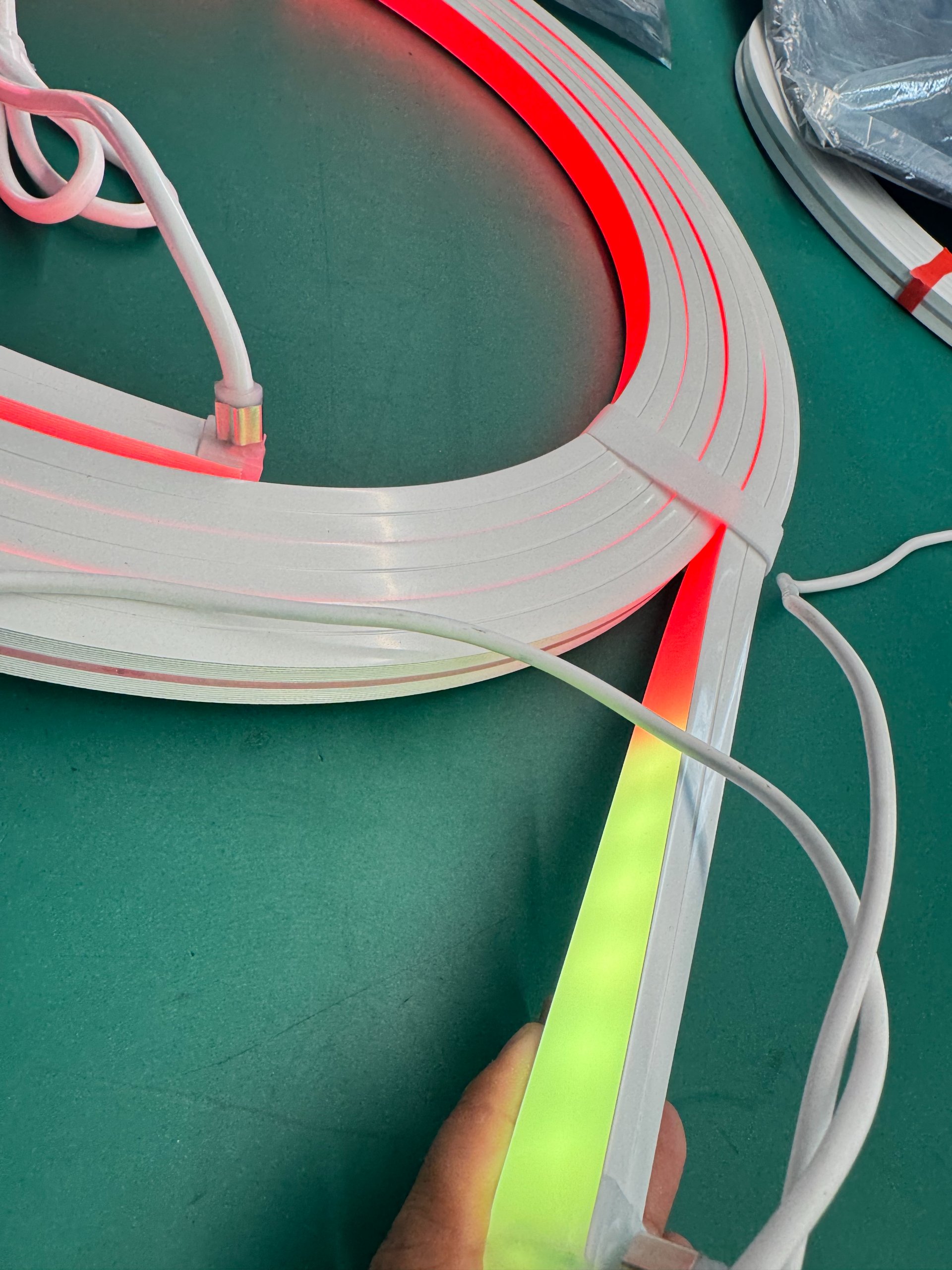
When we talk about LED Neon Flex, we often think of its application in various design projects. However, it’s essential to understand the technology behind it. How does LED Neon Flex achieve its unique lighting effects? Let’s dive deeper.
What Is LED Neon Flex?
LED Neon Flex is not your typical lighting solution. It combines advanced LED technology with a flexible design, allowing for creative applications. I often tell people that it is like traditional neon but without the fragility.
SMD LED chips emit light, which is then diffused through the internal optical structure and the outer shell.2 This design solves the issue of light spots seen in regular LED strips. By layering the light in this way, you can achieve a smooth and even glow reminiscent of classic neon lights.
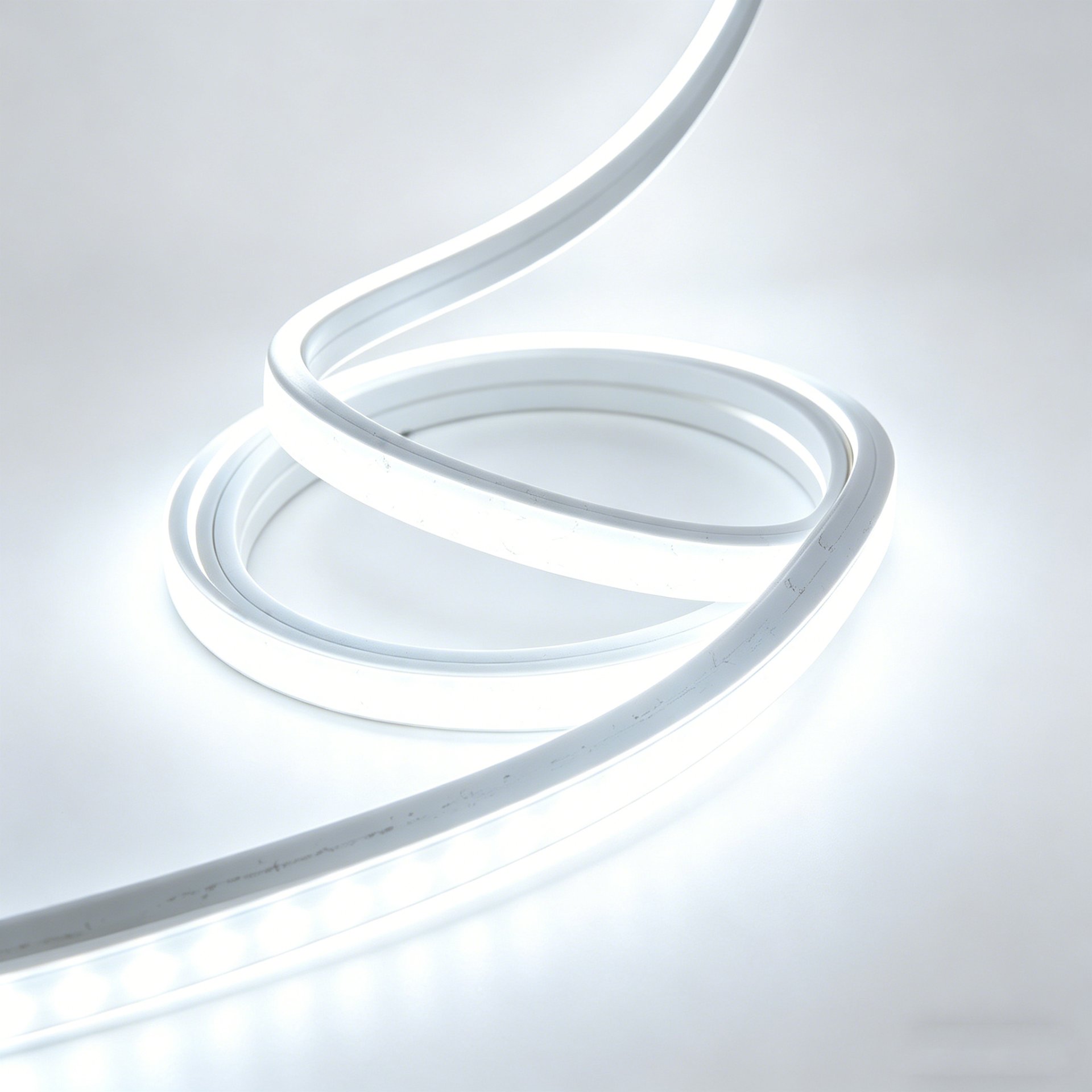
The flexibility of the material means that it can be bent and shaped to fit various designs. This feature is particularly advantageous for lighting designers and architects who want to create unique shapes and layouts in their projects. The versatility of LED Neon Flex opens new avenues for creativity.
How Does It Work?
Understanding how LED Neon Flex works can enhance your appreciation for its design.
The core components include light-emitting diodes, flexible printed circuit boards (FPC), and a protective outer shell made from materials like polyurethane or silicone. Each of these components plays a crucial role in determining the performance of the lighting system.

The SMD chips are responsible for generating light. Once the light is produced, it travels through the internal structure of the LED Neon Flex. This structure is designed to distribute the light evenly. The outer shell, whether made from silicone or PU, acts as a protective barrier. It enhances the durability and waterproof capabilities of the product, making it suitable for various environmental conditions.
To give you a better understanding, let’s break down the core structure of LED Neon Flex:
| Component | Function |
|---|---|
| SMD LED Chips | Emit light |
| Flexible Printed Circuit | Connects and powers the LEDs |
| Protective Outer Shell | Diffuses light and protects against weather damage |
The material used for the outer shell significantly impacts its properties. Silicone, for example, offers excellent flexibility and resistance to UV light, while PU is often chosen for its cost-effectiveness. This distinction is essential when selecting the right LED Neon Flex for your project.
Conclusion
LED Neon Flex combines flexibility with efficiency, offering a fresh alternative to traditional neon lights. Understanding its components helps in making informed choices for your lighting needs.
"Advantages of Using LED Neon Flex over Traditional ...", https://glls.com/blog-posts/advantages-using-led-neon. This source provides a definition of LED Neon Flex and its advantages over traditional neon lighting, including flexibility and durability, but does not provide specific performance metrics or comparative analysis with traditional neon. Evidence role: definition; source type: encyclopedia. Supports: LED Neon Flex is a flexible LED lighting solution that mimics the appearance of traditional neon lights, but with added benefits.. Scope note: The support is contextual and does not include quantitative comparisons. ↩
"Light-emitting diode", https://en.wikipedia.org/wiki/Light-emitting_diode. This source explains the mechanism of light emission and diffusion in LED technology, supporting the claim about SMD LED chips and their function in LED Neon Flex, but may not specifically address the unique design of LED Neon Flex. Evidence role: mechanism; source type: paper. Supports: SMD LED chips emit light, which is then diffused through the internal optical structure and the outer shell.. Scope note: The support may not directly reference LED Neon Flex specifically. ↩