
I've been manufacturing silicone extrusion products for 15 years. When someone asks me "where's the best place," I never give a simple answer.
Instead, I ask them this: Do you want something that "looks good in photos," or do you want something that "won't fail three months after installation"?
The best place to get a custom LED neon sign1 isn't a country or a marketplace—it's a manufacturing partner who understands the difference between a sample and a system. Most businesses choose suppliers based on price and pictures. The smart ones choose based on material science2, environmental testing3, and batch consistency4. If you're specifying LED neon for a commercial project, those three factors will determine whether your installation lasts 6 months or 6 years.
You might think this is just about finding a "good factory." It's not. It's about understanding what actually causes LED neon systems to fail in real-world conditions—and most suppliers don't even test for those conditions.
Why do most custom LED neon sign1s fail within the first year?
I've seen this pattern repeat across hundreds of commercial projects.
The process always looks the same: samples arrive and look perfect. Your client approves. Installation goes smoothly. Then, three to six months later, the problems start.
Most custom LED neon sign1s fail because suppliers optimize for "sample approval," not "field performance." The typical failure points are: water ingress5 at end caps, silicone yellowing6 under UV exposure7, material hardening in temperature cycles, and complete circuit failure8 from moisture penetration. These issues don't show up in showroom conditions—they only appear when your sign faces real weather, real thermal stress, and real electrical loads.
Here's what actually happens in the field:
End caps start leaking after the first heavy rain. The silicone jacket turns yellow or brittle after a few months of sun exposure. The entire run goes dark because moisture corroded the circuit board inside. The material becomes stiff and cracks at the mounting points.
The root cause isn't "poor quality." It's that most manufacturers never tested the product in combined environmental stress conditions. They tested components separately—never together, never over time, never in the chaos of real installation scenarios.
The gap between lab testing and real-world performance
Most suppliers will show you certifications. They'll promise "IP67 waterproof9" or "UV resistant." Those claims aren't lies—they're just incomplete.
A product can pass IP67 in a controlled 30-minute water tank test and still fail in a real outdoor installation. Why? Because the test doesn't account for thermal cycling10, mechanical stress from wind, or long-term UV degradation of the seal material.
I've worked with project engineers who specified "certified" products, only to face complete system failures within months. The issue wasn't the certification—it was that the certification tested one variable at a time, while the real world throws five variables at once.
| Testing Approach | What Gets Tested | What Gets Missed |
|---|---|---|
| Standard IP Testing | Water resistance at room temperature | Combined UV + thermal cycling10 + water exposure |
| UV Resistance Claims | Material color stability in accelerated chamber | Mechanical property changes under real sunlight |
| Temperature Range Specs | Static cold/hot exposure | Rapid cycling between -20°C and +50°C with humidity |
| Sample Approval Process | Visual appearance and initial function | Batch-to-batch material consistency |
This is why I always tell clients: the specification sheet is not your protection. The manufacturing process is.
What separates a "sample supplier" from a "systems partner"?
When I evaluate a potential LED neon supplier for a client, I don't start with price. I start with questions.
Here's what I ask them: What's your silicone compound formulation? How do you control batch consistency4? What environmental combination testing do you perform? Can you provide material traceability11 for every production run?
A real manufacturing partner won't just send you a catalog—they'll ask about your installation environment, thermal exposure, expected lifespan, and maintenance access. If a supplier doesn't ask these questions before quoting, they're treating your project like a commodity transaction, not an engineering challenge. The best suppliers force you to think harder about your specification because they know what fails in the field.
I once worked with a hotel chain on a facade lighting project. They had already received quotes from three suppliers—all offering "the same product" at different prices. I asked them one question: "Did any supplier ask about your building's thermal envelope or sun exposure hours?"
None of them had.
That's when I knew they were buying a product, not a solution. We ended up specifying a silicone neon flex with a custom UV-stabilized compound and redesigned end-cap sealing. The installation has been running flawlessly for four years now, through coastal humidity and desert heat.
The three technical factors that actually matter
Forget about brand names or country of origin. Focus on these three technical realities:
First: Material formulation, not material type. Saying "we use silicone" means nothing. The question is: what's the molecular weight? What's the crosslinking density? What additives are used for UV stability? Two "silicone" products can have completely different performance profiles based on these details.
Second: Multi-variable environmental testing3. A good supplier doesn't just test waterproofing. They test waterproofing + UV exposure7 + thermal cycling10, all running simultaneously for 1,000+ hours. That's the only way to simulate real outdoor conditions.
Third: Batch consistency controls. Samples are easy. Consistent production across 50,000 meters is hard. Ask for material traceability11 systems, incoming inspection protocols, and batch testing documentation. If they can't provide it, your quality will vary by shipment.
| Critical Factor | Why It Matters | What to Verify |
|---|---|---|
| Silicone Compound Grade | Determines UV resistance and lifespan | Request material datasheet with molecular weight specs |
| Extrusion Process Control | Affects dimensional consistency and seal integrity | Ask for process capability (Cpk) documentation |
| LED Binning Standards | Controls color consistency across runs | Verify they use MacAdam 3-step binning or tighter |
| End-Cap Sealing Method | Primary failure point for water ingress5 | Request cross-section photos and IP testing data |
I've seen projects fail because the supplier changed their silicone compound supplier between the sample and production run—without telling the client. The color was the same, but the UV resistance dropped by 40%. Six months later, the entire installation had yellowed.
How do you actually evaluate a custom LED neon manufacturer?
Most buyers use the wrong evaluation criteria. They compare prices, look at photos, maybe visit a showroom. That tells you almost nothing about field reliability.
Here's the process I use when specifying a supplier for a commercial project.
The best evaluation starts with stress testing their technical knowledge12, not their product samples. Before you request a quote, send them your environmental parameters: temperature range, UV exposure7 hours, installation method, expected service life. A competent manufacturer will come back with questions and recommendations. A commodity supplier will just send a price list.
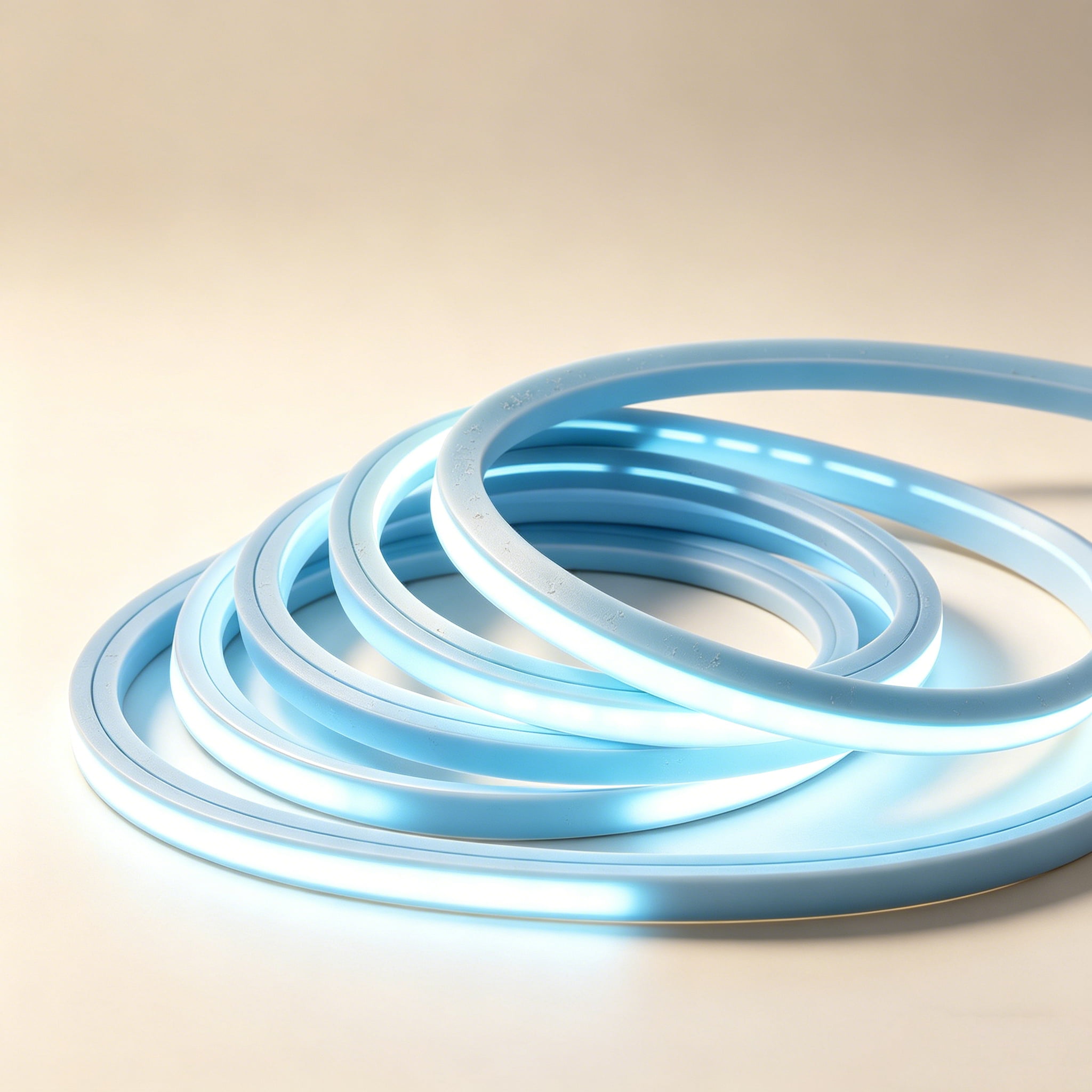
I start every supplier evaluation13 with a technical call. I describe the project environment and wait to see what questions they ask. The best manufacturers will challenge my assumptions. They'll ask about things I hadn't considered: wind load on the mounting clips, thermal expansion coefficients, access for future maintenance.
If they don't ask those questions, I know they're thinking about selling product, not solving problems.
The documentation that actually proves capability
Forget about generic brochures. Ask for these specific documents:
Request a material safety datasheet (MSDS) for the silicone compound. This tells you the actual chemical composition, not marketing claims. Ask for batch testing reports from recent production runs. This shows you their quality control process. Request accelerated aging test results—specifically combined UV, thermal, and moisture testing. This is the only way to predict long-term performance.
I also ask for failure analysis14 reports from past projects. A manufacturer who can show you what went wrong and how they fixed it is far more trustworthy than one who claims they've never had a problem.
The factory audit15 questions that reveal the truth
If you're going to visit the factory—or have someone visit on your behalf—here are the three areas that matter most:
Incoming material inspection: Do they test every batch of silicone compound before extrusion? Do they have a spectrophotometer for color verification? Can they show you rejection records?
Process monitoring: Is the extrusion temperature continuously logged? Do they measure wall thickness at multiple points during production? Can they trace every meter of product back to a specific production batch?
Environmental testing capacity: Do they have their own UV aging chamber? Can they run thermal cycling10 tests? Do they perform pull tests on end-cap seals?
If the answer to any of these is "no," you're dealing with an assembly operation, not a manufacturing partner.
Where should you actually source your custom LED neon sign1?
I'm going to give you an answer you won't like: it depends entirely on your project requirements and risk tolerance.
If you're doing a short-term retail display that will be replaced in six months, a budget supplier might be fine. If you're specifying a building facade that needs to last five years with minimal maintenance, you need a completely different approach.
The "best place" isn't a location—it's a capability match. For temporary installations, focus on price and lead time. For permanent architectural lighting, focus on material science2, environmental testing3, and batch consistency4. The mistake most buyers make is using temporary-installation criteria to select suppliers for permanent projects. That's why they end up with failures.
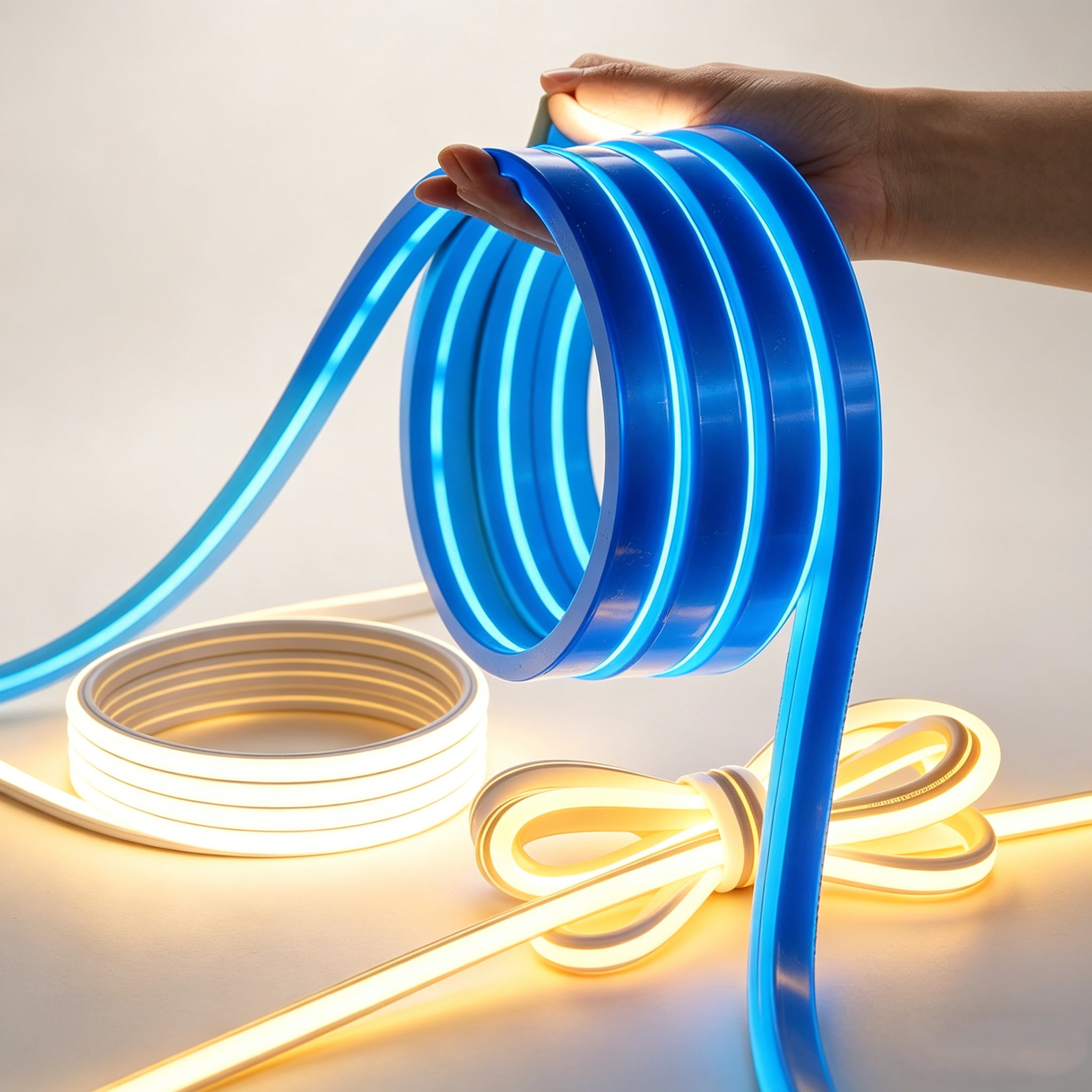
I've worked with excellent manufacturers in China, mediocre ones in Europe, and terrible ones in both regions. Geography doesn't determine quality—manufacturing philosophy does.
The suppliers I trust are the ones who treat every project like an engineering challenge. They ask uncomfortable questions. They push back on unrealistic specifications. They tell you when your budget doesn't match your performance requirements.
When direct factory sourcing makes sense
If your project involves custom extrusion profiles16, specific color temperatures, or integration with building management systems, you need direct factory access. Trading companies and distributors add cost without adding technical value.
Direct sourcing works best when you have clear specifications, the technical knowledge12 to evaluate samples, and the volume to justify custom tooling. For a single small sign, the complexity isn't worth it. For a multi-site rollout or a signature architectural project, it's essential.
The hidden costs of choosing the wrong supplier
I've seen companies "save" 30% on initial purchase price, then spend three times that amount on replacement installations, customer complaints, and brand damage.
The real cost of a failed LED neon installation isn't the product price. It's the labor to remove and reinstall. It's the scaffolding rental. It's the client relationship damage. It's the lost revenue while the sign is dark.
When I help clients calculate total cost of ownership17, the supplier price difference becomes almost irrelevant compared to the cost of a single failure event.
| Cost Factor | Budget Supplier | Quality Manufacturer |
|---|---|---|
| Initial Unit Price | $8-12/meter | $15-22/meter |
| Expected Lifespan | 1-2 years | 5-7 years |
| Failure Rate (first year) | 15-30% | <2% |
| Replacement Cost (labor + material) | $50-80/meter | Rarely needed |
| Total Cost Over 5 Years | $40-60/meter | $15-22/meter |
The math is brutal. The "cheap" option costs 2-3x more over the project lifespan.
Conclusion
The best place to get a custom LED neon sign1 is wherever you find a manufacturer who understands that your success depends on their material science2, not their marketing. If you're facing a complex commercial installation and need a partner who thinks about field performance before price, I'm here to help you navigate the technical decisions that actually matter.
Explore this link to find top manufacturers who specialize in high-quality custom LED neon signs. ↩
Understanding material science is crucial for ensuring the longevity of your LED neon signs. ↩
Learn why environmental testing is essential for the performance of LED neon signs in real-world conditions. ↩
Discover how batch consistency can affect the reliability and performance of your LED neon signs. ↩
Find out the common causes of water ingress and how to prevent it in your installations. ↩
Explore the factors that lead to silicone yellowing and how to choose materials that resist it. ↩
Learn about the impact of UV exposure on LED neon signs and how to select UV-resistant materials. ↩
Understanding circuit failure can help you choose better products and avoid costly mistakes. ↩
Explore the significance of IP67 ratings and their implications for outdoor LED neon signs. ↩
Learn about the effects of thermal cycling on LED neon signs and how to mitigate risks. ↩
Discover how material traceability ensures quality and consistency in LED neon sign production. ↩
Explore the importance of technical knowledge in ensuring you choose the right LED neon supplier. ↩
Explore effective strategies for evaluating suppliers to ensure high-quality LED neon signs. ↩
Understanding failure analysis can help you choose reliable manufacturers and avoid future issues. ↩
Discover key factors to evaluate during a factory audit to ensure quality manufacturing. ↩
Learn about the benefits of custom extrusion profiles for tailored LED neon sign solutions. ↩
Learn how to calculate the total cost of ownership to make informed purchasing decisions. ↩