

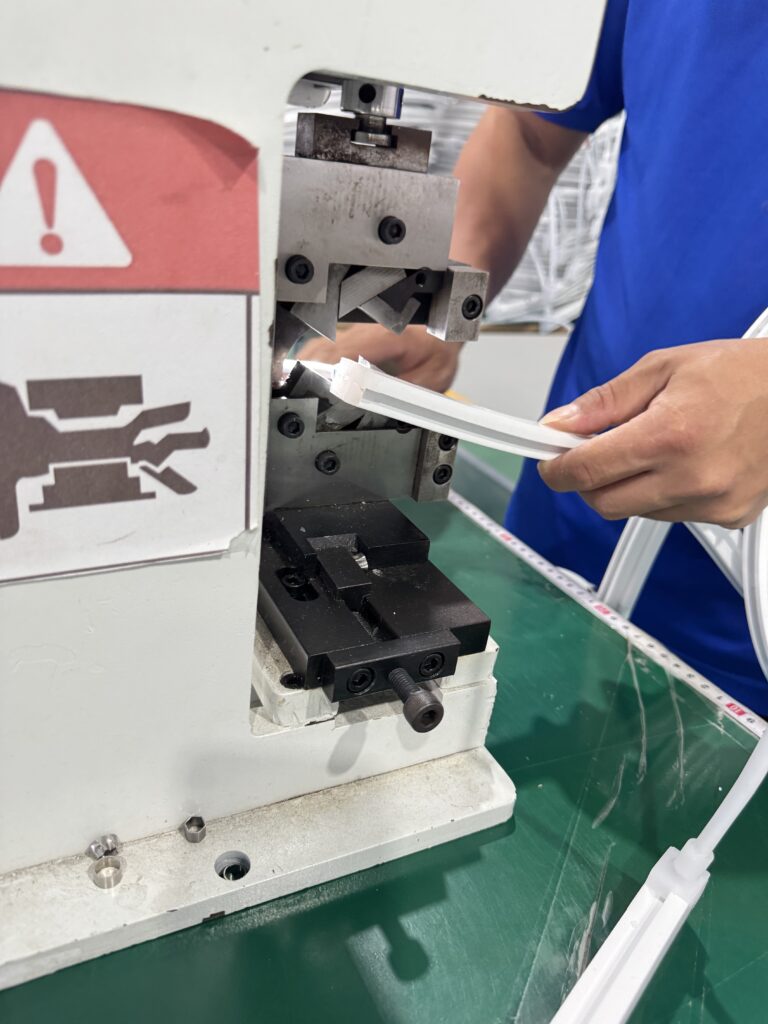
You install the 8mm silicone neon strip1 into the recessed channel. It fits snugly. Everything looks clean and professional. But three months later, you notice cracks, water ingress2, or dimming sections. The problem is not whether it fits initially, but whether it stays fitted under real-world stress.
The real challenge with 8mm recessed silicone LED neon covers is not installation fit, but maintaining dimensional stability3 and sealing elasticity4 over time. Without proper compression control5 and material selection, your installation will either squeeze the strip to early failure or loosen enough to allow moisture penetration.
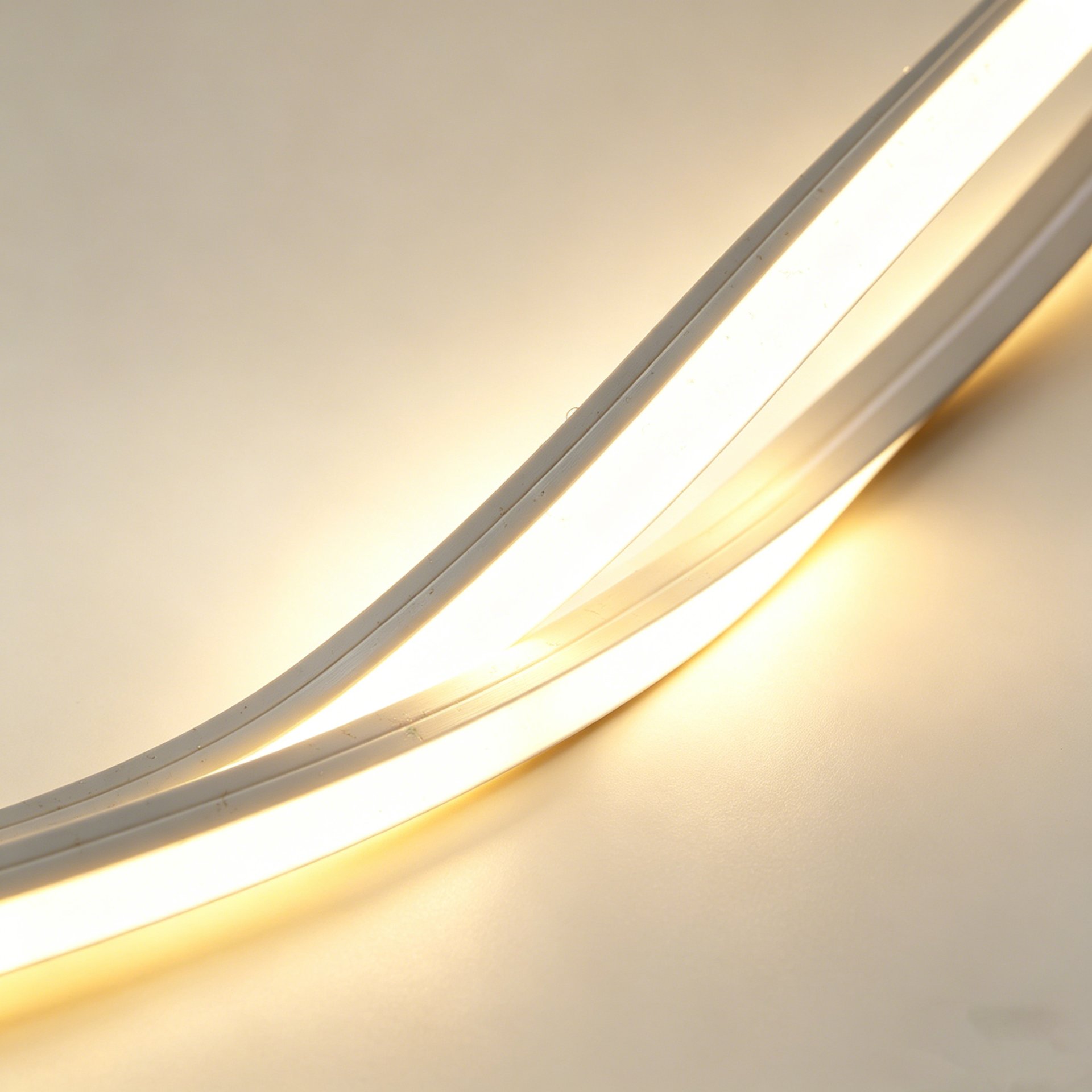
I have seen too many contractors face this exact scenario. The installation looks perfect on day one, but the client calls back months later with complaints. Let me walk you through what actually happens beneath the surface and how we solve it at the manufacturing level.
Why Does "Perfect Fit" Often Lead to Early Failure?
The moment you press an 8mm silicone neon strip1 into a recessed channel, you create compression forces. The silicone must compress enough to seal against dust and moisture, but not so much that it crushes the internal LED circuit or blocks heat dissipation.
Most failures occur because the compression rate6 is either too high (causing permanent deformation and heat buildup) or too low (allowing the strip to loosen and admit water). Without controlling the compression ratio7 between 20% and 30%, you are gambling with the installation's lifespan.
I worked on a hotel facade project where the contractor used "standard" 8mm channels. After six months, the client reported uneven brightness. We pulled samples and found the silicone had compressed permanently by over 40% in some sections, creating hot spots that degraded the LEDs. In other sections, the strip had loosened, allowing condensation inside. The root cause was simple: no one verified the actual channel width tolerance8 or tested the silicone's compression set properties9.
Here is what happens at each compression stage:
| Compression Ratio | Installation Feel | Short-Term Performance | Long-Term Risk |
|---|---|---|---|
| <10% | Loose, easy to install | Looks fine initially | Water ingress within 3-6 months |
| 10%-20% | Slides in smoothly | Good sealing, minimal stress | Moderate risk of loosening in outdoor use |
| 20%-30% (Optimal) | Snug fit, requires slight pressure | Excellent sealing, controlled stress | Stable over 5+ years with proper material |
| 30%-50% | Very tight, hard to install | Appears secure | Permanent deformation, heat buildup, premature LED failure |
| >50% | Extreme force required | Immediate stress on circuit | Rapid degradation, cracking, color shift |
The optimal zone is narrow. If your channel tolerance varies by even 0.5mm, you can swing from safe compression to destructive force. This is why I always recommend verifying actual channel dimensions before ordering silicone profiles, not just trusting nominal specs.
What Happens When Silicone Loses Its Rebound Elasticity?
Silicone is not a rigid material. It compresses, then rebounds. But cheap silicone formulations lose this rebound ability over time, especially under heat and UV exposure10. This property is called compression set, and it is the silent killer of recessed installations.
High-quality platinum-cured silicone11 maintains less than 10% compression set after 1000 hours at 70°C, meaning it recovers nearly all its original shape. Inferior peroxide-cured silicone12 can exceed 30% compression set, leaving permanent gaps that invite moisture and dust.
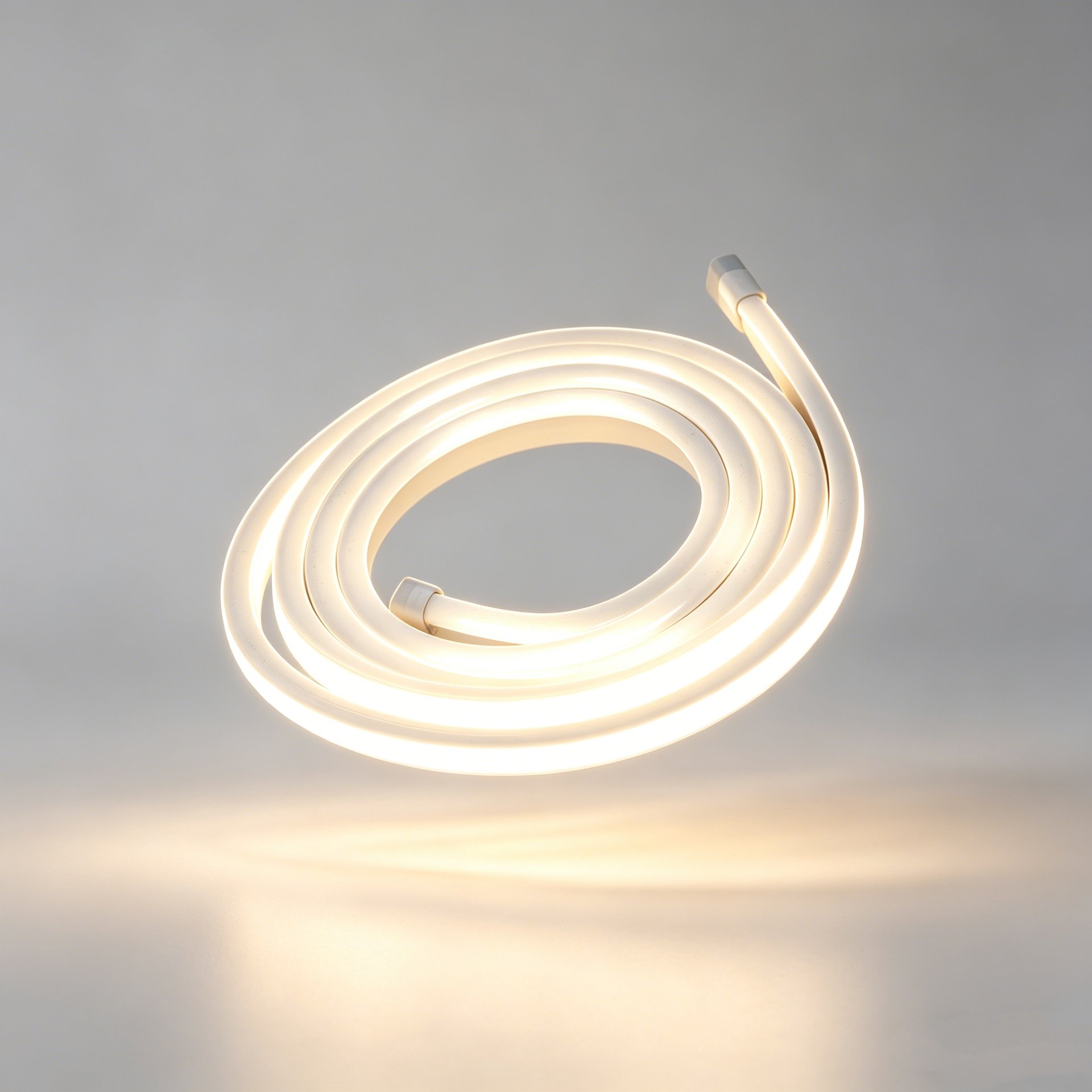
I remember a commercial signage project in a coastal city. The client chose a budget silicone neon supplier. Within eight months, the strips showed white stress marks along the edges and water condensation inside. When we tested the material, the compression set was over 35%. The silicone had hardened and lost its sealing ability. We replaced it with our platinum-cured grade, and the installation has been stable for over three years now, even with salt spray exposure.
The difference comes down to molecular structure:
| Silicone Type | Curing Method | Compression Set (22h @ 70°C) | UV Resistance | Cost Premium |
|---|---|---|---|---|
| Food-Grade Platinum | Platinum catalyst | <8% | Excellent | +30%-40% |
| Standard Platinum | Platinum catalyst | <12% | Good | +15%-25% |
| Peroxide-Cured | Organic peroxide | 15%-25% | Moderate | Baseline |
| Low-Grade Peroxide | Organic peroxide | >30% | Poor | -10%-20% |
For recessed installations, I only use platinum-cured silicone11 with documented compression set below 10%. The upfront cost is higher, but the client never calls back with failure complaints. That is worth far more than saving a few dollars per meter.
How Do Channel Tolerances Sabotage Your Installation?
You order an "8mm channel" from your aluminum supplier. But what does 8mm actually mean? Is it 8.0mm ±0.1mm? Or ±0.5mm? Most suppliers do not specify, and most contractors do not ask. This is where the mismatch begins.
If your 8mm silicone neon has a tolerance of ±0.2mm and your channel has a tolerance of ±0.5mm, you can end up with combinations ranging from 7.3mm silicone in an 8.5mm channel (loose) to 8.2mm silicone in a 7.5mm channel (crushed). Neither scenario will last.
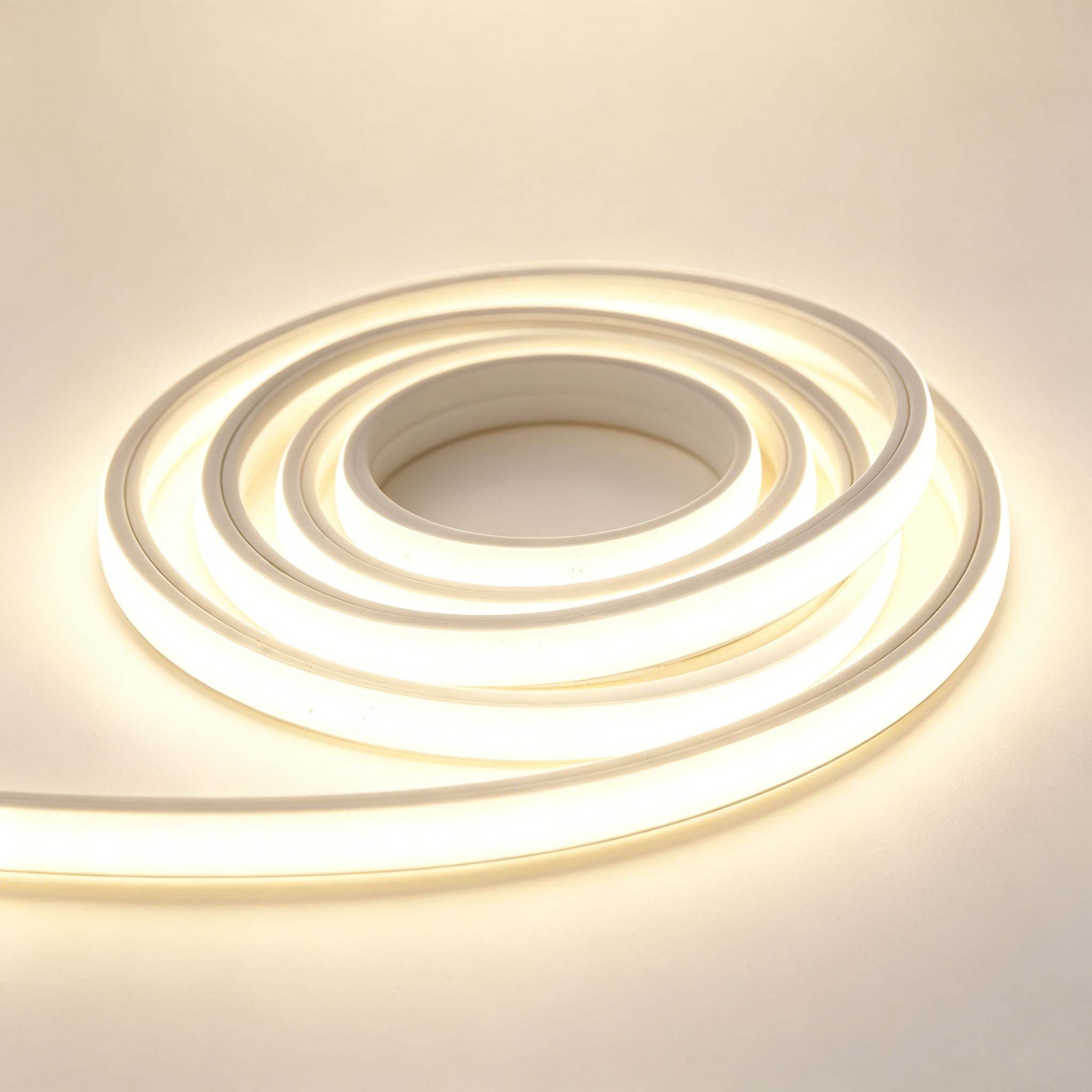
I worked with an architect on a museum lighting project. The specification called for "8mm recessed neon." The contractor ordered channels from one supplier and silicone strips from another. When we measured samples, the channel width varied from 7.8mm to 8.4mm across a single batch. The silicone strips measured 7.9mm to 8.1mm. Some sections were too loose, others were over-compressed. We had to rework the entire installation with matched tolerances.
Here is the tolerance matching strategy I use:
| Component | Specified Dimension | Acceptable Tolerance | Verification Method |
|---|---|---|---|
| Recessed Channel Width | 8.0mm | ±0.15mm | Caliper measurement on 10 samples per batch |
| Silicone Neon Width | 7.5mm | ±0.10mm | Micrometer measurement under zero load |
| Target Compression Gap | 0.4mm-0.6mm | ±0.05mm | Calculated from channel and neon measurements |
| Installed Compression Ratio | 25% | ±3% | Force gauge during installation |
By controlling both the channel and the silicone within tight tolerances, we ensure every meter compresses uniformly. This eliminates the lottery of "will this section fit properly or not."
Why Does Heat Buildup Kill Recessed Installations Faster?
Recessed channels create a thermal trap. The silicone insulates the LED strip, the channel walls block convection, and heat accumulates. If the silicone is over-compressed, the internal air gaps that help dissipate heat are eliminated, and the LED junction temperature13 climbs.
Every 10°C increase in LED junction temperature13 roughly halves the expected lifespan. In a poorly designed recessed installation, junction temperatures can exceed 85°C, reducing a 50,000-hour LED to under 20,000 hours of useful life.
I tested this on a retail store project. The contractor installed 8mm silicone neon in narrow aluminum channels with no thermal design. After 500 hours, we measured surface temperatures of 68°C and calculated junction temperatures near 90°C. The LEDs showed visible color shift toward yellow. We redesigned the channel with a wider base to allow air circulation and added thermal paste14 between the silicone and aluminum. Junction temperatures dropped to 72°C, and the color shift stopped.
Here is the thermal management15 checklist I follow:
| Design Element | Poor Practice | Best Practice | Temperature Impact |
|---|---|---|---|
| Channel Material | Plastic or painted aluminum | Bare aluminum with high emissivity | -8°C to -12°C |
| Channel Base Width | Minimal, just fits the strip | 20%-30% wider than strip | -5°C to -8°C |
| Compression Ratio | >35% (eliminates air gaps) | 20%-30% (preserves some air space) | -6°C to -10°C |
| Thermal Interface | No contact or air gap | Thermal paste or pad | -3°C to -5°C |
| Ventilation | Sealed channel | End vents or perforations | -4°C to -7°C |
Thermal design is not optional for recessed installations. If you skip it, you are shortening the LED lifespan by half or more, and the client will notice when the lights start failing years earlier than expected.
How Do We Test Recessed Installations Before They Fail in the Field?
Most suppliers test silicone neon strips in free air, not installed in channels. This tells you nothing about real-world performance. We test our 8mm strips in actual recessed configurations, under thermal cycling16 and mechanical stress, to predict long-term behavior.
Our standard recessed installation test runs 1000 hours at 60°C with daily thermal cycles from -20°C to +60°C, while measuring compression set, light output, and moisture ingress17. Only products that maintain less than 10% compression set and zero water penetration pass for outdoor recessed use.
I had a client who wanted to use our neon for an outdoor architectural installation in a desert climate with extreme day-night temperature swings. We set up a test chamber simulating 50°C days and 5°C nights, cycling every 12 hours. After 60 cycles (simulating two months), we pulled the samples. The compression set was 6%, well within spec. The client approved, and the installation has been running for over four years without a single failure.
Here is our test protocol:
| Test Parameter | Condition | Duration | Pass Criteria |
|---|---|---|---|
| Compression Set | 70°C constant | 1000 hours | <10% permanent deformation |
| Thermal Cycling | -20°C to +60°C | 100 cycles | No cracking, no delamination |
| Water Immersion | IP68, 1m depth | 168 hours | Zero moisture ingress17 |
| UV Aging | UVA 340nm, 0.89 W/m² | 1000 hours | No yellowing, no hardening |
| Mechanical Stress | 30% compression, 60°C | 500 hours | Maintains sealing pressure |
This level of testing is expensive, but it eliminates the guesswork. When we ship a product rated for recessed outdoor use, we have data proving it will survive.
What Is the Right Way to Specify and Install 8mm Recessed Silicone LED Neon?
Specification and installation are equally important. A perfect product installed incorrectly will still fail. Here is the process I recommend to contractors and designers.
First, verify actual channel dimensions before ordering silicone profiles. Second, select platinum-cured silicone11 with documented compression set below 10%. Third, design for 20%-30% compression with thermal management15. Fourth, test a sample installation under expected environmental conditions18 before committing to the full project.
I worked with a lighting designer on a high-end residential project. We spent two weeks testing different channel widths and silicone formulations before finalizing the spec. The final design used 7.6mm silicone in an 8.1mm channel, achieving 26% compression. We added thermal pads under the channel and specified platinum-cured silicone11. The installation was completed three years ago, and the client reports zero issues.
Here is the specification checklist:
| Specification Item | Critical Details | Verification Method |
|---|---|---|
| Silicone Material | Platinum-cured, compression set <10% | Request material datasheet and test reports |
| Silicone Width | Measured under zero load, ±0.10mm tolerance | Micrometer measurement on samples |
| Channel Width | Measured at narrowest point, ±0.15mm tolerance | Caliper measurement on samples |
| Target Compression | 20%-30% of silicone width | Calculate from measured dimensions |
| Thermal Design | Aluminum base, thermal interface, ventilation | Review channel cross-section drawings |
| Environmental Rating | IP65 minimum for indoor, IP68 for outdoor | Request IP test reports with recessed installation |
This level of detail may seem excessive, but it is the only way to ensure a recessed installation lasts as long as the LEDs are rated for.
Conclusion
An 8mm recessed silicone LED neon installation is only as good as its compression control5, material quality, and thermal design. Focus on verified tolerances, platinum-cured silicone11, and real-world testing, and you will avoid the failures that plague most recessed projects.
Explore the advantages of 8mm silicone neon strips for your projects, ensuring durability and aesthetic appeal. ↩
Find out the causes of water ingress in silicone installations and how to prevent it. ↩
Learn about the importance of dimensional stability in silicone installations to prevent failures over time. ↩
Understand sealing elasticity and its role in maintaining effective seals in silicone applications. ↩
Discover how proper compression control can enhance the longevity and performance of silicone installations. ↩
Find out the optimal compression rate for silicone neon strips to ensure their effectiveness and durability. ↩
Find out the ideal compression ratio for silicone neon installations to ensure optimal performance. ↩
Learn about the significance of channel width tolerances in ensuring a successful silicone installation. ↩
Explore compression set properties to understand how they impact the performance of silicone in installations. ↩
Understand the effects of UV exposure on silicone materials and how to choose UV-resistant options. ↩
Discover the benefits of using platinum-cured silicone for enhanced performance and longevity. ↩
Understand the limitations of peroxide-cured silicone compared to platinum-cured options. ↩
Learn about LED junction temperature and its impact on the lifespan and performance of LED lights. ↩
Discover the importance of thermal paste in enhancing heat dissipation in LED installations. ↩
Explore the importance of thermal management in LED installations to prevent overheating and failures. ↩
Discover how thermal cycling affects silicone materials and the importance of testing for durability. ↩
Learn effective strategies to prevent moisture ingress in silicone installations for long-lasting results. ↩
Learn how different environmental conditions can impact the performance of silicone installations. ↩