
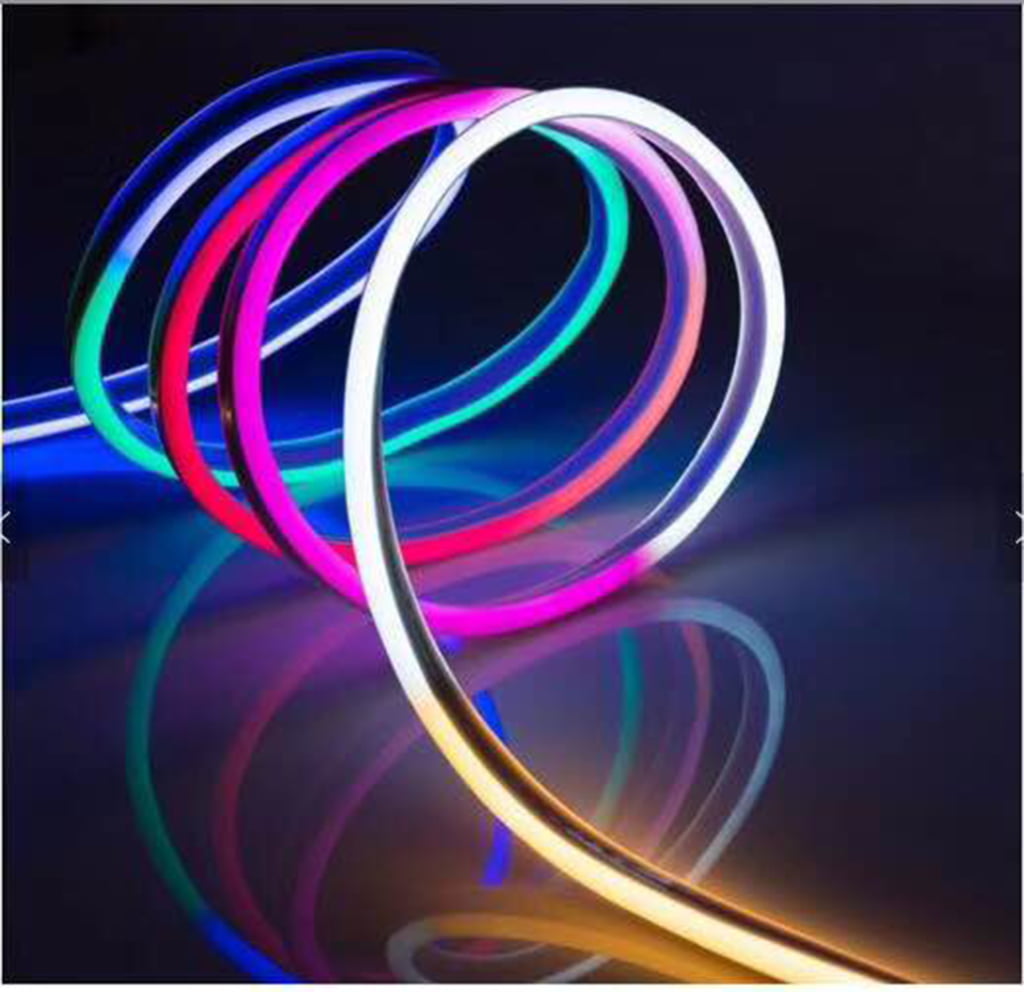
We all love the idea of flexible lighting1 that curves around corners and follows any design we dream up. But here's what keeps me awake at night: will it still work flawlessly after months of being bent and lit?
Flexibility isn't just about bending during installation—it's about maintaining structural integrity2, consistent brightness, and color stability3 while continuously operating in a curved state. True flexible silicone lighting must resist both mechanical fatigue4 and thermal aging5 simultaneously, or it becomes a maintenance nightmare within months.
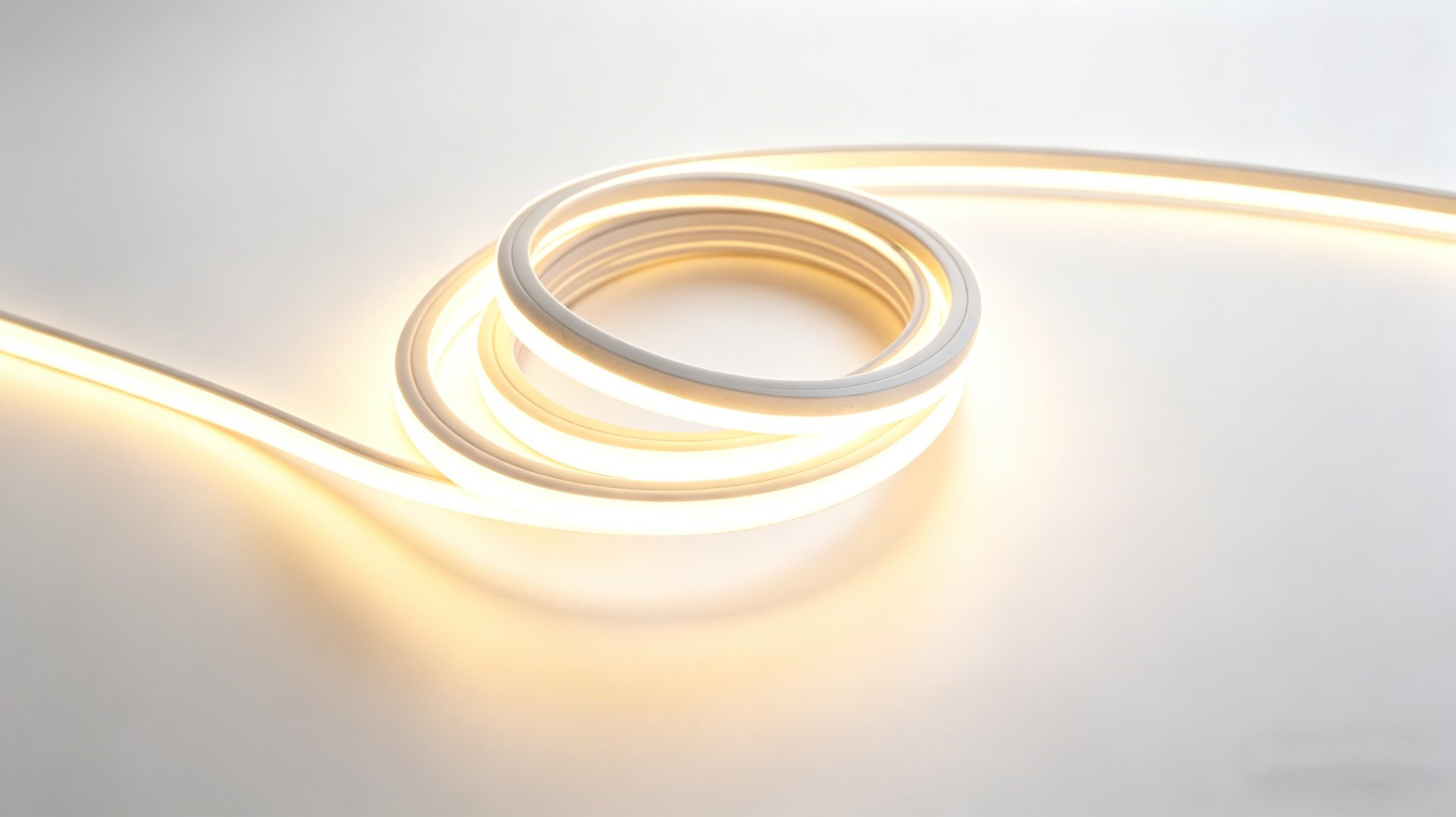
I've seen too many projects start beautifully and end in frustration. Let me walk you through what actually happens to flexible lighting1 over time and how to avoid the common pitfalls.
What Actually Happens When Silicone Lighting Stays Bent for Months?
The installation day always looks perfect. The silicone strip curves smoothly around architectural features, the light output is uniform, and everyone is happy.
After 3-6 months of continuous operation in a bent state, three critical failures typically emerge: whitening and hardening at bend points, localized dimming6 or complete failure, and visible color shifts or dark zones along curved sections. These issues concentrate precisely where the material experiences maximum stress.
I remember a hotel lobby project where we replaced a competitor's "flexible" neon. After just four months, every curved section showed visible degradation. When we removed the old strips, the pattern was unmistakable—all damage occurred at the bends.
The root causes are interconnected. Low-grade silicone lacks fatigue resistance, so repeated thermal expansion and contraction create micro-cracks. The PCB substrate experiences constant mechanical stress at bend points, leading to solder joint fatigue7 and circuit trace damage. Heat dissipation becomes uneven because curved sections trap more heat, accelerating the aging process. Most critically, many manufacturers design for "bendability" during installation but ignore what happens when the product operates in that bent state for thousands of hours.
At Shenzhen Alister Technology Limited, we approach this differently. We don't just ask "can it bend?" We ask "can it stay bent and lit for 50,000 hours without performance degradation?"
Here's what distinguishes industrial-grade flexible silicone lighting:
| Design Aspect | Standard Approach | Professional Solution |
|---|---|---|
| Silicone Material | General-purpose compound | Platinum-cured, low-stress formulation |
| PCB Design | Rigid substrate | Stress-relief features (slots, flex zones) |
| Testing Protocol | Static bend test | Dynamic bend + thermal cycling8 |
| Heat Management | Passive cooling only | Engineered thermal pathways9 |
| Minimum Bend Radius | "As flexible as possible" | Specified and enforced limits |
The material science matters tremendously. We use 100% food-grade, high-molecular silicone with specific anti-fatigue additives. This isn't marketing language—it's measurable resistance to crack propagation under cyclic stress. Our extrusion process creates a uniform molecular structure that maintains elasticity even after 10,000+ thermal cycles between -40°C and +60°C.
The PCB design10 is equally critical. We engineer stress-relief features11 directly into the circuit board at anticipated bend zones. This might include strategic perforation patterns, deliberate flex zones, or reinforced solder joints using specialized alloys. When you bend our silicone neon flex, the structure distributes mechanical stress across the entire curve rather than concentrating it at single points.
Does Side-Bend Versus Top-Bend Really Make a Difference?
I get this question constantly from lighting designers. They assume flexibility is universal—if it bends one way, it bends every way equally well.
Side-bending and top-bending create fundamentally different stress patterns on the PCB and silicone structure. Using a side-bend optimized strip for top-bend applications (or vice versa) dramatically increases failure rates because the internal components aren't oriented to handle those specific forces.
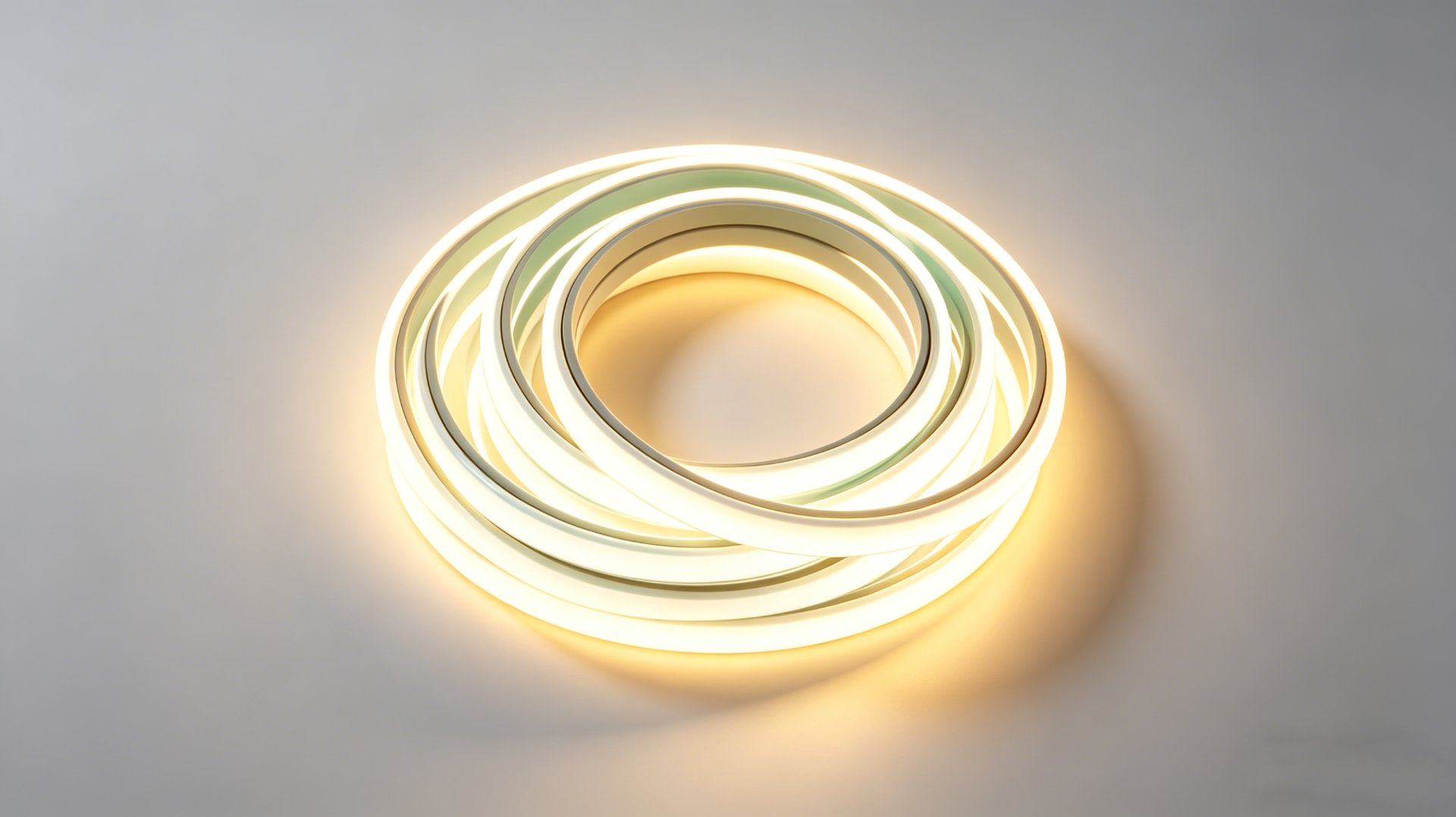
Think about the internal structure. In a side-bend configuration, the LED chips and circuit traces run perpendicular to the bending axis. The stress distributes across the width of the PCB. In a top-bend setup, those same components align parallel to the bend, concentrating stress along their length.
I worked with an architectural firm that specified a top-bend product for a curved ceiling installation. The contractor, trying to save money, substituted a side-bend strip and forced it into the wrong orientation. Within two months, we had callback reports of flickering and dead sections. When we inspected the failed units, the solder joints had literally fractured because they were never designed to flex in that direction.
This is why our product specifications clearly state the intended bend orientation. Our side-view silicone neon flex uses a different PCB layout than our top-view models. The LED placement, trace routing, and even the silicone extrusion profile are optimized for specific directional stress.
Here's the practical guidance I give to contractors:
| Application Type | Recommended Product | Why It Matters |
|---|---|---|
| Curved signage faces | Side-bend design | Letters and logos bend horizontally |
| Ceiling coves | Top-bend design | Curves follow vertical planes |
| Stair nosing | Top-bend design | Vertical stress at step edges |
| Column wrapping | Either (specify radius) | Requires proper minimum radius |
The minimum bend radius12 specification isn't a suggestion—it's a structural limit. When you exceed this limit (bend tighter than specified), you're mechanically damaging the product during installation. The silicone might look fine initially, but you've already created stress concentration points that will fail prematurely.
We publish detailed installation guides13 that include not just minimum bend radius12, but also maximum bend angles per linear meter, recommended fixing intervals at curves, and thermal expansion allowances. These aren't arbitrary numbers. They come from accelerated life testing14 where we bend samples to various radii, power them continuously, and measure time-to-failure.
What's the Real Lifespan of Bent Silicone Lighting in Outdoor Conditions?
Indoor installations are relatively forgiving. Outdoor installations? That's where flexible silicone lighting either proves its engineering or fails spectacularly.
Outdoor curved installations face simultaneous UV exposure15, temperature cycling, moisture ingress16, and mechanical stress—a combination that can reduce poorly designed flexible lighting1 lifespan from years to months. Professional-grade silicone neon flex uses anti-UV stabilizers, salt-spray resistant compounds, and IP68-rated construction17 to maintain 50,000+ hour performance even in coastal or extreme climate installations.
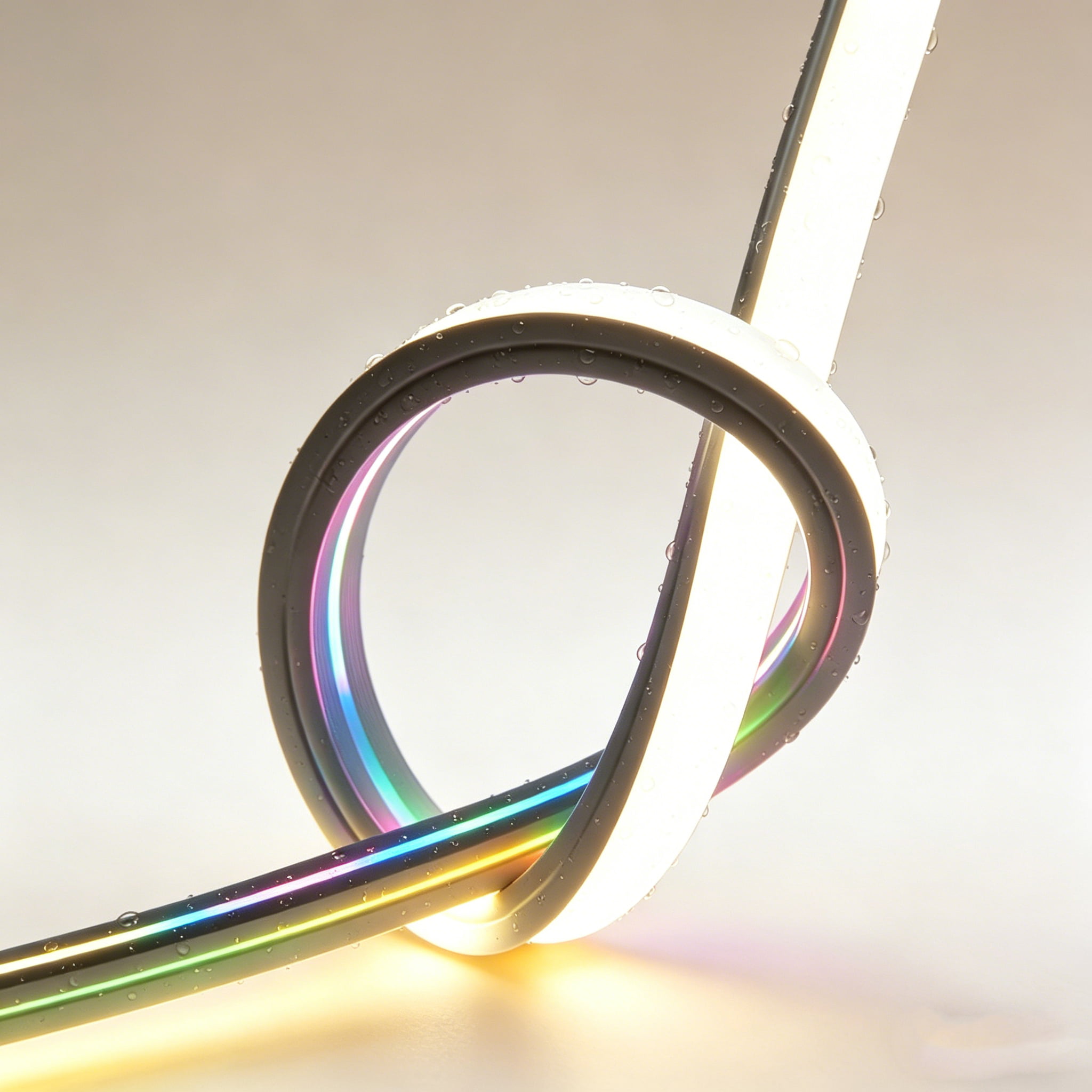
I've installed our silicone neon flex in Dubai (summer temperatures exceeding 50°C), in Norwegian coastal applications (constant salt spray), and in Canadian winter conditions (down to -35°C). The common factor? Every installation involved curves and bends. The stress isn't theoretical—it's cumulative and relentless.
UV degradation is particularly insidious in bent sections. When silicone is under tension (the outer surface of any bend), UV radiation penetrates more easily and accelerates molecular breakdown. Standard silicone compounds without UV stabilizers will yellow, harden, and crack within 12-18 months in direct sunlight—faster at bend points.
We formulate our silicone with industrial-grade UV stabilizers that absorb harmful wavelengths before they damage the polymer structure. This isn't just about maintaining appearance (though non-yellowing is important for white and RGB applications). It's about preventing the material from becoming brittle and losing its flexibility.
Temperature cycling creates thermal fatigue. Every day, the material expands as it heats up (both from ambient temperature and LED heat generation), then contracts as it cools. At bend points, this cycling creates micro-movements between the silicone and the internal components. Over thousands of cycles, inferior products develop separation, delamination, or moisture infiltration paths.
Our testing protocol simulates this brutally. We place bent samples in thermal chambers and cycle them from -40°C to +60°C every 8 hours while the LEDs are powered. We measure light output, color consistency, and perform destructive testing18 at intervals to check for internal damage. Products must complete 3,000 cycles (roughly 3 years of accelerated aging) without performance degradation to meet our release criteria.
Moisture is the silent killer. Even with IP68 ratings, the bend points are vulnerable. If the silicone extrusion has any inconsistencies, if the end caps aren't perfectly sealed, or if installation creates micro-tears, water finds its way in. Once inside, it corrodes connections, shorts circuits, and creates failure cascades.
We address this through multiple layers of protection:
| Protection Layer | Purpose | Implementation |
|---|---|---|
| Silicone formulation | Inherent water resistance | Hydrophobic additives |
| Extrusion quality | Eliminate internal voids | Precision temperature control |
| End sealing | Block entry points | Heat-shrink + silicone adhesive |
| Mounting design | Prevent water pooling | Drainage considerations |
I always tell contractors: if you're installing outdoors in a bent configuration19, assume water will test every weakness. Design accordingly. Use proper end caps. Route installations so water drains away from connections. Inspect bend points during installation for any surface irregularities that might compromise the seal.
How Do You Test Flexible Lighting Before Committing to a Large Order?
This is where I see the biggest gap between professional buyers and amateur purchasers. Professionals understand that a small sample test can prevent massive field failures.
Effective pre-order testing20 for flexible silicone lighting requires simulating actual installation conditions: bend the sample to your project's radius, power it continuously for 72+ hours, monitor for temperature anomalies, color shifts, or brightness degradation, and inspect for physical changes at stress points. A sample that passes static display but fails under operating stress will fail your installation.
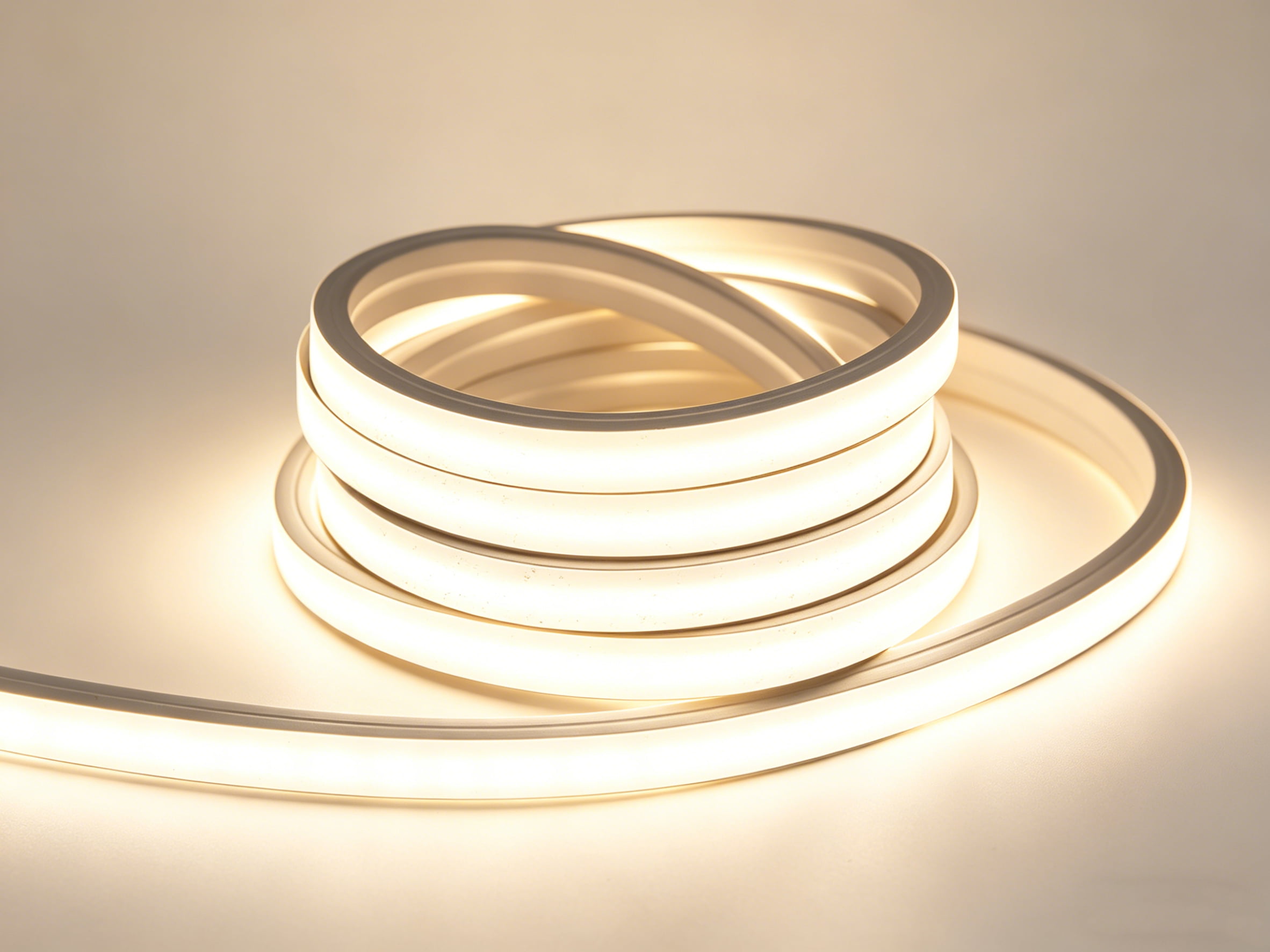
When distributors contact us for OEM partnership, I walk them through our recommended testing protocol. First, we discuss their specific application. What bend radii will they encounter? Indoor or outdoor? Continuous operation or occasional use? This context shapes the test design.
For a curved architectural application, I recommend this sequence:
Mount the sample to match your tightest planned curve. Use the same mounting method you'll use in production (clips, channels, adhesive, etc.). Don't just lay it on a table—install it properly.
Power the sample continuously for at least 72 hours. This isn't about total lifespan testing (that takes months), but about revealing immediate stress-related issues. Use a power supply that matches your project specifications.
Monitor temperature at three points: the bend apex (highest stress), a straight section (baseline), and the power connection (to verify supply adequacy). We use infrared thermometers or thermal cameras. Temperature differentials above 10°C between bent and straight sections indicate potential heat management issues.
Measure light output and color temperature at multiple points along the curve. We use a calibrated spectrometer, but even visual comparison against a reference sample can reveal problems. Any noticeable color shift or brightness variation after 72 hours suggests accelerated degradation under stress.
After the powered test, inspect the silicone surface at bend points under magnification. Look for whitening (stress concentration), any texture changes (micro-cracking), or separation between layers (delamination). These are early warning signs.
I also recommend a destructive test on one sample. After the 72-hour powered bend test, cut through the bend point and examine the internal structure. Check solder joints for stress fractures. Look for any discoloration of the PCB (overheating indicator). Verify that the silicone hasn't deformed or separated from internal components.
Professional buyers often ask about accelerated testing. Can we simulate years of use in weeks? The answer is yes, but it requires specialized equipment. We use environmental chambers that cycle temperature, humidity chambers that test seal integrity, and mechanical fatigue4 testers that repeatedly flex samples while powered.
For buyers who want to conduct their own accelerated testing, here's a simplified protocol:
| Test Type | Method | Pass Criteria |
|---|---|---|
| Thermal Shock | -20°C to +60°C, 4-hour cycles, 10 cycles | No visual damage, <5% light output loss |
| Bend Fatigue | Flex to minimum radius 100 times | No cracking, maintained flexibility |
| Powered Stress | 168 hours at maximum bend + full power | <3% light output loss, no hot spots |
| Water Resistance | Submersion at bend point, 24 hours | No moisture penetration, maintained function |
I've had clients discover through this testing that their initial product selection wouldn't survive their application. One lighting designer was planning to use a competitor's product for an underwater hotel feature with tight curves. After just 48 hours of our recommended testing, they found moisture penetration at every bend point. They switched to our IP68-rated, stress-optimized product and avoided what would have been a catastrophic field failure.
Conclusion
Flexible silicone lighting bends beautifully during installation, but the real test is whether it survives months of operation in that bent state. Choose products engineered for long-term stress resistance, test thoroughly before committing, and never compromise on proper installation practices.
Explore how flexible lighting can enhance your design projects with versatility and creativity. ↩
Understanding structural integrity is crucial for ensuring long-lasting lighting solutions. ↩
Explore techniques to ensure consistent color stability in your lighting projects. ↩
Learn about mechanical fatigue and its impact on the performance of lighting systems. ↩
Discover how thermal aging affects the longevity and performance of silicone lighting. ↩
Find out the reasons behind localized dimming and how to prevent it in your installations. ↩
Learn about solder joint fatigue and its implications for LED strip reliability. ↩
Discover how thermal cycling impacts the performance and lifespan of lighting products. ↩
Learn how engineered thermal pathways can optimize heat management in lighting. ↩
Discover best practices for PCB design to enhance the performance of lighting products. ↩
Explore how stress-relief features can enhance the reliability of lighting circuits. ↩
Learn why adhering to minimum bend radius is crucial for the longevity of lighting solutions. ↩
Discover essential elements that should be included in lighting installation guides. ↩
Understand the importance of accelerated life testing in evaluating lighting durability. ↩
Understand the effects of UV exposure on silicone lighting and how to mitigate them. ↩
Learn about moisture ingress and its potential risks for outdoor lighting installations. ↩
Explore the significance of IP68 ratings in ensuring durability for outdoor lighting. ↩
Understand the role of destructive testing in assessing the quality of lighting products. ↩
Get insights on best practices for installing lighting in bent configurations. ↩
Learn about the importance of pre-order testing to avoid costly installation failures. ↩