

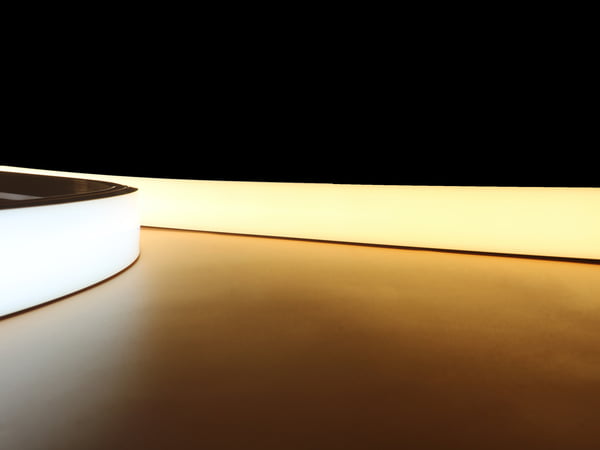
You see it everywhere now: sleek, glowing silicone light strips1 wrapping around buildings, signs, pools. They look perfect in showrooms. But six months later? Yellow stains. Dark spots. Cracked edges. You keep replacing them, watching your maintenance budget explode while your client satisfaction drops.
A silicone light strip isn't just about silicone coating—it's about whether the silicone, LED chips2, and structural design can stay synchronized under continuous operation. When these three components age at different rates, you get color shifts3, dimming, or premature failure.
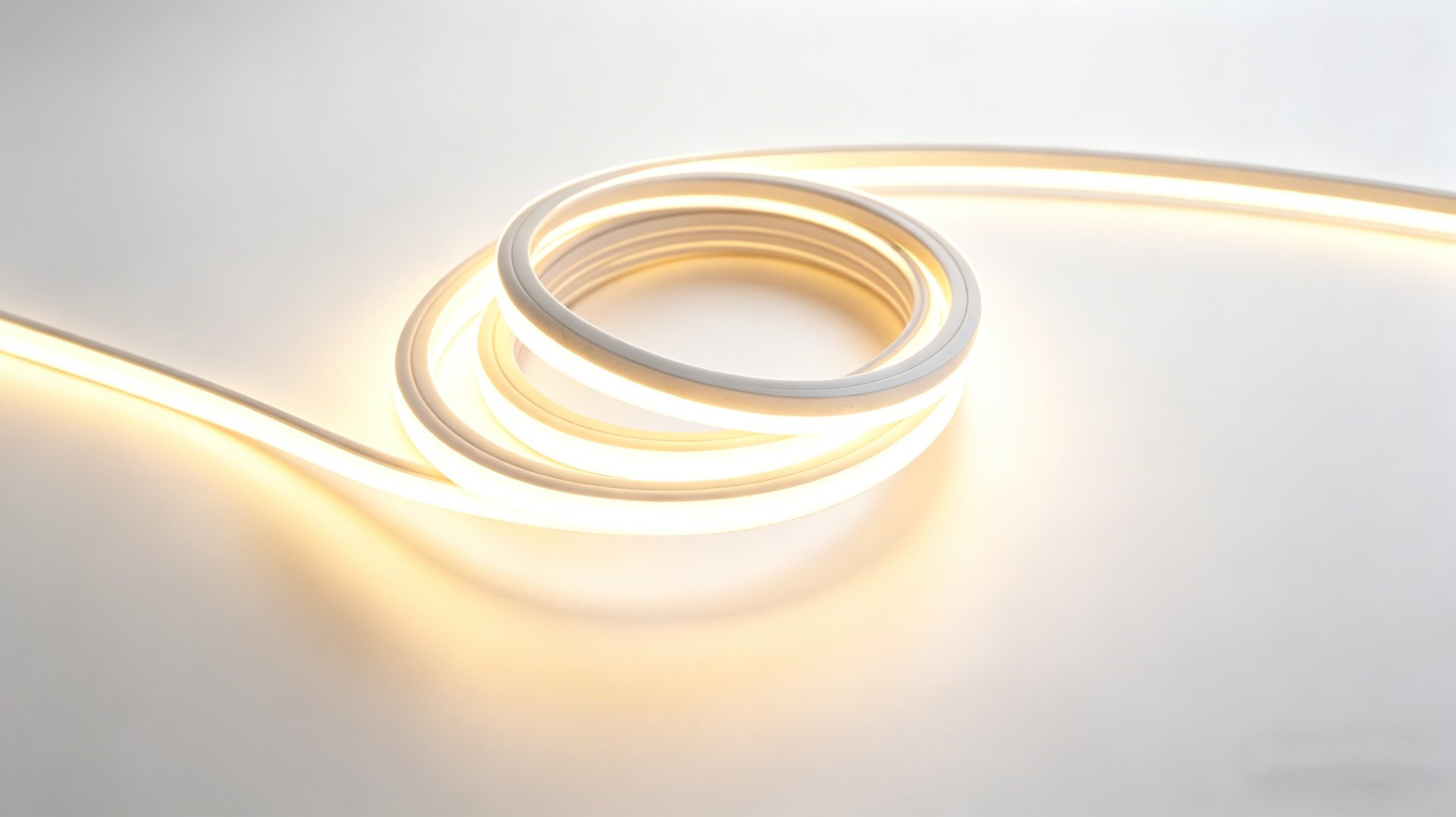
I've watched too many contractors fall into this trap. They test samples that perform beautifully, then deploy thousands of meters only to face systematic failures within months. The problem isn't the technology itself—it's the mismatch between material science, thermal management4, and manufacturing consistency5.
Why Do Silicone Light Strips Yellow and Fail Prematurely?
You install a pristine lighting system. It glows evenly, feels premium, impresses everyone. Then reality hits.
The silent degradation begins: UV radiation6 breaks down cheaper silicone compounds, heat accumulates inside the extrusion, and LED phosphor layers start drifting. What you thought was a 5-year investment becomes a 6-month liability.
The core issue is material synchronization7. When silicone yellows faster than LEDs dim, you get visual inconsistency. When thermal expansion rates differ between the extrusion and PCB substrate, you create mechanical stress points. When manufacturing tolerances vary between batches, your "same product" behaves differently across different installation zones.
Here's what actually happens in failing systems:
| Degradation Type | Root Cause | Visible Symptom | Timeline |
|---|---|---|---|
| UV Yellowing | Low-grade silicone with insufficient UV stabilizers | Surface turns amber/brown, especially in sun-exposed areas | 3-8 months outdoors |
| Brightness Drop | LED light decay outpacing silicone transparency loss | Uneven illumination, dark zones appear | 6-12 months |
| Material Hardening | Thermal cycling causes silicone cross-linking breakdown | Loss of flexibility, cracking at bend points | 4-10 months in high-heat zones |
| Batch Variation | Inconsistent curing parameters between production runs | Different aging rates across same project | Immediate but reveals over 3-6 months |
The expensive mistake contractors make is focusing on upfront appearance rather than synchronized aging performance. We test this by running accelerated life cycles8: 1000+ hours at 60°C with continuous illumination. Products that look identical on day one can show 40% performance divergence by day 180.
I remember a hotel chain project where we replaced a competitor's strips after just eight months. The original supplier used recycled silicone compounds to hit a lower price point. The material itself wasn't "bad"—it just aged three times faster than their LED selection. The client paid twice: once for the cheap solution, again for the emergency replacement during peak season.
The technical reality is that silicone light strips1 operate in a constant state of molecular stress. UV photons attack polymer chains. Thermal expansion creates micro-fractures. Oxygen infiltration accelerates phosphor degradation9. Your product is only as good as its weakest aging curve.
How Do You Match Silicone Properties with LED Performance?
Choosing compatible materials sounds basic. It's not.
Most failures happen because silicone transparency, LED color stability, and thermal conductivity10 weren't engineered as a unified system. You can't just wrap good LEDs in good silicone and expect synchronized performance.
The breakthrough approach is optical-thermal co-design11. We start by mapping the LED's spectral output against the silicone's transmission curve across the visible spectrum. If your blue LED peaks at 450nm but your silicone has higher absorption in that range, you'll see premature color shift as the material ages.
Here's our material matching protocol:
| Design Parameter | Integration Point | Why It Matters |
|---|---|---|
| Silicone Refractive Index | Must match LED beam angle for even diffusion | Mismatched values create hotspots and dark zones |
| Thermal Conductivity | Coordinated with PCB substrate and heat sink geometry | Poor heat transfer accelerates both LED and silicone aging |
| UV Stabilizer Loading | Balanced against LED UV output and ambient exposure | Over-stabilization can affect transparency; under-stabilization causes yellowing |
| Shore Hardness | Matched to installation method and thermal expansion rates | Too soft loses shape; too hard cracks under thermal cycling12 |
The critical insight is that LED junction temperature directly affects silicone aging rate. For every 10°C increase in operating temperature, silicone degradation roughly doubles. This means your thermal design isn't just about LED lifespan—it's about keeping the entire material system within its stability window.
We run side-by-side comparisons where identical LED chips2 are encased in different silicone formulations. The platinum-cured, high-molecular-weight compounds maintain 95%+ light transmission after 3000 hours at elevated temperatures. The peroxide-cured alternatives show visible yellowing by 1500 hours. Same LEDs, different aging trajectories.
The practical application is this: when we design a custom strip, we calculate the worst-case thermal load (maximum ambient temperature + LED self-heating), then select silicone compounds that remain stable 20°C above that threshold. This margin accounts for installation variables—poor ventilation, reflective surfaces, unexpected heat sources.
I've seen projects fail because engineers assumed "food-grade silicone" automatically meant UV resistance. It doesn't. Medical-grade formulations prioritize biocompatibility, not photostability. You need silicone specifically compounded with hindered amine light stabilizers and antioxidant packages designed for long-term outdoor exposure.
The verification step most manufacturers skip is accelerated UV aging with simultaneous thermal cycling12. We expose samples to 340nm UV radiation6 while cycling between -20°C and +80°C. Products that pass this test maintain both flexibility and transparency under real-world conditions.
What Thermal Management Actually Prevents Premature Failure?
Heat is the silent killer in silicone light strips1. You don't see it. You don't feel it. But it's destroying your investment from the inside out.
Effective thermal management4 isn't about adding a heat sink—it's about creating a continuous thermal pathway from LED junction to ambient air while maintaining structural integrity across temperature swings.
The physics is straightforward but often ignored: LEDs convert roughly 70% of input power to heat. In a sealed silicone extrusion, that heat has nowhere to go except through the silicone itself. If the material's thermal conductivity10 is too low, you create a thermal trap. Junction temperatures spike. LED efficiency drops. Silicone begins accelerated aging13.
Our thermal design hierarchy:
| Heat Dissipation Strategy | Implementation | Thermal Improvement |
|---|---|---|
| Aluminum Channel Mounting | U-shaped or flat aluminum base with thermal interface material | Reduces LED junction temp by 15-25°C |
| Enhanced PCB Design | Thicker copper layers (2oz vs 1oz), thermal vias under each LED | Improves lateral heat spreading by 30-40% |
| Thermally Conductive Silicone | Silicone compounds loaded with ceramic fillers (alumina, boron nitride) | Increases material thermal conductivity10 from 0.2 to 0.8 W/mK |
| Optimized LED Spacing | Calculated pitch based on power density and thermal resistance | Prevents hotspot formation, extends lifespan by 50%+ |
The mistake I see repeatedly is treating thermal management4 as an afterthought. Contractors buy strips, mount them in tight spaces without airflow, then wonder why they fail early. The silicone itself becomes a thermal blanket, trapping heat against the LEDs.
We conduct thermal imaging14 on every prototype design. A well-engineered strip shows less than 5°C temperature variation along its length under full power. Poorly designed products can show 20°C+ gradients, with hotspots at power injection points and tight bends.
The real-world impact is dramatic. In a recent outdoor installation, we compared two similar products: one with proper thermal design, one without. After 6 months of continuous operation, the thermally optimized strip maintained 92% of initial brightness. The competitor's product dropped to 71% and showed visible yellowing at high-temperature zones.
The verification method we use is thermal cycling12 combined with power aging. We run strips at 120% of rated current while cycling ambient temperature every 8 hours. This accelerates both thermal fatigue and material degradation. Products that survive 1000 cycles typically achieve 50,000+ hours in normal use.
I remember a project where we redesigned a failing strip by simply adding thermal vias and switching to a higher thermal conductivity10 silicone. Same LEDs, same power, same form factor. The new version ran 18°C cooler and eliminated the yellowing issues that plagued the original design.
The critical insight is that thermal management4 affects every component simultaneously. Cooler operation means slower LED lumen depreciation, reduced silicone yellowing, less thermal expansion stress, and longer solder joint life. It's the multiplier that makes everything else work better.
How Do Manufacturing Inconsistencies Destroy Field Performance?
You approved the samples. They were perfect. Then production batches arrive, and suddenly you're seeing variations in color, brightness, flexibility. Welcome to the manufacturing consistency5 trap.
Silicone extrusion is a process-sensitive operation where small variations in curing temperature15, mixing ratios, or line speed can create products that look identical but age completely differently.
The problem is that silicone polymerization is both time and temperature dependent. If one production batch cures at 180°C for 8 minutes while another runs at 185°C for 7 minutes, you've created different molecular structures. They might test the same on day one, but their aging trajectories will diverge significantly.
We control this through process lockdown:
| Critical Process Variable | Control Method | Impact on Long-term Performance |
|---|---|---|
| Silicone Mixing Ratio | Automated dosing systems with ±0.5% accuracy | Ensures consistent cross-link density, prevents soft spots or over-hardening |
| Curing Temperature Profile | Multi-zone ovens with ±2°C stability | Maintains uniform molecular structure, prevents batch-to-batch yellowing variation |
| Extrusion Line Speed | Servo-controlled pull systems | Ensures consistent wall thickness, eliminates weak points |
| Material Traceability | Batch coding linked to raw material lots | Enables root cause analysis if field issues emerge |
The expensive lesson many manufacturers learn too late is that silicone isn't like PVC extrusion. You can't just "run it faster" to meet deadlines without consequences. Insufficient cure time leaves residual unreacted monomers that will continue reacting in the field, causing dimensional changes16 and potential yellowing.
We run batch validation testing where we compare samples from the beginning, middle, and end of each production run. They must show less than 3% variation in Shore hardness17, light transmission, and thermal resistance. If any sample fails, we investigate the entire batch.
The field reality is brutal. I've seen installations where sections from different production batches aged at visibly different rates. One area yellowed within 4 months while adjacent sections remained clear for over a year. Same installation, same environmental conditions, different manufacturing lots.
The verification approach we use is accelerated aging13 on random production samples. We pull units from every 1000-meter run and subject them to 500-hour UV/thermal stress tests. This catches process drift before it reaches customers.
The breakthrough for us was implementing statistical process control on the extrusion line. We monitor 12 critical parameters in real-time and can detect shifts before they create out-of-spec product. This reduced our field failure rate by 87% compared to our earlier manual monitoring approach.
I remember a competitor who lost a major contract because their "same product" varied by 15% in light output between batches. Their silicone mixing wasn't automated, so human error created inconsistencies. The client couldn't tolerate visible differences across a large architectural installation.
The practical takeaway is that you need to audit manufacturing processes, not just inspect finished products. Ask about curing protocols, mixing systems, and process monitoring. A manufacturer who can't show you process control data18 is gambling with your project's long-term success.
Conclusion
A silicone light strip's true quality isn't visible at installation—it reveals itself six months later through sustained brightness, color stability, and material integrity. Success requires synchronized engineering of materials, thermal design, and manufacturing consistency5, not just attractive samples.
Explore this resource to understand how to maximize the lifespan and performance of silicone light strips. ↩
Gain insights into how LED chips influence the overall effectiveness of silicone light strips. ↩
Explore the reasons behind color shifts to ensure consistent lighting quality over time. ↩
Discover essential thermal management techniques to enhance the longevity of your LED systems. ↩
Discover how manufacturing consistency impacts the reliability and performance of silicone products. ↩
Learn about the impact of UV radiation on silicone to make informed choices for outdoor applications. ↩
Understand the importance of material synchronization for optimal performance in lighting applications. ↩
Understand accelerated life cycles to evaluate product durability and performance effectively. ↩
Learn about phosphor degradation to maintain the quality and longevity of your LED lights. ↩
Explore the role of thermal conductivity in enhancing the performance of silicone light strips. ↩
Learn about optical-thermal co-design to improve the integration of lighting components. ↩
Learn about thermal cycling to better understand its effects on silicone longevity. ↩
Learn about accelerated aging testing to evaluate the long-term performance of silicone products. ↩
Explore the use of thermal imaging to identify potential issues in silicone light strips. ↩
Discover the impact of curing temperature on silicone to ensure optimal performance. ↩
Understand dimensional changes to prevent issues in silicone applications over time. ↩
Discover the significance of Shore hardness in ensuring the right material properties for silicone. ↩
Understand the importance of process control data to ensure quality in manufacturing processes. ↩