

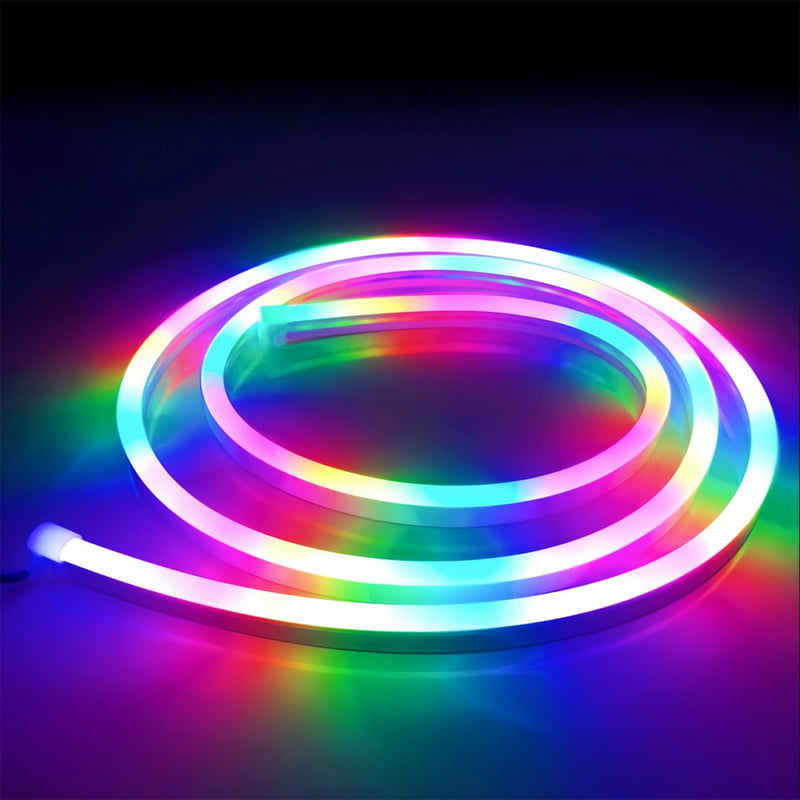
We've all seen those stunning RGB installations that look absolutely perfect on day one. The colors blend seamlessly, creating that premium atmosphere everyone wants. But here's the uncomfortable truth: many of these systems start showing their true colors (literally) within months. The vibrant, uniform glow gradually transforms into patchy, dirty-looking light that screams "cheap." Why does this happen, and how can you avoid becoming another cautionary tale?
RGB silicone neon flex doesn't fail because it stops working—it fails because the three color channels age differently, creating irreversible color separation that turns premium installations into eyesores. The real challenge isn't getting RGB to work; it's keeping it looking good for years.
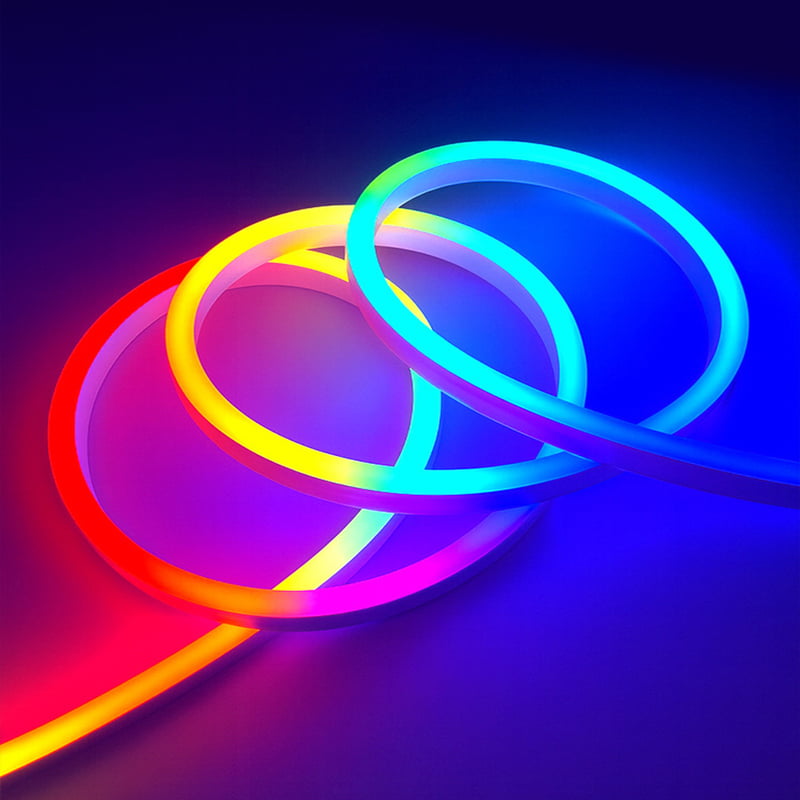
This isn't a theoretical problem. I've seen project managers standing in front of installations they were proud of six months ago, now staring at color bands and dirty patches they can't explain to their clients. The worst part? By the time you notice the degradation, it's too late to fix it without replacing entire runs. Let's break down what's really happening inside that silicone tube—and more importantly, how to prevent it.
What Actually Causes RGB Neon to "Go Bad" Over Time?
Most people think LED degradation is simple. The light gets dimmer over time, right? With RGB systems, the reality is far more complex and potentially devastating to your project.
The core issue with RGB silicone neon isn't total brightness loss—it's differential color degradation. Red, green, and blue LEDs have fundamentally different aging curves, meaning they don't dim at the same rate. This creates progressive color shifts that destroy the visual consistency of your installation.
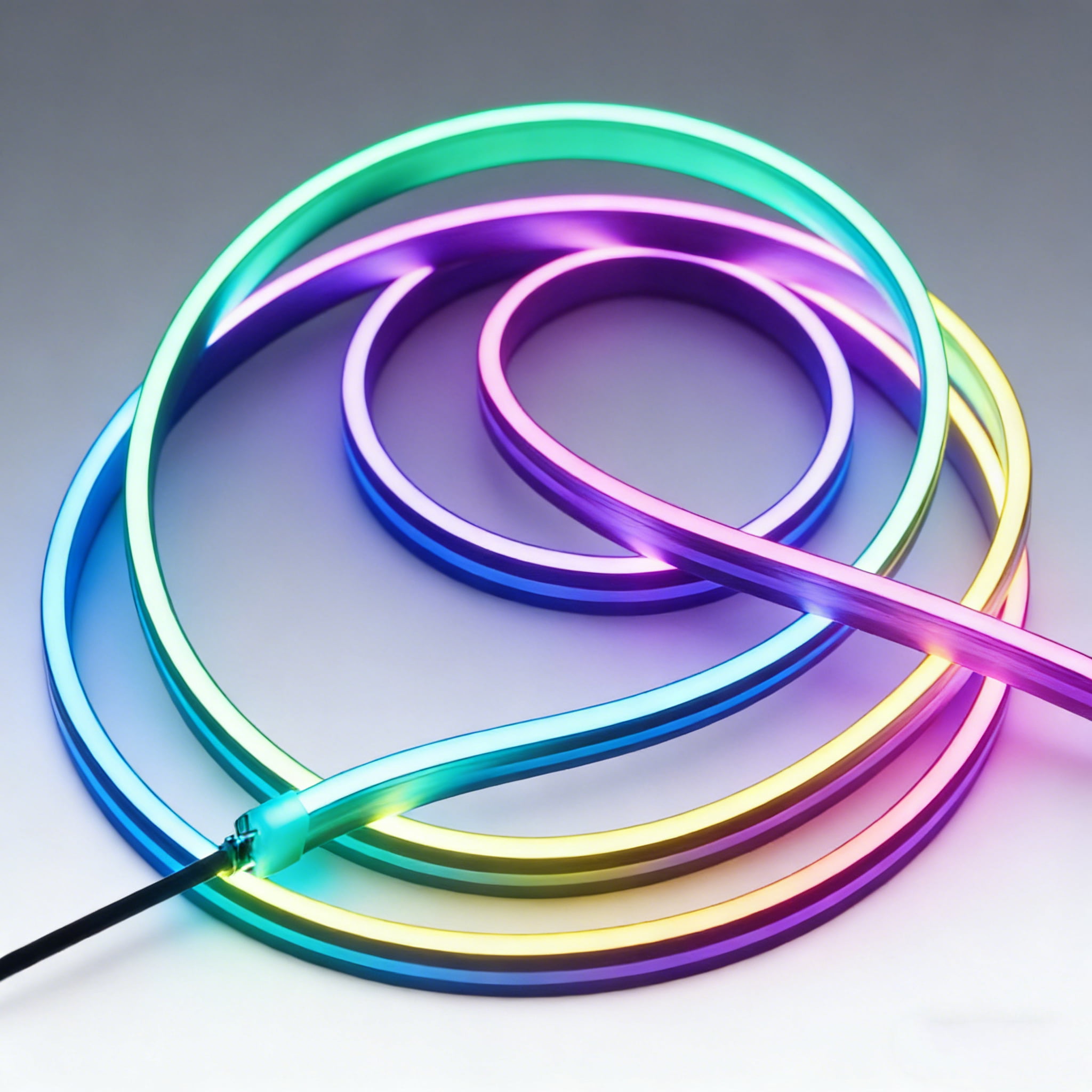
Here's what happens in real-world conditions. You install a beautiful RGB system. The mixing looks perfect. Three months later, you start seeing slight variations. Six months in, certain sections look distinctly different from others. By month twelve, you have visible color bands, patches of "dirty" light, and what looks like failing pixels—even though every LED is still technically functioning.
The technical breakdown looks like this:
| Degradation Factor | Impact on RGB Consistency | Long-term Result |
|---|---|---|
| Unmatched Light Decay Rates | Red chips typically fade faster than blue; green sits somewhere in the middle | Color temperature shifts from intended white/neutral toward blue-green cast |
| Unbalanced Current Distribution | If one channel receives slightly more current, it degrades faster while appearing brighter initially | Accelerated failure of overdriven channel; color becomes increasingly unbalanced |
| Insufficient Mixing Distance | RGB chips placed too close to silicone surface don't blend properly | Visible individual color spots instead of uniform mixed light |
| Inconsistent LED Binning | Mixing different color bins (wavelength variations) in same run | Some sections appear warmer/cooler even when new; gets worse over time |
| Silicone Diffusion Limitations | Low-quality or thin diffusion layer can't hide chip-level variations | Color separation becomes visible as individual chips age differently |
This is why I always tell clients: with RGB, you're not buying a lighting product—you're buying a color management system that needs to perform consistently for years. The cheapest RGB neon might look identical to premium options on installation day. The difference shows up six months later when one looks like a professional installation and the other looks like a maintenance problem.
The most frustrating part? Many installers and even some manufacturers don't understand this distinction. They focus on initial brightness, IP ratings, and price—all important factors, but none of them address the real failure mode of RGB systems. I've watched projects that looked spectacular in photos turn into warranty nightmares because nobody accounted for differential aging.
How Do You Actually Prevent RGB Color Separation?
The answer isn't "buy better LEDs"—it's more nuanced than that. Preventing RGB degradation requires controlling multiple variables simultaneously, starting before you even order the product.
Effective RGB color consistency requires matched component aging, precise current control, optimized mixing architecture, and ongoing calibration capability. You can't fix this problem after installation; it must be engineered into the product from the beginning.
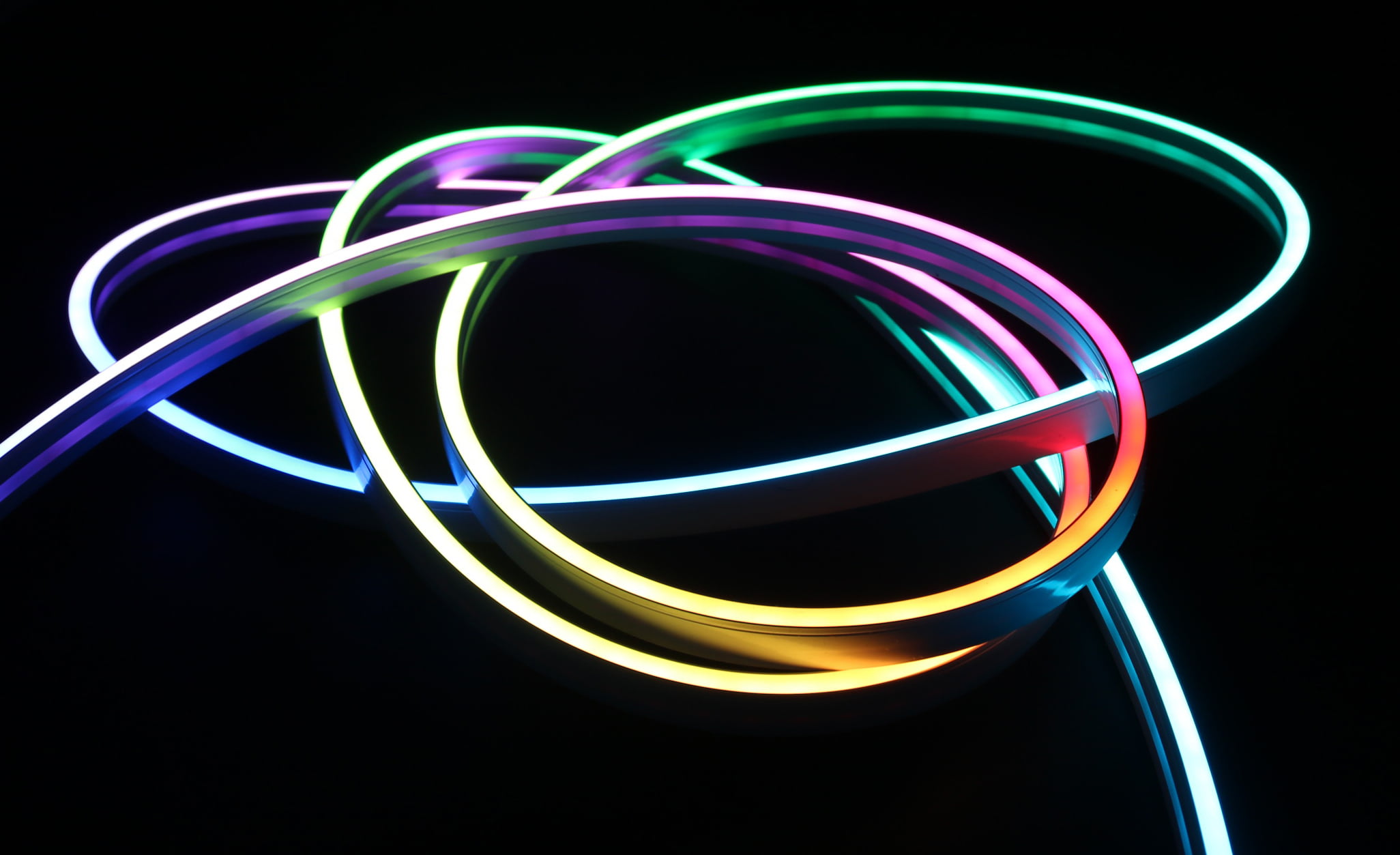
At our facility in Shenzhen, we've developed a specific protocol for RGB products that goes far beyond standard manufacturing practices. I want to walk you through what actually matters—not marketing claims, but measurable engineering controls.
Component-Level Color Management:
First, we never mix LED bins in RGB applications. Ever. This sounds obvious, but you'd be surprised how many manufacturers cut corners here. Every red chip must come from the same wavelength bin. Same for green. Same for blue. We test this using spectrophotometers, not just visual inspection. When you receive our RGB neon, every meter in your order comes from the same matched batch.
Beyond binning, we pre-age sample batches to verify degradation curves. We run accelerated life testing at elevated temperatures and currents, measuring not just brightness loss but wavelength shift. If the red channel shows 15% degradation while blue only shows 8% after 1000 hours of accelerated aging, we reject that LED batch entirely—even if the individual specs look fine. This is expensive. It also prevents the exact problem we're discussing.
Architectural Mixing Optimization:
The physical structure of the silicone neon matters enormously. We design our RGB products with specific mixing distances calculated based on LED spacing, silicone thickness, and diffusion characteristics. The chips aren't just "placed inside"—their position relative to the silicone wall is calculated to ensure adequate color blending before light exits the tube.
Here's our standard RGB mixing architecture:
| Design Element | Standard Practice | Our Specification | Purpose |
|---|---|---|---|
| LED to Surface Distance | 2-3mm | 4-6mm minimum | Allows adequate mixing space before light emission |
| Chip Spacing | 16-20mm | 12-15mm for RGB | Reduces dark spots between color sources |
| Silicone Diffusion Layer | Single-layer extrusion | Dual-layer with graduated diffusion | Progressive light scattering prevents hotspots |
| Mixing Chamber Depth | Not specified | Minimum 8mm effective depth | Ensures complete color integration |
This is why our RGB products are slightly larger in diameter than some competitors. It's not waste—it's physics. You cannot achieve proper color mixing in a 6mm tube. Anyone claiming otherwise is selling you a product that will develop color separation.
Current Control and Thermal Management:
RGB requires precise current balancing across all three channels. We use dedicated constant-current drivers with individual channel regulation, not shared power supplies that can allow one color to draw excess current. Each channel gets monitored and limited independently.
Thermal management becomes critical because different color LEDs have different temperature sensitivities. Blue LEDs typically handle heat better than red. If your RGB neon has inadequate heat dissipation, the red channel will degrade faster simply from thermal stress—even if current is perfectly balanced. Our silicone formulation includes thermal-conductive additives specifically to address this. It's more expensive. It's also the only way to ensure long-term color stability.
Real-World Testing Protocols:
Before any RGB product ships, we run extended aging tests. Not just brightness measurements—full spectral analysis over time. We're looking for color shift, not just dimming. Our acceptance criteria requires all three channels to maintain spectral output within 5% of each other after 3000 hours of operation. If one channel drifts outside that window, we reformulate the entire product.
I've had clients ask why our RGB products cost more than alternatives. This is why. We're not selling LEDs in silicone. We're selling color consistency over a 5+ year lifespan. That requires engineering at every level—component selection, physical design, thermal management, and validation testing. There's no shortcut.
What Should You Actually Look For When Buying RGB Neon?
Most specification sheets are useless for predicting real-world RGB performance. They list brightness, IP ratings, and color temperature—none of which tell you whether the product will maintain color consistency.
Effective RGB specification requires aging data, binning protocols, current control methods, and long-term spectral stability documentation. If a supplier can't provide this data, assume the product will develop color separation.
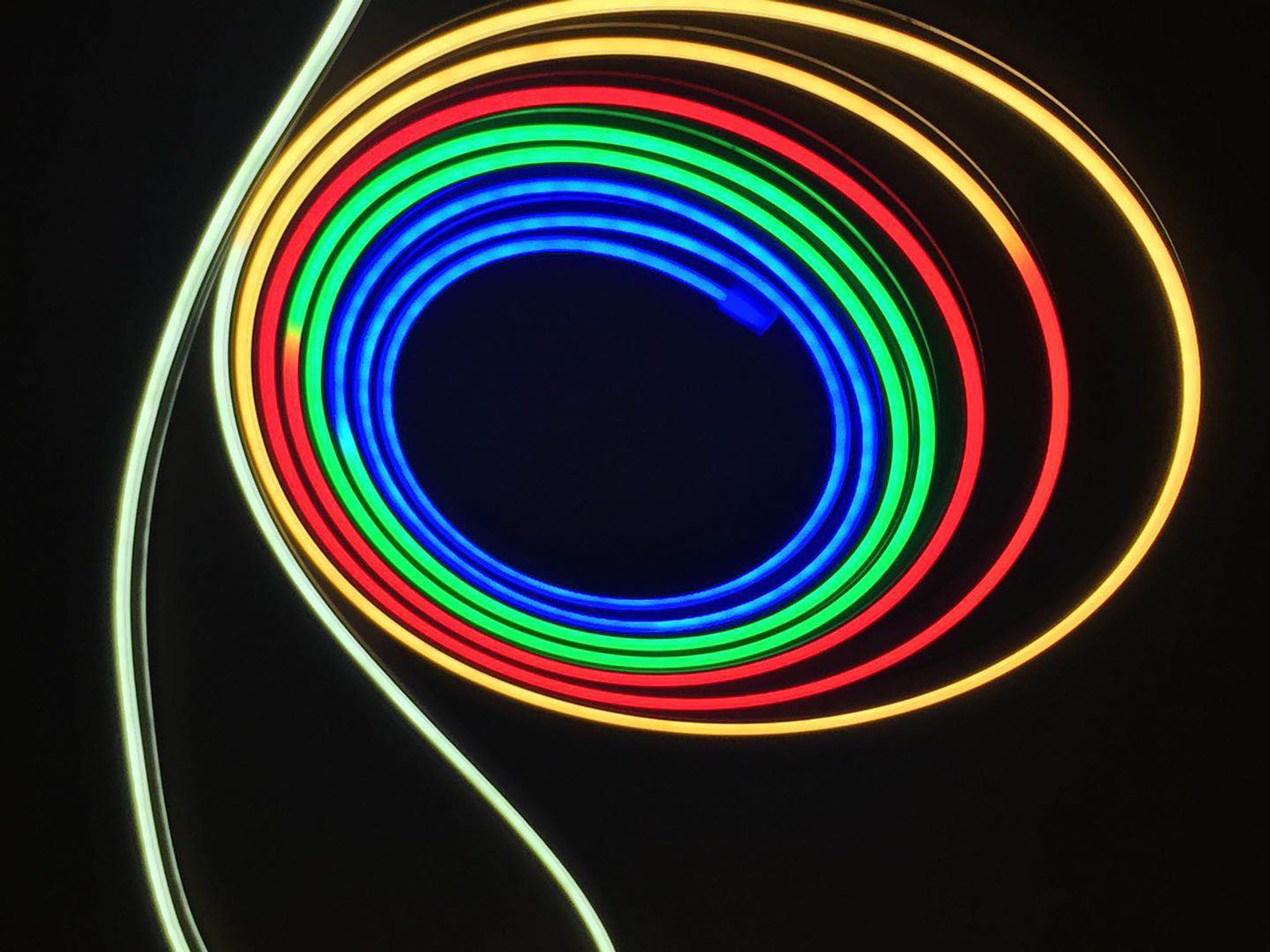
Here's what I actually ask suppliers when evaluating RGB products—and what their answers tell me:
Critical Questions and What the Answers Mean:
"What's your LED binning tolerance for RGB products?"
Good answer: "We use 3-step MacAdam ellipse matching for all three channels, verified with spectrophotometer data we can share."
Bad answer: "We use high-quality LEDs from reputable manufacturers."
The difference? Specific, measurable criteria versus vague marketing language. If they can't tell you the exact color binning standard they use, they're not controlling it.
"How do you verify long-term color stability?"
Good answer: "We run accelerated aging tests measuring spectral shift across all channels. Here's our test protocol and sample data from recent batches."
Bad answer: "Our LEDs are rated for 50,000 hours."
LED lifetime ratings mean nothing for RGB consistency. You need aging curve data showing how the channels perform relative to each other over time.
"What current control method do you use?"
Good answer: "Independent constant-current regulation per channel with thermal compensation."
Bad answer: "We use high-quality drivers from [brand name]."
Even the best drivers can't prevent color separation if they're not configured correctly for RGB applications. You need channel-specific control, not just good components.
Documentation That Actually Matters:
When we ship RGB products, clients receive:
- Spectral analysis data for the specific batch (not generic specs)
- LED bin codes with traceability to manufacturer lot numbers
- Accelerated aging test results showing color stability
- Current specifications for each channel with tolerance ranges
- Thermal performance data including maximum operating temperature
This isn't marketing material. It's engineering documentation that allows you to predict long-term performance. If your supplier can't provide equivalent data, you're buying based on hope rather than evidence.
Installation Considerations for Color Consistency:
Even with perfect product engineering, poor installation can create color problems. Here's what we specify for installers:
| Installation Factor | Why It Matters for RGB | Our Recommendation |
|---|---|---|
| Ambient Temperature | Affects all three channels differently | Avoid locations exceeding 45°C ambient; use additional heat sinking if necessary |
| Voltage Drop | Can cause uneven current distribution across channels | Maximum 24V run length: 3 meters before power injection |
| Mounting Surface | Dark surfaces absorb different wavelengths differently | Use neutral white/gray mounting whenever possible; test color appearance on actual surface |
| Control System | Poor DMX/SPI signals can cause flickering that accelerates degradation | Use quality controllers with proper termination; avoid daisy-chaining beyond 50 units |
I've seen installations fail because they mounted RGB neon on dark blue walls. The blue wavelength got partially absorbed by the wall color, creating apparent color shift even though the product was performing correctly. These are the real-world details that separate successful RGB projects from problematic ones.
Can You Actually Fix RGB Color Problems After Installation?
This is the question I get most often—and the answer is usually disappointing. Once RGB color separation begins, your options are limited.
RGB color degradation is generally irreversible because it results from physical LED aging, not calibration issues. The only reliable fix is replacement, which is why prevention through proper product selection is critical.
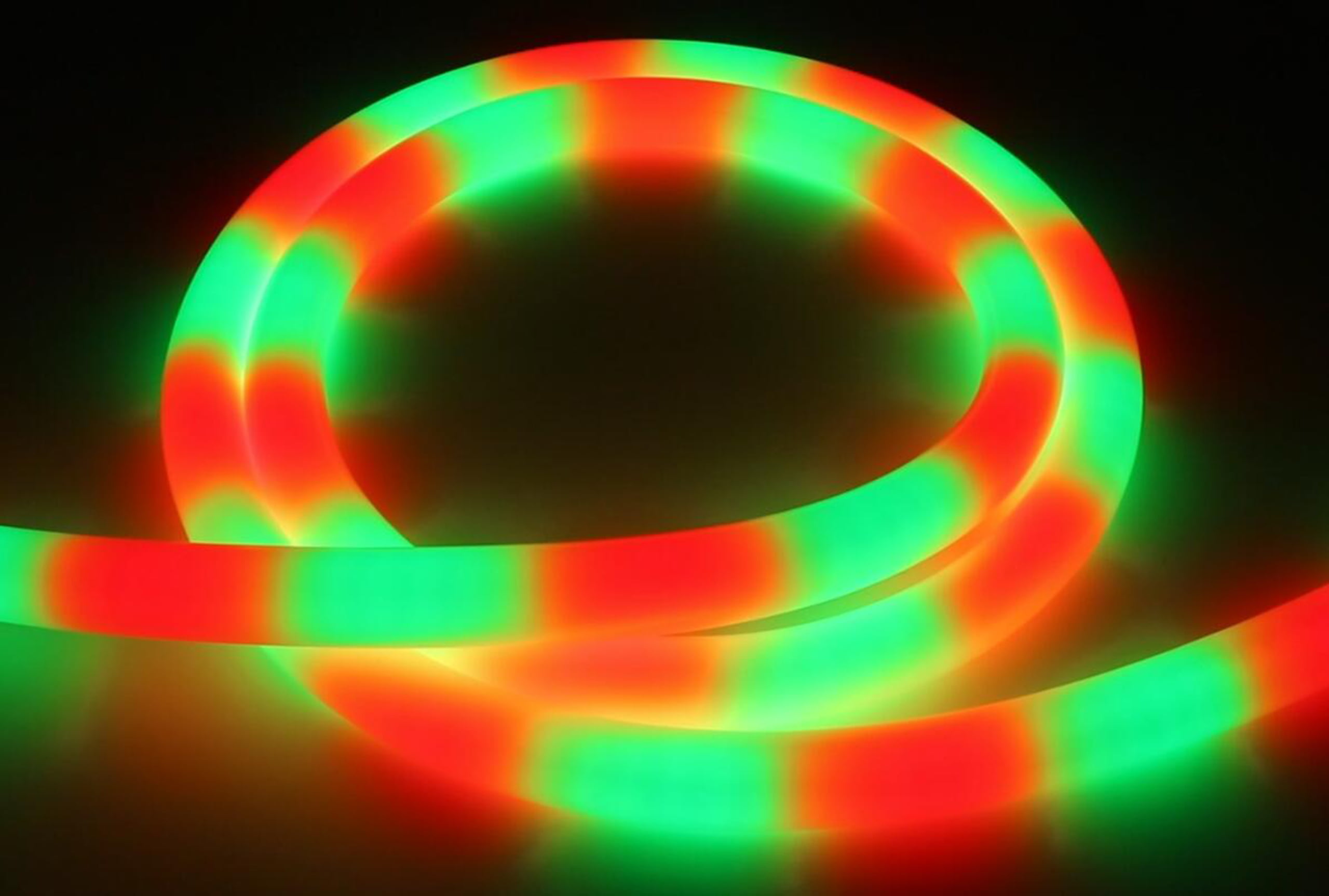
Let me be brutally honest about what you can and can't fix:
What You CAN Adjust:
If the color issue is recent and consistent across the entire installation, you might be dealing with driver or control problems rather than LED degradation. Try these diagnostics:
Check current output on each RGB channel. If one channel is significantly lower, you might have a driver failure rather than LED aging. This is fixable by replacing the driver.
Verify control signal integrity. Poor DMX or SPI signals can cause apparent color problems. Use a signal tester to verify data transmission. If signals are degraded, adding repeaters or replacing controllers can help.
Assess thermal conditions. If the installation is running unusually hot (above 50°C surface temperature), improving ventilation or heat sinking might prevent further degradation—though it won't reverse existing damage.
What You CANNOT Fix:
If individual LEDs or sections show different colors than others, you have actual chip-level degradation. No amount of calibration, driver adjustment, or control system tweaking will fix this. The LEDs have aged differently, and their spectral output has permanently shifted.
If color separation is visible (you can see distinct red/green/blue instead of blended colors), the mixing architecture is inadequate. This is a fundamental product design problem. You cannot fix it without replacing the entire product with properly designed RGB neon.
If certain sections have developed a "dirty" or "muddy" appearance compared to others, you're seeing differential aging across the three channels. One color has faded more than the others. This will only get worse over time.
Real-World Repair Scenarios:
I worked with a hotel that installed RGB neon in their lobby. After eight months, they started seeing color variations. Here's how we diagnosed and addressed it:
First, we measured current on all three channels. Red was pulling 15% less current than specified. We replaced the driver—that fixed about 30% of the color variation. But the rest persisted.
Next, we did spectral analysis on multiple sections. Some sections showed significant red channel degradation while others were fine. This told us they'd received mixed batches with different LED bins. The solution? Replace all the neon with properly binned product. Expensive, but the only real fix.
The lesson? If you're experiencing color problems, professional diagnosis can determine whether you have a fixable driver/control issue or irreversible LED degradation. But in most cases, once color separation is visible, you're looking at replacement, not repair.
Conclusion
RGB silicone neon's real challenge isn't making colors—it's keeping them consistent for years. The difference between premium and problematic RGB systems lies entirely in engineering controls you can't see: matched LED binning, optimized mixing architecture, precise current control, and verified aging characteristics. Choose based on documented performance data, not initial appearance or price. Your installation's long-term success depends on it.