

You ask about where LEDs come from. But here's the real problem: your project might fail not because of the wrong country, but because your supplier changed the source without telling you. One batch works perfectly. The next batch looks like a different product entirely.
LEDs are manufactured globally1, with major production concentrated in China, Taiwan, South Korea, Japan, and the United States. However, the critical question is not "where" your LEDs are made, but whether your supplier maintains consistent supply chain control2 across every batch you order.

Most businesses make the same mistake. They focus on finding the "best country" for LED production. They compare prices between regions. They assume that buying from the same supplier guarantees consistency. Then reality hits when the second or third order arrives.
Why does the same LED model perform differently across batches?
You placed your first order. The lights performed beautifully. Color temperature matched your specifications. Brightness stayed uniform. Everything worked as promised.
Supply chain drift occurs when manufacturers substitute components or switch production facilities between orders. This happens because LED products depend on multiple supply sources: chip foundries, phosphor suppliers3, encapsulation factories, and silicone material systems4 that vary significantly across regions.
Here's what actually happens behind the scenes. Your supplier sources LED chips from one factory for your initial order. When you reorder, that chip factory might be at full capacity. Or prices increased. Or lead times stretched too long. So they switch to an alternative source. They use chips from a different foundry. The model number stays the same. The specifications on paper look identical. But the real performance shifts.
The phosphor coating system changes. Different batches use different phosphor suppliers3. This affects color rendering. It impacts how the LED ages over time. Two chips with identical datasheets can have completely different lifespans simply because the phosphor chemistry differs.
Silicone encapsulation materials vary dramatically. Some manufacturers use high-molecular-weight silicone with anti-UV stabilizers. Others use cheaper alternatives that yellow within months. The silicone might come from different suppliers batch to batch. Your outdoor installation that should last five years starts showing degradation after six months.
This is not about dishonest suppliers. This is about how the LED supply chain actually operates. Most manufacturers optimize for cost and delivery speed. They assume customers won't notice small variations. They don't realize that "small variations" compound into major performance differences in real applications.
| Component | Impact of Variation | Visible Result |
|---|---|---|
| LED Chip Source | Light output, efficiency, lifespan | Brightness inconsistency, premature failure |
| Phosphor System | Color temperature, CRI, aging | Color shift between batches, yellowing |
| Silicone Material | UV resistance, flexibility, clarity | Hardening, yellowing, cracking outdoors |
| Encapsulation Process | Thermal management, moisture seal | Hotspots, water ingress, rapid degradation |
What regions actually dominate LED production and why?
You need to understand the real manufacturing landscape. Not the marketing claims. Not the country-of-origin labels. The actual ecosystem that produces your LEDs.
China controls approximately 70% of global LED manufacturing capacity, particularly in Guangdong Province where Shenzhen alone houses over 3,000 lighting-related manufacturers. Taiwan leads in high-performance LED chips5 through companies like Epistar and Lextar. South Korea and Japan focus on specialized applications6 requiring extreme reliability.

Let me break down what each region actually specializes in. This matters because your product requirements should determine which supply chain you tap into.
China dominates volume production and complete system integration. The Shenzhen-Dongguan-Zhongshan corridor contains the most comprehensive LED supply chain in the world. Within a 100-kilometer radius, you can source LED chips, phosphors, silicone materials, aluminum extrusions, power supplies, control systems, and complete assembly. This concentration creates massive cost advantages and fast turnaround times. However, it also creates quality variation because thousands of manufacturers compete primarily on price.
Taiwan specializes in high-efficiency LED chips and precision manufacturing. Taiwanese chip foundries like Epistar invest heavily in R&D and maintain stricter process controls. Their products typically offer better binning consistency and longer lifespans. But they cost more and have longer lead times. You choose Taiwan-sourced chips when performance consistency outweighs cost considerations.
South Korea focuses on specialized applications6. Samsung and Seoul Semiconductor produce LEDs for automotive, medical, and industrial uses where failure is not acceptable. Their supply chains prioritize reliability over cost. You rarely see Korean LEDs in general lighting because the price premium doesn't make sense for most applications.
Japan maintains niche positions in UV LEDs and ultra-high-CRI applications. Nichia invented the blue LED and still leads in specialized phosphor technology. Japanese manufacturers excel at consistent color rendering and long-term stability. But their products command premium pricing that only makes sense for specific high-end applications.
The United States produces primarily for military, aerospace, and specialized industrial applications. American LED manufacturers focus on extreme reliability and traceability rather than cost competitiveness. You choose US-sourced LEDs when you need complete supply chain documentation and guaranteed domestic production.
| Region | Strength | Typical Application | Cost Level |
|---|---|---|---|
| China (Guangdong) | Volume, integration, speed | Commercial lighting, signage | Low to Medium |
| Taiwan | Chip efficiency, consistency | Architectural, retail display | Medium to High |
| South Korea | Reliability, automotive-grade | Transportation, industrial | High |
| Japan | Color rendering, UV technology | Museum, horticulture, medical | Very High |
| United States | Traceability, military-spec | Aerospace, defense, critical infrastructure | Premium |
How do you prevent supply chain drift7 in your LED orders?
You understand the problem now. Different regions produce different characteristics. Even within one region, quality varies dramatically. So how do you actually control what you receive?
Implement supply chain locking8 by specifying exact component sources in your purchase orders. Require your supplier to document LED chip binning codes, phosphor system specifications, and silicone material certifications. Demand batch consistency verification9 through comparative testing across multiple orders.
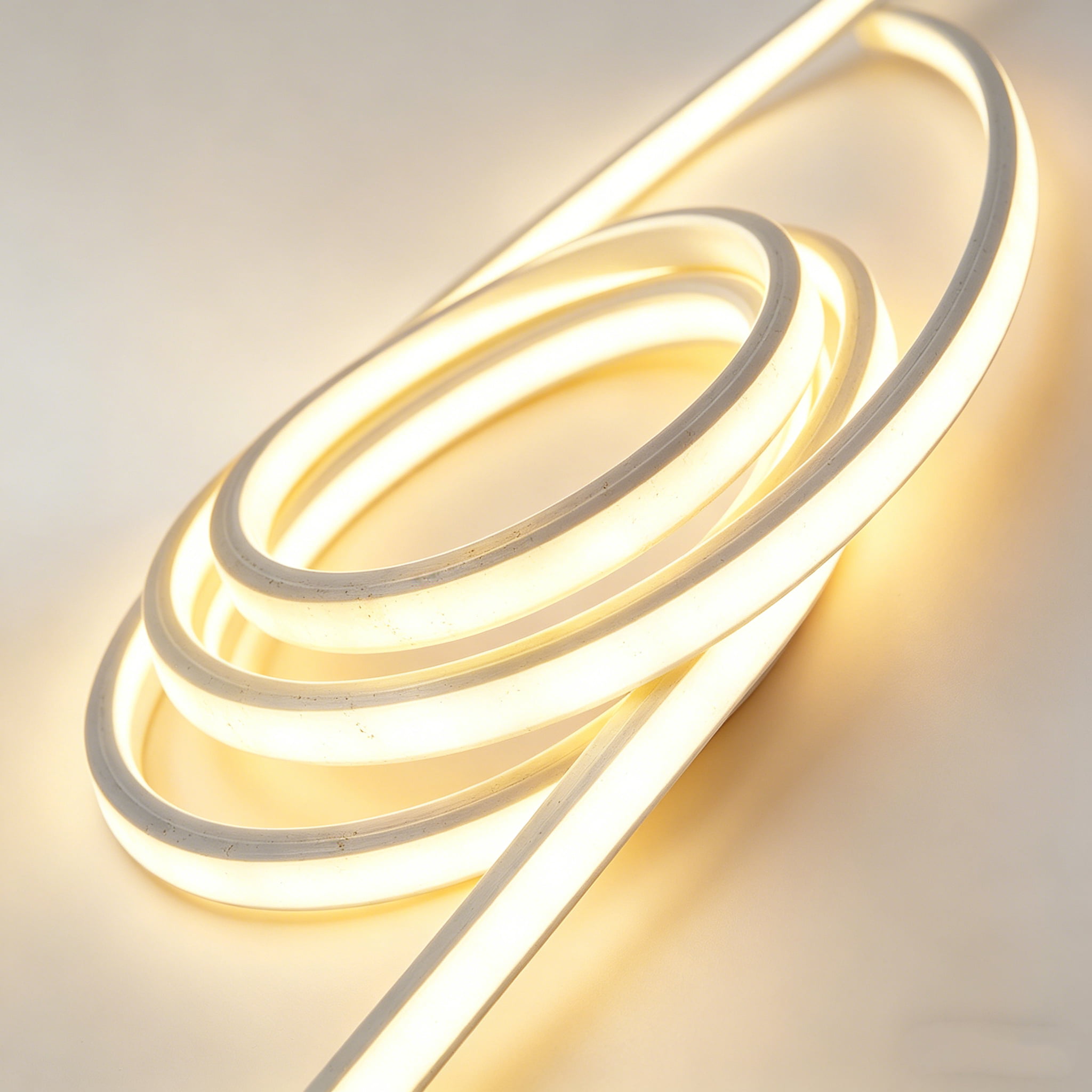
Here's the practical approach we use at Shenzhen Alister Technology. When a client orders silicone neon flex, we don't just record the model number. We document everything that matters.
First, we lock the LED chip source. We specify the exact chip manufacturer and bin code. Not just "SMD2835" but "Epistar ES-2835-CW-80-F3" with specific flux and voltage bins. This prevents substitution with cheaper alternatives. When you reorder six months later, you get chips from the same production line with identical performance characteristics.
Second, we specify the silicone material system. We don't just say "food-grade silicone." We document the exact supplier, the molecular weight range, the UV stabilizer package, and the compression set specifications10. This matters enormously for outdoor applications. Cheap silicone yellows and hardens within months. High-molecular-weight silicone with proper UV inhibitors maintains flexibility and clarity for five-plus years.
Third, we implement batch verification protocols. When you place a repeat order, we run comparison tests against samples from your previous batch. We measure color temperature deviation. We check brightness uniformity. We verify that the new batch matches the original within acceptable tolerances. If something shifts, we catch it before shipping.
This approach costs slightly more upfront. It requires better documentation systems. It demands closer relationships with component suppliers. But it eliminates the nightmare scenario where your second order doesn't match your first order.
| Control Point | Specification Required | Prevents |
|---|---|---|
| LED Chip | Manufacturer, model, bin code | Brightness variation, color shift |
| Phosphor System | Supplier, coating thickness, CRI spec | Color temperature drift, aging differences |
| Silicone Material | Molecular weight, UV package, shore hardness | Yellowing, hardening, cracking |
| Manufacturing Process | Extrusion temperature, curing time, QC checkpoints | Dimensional variation, internal voids |
What material specifications actually matter for long-term performance?
You secured your supply chain. You know exactly where your components come from. Now you need to understand which specifications actually predict real-world performance.
Material system consistency determines LED longevity more than individual component quality. Focus on three critical parameters: LED chip thermal management11t](https://arxiv.org/pdf/2109.05900)%%%FOOTNOTE_REF_12%%%, phosphor degradation resistance13, and silicone material aging characteristics14. These factors interact to determine whether your installation lasts six months or six years.
Let me explain what actually kills LED installations prematurely. It's rarely the LED chip itself. Modern LED chips last 50,000 hours or more under proper conditions. The failure almost always comes from the materials surrounding the chip.
Thermal management determines everything. LEDs generate heat. If that heat cannot escape efficiently, the junction temperature rises. Higher junction temperatures accelerate phosphor degradation. They cause silicone yellowing. They reduce light output. Poor thermal design creates a death spiral where rising temperatures accelerate all aging mechanisms simultaneously.
We use high-thermal-conductivity aluminum substrates in our silicone neon flex. The aluminum pulls heat away from the LED chips. The thin silicone extrusion allows heat to radiate into the surrounding air. This keeps junction temperatures below 80°C even in direct sunlight. Compare this to cheaper products using thick silicone with poor thermal design where junction temperatures exceed 100°C. That 20-degree difference cuts lifespan in half.
Phosphor degradation causes color shift. The phosphor coating converts blue LED light into white light. Over time, the phosphor degrades. Cheaper phosphor systems degrade faster. You see this as yellowing or color temperature shift15. High-quality phosphor systems use rare-earth materials with protective coatings. They maintain color consistency for 50,000+ hours. Cheap alternatives show visible color shift after 10,000 hours.
Silicone aging determines outdoor survival. Standard silicone yellows under UV exposure16. It becomes brittle in cold weather. It softens and deforms in hot weather. We use high-molecular-weight silicone with UV stabilizers and anti-oxidation packages. This material maintains flexibility from -40°C to +60°C. It resists yellowing for five-plus years of continuous outdoor exposure. Cheaper alternatives fail within 12-18 months.
The critical insight: these factors interact. Poor thermal management12 accelerates phosphor degradation. Degraded phosphor generates more heat. Increased heat accelerates silicone aging. You cannot optimize one factor in isolation. You need a complete material system designed to work together.
| Material Parameter | Poor Specification | Professional Specification | Performance Impact |
|---|---|---|---|
| LED Thermal Resistance | >15°C/W | <10°C/W | Junction temp, lifespan |
| Phosphor System | Standard coating | Rare-earth + protective layer | Color stability, CRI maintenance |
| Silicone Shore Hardness | 60A-70A | 50A-60A | Flexibility, installation ease |
| UV Stabilizer Content | <0.5% | >2.0% | Yellowing resistance, outdoor life |
| Compression Set (22h@70°C) | >25% | <15% | Shape retention, seal integrity |
Conclusion
LED manufacturing location17 matters less than supply chain consistency. Lock your component sources, specify complete material systems, and verify batch-to-batch consistency. This approach prevents the common failure mode where your second order doesn't match your first order.
Explore the global landscape of LED manufacturing to understand production capabilities and regional strengths. ↩
Learn about the importance of supply chain control to ensure consistent LED quality across orders. ↩
Find out about key phosphor suppliers and how they influence LED color rendering and longevity. ↩
Explore the different silicone materials used in LEDs and their effects on performance and durability. ↩
Discover the advantages of high-performance LED chips and why they matter for your projects. ↩
Explore the various specialized applications of LEDs and how they differ from general lighting. ↩
Discover how supply chain drift affects LED performance and what you can do to mitigate it. ↩
Understand the concept of supply chain locking and how it can ensure consistency in LED orders. ↩
Learn how to verify batch consistency in LED orders to avoid performance discrepancies. ↩
Explore the importance of compression set specifications in ensuring the integrity of silicone materials. ↩
Discover the significance of thermal management in LED performance and longevity. ↩
Understand the critical role of thermal management in extending the lifespan of LED installations. ↩
Explore how phosphor degradation resistance affects LED color stability and lifespan. ↩
Learn about the aging characteristics of silicone materials and their impact on outdoor LED performance. ↩
Discover the factors that lead to color temperature shifts in LED lighting and how to prevent them. ↩
Learn about the effects of UV exposure on silicone materials and how to choose the right ones. ↩
Explore the relationship between LED manufacturing location and product quality to make informed sourcing decisions. ↩