

I learned this the hard way. A client called me at midnight. Their outdoor installation was failing. Half the lights were dim. Some connectors were melting. Water was seeping into junction points. They had bought "quality components" from different suppliers. Each piece tested fine individually. But together? Total disaster. The real problem was not about low voltage safety. It was about system compatibility1.
Low voltage LED systems2 fail when components don't match as a complete system. You need matched power supplies3, strips, connectors, and sealing—not just good individual parts. Without proper system design4, even premium components will cause voltage drops5, overheating, and water ingress6 within months.
I spent years fixing these problems. Now I help businesses avoid them entirely. Let me show you why treating this as a system—not a shopping list—saves you from expensive failures.
Why Do "Good Quality" Components Still Fail Together?
I see this pattern repeat. A contractor buys top-rated power supplies. Premium LED strips. Name-brand connectors. Everything works on the bench. Then they install it. Three months later, the callbacks start. Lights flickering. Uneven brightness. Burnt smell from junction boxes.
Component mismatch creates three critical failure points: voltage drop from improper power calculation, thermal failure7 from undersized connections, and water ingress6 from incomplete sealing strategies8. Each failure compounds the others, accelerating system collapse.
The Three Ways Systems Fail (Even With Good Parts)
I documented every failure mode I encountered. They fall into three categories.
Power System Failures:
The math doesn't lie. You need to calculate total load, wire gauge, and run length together. I watched an installer use 18AWG wire for a 30-foot run pulling 8 amps. The voltage drop hit 15%. The far end of the strip was visibly dimmer. The wire insulation felt warm. That's a fire waiting to happen.
| Run Length | Wire Gauge | Max Current | Voltage Drop |
|---|---|---|---|
| 0-15 feet | 18AWG | 5A | <5% |
| 15-30 feet | 16AWG | 8A | <8% |
| 30-50 feet | 14AWG | 12A | <10% |
| 50+ feet | 12AWG | 15A+ | Requires calculation |
You must keep voltage drop under 10%. Beyond that, you damage LEDs and shorten lifespan. Long runs need segmented power injection. One power supply at the start won't cut it.
Thermal Failures:
Connectors fail from heat before anything else. I pulled apart a melted connector last month. The installer chose connectors rated for the exact amperage. No safety margin. Under full load, resistance creates heat. Heat accelerates oxidation. Oxidation increases resistance. More heat. The death spiral.
You need 30% current headroom minimum. If your strip pulls 6 amps, use connectors rated for 8+ amps. Also consider contact area. Larger contact surfaces distribute heat better. Spring-loaded connectors maintain pressure as materials expand and contract.
Sealing System Failures:
Here's what nobody tells you. You can't seal individual components and call it waterproof. Water finds the weakest point. I saw a project where they sealed the strip ends perfectly. Used IP68-rated connectors. But they didn't seal where the connector met the strip housing. Water wicked along the wire into the strip. Six months later, entire sections were dead.
You need continuous sealing architecture. Every junction point needs the same protection level. Use silicone potting compound at wire entry points. Heat-shrink tubing over solder joints. And test the complete assembly, not individual pieces.
What Makes a "System-Level" Approach Different?
I changed how I specify projects. I stopped picking best-in-class components. I started designing matched systems. The difference shows in failure rates. My system-designed installations have under 2% failure rates over five years. Industry average sits around 15-20%.
A system approach means selecting components based on how they interact, not individual specifications. This requires calculating cumulative voltage drop9, thermal load across all connection points, and unified environmental protection across the entire installation path.
How I Design Complete Systems Now
I follow a specific sequence. Each step builds on the previous one.
Step 1: Calculate System Load First
I map the entire installation. Total strip length. Total wattage. Maximum run between power injection points. Then I calculate voltage drop for each segment. If any segment exceeds 8%, I redesign the power distribution.
I use this formula: Voltage Drop = (2 × Length × Current × Resistance) / 1000
For 12V systems, keep drop under 1.2V. For 24V, under 2.4V. Higher voltage systems tolerate longer runs better. That's why I prefer 24V for anything over 15 feet.
Step 2: Select Connectors for Thermal Performance
I choose connectors based on heat dissipation, not just amperage rating. Brass connectors with nickel plating work better than pure copper for outdoor applications. The plating prevents oxidation. I also look at contact force specifications. You want 30-50N of contact pressure for reliable long-term connection.
Test connectors under load before specifying. Run them at 80% rated current for 4 hours. Measure temperature rise. Anything over 40°C above ambient needs uprating or redesign.
Step 3: Design Unified Sealing Strategy
I treat the entire run as one sealed unit. Here's my standard approach:
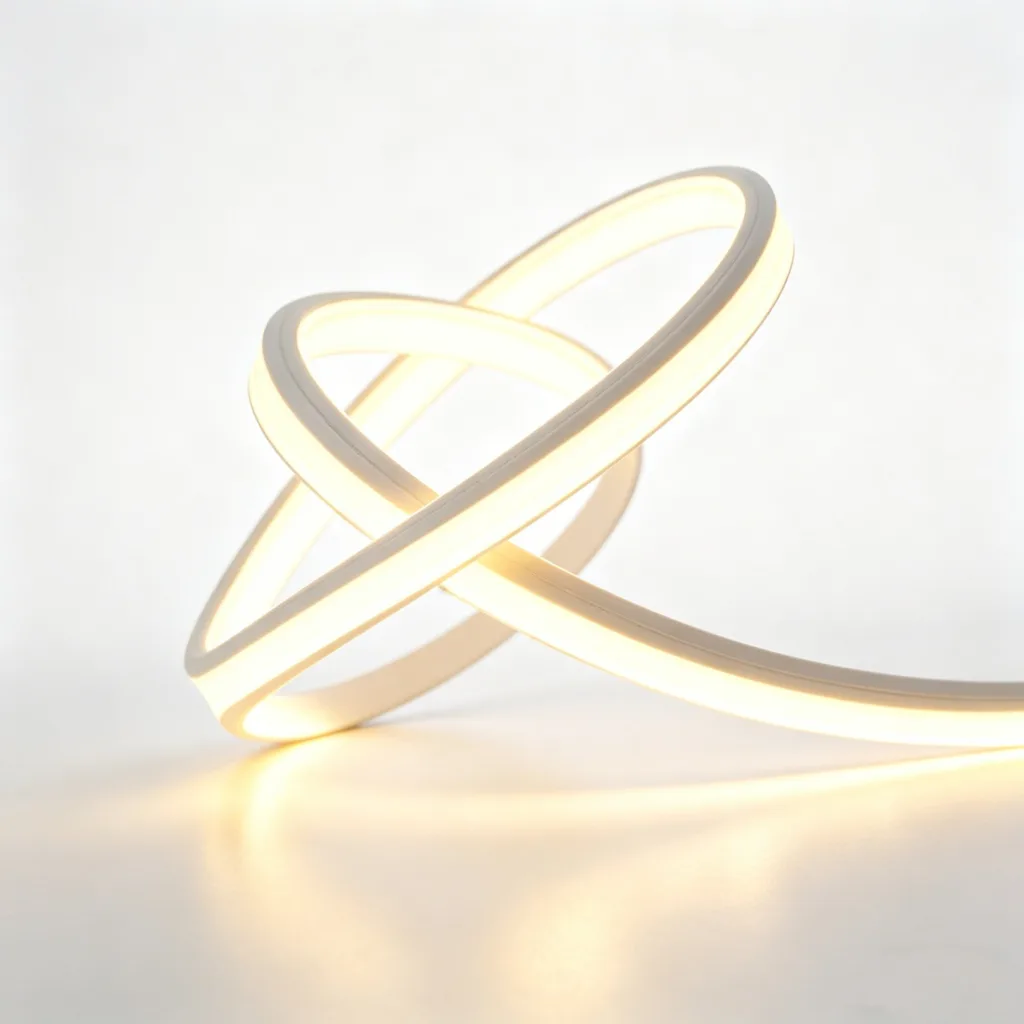
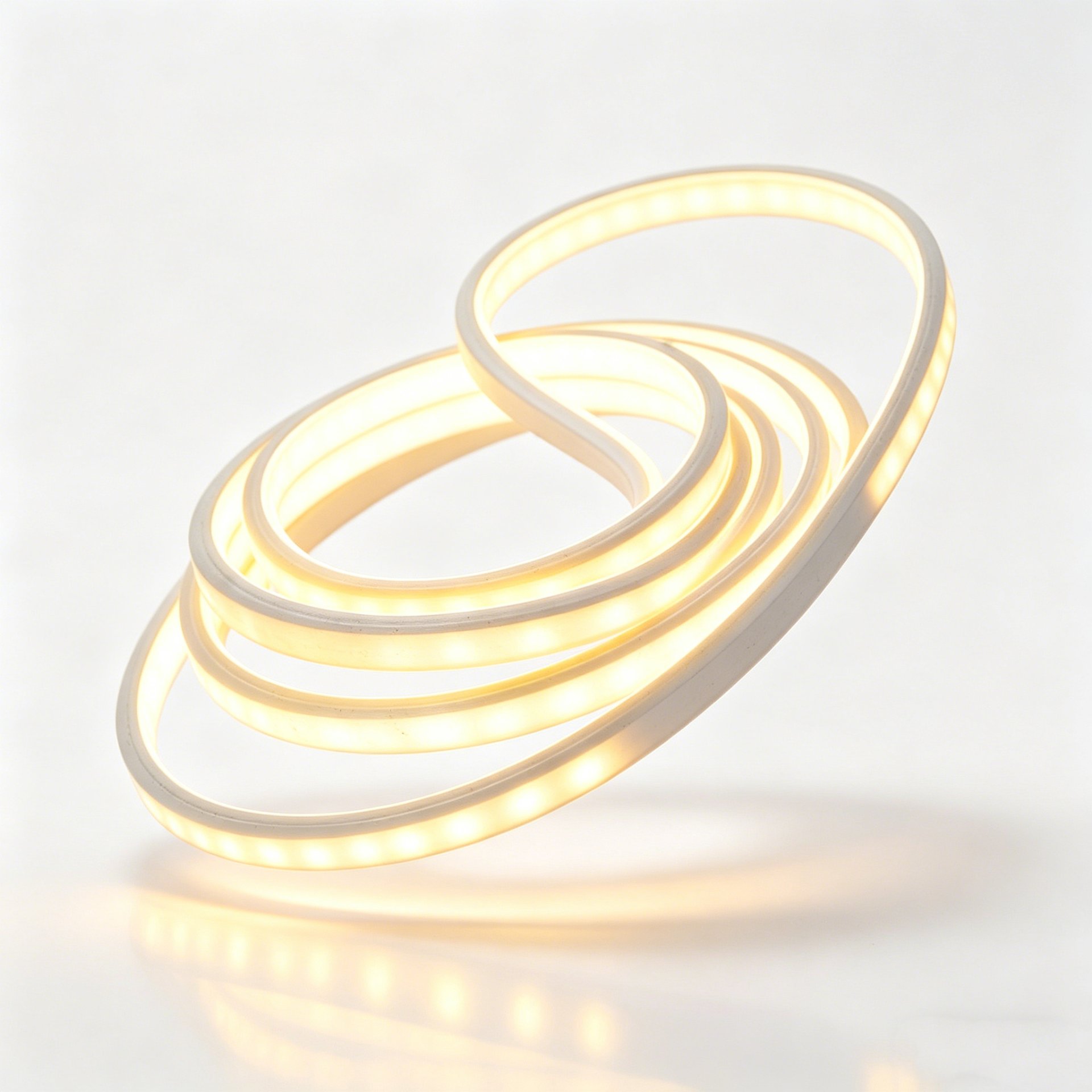
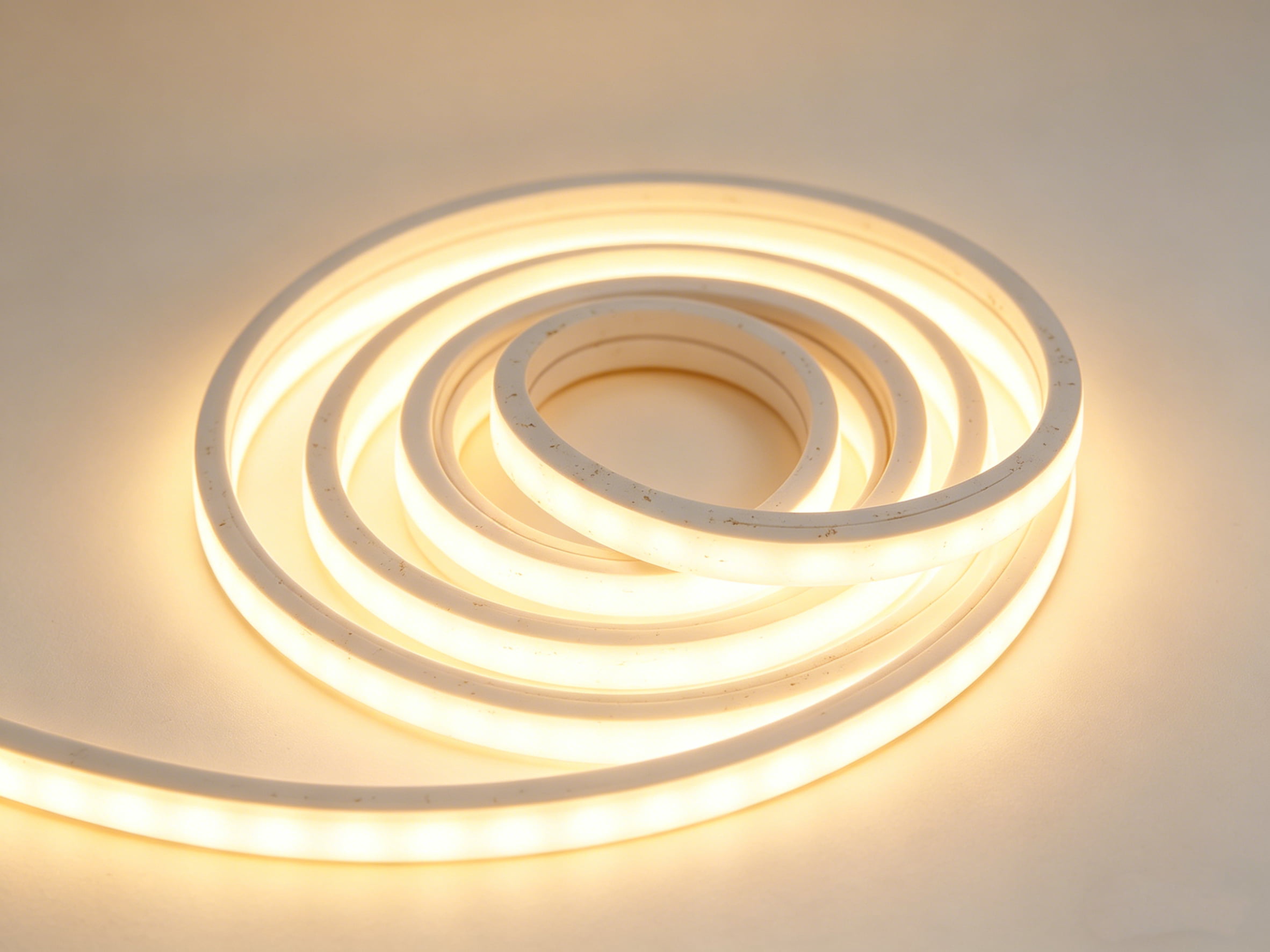
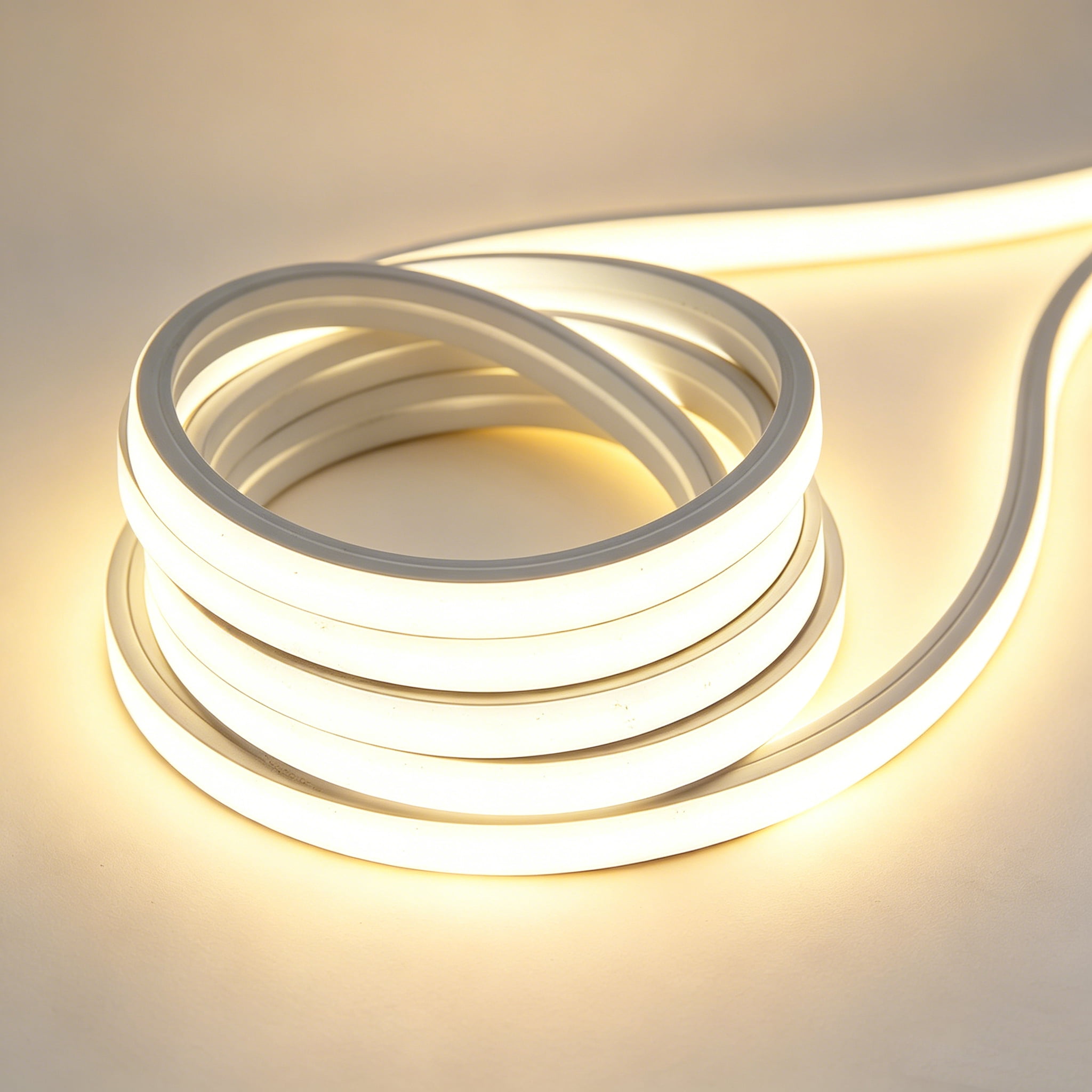
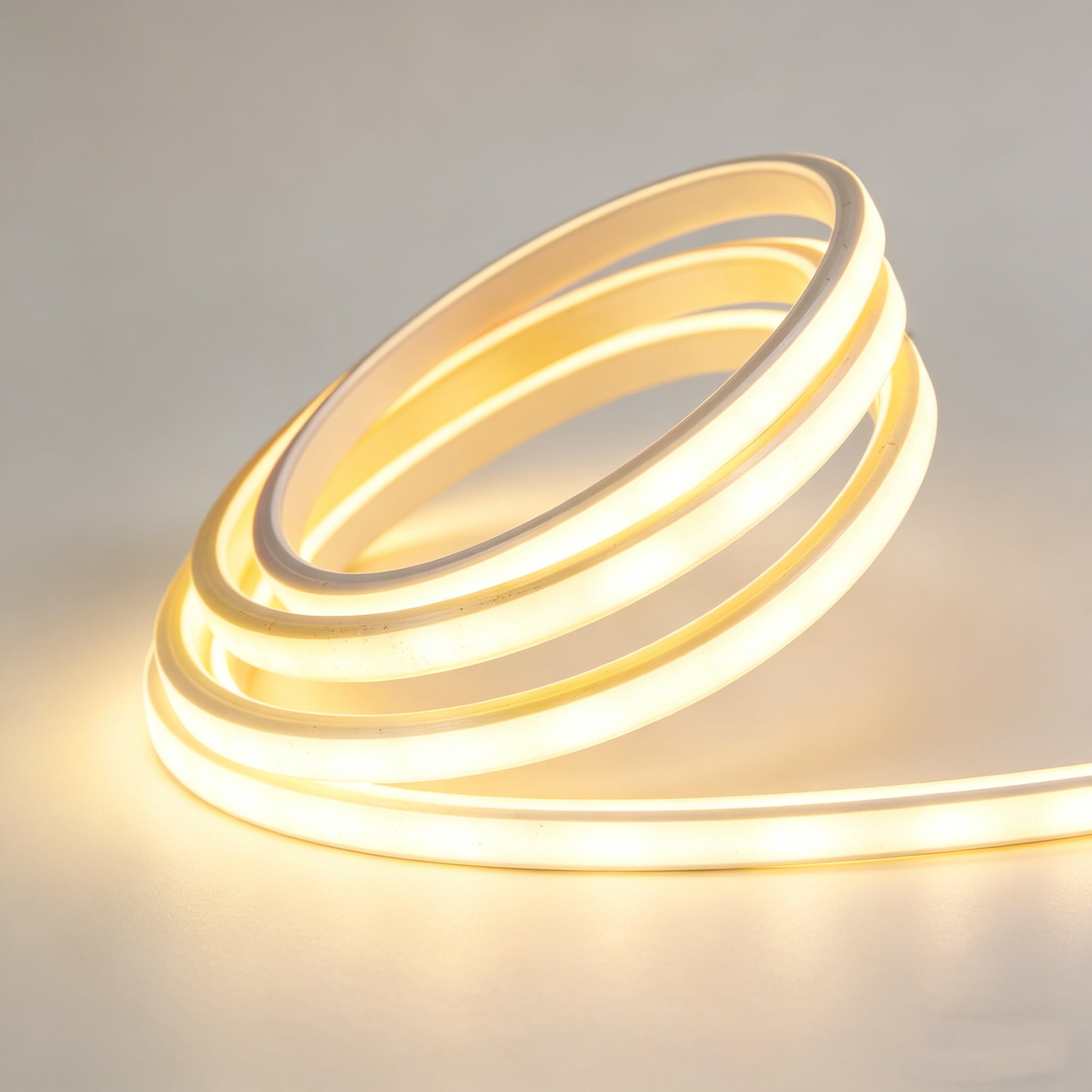
- Silicone neon flex body (inherently waterproof)
- Heat-shrink tubing with adhesive lining at all wire exits
- Silicone potting compound in all connector housings
- IP68-rated cable glands at enclosure entries
- Continuous gasket seal where strips mount to channels
The key is material compatibility. All sealants must be silicone-based or polyurethane-based. Don't mix chemistries. Different materials have different thermal expansion rates. They'll separate under temperature cycling.
Step 4: Run Full-System Aging Tests
Bench testing individual components tells you nothing. I run complete assemblies10 through accelerated aging. Full load for 1000 hours minimum. Temperature cycling from -20°C to +60°C. Salt spray for outdoor installations. UV exposure for anything that sees sunlight.
I want to see failure modes before installation. A connector that works fine for 100 hours might fail at 500 hours. That's the difference between a successful project and a warranty nightmare.
Why Single-Source System Suppliers Save You Money
I used to multi-source everything. I thought it gave me leverage. Better pricing. More options. I was wrong. The hidden costs killed me. Mismatched specifications. Incompatible connection systems. Finger-pointing when things failed.
Single-source suppliers provide matched component ecosystems with verified compatibility, unified warranties, and streamlined technical support. The 10-15% price premium pays for itself through reduced installation time11, lower failure rates, and simplified troubleshooting.
The Real Cost Comparison
I tracked costs over two years. Here's what I found.
Multi-Source Approach:
- Component cost: $8,500
- Installation time: 120 hours (troubleshooting compatibility issues)
- Callbacks in year 1: 8 (different vendors blamed each other)
- Replacement parts: $1,200
- Labor for repairs: 32 hours
- Total cost: $15,700
Single-Source System:
- Component cost: $9,500
- Installation time: 80 hours (plug-and-play compatibility)
- Callbacks in year 1: 1 (handled immediately by vendor)
- Replacement parts: $150
- Labor for repairs: 4 hours
- Total cost: $11,650
The single-source approach cost 26% less overall. And that doesn't count the reputation damage from repeated callbacks.
What to Look for in a System Supplier
Not all "system suppliers" actually provide systems. Some just bundle components. Here's what I verify:
They must manufacture or tightly control the core components. Power supplies, LED strips, and connectors should come from the same engineering team. This ensures matched specifications.
They need application engineers who can calculate your specific installation. Cookie-cutter solutions don't work. Every project has unique voltage drop profiles and environmental challenges.
They should provide complete technical documentation12. Wiring diagrams. Load calculations. Thermal derating curves. Installation procedures. If they can't give you this, they're not thinking systemically.
Look for extended warranties13 that cover the complete installation. If they warranty components separately, that's a red flag. System suppliers stand behind how everything works together.
How We Build Complete LED Systems at Alister
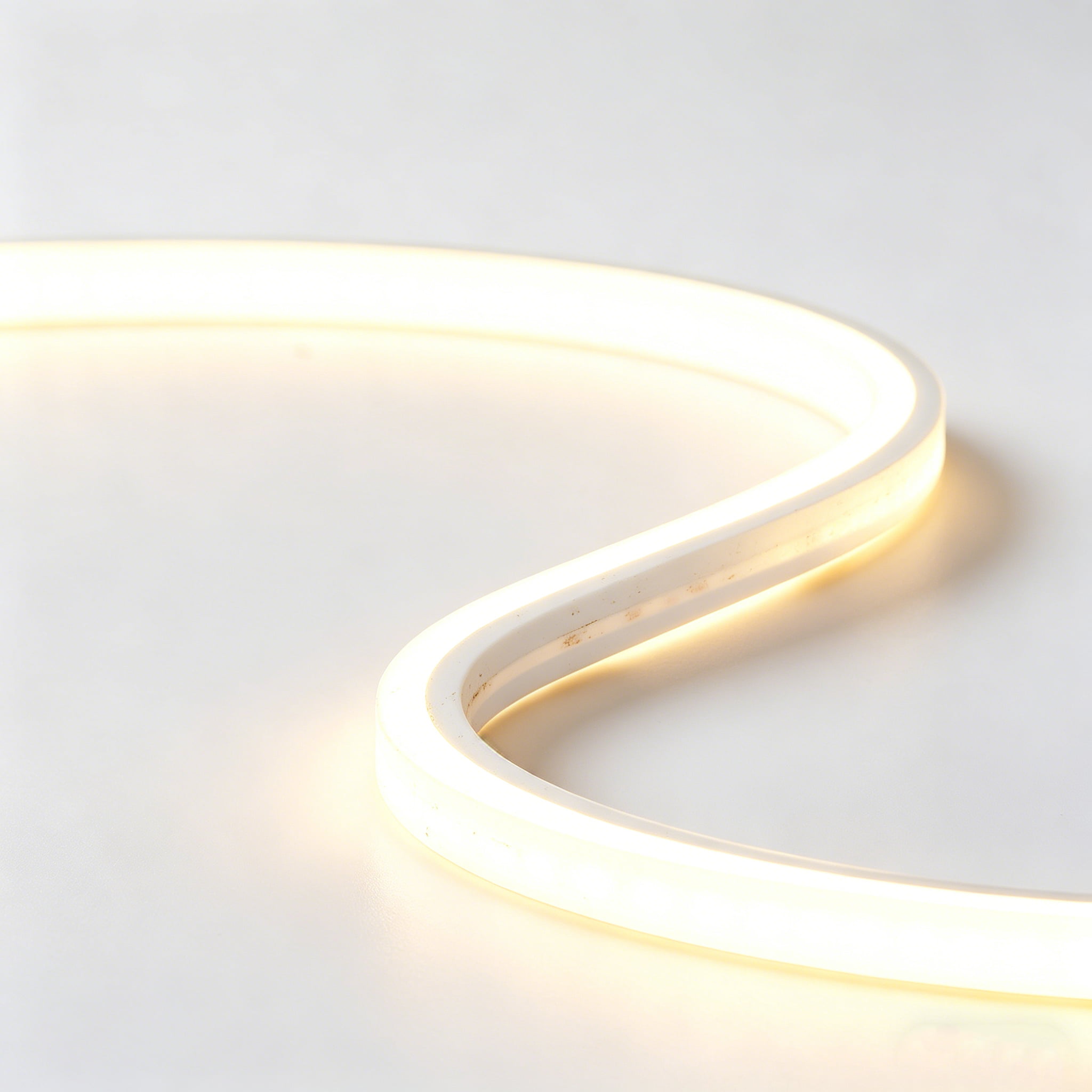
I built our manufacturing process around system compatibility1. We don't just make silicone neon flex. We engineer complete lighting ecosystems.
Our system approach integrates food-grade silicone extrusion with matched power delivery, thermal-optimized connectors, and environmental sealing rated for -40°C to +60°C operation. Every component undergoes 1000-hour aging tests as part of complete assemblies10, not in isolation.
Our Four-Layer System Integration
We validate compatibility at four levels.
Material Layer:
We use 100% food-grade silicone for all flex components. This isn't just about safety. Food-grade silicone has superior UV resistance and lower compression set. It maintains sealing force through temperature cycles. We compound it with anti-yellowing additives. Five-year outdoor installations show less than 5% color shift.
Electrical Layer:
We match LED strip current density to connector thermal capacity. Our standard 12V strips pull 4.8A per 5 meters. We pair them with connectors rated for 7A continuous. That 30% margin keeps junction temperatures under 50°C even at 40°C ambient.
We also calculate cumulative voltage drop9 for standard installation patterns. Our technical sheets show maximum run lengths for different wire gauges. No guesswork needed.
Mechanical Layer:
Our connector system uses spring-loaded brass contacts with 40N contact force. The connector housing integrates directly into the silicone extrusion profile. This creates a continuous seal without separate gaskets. Fewer interfaces mean fewer failure points.
We test mechanical stability through 500 thermal cycles. Connectors must maintain electrical contact and water seal across the full temperature range.
Environmental Layer:
We seal complete assemblies10, not components. After connector installation, we pot the junction area with UV-stable silicone. We heat-shrink over wire exits. We add IP68-rated cable glands at power entry points.
Then we test the complete assembly. Submersion testing at 1.5 meters depth for 72 hours. Salt spray per ASTM B117. UV exposure equivalent to 5 years Florida sunlight. The system passes or we redesign.
Custom System Design Services
We don't sell catalog products. We engineer solutions. When you contact us, we start with your installation requirements. Total length. Environmental exposure. Mounting method. Control requirements. Aesthetic goals.
We calculate voltage drop for your specific layout. We recommend power injection points. We specify wire gauges and connector types. We provide CAD drawings showing exact component placement.
For complex projects, we build prototype assemblies14. You test them in your actual environment. We refine based on your feedback. Only then do we move to production.
This process takes longer than buying off-the-shelf. But it eliminates the expensive trial-and-error phase. You install once, correctly, and move on to the next project.
Conclusion
Low voltage LED systems2 fail when you treat them as component collections instead of integrated systems. Design for compatibility first, then select components that work together across electrical, thermal, and environmental requirements.
Learn how compatibility can enhance the longevity and efficiency of your LED systems. ↩
Understanding the common issues can help you avoid costly mistakes in your LED installations. ↩
Learn how matched power supplies can prevent issues and ensure optimal performance. ↩
A well-thought-out design can significantly reduce failure rates and enhance system reliability. ↩
Discover the factors leading to voltage drops and how to mitigate them for better performance. ↩
Explore the impact of water ingress and how to prevent it in your installations. ↩
Identifying thermal failure early can save you from expensive repairs and replacements. ↩
Effective sealing strategies are essential for protecting your systems from environmental damage. ↩
Calculating voltage drop accurately is key to ensuring your LED systems function properly. ↩
Testing complete assemblies ensures that all components work together effectively, reducing failures. ↩
Reducing installation time can lead to cost savings and increased project efficiency. ↩
Comprehensive documentation is vital for successful installations and future troubleshooting. ↩
Extended warranties can provide peace of mind and protect your investment in LED technology. ↩
Prototyping can help identify potential issues before full-scale production, saving time and money. ↩