
You're searching for neon lighting. You open ten supplier websites. Every product looks identical. Same glow. Same price range. Same promises. How do you choose? Most buyers focus on cost first. But I've learned that's the wrong starting point.
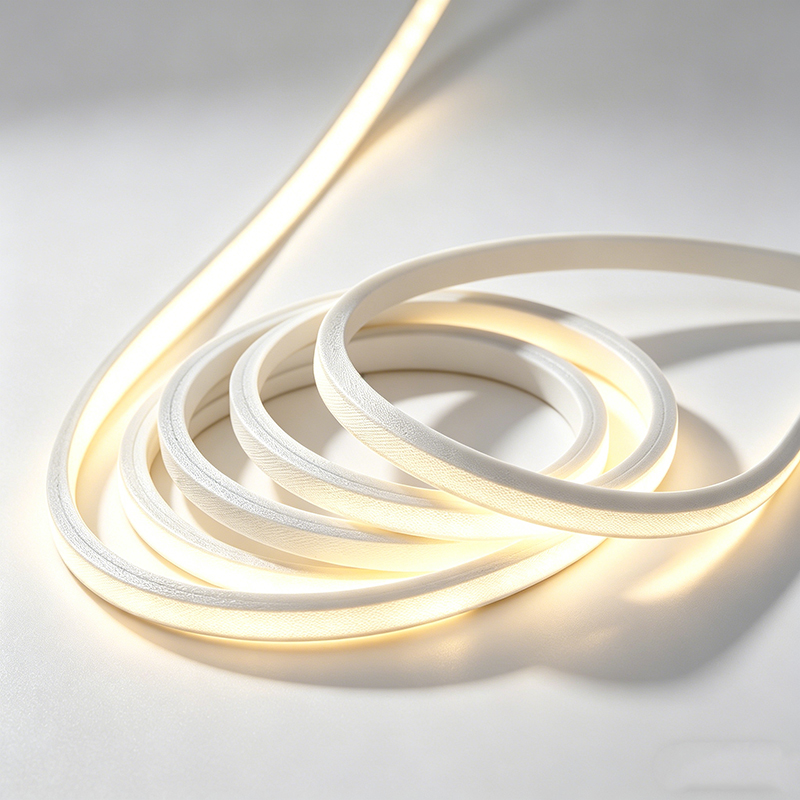
The real question is: does the light stay consistent from start to finish? This is what separates professional-grade silicone neon flex from cheap alternatives. One delivers smooth, dotless illumination. The other creates visible gaps, uneven brightness, and damaged brand perception.
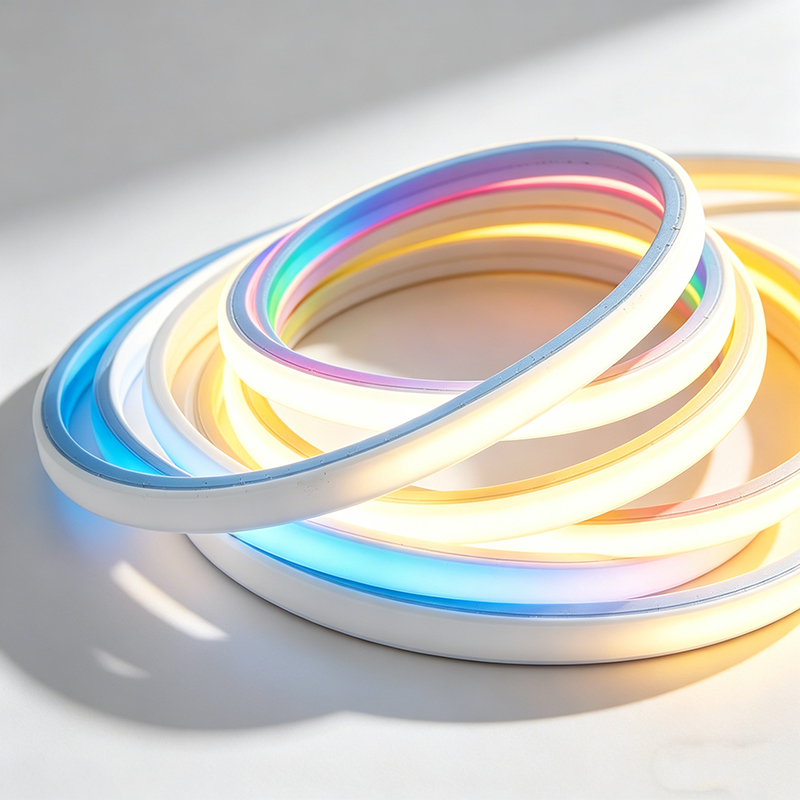
I've worked with dozens of wholesale distributors, contractors, and lighting designers. And I've seen the same mistake repeated: they choose based on samples, then discover inconsistencies in production batches. Let me show you what really matters.
What Makes Light Consistency So Critical?
Your customer doesn't care about your supplier's certifications. They care about what they see. And what they see first is light quality. If your neon signage has visible LED dots, dark spots, or uneven color, your entire project looks low-end—even if you spent top dollar on design.
Consistency means uniform brightness from end to end, no matter the installation angle, length, or operating temperature. This is the standard we engineer into every meter of silicone neon flex we manufacture.
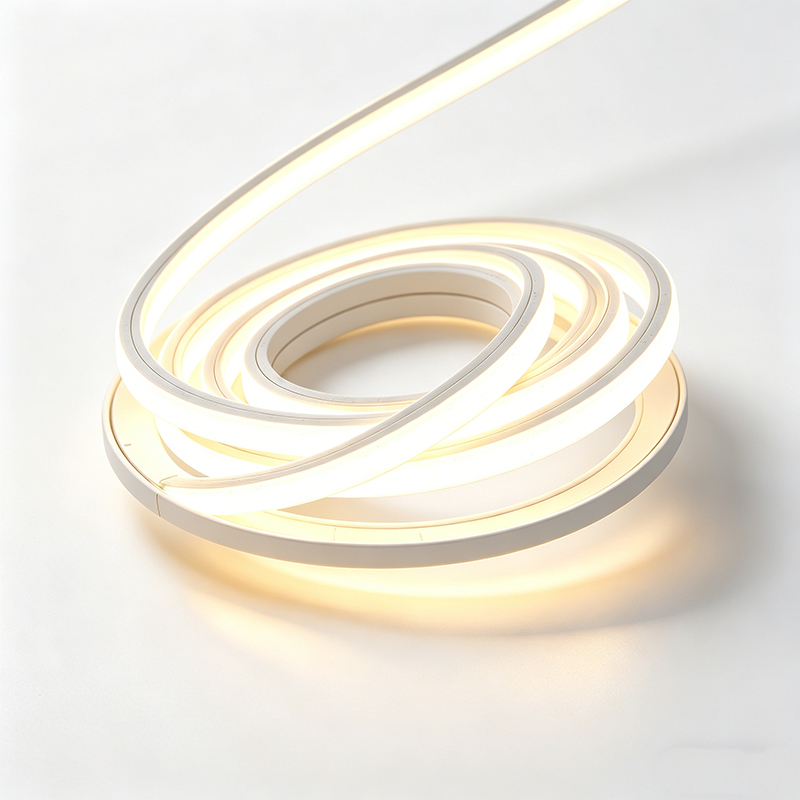
Here's what happens when consistency fails. I once received a call from a hotel contractor in Dubai. They installed 200 meters of neon lighting around a rooftop bar. Everything looked perfect during the day. But when the lights turned on at night, guests noticed uneven brightness. Some sections glowed brightly. Others looked dim. The hotel manager demanded a replacement within two weeks. The contractor had to eat the cost. That's a $15,000 lesson in why material quality and production control matter more than initial price.
Let me break down the three technical factors that determine whether your lighting delivers consistent performance or becomes a maintenance headache.
Factor 1: Silicone Material Grade and Light Diffusion Design
Not all silicone is equal. Low-grade silicone yellows under UV exposure. It cracks in cold weather. And it doesn't diffuse light evenly. We use 100% food-grade, high-molecular silicone. This material resists UV degradation, maintains flexibility from -40°C to +60°C, and includes engineered diffusion properties that scatter LED output uniformly across the entire cross-section.
The diffusion design itself is critical. If the silicone wall is too thin, you see individual LED dots. Too thick, and you lose brightness. Our extrusion process controls wall thickness to within 0.1mm tolerance, ensuring that every centimeter delivers identical visual output.
| Material Factor | Low-Grade Silicone | High-Grade Silicone (Our Standard) |
|---|---|---|
| UV Resistance | Yellows in 6-12 months | No yellowing after 5+ years |
| Temperature Range | -10°C to +40°C | -40°C to +60°C |
| Light Diffusion | Visible LED dots | Smooth, dotless glow |
| Flexibility | Cracks under stress | Maintains elasticity |
| Lifespan | 1-2 years | 5+ years |
Factor 2: Mold Library and Custom Engineering Capability
This is where most suppliers fail. They use generic molds for all projects. But a retail storefront requires different light distribution than a hotel façade. A top-view installation needs different optical geometry than a side-view sign.
We maintain thousands of molds in-house. This isn't just inventory—it's engineering flexibility. When you send us your project specifications, we don't force your design into a standard product. We match the exact mold profile, LED density, and viewing angle to your application. Need a 270° viewing angle for corner installations? We have a mold for that. Need ultra-slim 6mm profiles for logo lettering? We have that too.
This capability matters because it eliminates the "close enough" compromise. Your lighting performs exactly as intended, in your specific environment, under your exact installation conditions.
Factor 3: Production Process Control and Batch Consistency
Even the best materials and molds fail without strict process control. Silicone extrusion is sensitive to temperature, pulling speed, and curing time. If any variable shifts during production, your lighting consistency shifts too.
Our quality control process includes three checkpoints:
Pre-Production Testing: We run sample batches and measure brightness uniformity using a spectrophotometer. If any section deviates more than 3% from target luminance, we don't proceed.
In-Line Monitoring: Every meter of extruded silicone passes through automated optical sensors that detect wall thickness variations, air bubbles, and surface defects in real-time.
Final Inspection: Before shipment, we power-test random samples from each production batch for 72 continuous hours. We verify color temperature consistency (within 100K tolerance), waterproof integrity (IP68 standard), and mechanical flexibility.
This is why our clients report zero batch-to-batch variation. When you order 1,000 meters in January and another 1,000 meters in June, the lighting looks identical. That's manufacturing discipline, not luck.
How Do You Know if Your Current Supplier Meets This Standard?
Most suppliers won't show you their extrusion lines. They won't discuss material sourcing. And they definitely won't share quality control data. But you can test them with three simple questions:
Question 1: What is the luminance uniformity rating across a 5-meter length? If they can't provide a percentage (we target <3% deviation), they're not measuring it.
Question 2: How many mold profiles do you stock, and can I see the optical simulation for my specific viewing angle? If they offer "standard sizes only," expect compromises.
Question 3: What is your batch-to-batch color consistency tolerance? We hold ±100K on CCT. Anything wider means visible color shifts between orders.
If your supplier dodges these questions, you're buying commodity products, not engineered solutions.
What Should You Prioritize When Evaluating Samples?
Samples lie. I don't mean suppliers intentionally deceive you—I mean a 50cm sample under controlled lighting doesn't reveal what happens during a 50-meter installation in direct sunlight. Here's how to test samples properly:
Test 1: Extended Length Performance Request a 3-meter sample, not 50cm. Power it for 24 hours. Walk around it from multiple angles. Do you see brightness drop-off at the far end? Are there dark spots at connection points? This reveals driver compatibility and voltage drop issues.
Test 2: Outdoor Aging Simulation If your project is outdoor, leave the sample in direct sunlight for two weeks. Check for color shift, surface tackiness, or flexibility loss. Low-grade silicone shows degradation within days.
Test 3: Bend Radius Testing Flex the sample to your tightest installation curve. Quality silicone maintains light output and doesn't crack. Cheap silicone shows stress whitening or separates from the LED strip.
Test 4: Waterproof Integrity Submerge a powered sample in water for 48 hours. If you see water ingress, flickering, or condensation inside the silicone, the IP rating is fake.
I've seen contractors skip these tests and pay later. One client installed 300 meters of "IP68-rated" neon flex in a fountain display. Within two months, water seeped into 40% of the strips. They had to drain the fountain, remove all lighting, and reinstall with properly sealed products. Total cost: $28,000. Proper sample testing would have cost them one afternoon.
Why Custom Solutions Matter More Than Standard Products
Every project has unique requirements. A hotel lobby needs warm white (2700K) with high CRI for accurate color rendering. A nightclub needs RGB dynamic effects with SPI addressable control. A retail façade needs cool white (6500K) with maximum brightness for daytime visibility.
Standard products force you to compromise. Custom engineering delivers exactly what your project demands. Here's what that looks like in practice:
Case 1: Curved Signage with Tight Radius A signage manufacturer needed neon flex that could bend to a 15mm radius without kinking. Standard products crack below 25mm. We developed a specialized silicone formulation with higher elongation properties and reduced the LED strip width to 4mm. Result: smooth curves with zero light distortion.
Case 2: Underwater Pool Lighting A resort contractor needed RGB lighting for a 12-meter-deep pool. Standard IP68 products fail under sustained pressure. We engineered double-sealed end caps with pressure-equalization vents and upgraded to IP69K-rated cable entry. The installation has operated flawlessly for three years.
Case 3: Ultra-Bright Retail Displays A luxury retailer needed window displays visible in direct sunlight. Standard neon flex outputs 80-100 lumens per meter. We customized a high-density LED configuration with enhanced driver output, delivering 180 lumens per meter while maintaining thermal stability.
These aren't "premium upgrades." They're engineering responses to real-world challenges. If your supplier can't modify products for your application, you're limited to generic solutions that might not perform.
What Questions Should You Ask Before Placing an Order?
Most buyers focus on price and lead time. But the wrong questions lead to the wrong supplier. Here are the questions that reveal manufacturing capability:
Manufacturing Questions:
- How many extrusion lines do you operate? (Capacity indicator)
- What is your daily production capacity in meters? (Scalability check)
- Do you extrude silicone in-house or outsource it? (Quality control verification)
Technical Questions:
- What LED brands do you use, and can I specify alternatives? (Component flexibility)
- What is your typical luminance uniformity across 5 meters? (Quality standard)
- Do you provide IES photometric files for lighting design software? (Professional-grade support)
Quality Questions:
- What certifications do your products carry, and can you share test reports? (Compliance proof)
- What is your warranty period, and what does it cover? (Confidence indicator)
- Can you provide client references for similar projects? (Track record verification)
If a supplier hesitates on any of these, they're either hiding limitations or operating as a trading company without manufacturing control.
How Do We Ensure Long-Term Performance?
Product quality starts with material selection, but long-term performance depends on post-sale support. We've structured our service model around three commitments:
Commitment 1: Technical Consultation Before Purchase We don't sell products blindly. Our engineers review your project drawings, ambient conditions, and installation method. We identify potential issues—voltage drop over long runs, thermal management in enclosed spaces, control signal integrity for DMX systems—and recommend solutions before you commit.
Commitment 2: Fast Sampling and Iteration Need a custom color temperature? Non-standard cutting length? Specific mounting clip design? We produce samples within 5-7 days and iterate based on your feedback. Most suppliers require minimum orders for customization. We prototype first, then scale.
Commitment 3: Consistent Batch Production Once you approve a sample, we lock in the specifications. Your production batches will match your approved sample exactly—same brightness, same color, same flexibility. We maintain detailed production records for every order, so repeat orders years later deliver identical products.
This approach eliminates the "sample vs. production mismatch" problem that plagues the industry. What you approve is what you receive, every time.
Why Do Our Clients Keep Coming Back?
We don't compete on price alone. We compete on reliability. Many of our long-term clients came to us after frustrating experiences with cheaper suppliers. Here's what changed for them:
Before: Inconsistent brightness across installations. Frequent rework. Customer complaints. After: Predictable visual results. Fewer site visits. More referrals from satisfied end-users.
Before: Limited product options. Forced compromises on design. After: Custom solutions that match exact specifications. Creative freedom.
Before: Slow response times. Generic technical advice. After: Direct access to engineers. Fast problem-solving.
One distributor told me: "I used to spend 20% of my time handling lighting failures. Now I spend that time growing my business." That's the operational difference reliable manufacturing creates.
Conclusion
Selecting good neon signs and lighting isn't about finding the cheapest supplier. It's about finding a manufacturing partner who understands that your reputation depends on their product quality. Start with light consistency, verify material standards, and demand engineering support. That's how you avoid costly mistakes.