

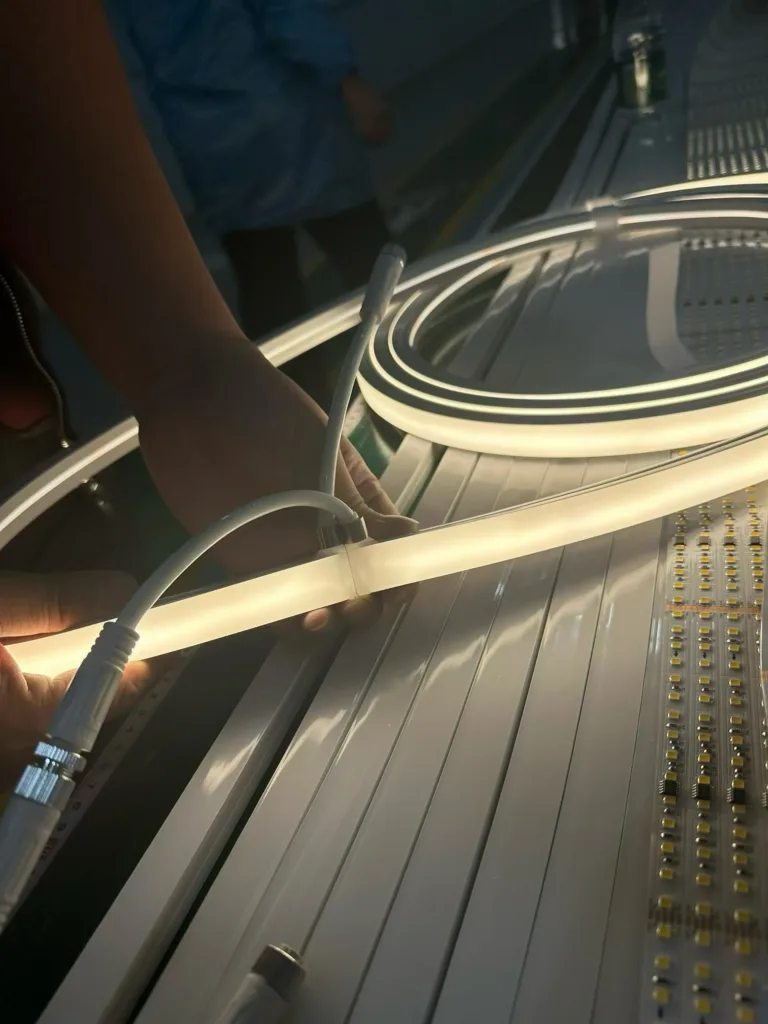
You've probably heard this claim before: "Everything LED-related comes from China." It sounds absolute. But here's the uncomfortable truth most people discover after their first bulk order: origin matters less than manufacturing discipline. When your project lighting fails halfway through installation, the factory location won't be your main concern.
Not all LEDs are made in China—but the majority are, and for reasons that go far beyond cheap labor. China controls the complete LED supply chain, from semiconductor wafers to finished silicone neon flex systems. The real question isn't geographic—it's operational: can your manufacturer deliver consistent quality across 10,000 meters, not just one perfect sample?
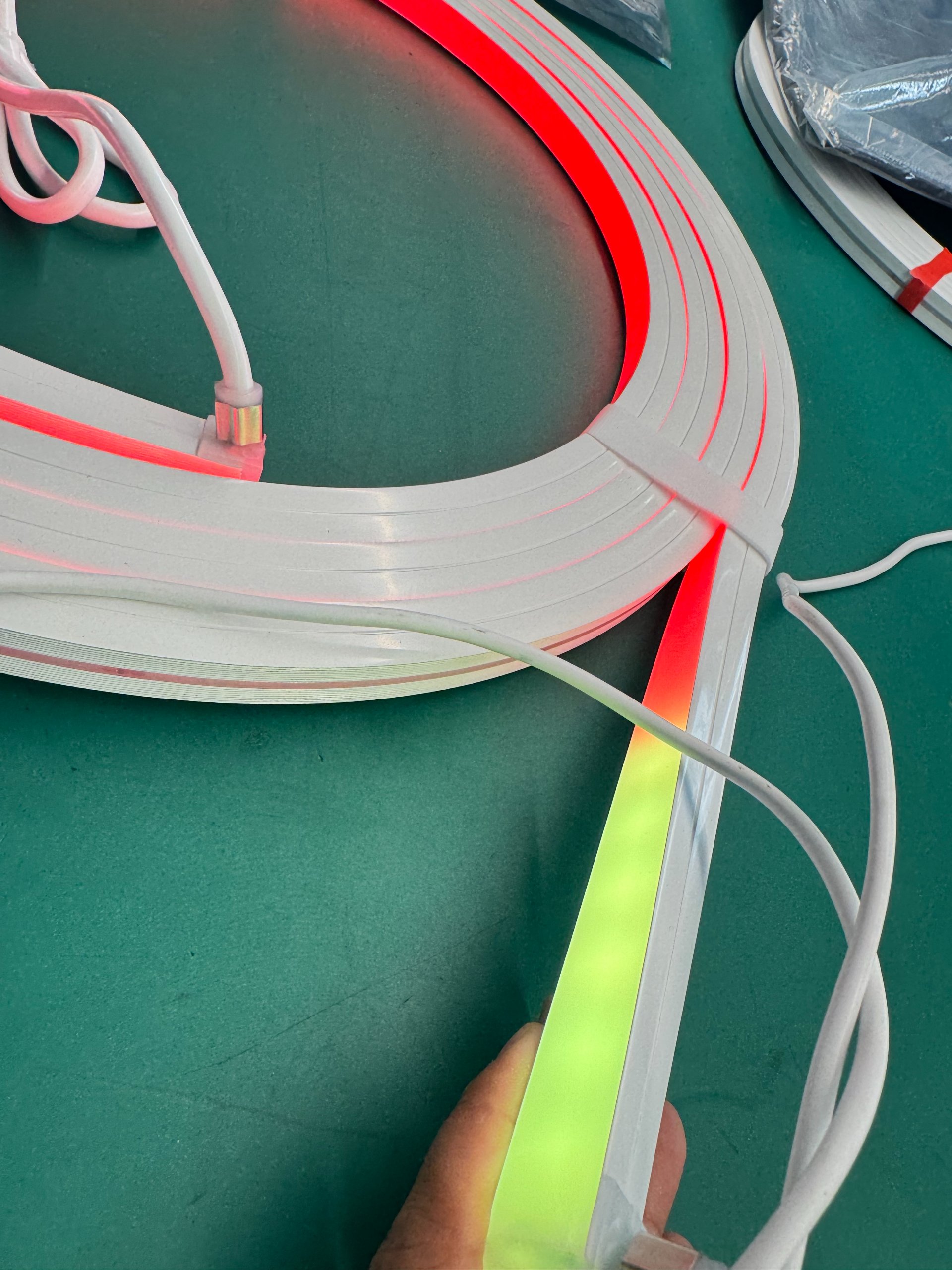
If you've been burned by inconsistent batches or "close enough" color temperatures, you already know why this question matters. Let me walk you through what actually happens inside a serious LED manufacturing operation—and why it changes everything about your purchasing decision.
Why Does China Dominate LED Manufacturing—Is It Just About Price?
Most buyers assume China wins on cost alone. That was true 15 years ago. Today, the advantage is structural. I've seen this firsthand working with international lighting designers who initially tried European suppliers, then switched to us after realizing something critical: vertical integration beats fragmented supply chains every time.
China's LED dominance stems from complete supply chain control—LED chip fabrication, driver electronics, silicone extrusion, and assembly all happen within 50 kilometers in Shenzhen alone. This proximity enables rapid prototyping, real-time quality adjustments, and economies of scale impossible in fragmented manufacturing regions.
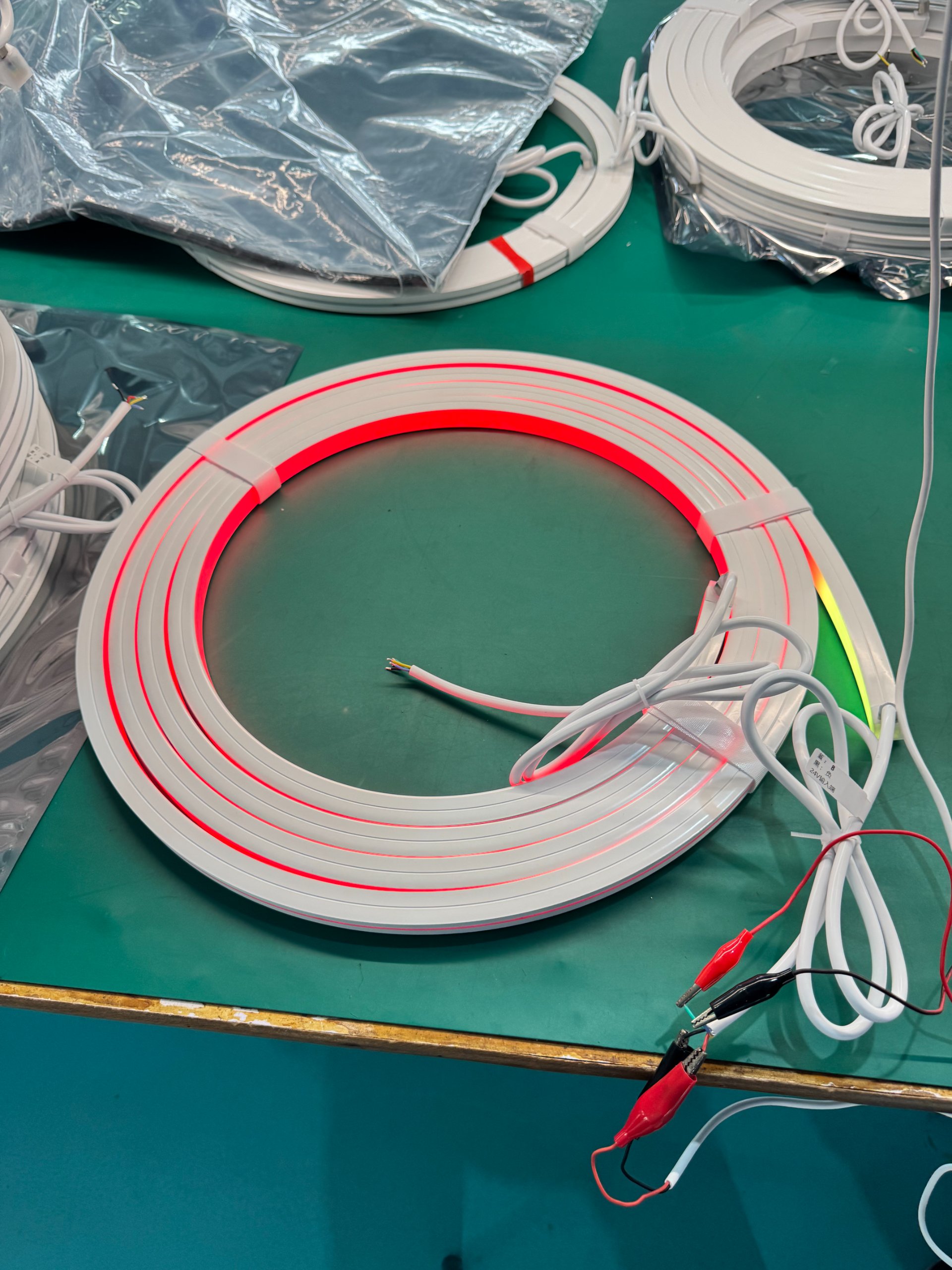
The Hidden Infrastructure Most Buyers Never See
When you order silicone neon flex from us, you're not just buying a product. You're accessing an ecosystem that took 20+ years to build. Here's what actually happens behind your order:
| Supply Chain Stage | China Advantage | Impact on Your Project |
|---|---|---|
| LED Chip Production | Domestic wafer foundries (80%+ global capacity) | Lower costs, faster iteration on custom CCTs |
| Silicone Compounding | Food-grade silicone producers within 2-hour drive | Same-day material adjustments for anti-UV properties |
| Extrusion Tooling | 10,000+ mold variations available locally | Custom profiles without expensive tooling delays |
| Driver Electronics | Regional PCB assembly with <24hr turnaround | Rapid troubleshooting for DALI/DMX integration |
I remember a Canadian signage company that needed 3000K side-view neon flex with a 6mm bend radius. Their previous German supplier quoted 8 weeks for custom tooling. We delivered samples in 11 days because our mold supplier is literally next door. That's not about being "cheap"—it's about system efficiency.
But here's where most factories fail: they have access to these resources but lack the process discipline to use them consistently. I've toured facilities where extrusion speed changes based on operator mood. That's why batch-to-batch variation happens. We eliminate that through documented procedures at every stage—silicone mixing ratios, LED placement tolerances (±0.5mm), curing temperature curves. It sounds boring. It's what makes your 500-meter order match your 5-meter sample.
The real cost advantage isn't labor anymore—it's iteration speed. When we identify a waterproofing issue at IP68 testing, we can reformulate the silicone compound and run new samples within 48 hours. Try doing that with a supplier sourcing materials internationally.
What Actually Determines LED Quality—And Why Location Doesn't Guarantee It?
Here's the part most procurement managers get wrong: assuming "Made in Germany" automatically means better. I've tested samples from European brands that sourced LEDs from the same Epistar chips we use—but charged 3x more. The components were identical. The difference? Their assembly process had looser tolerances.
LED quality depends on manufacturing precision, not geography. Critical factors include LED binning consistency (±3-step MacAdam ellipse), silicone optical clarity (>92% light transmission), and thermal management during extrusion. A poorly controlled Chinese factory produces inferior results; a disciplined Chinese factory matches—or exceeds—global standards at competitive pricing.
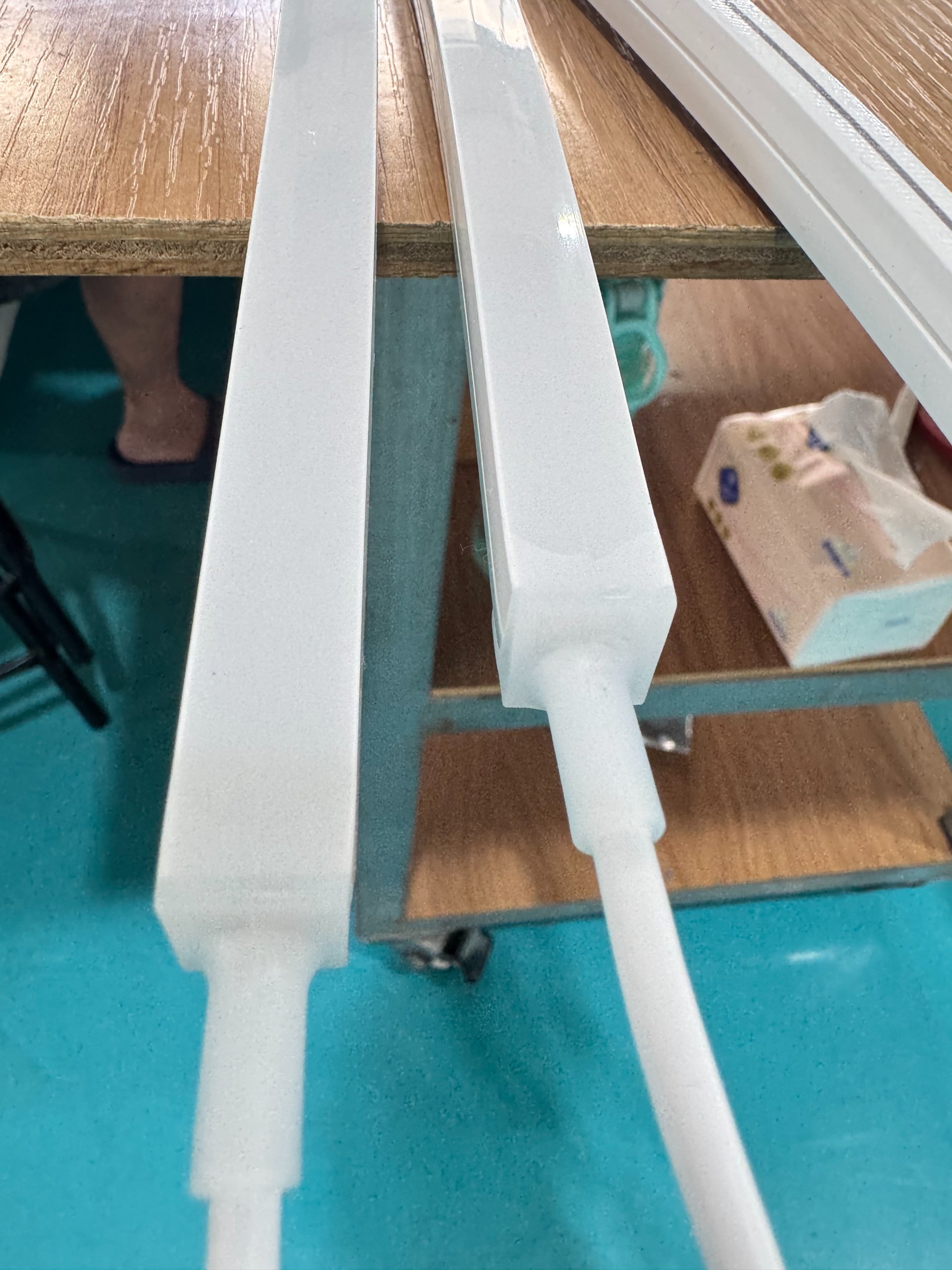
The Three Quality Checkpoints Most Suppliers Skip
I'm going to share something that will help you evaluate any LED supplier, regardless of location. Most factories focus on finished product testing. We focus on process control at three critical stages—because by the time a defect reaches final inspection, you've already wasted materials and time:
Stage 1: LED Selection and Binning
We don't just buy "5050 LEDs" in bulk. Every batch gets spectrophotometer tested for color consistency. Here's why this matters: if your architectural project uses 200 meters of neon flex across a facade, even a 200K CCT variation becomes visible to the human eye. We reject batches that fall outside ±150K tolerance, even though industry standard allows ±300K. That rejected inventory costs us money. But it saves you from callbacks.
Stage 2: Silicone Compounding and Extrusion
The silicone material isn't just about flexibility. It's an optical lens. If the molecular structure has inconsistencies—from rushed curing or contaminated mixing—you get light scattering. That creates the "dotted" effect instead of continuous illumination. Our extrusion process maintains ±2°C temperature control across the entire die. Most factories operate at ±5°C variance because tighter control requires better equipment. That 3-degree difference is what separates smooth light from spotted light.
Stage 3: Post-Assembly Burn-In Testing
This is where we catch "infant mortality" failures. Every production batch runs at 110% rated power for 48 hours before shipping. Components that will fail early—loose solder joints, marginal LED chips—fail during burn-in, not after your installation. Yes, this adds 2 days to lead time. It also drops field failure rates from 2-3% (industry average) to <0.5% in our shipments.
One of our Australian clients—a lighting contractor for shopping centers—told me they switched to us after their previous supplier (ironically, a US-based brand sourcing from China) delivered a batch where 15% of the strips failed within 90 days. The root cause? No burn-in testing. They assembled, packaged, and shipped immediately to hit delivery deadlines. That's where "Made in China" gets its bad reputation—from factories cutting corners to maximize short-term profit.
But here's the reality check: I've also seen "premium European brands" do the exact same thing because they're under price pressure from clients. Geography doesn't fix bad management decisions.
Can Other Countries Compete with China's LED Manufacturing Infrastructure?
This question comes up in every trade show conversation I have. The short answer: theoretically yes, practically no—at least not at scale. Let me explain why, because it reveals something important about what you should actually evaluate when choosing a supplier.
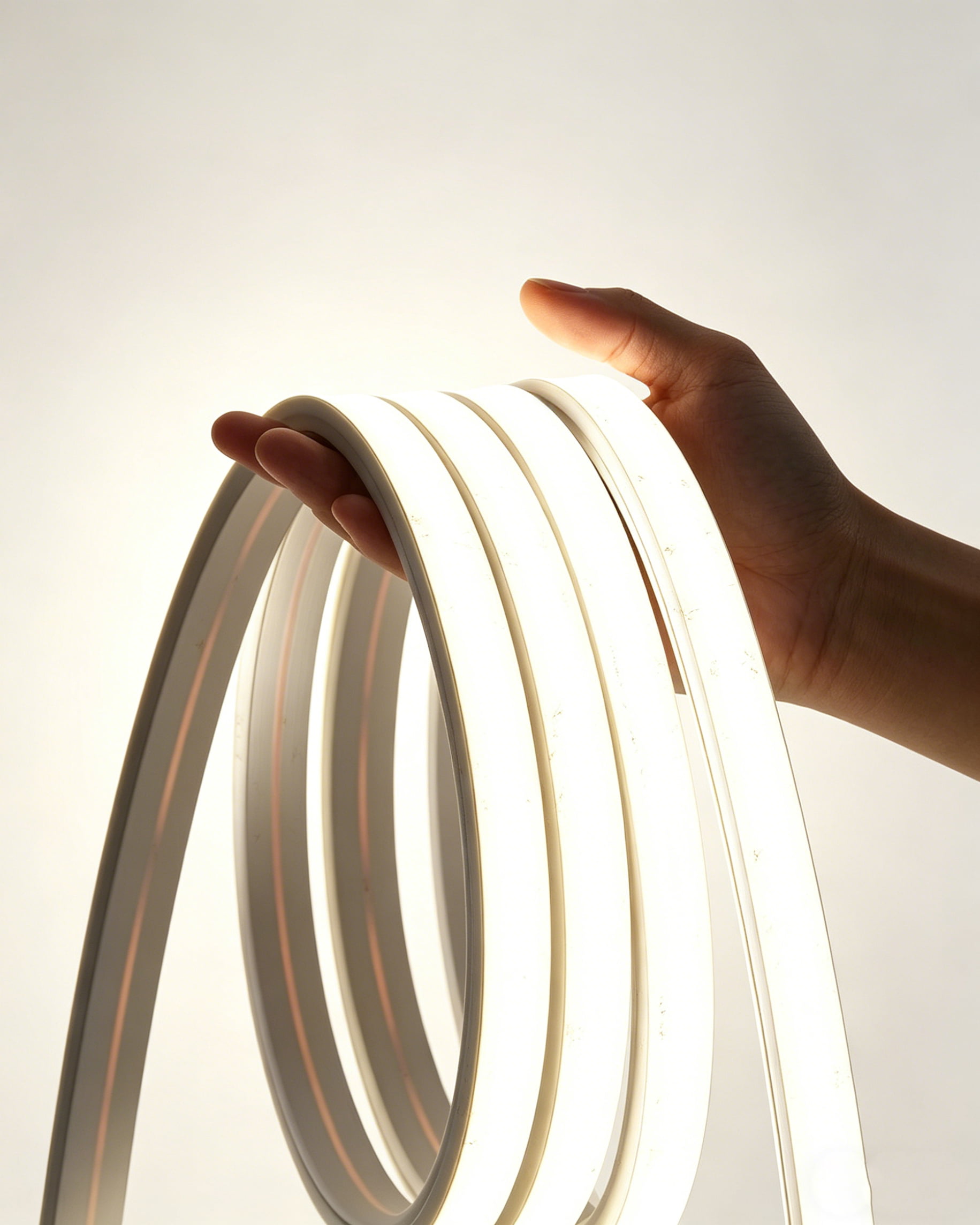
While the US, Germany, and South Korea produce high-end LED chips and specialized lighting systems, they cannot compete with China's high-volume manufacturing infrastructure for products like silicone neon flex. The combination of material availability, skilled labor density, and production equipment concentration creates a 40-60% cost advantage that persists even with tariffs.
Where Non-Chinese Manufacturing Actually Excels
I want to be honest here because my goal isn't nationalistic—it's practical. There are specific LED applications where non-Chinese manufacturers lead, and understanding this helps you make better sourcing decisions:
| Product Category | Leading Region | Why They Win | When to Consider |
|---|---|---|---|
| High-Power LED Chips (>5W) | USA (Cree), Germany (Osram) | Advanced thermal management, tighter binning | Stadium lighting, industrial high-bay |
| Automotive-Grade LEDs | Japan (Nichia), Germany | Extreme reliability requirements (AEC-Q100) | Signage exposed to vibration, aviation |
| Specialized UV/IR LEDs | USA, Israel | Niche applications with lower price sensitivity | Horticulture, medical sterilization |
| Consumer Silicone Neon Flex | China (dominant 85%+ share) | Vertically integrated supply chain | Commercial signage, architectural accent lighting |
The key insight: high-mix, low-volume specialty products can justify distributed manufacturing. High-volume, cost-sensitive products naturally centralize where infrastructure is deepest. Silicone neon flex falls squarely in the latter category.
I've had European lighting designers ask if they should source locally to "support regional manufacturing." My response: if your project budget allows 2-3x higher costs for functionally identical products, that's a valid business decision—but don't expect performance improvements. The LED chips inside that "German-made" neon flex likely came from the same Taiwanese foundry we use.
What actually matters more than origin country? Factory certification and process documentation. A Chinese manufacturer with ISO 9001, UL certification, and documented QC procedures will outperform an uncertified European assembler every time. Geography is a proxy for quality, not a guarantee of it.
How Do We Ensure Consistency Across Large Production Runs?
This is where the conversation gets real for B2B buyers. Anyone can make 10 meters of perfect silicone neon flex. The challenge—and where most suppliers fail—is delivering identical quality across 10,000 meters, especially when production spans multiple batches over weeks or months.
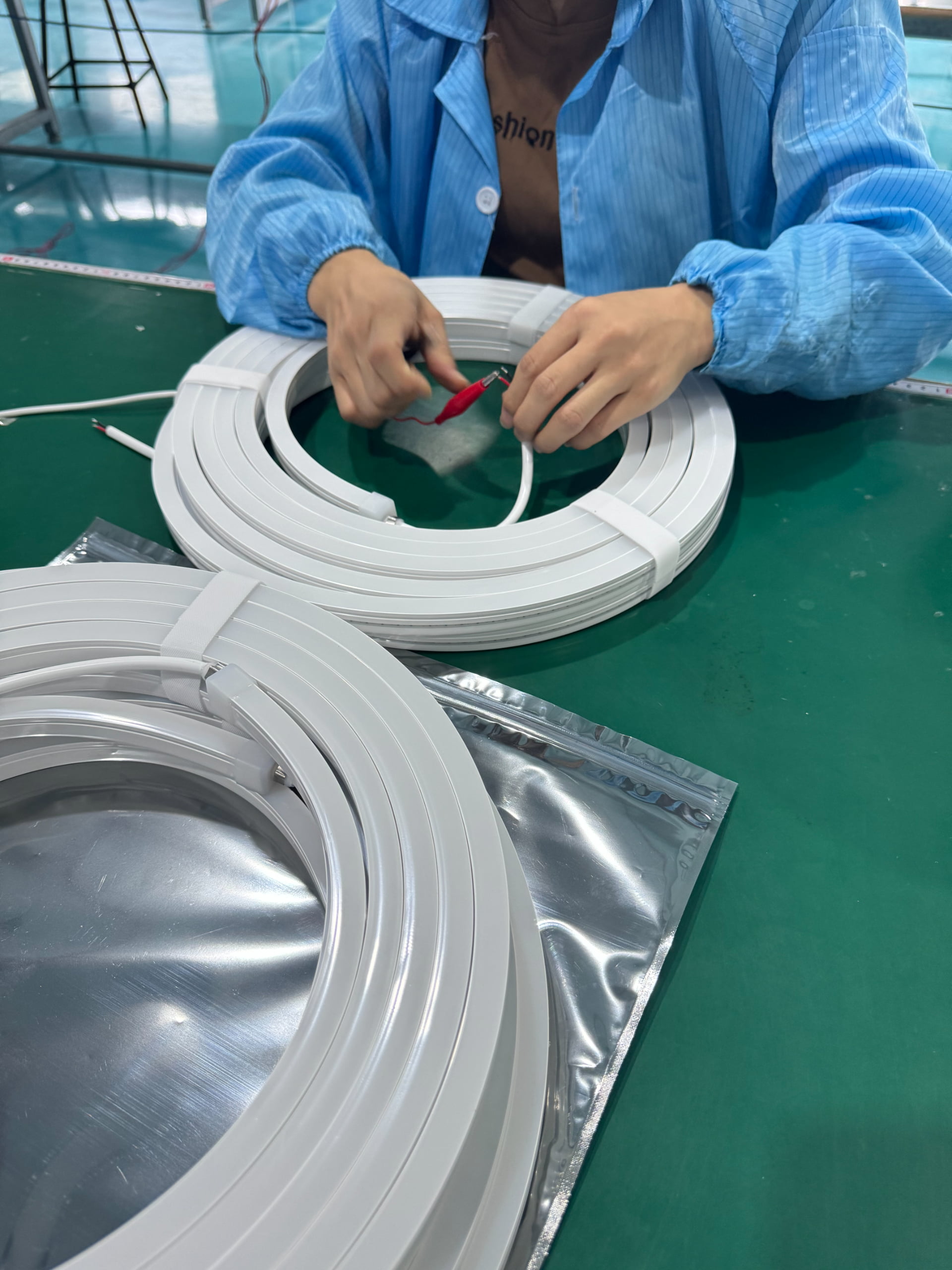
Consistency in large-scale LED manufacturing requires documented process controls, statistical quality monitoring, and traceable material batching. We maintain ±3% brightness uniformity across production runs through automated LED placement (±0.3mm accuracy), silicone batch-to-batch color matching (Delta E <2), and real-time spectrophotometer verification at 10-meter intervals.
The Four Systems That Prevent Batch Variation
Most procurement managers focus on inspecting finished goods. That's too late. By the time you discover a color temperature shift in batch 3 of 5, you've already manufactured—and potentially shipped—inconsistent inventory. Here's how we prevent that at the source:
1. Material Lot Traceability
Every silicone batch gets a unique identifier linking back to the raw material supplier, mixing date, and compound ratio. When we extrude your neon flex, all materials in that production run come from the same lot. Why does this matter? Silicone optical properties subtly vary between production batches due to minor molecular weight differences. By controlling lot consistency, we eliminate one major source of light transmission variation.
2. LED Reel-to-Reel Mapping
We don't randomly grab LEDs from inventory. Each 5050 LED reel gets tested for forward voltage (Vf) and color coordinates (x,y) before assembly. LEDs are then grouped by bin code—only components from the same bin populate a single production order. This prevents the situation where your first 1000 meters has a slight pink tint and the next 1000 meters skews blue. I've seen that exact issue destroy a hotel chain's facade project because the contractor used a supplier without LED binning discipline.
3. In-Line Quality Verification (Not Just Final Inspection)
Our extrusion line has three checkpoints: immediately after LED strip application (checks placement accuracy), post-encapsulation (verifies silicone optical clarity), and after cutting/termination (measures actual light output). Each checkpoint feeds data into a statistical process control system. If brightness drops 5% below target on two consecutive measurements, production automatically pauses for adjustment. Most factories only measure at the end—when it's too late to correct.
4. Environmental Control Throughout Assembly
Here's something subtle that most buyers never consider: silicone curing is temperature and humidity sensitive. If your factory's ambient conditions vary—say, 40% humidity in the morning and 70% after lunch—your silicone's optical properties will drift. We maintain ±5% relative humidity and ±2°C temperature in our assembly area year-round. Overkill? Maybe. But it's why our clients don't get surprises when they install the last box from a 5-container order six months after the first.
A lighting distributor in Texas once told me they tested our product against three competitors by ordering the same 3000K specification from all four suppliers. Then they measured actual CCT with a spectrophotometer. Two competitors varied between 2850K-3200K within the same order. The third was consistent but ran at 3150K (outside specification). Our product measured 2975K-3020K across all samples. That 45K maximum deviation versus 350K from competitors? That's what process control delivers.
What Should You Actually Ask Your LED Supplier—Beyond Price?
If you've read this far, you already know price alone is a terrible decision criterion. But most RFQ processes still default to "lowest quote wins." Let me give you the questions I wish every buyer would ask before signing a purchase order—because they expose which suppliers actually understand manufacturing versus which ones are just resellers.
Effective supplier evaluation focuses on process capability, not just product specifications. Critical questions include: "What is your LED binning tolerance?", "How do you maintain color consistency between production batches?", "What is your burn-in testing protocol?", and "Can you provide material traceability documentation?" Suppliers who answer with specific procedures rather than vague assurances demonstrate real manufacturing control.
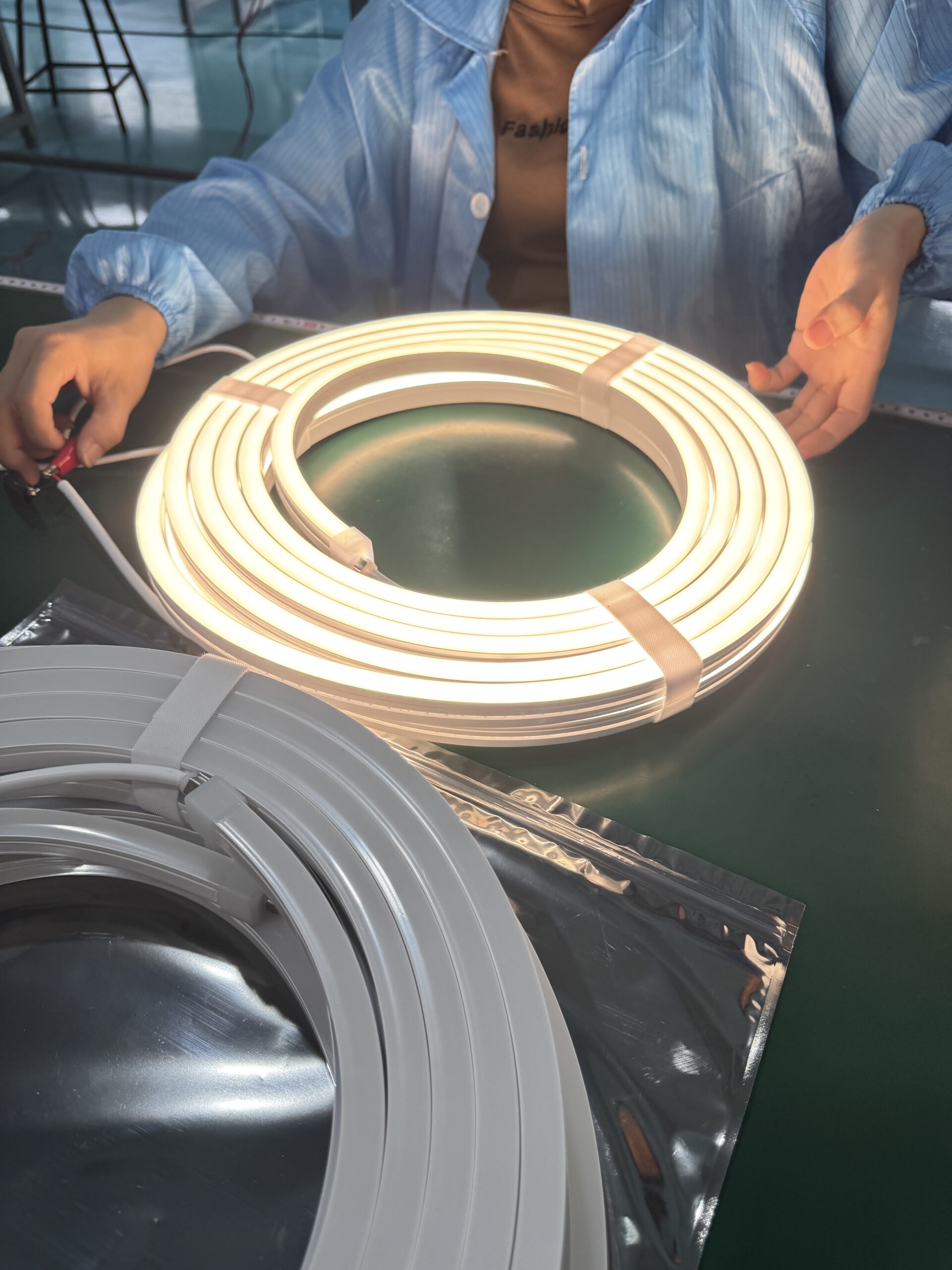
The Eight Questions That Separate Serious Manufacturers from Resellers
I'm going to structure this as a practical evaluation framework. Use this in your next supplier conversation and watch how quickly you filter out the companies that can't actually control their production:
Question 1: "What LED chip brand do you use, and what is your binning specification?"
Red flag answer: "We use high-quality LEDs." That's meaningless. Serious manufacturers specify chip supplier (e.g., "Epistar SMD5050, 3-step MacAdam ellipse binning") and can show binning documentation. If they can't tell you the Delta E tolerance between batches, they're not controlling it.
Question 2: "How do you maintain silicone optical clarity over time?"
What you're really asking: do they understand UV degradation and yellowing? We use anti-UV additives in our silicone compound and can provide accelerated aging test data (1000 hours UV-B exposure with <5% yellowing). If the supplier talks about "high-quality silicone" without specifying UV resistance, your outdoor installation will look dingy in 18 months.
Question 3: "What is your production lead time, and how much buffer do you build in?"
This reveals planning discipline. Our standard lead time is 15-18 days for custom orders because we schedule material procurement, extrusion slots, and QC testing with buffer time. Suppliers quoting "7-10 days" are either cutting corners (no burn-in testing) or don't actually manufacture—they're sourcing from other factories and have no control over scheduling.
Question 4: "Can you provide a Process Failure Mode and Effects Analysis (PFMEA)?"
Most suppliers will have no idea what you're asking. That's your answer. A PFMEA documents every potential failure point in manufacturing (e.g., "LED misalignment during placement") and the controls to prevent it (e.g., "automated vision inspection"). If a manufacturer has never systematically analyzed how their process could fail, they're reactive, not proactive.
Question 5: "What happens if I receive a defective batch after installation?"
The answer reveals their confidence in quality systems. We offer a 5-year warranty on our silicone neon flex and maintain traceability to replace defective sections—but our field failure rate is <0.5% specifically because of upstream process controls. Suppliers offering long warranties but no upstream quality evidence are just rolling the dice.
Question 6: "How do you handle custom color temperature requests?"
This tests their engineering capability. Can they adjust CCT in 100K increments (2850K, 2950K, 3050K) or only in broad bins (2700K, 3000K, 4000K)? Custom CCT requires precise LED selection and bin mixing—a capability only manufacturers with direct chip access possess.
Question 7: "What is your MOQ, and why?"
MOQ reveals production setup costs. Our typical MOQ is 500 meters for custom specifications because that's the threshold where tooling/setup costs become economically reasonable. Suppliers with suspiciously low MOQs (e.g., "50 meters custom color") are either marking up dramatically or don't actually customize—they're relabeling stock products.
Question 8: "Can I visit your factory, and what will I see?"
I've hosted dozens of client factory tours. They see our extrusion lines, LED placement automation, burn-in testing racks, and QC documentation. If a supplier defl