

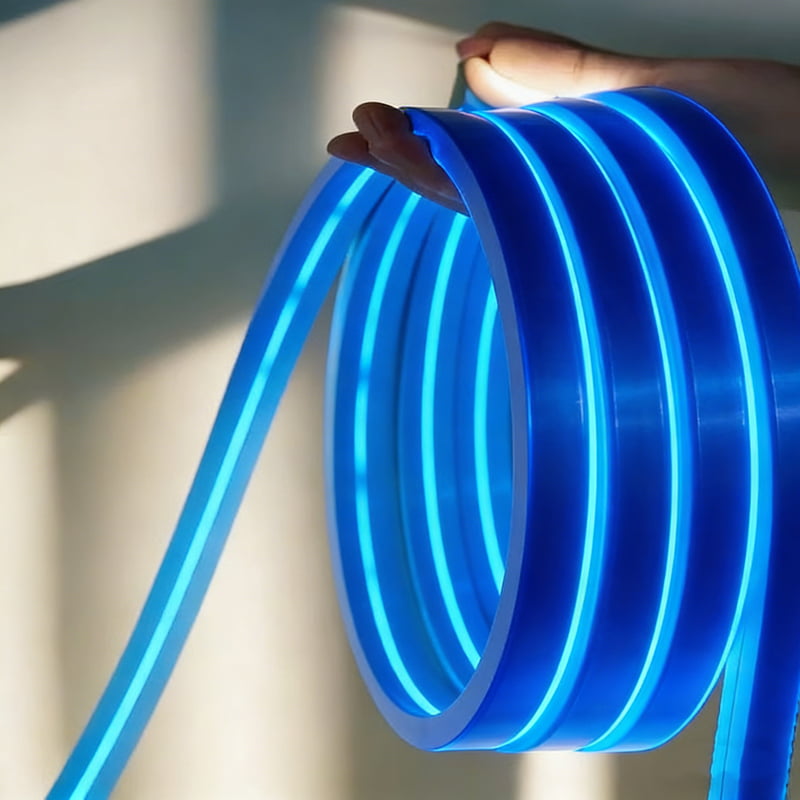
Most people start by comparing voltage ratings, IP grades, and prices. But after years of working with contractors and designers, I realized something critical. The spec sheet never tells you how the light will actually look when it's installed.
The one thing that truly matters when choosing LED strip lights is light uniformity. If the light output is not smooth and consistent along the entire strip, even the best specs won't save your project from looking unprofessional.
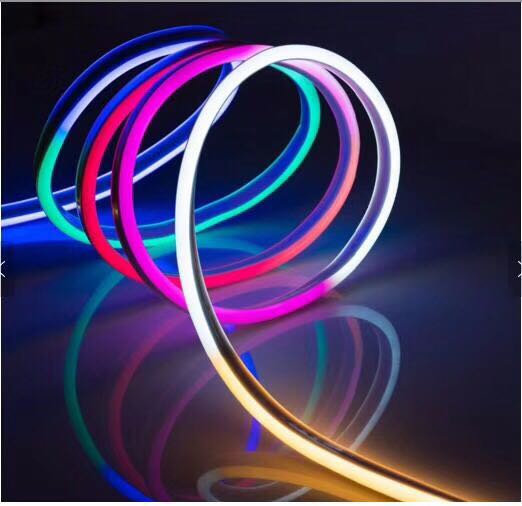
You've probably seen this before. A newly installed strip that looked great in the catalog, but once powered on, you notice visible LED dots, uneven brightness, and a "cheap" appearance that ruins the entire design. Let me walk you through why this happens and how to avoid it.
What Makes LED Strip Light Quality Actually Matter?
Most buyers focus on lumens and wattage. But I've seen high-lumen strips fail because nobody considered how the light diffuses.
LED strip light quality is determined by three factors: LED chip consistency, silicone or PVC material quality, and manufacturing precision. When any of these elements underperforms, you get spotting, color shift, or early failure.
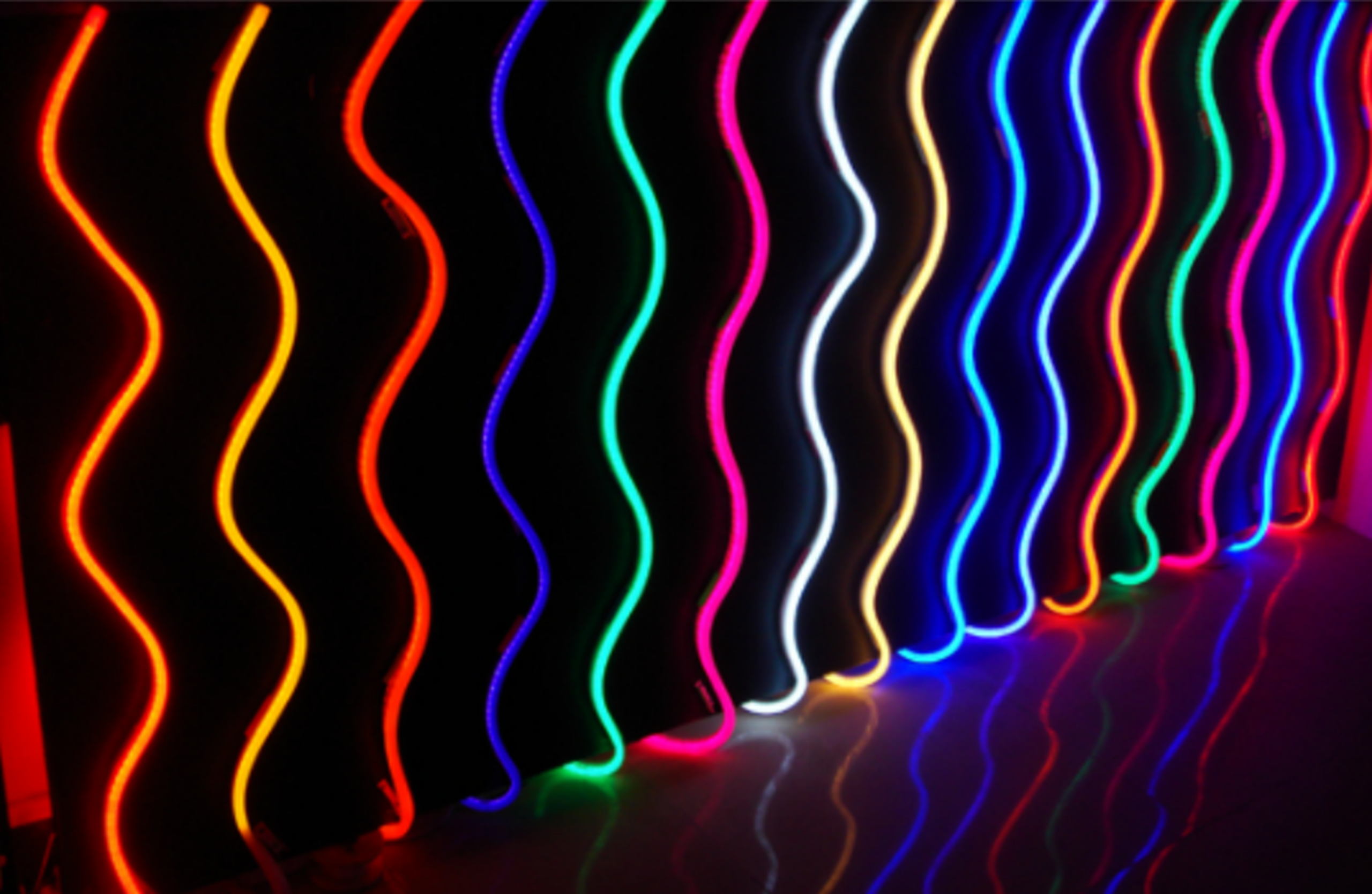
Here's what really happens during production. The extrusion process must maintain exact tolerances. If the silicone layer thickness varies even slightly, light distribution becomes uneven. We control this through real-time monitoring during extrusion. Our engineering team adjusts material flow rates every 30 minutes to maintain consistency.
| Quality Factor | Impact on Performance | Our Solution |
|---|---|---|
| LED Chip Selection | Color consistency (±3 SDCM) | Binning from Tier-1 suppliers only |
| Silicone Purity | UV resistance & clarity | Food-grade molecular silicone |
| Extrusion Precision | Uniform diffusion | ±0.05mm tolerance control |
| Testing Protocol | Long-term reliability | 1000-hour aging test per batch |
The material itself plays a bigger role than most people realize. Standard PVC covers yellow after 6-12 months outdoors. Our silicone formulation includes anti-UV stabilizers that prevent color shift for 5+ years. I've personally inspected installations from 2019 that still maintain their original appearance.
How Do I Know If an LED Strip Will Look Good Installed?
You can't judge this from a data sheet. You need to see it powered up in conditions similar to your actual application.
Request a powered sample in a dark environment. Look for: no visible LED dots from any viewing angle, consistent color temperature along the entire length, and smooth brightness without hotspots. If the supplier can't provide this, walk away.

I always tell clients to test samples this way. Take the strip into a completely dark room. Power it up and view it from straight on, then from 30 degrees, then from the side. Any spotting or irregularity will show immediately. This test has saved projects from costly mistakes.
The "no-dot" effect comes from engineering decisions made during design. We position LEDs at calculated intervals inside a precisely shaped silicone channel. The channel geometry determines how light refracts through the material. Get this wrong by 1-2mm and you create bright spots. We run optical simulations before production to verify the design.
Distance also matters. In signage work, viewers stand 2-5 meters away. For architectural cove lighting, it's 5-15 meters. The required uniformity level changes based on viewing distance. We help clients calculate this during specification.
| Application Type | Viewing Distance | Required Uniformity | Recommended Product |
|---|---|---|---|
| Close-up Signage | 1-3 meters | >95% | Ultra-dense chip spacing |
| Retail Display | 3-5 meters | >90% | Standard neon flex |
| Architectural Accent | 5-15 meters | >85% | Wide-angle diffusion |
| Outdoor Facade | 15+ meters | >80% | High-output models |
Color consistency is another hidden problem. We've seen competitors ship strips where the first meter looks 3000K and the last meter shifts to 3200K. This happens when manufacturers mix LED batches without proper binning. Our quality control separates incoming LEDs into ±50K bins before assembly.
What Installation Problems Should I Expect with LED Strips?
Every installation environment creates unique challenges. I've learned this by troubleshooting failed projects that used the wrong product type.
The most common installation problems are: inadequate waterproofing for outdoor use, insufficient heat dissipation in enclosed spaces, incompatible dimming systems, and incorrect voltage drop calculations for long runs. Prevent these by matching the product specifications to your exact installation conditions.

Waterproofing confusion causes most outdoor failures. IP65 means splash-resistant. IP67 means submersion up to 1 meter for 30 minutes. IP68 means continuous underwater use. We manufacture IP68 products that stay submerged in pools and fountains for years. The difference is in the end-cap sealing process and the silicone compound density.
Heat management is misunderstood too. LEDs generate less heat than traditional lights, but they still need air circulation. I've seen strips installed in sealed aluminum channels without ventilation slots. After 6 months, the LEDs dimmed 30% because thermal stress degraded the chips. Our technical team provides heat dissipation calculations based on your channel design.
Voltage drop kills brightness in long runs. Every meter of strip has electrical resistance. On a 10-meter 12V run, the last meter might receive only 10V, causing visible dimming. We solve this with dual-feed wiring or by switching to 24V systems. For runs over 15 meters, we recommend installing power injection points every 5 meters.
| Problem Category | Symptom | Root Cause | Solution |
|---|---|---|---|
| Water Ingress | Flickering, failure | Poor end sealing | IP68 certified end caps |
| Overheating | Premature dimming | No ventilation | Aluminum channel with gaps |
| Voltage Drop | End-section dimming | Long cable runs | Power injection every 5m |
| Control Issues | Erratic behavior | Incompatible protocol | Match controller to strip type |
Dimming compatibility is technical. Not all LED strips work with all dimmers. Standard strips use PWM dimming. Flicker-free versions use constant current reduction. DMX strips need digital controllers. We specify exactly which controllers work with each product series. This eliminates trial-and-error during installation.
Can LED Strips Work for Both Indoor and Outdoor Projects?
Yes, but only if you choose products designed for dual-environment use. I've worked on projects that needed the same visual effect inside a hotel lobby and outside on the facade.
For indoor-outdoor versatility, select LED strips with IP67 or IP68 ratings, UV-stabilized silicone materials, and wide operating temperature ranges (-40°C to +60°C). These specifications ensure the same product performs reliably in any environment without appearance changes.

Temperature range is critical. Standard products operate from 0°C to +40°C. That works for climate-controlled interiors but fails in outdoor winter installations. Our silicone formulation maintains flexibility down to -40°C. I've tested samples in freezer conditions to verify they don't crack or become brittle.
UV exposure is the other killer. Sunlight degrades plastics through photochemical reactions. After 12-18 months, cheap PVC covers turn yellow and crack. Our silicone includes industrial-grade UV stabilizers. We run accelerated aging tests equivalent to 5 years of sun exposure. The material shows no color shift or structural degradation.
Salt spray resistance matters in coastal projects. Standard strips corrode within months near ocean environments. We run 1000-hour salt fog chamber tests per ASTM B117 standards. The silicone coating completely seals the electrical components. The aluminum housing uses marine-grade alloy that resists corrosion.
| Environmental Factor | Standard Product Limit | Our Product Performance | Test Standard |
|---|---|---|---|
| Temperature Range | 0°C to +40°C | -40°C to +60°C | IEC 60598 |
| UV Resistance | 1-2 years | 5+ years | ASTM G154 |
| Salt Spray | <100 hours | 1000+ hours | ASTM B117 |
| Water Immersion | IP65 (splash) | IP68 (continuous) | IEC 60529 |
Installation flexibility improves when one product handles all conditions. Architects appreciate this because it simplifies specifications. Contractors benefit because they don't need separate inventory for different zones. We've supplied single product lines for hotels where the same strip runs from poolside through corridors into outdoor terraces.
The color rendering index stays consistent across environments. Cheap strips shift color between indoor and outdoor sections because thermal stress affects the phosphor coating. We use high-CRI LEDs (>90) with thermal-stable phosphors. The color appearance remains identical whether installed in an air-conditioned showroom or on a sun-baked wall.
How Does Customization Actually Work for LED Strips?
Most suppliers offer limited options. But real projects need specific solutions that standard products can't provide.
True LED strip customization involves: custom cutting lengths to eliminate waste, specific color temperatures matched to existing lighting, programmable color-changing sequences for dynamic effects, and mechanical modifications for unique mounting situations. Work with manufacturers who have in-house engineering teams that can translate your design requirements into production specifications.
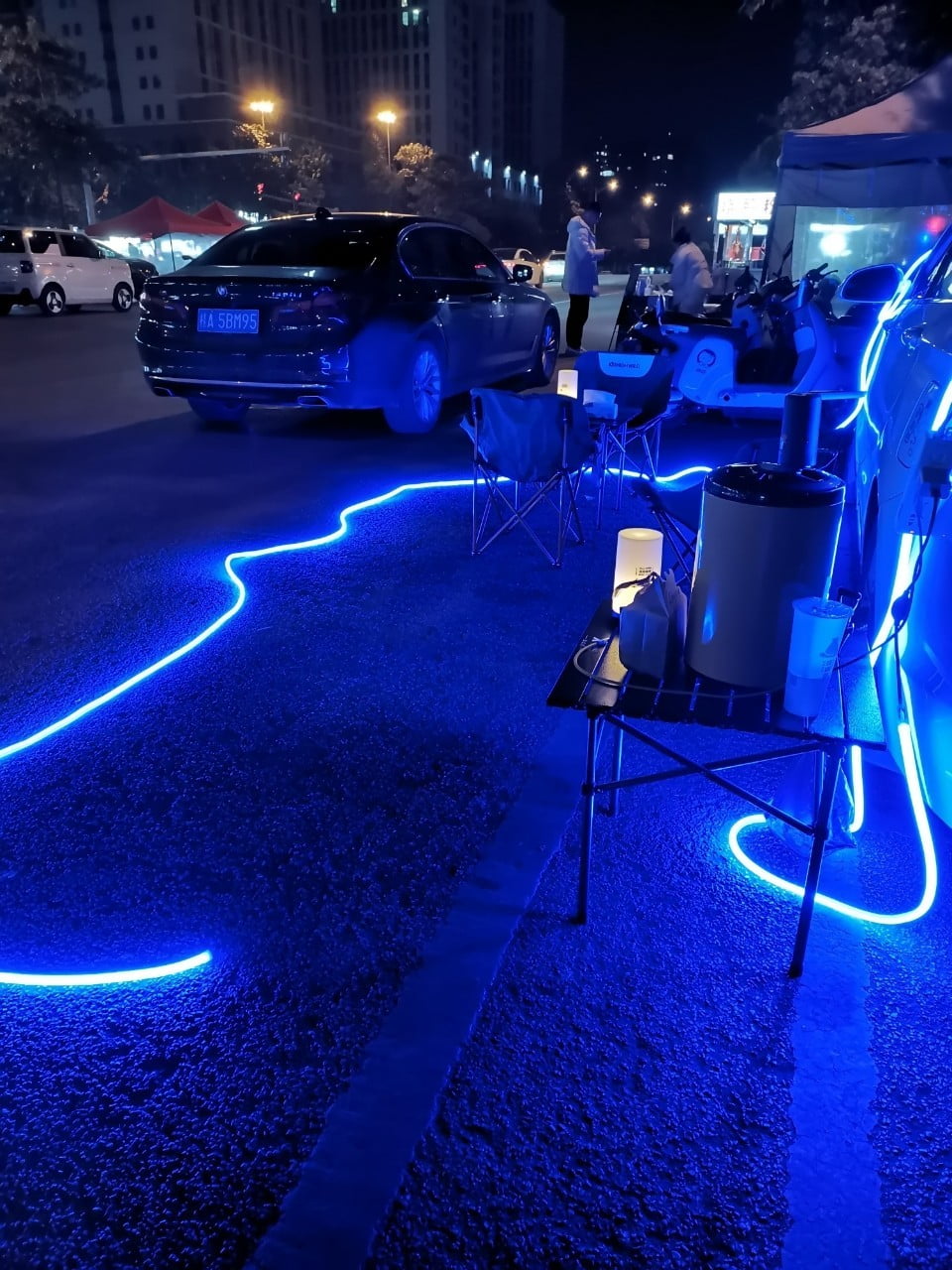
Cutting length seems simple but it's not. Standard strips come in 5-meter reels. What if your design needs exactly 3.7 meters? Cutting at the wrong point damages the circuit. We program custom cut points during production so each segment functions independently. This eliminates field modifications and reduces installation errors.
Color temperature customization matters for brand consistency. I worked with a retail chain that needed 3200K to match their existing halogen fixtures. Standard options are 3000K or 4000K. We mixed phosphor ratios to hit exactly 3200K with ±100K tolerance. The transition between old and new lighting became invisible.
Dynamic control adds complexity. SPI protocols like WS2812 allow individual LED addressing. DMX512 enables theatrical lighting effects. DALI systems integrate with building automation. We embed the control electronics directly into the strip during manufacturing. This creates plug-and-play solutions that installers can configure without electronics expertise.
| Customization Type | Standard Limitation | Custom Solution | Lead Time Impact |
|---|---|---|---|
| Cut Length | 5m fixed reels | Any length 0.5-20m | +7 days |
| Color Temperature | 3000K/4000K/6000K | Any CCT 2700-6500K | +10 days |
| Control Protocol | Fixed RGB | SPI/DMX/DALI/0-10V | +14 days |
| Physical Shape | Round/Square | Custom extrusion profile | +21 days |
Mechanical customization solves mounting problems. We've extruded custom profiles with integrated mounting clips for ceiling grid systems. We've added mounting flanges for direct concrete fastening. We've created ultra-slim 6mm profiles for jewelry display cases. Each requires custom extrusion dies and testing.
The process starts with your design requirements. Our engineering team reviews the application environment, mounting method, power supply constraints, and control requirements. We create technical drawings for approval. After sign-off, we produce samples within 10-14 days. You test in your actual installation. We adjust based on feedback. Then we move to production.
Sample approval is critical. I never recommend skipping this step. We've caught issues during sampling that would have caused field failures. A contractor discovered that our standard end cap didn't fit their mounting bracket. We redesigned it before producing 5000 meters. That saved weeks of rework.
Conclusion
Choosing LED strip lights is not about specs—it's about understanding how light quality, material durability, and customization options combine to serve your specific project needs. Work with manufacturers who engineer solutions, not just sell products.