

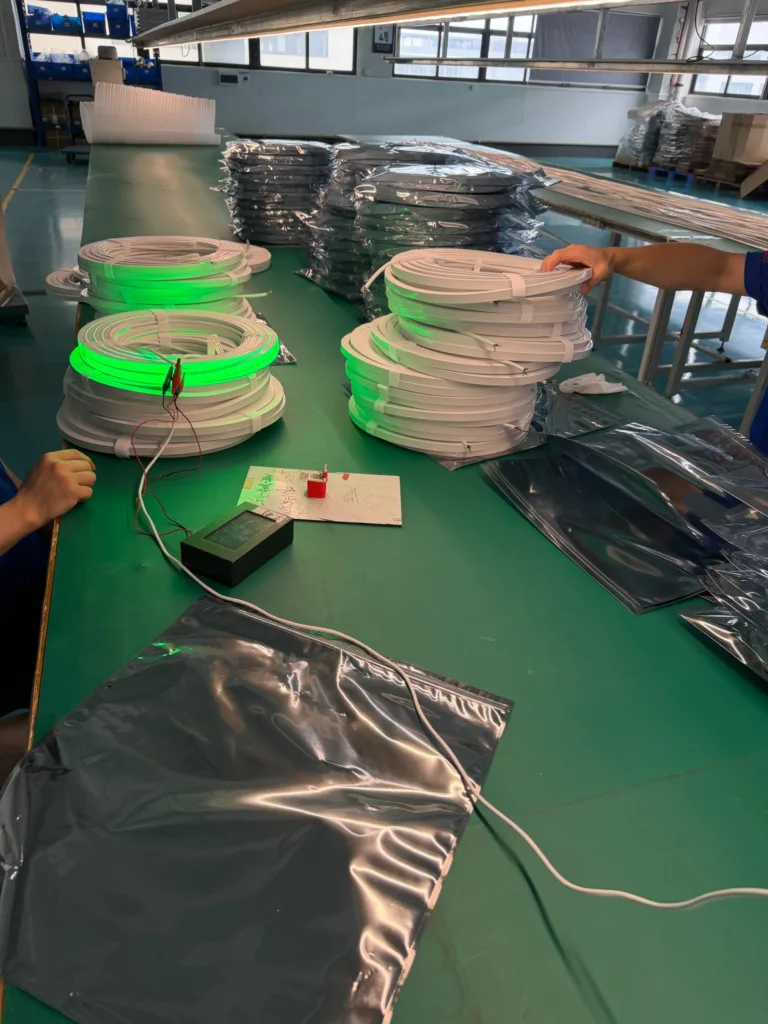
I have watched many projects fail. Not because the lights were bad at first. But because nobody asked the right questions before signing the contract. Most people think choosing a manufacturer is about comparing prices and certifications. It is not. It is about understanding what happens after installation.
The real test of a reliable LED lighting manufacturer is not their ability to produce lights. It is their ability to control the long-term coupling failure between materials, structure, thermal management, process, tolerance, and aging. Because most disasters in industrial and commercial lighting do not happen at the factory. They happen in month 6, month 12, or month 24 after project delivery.
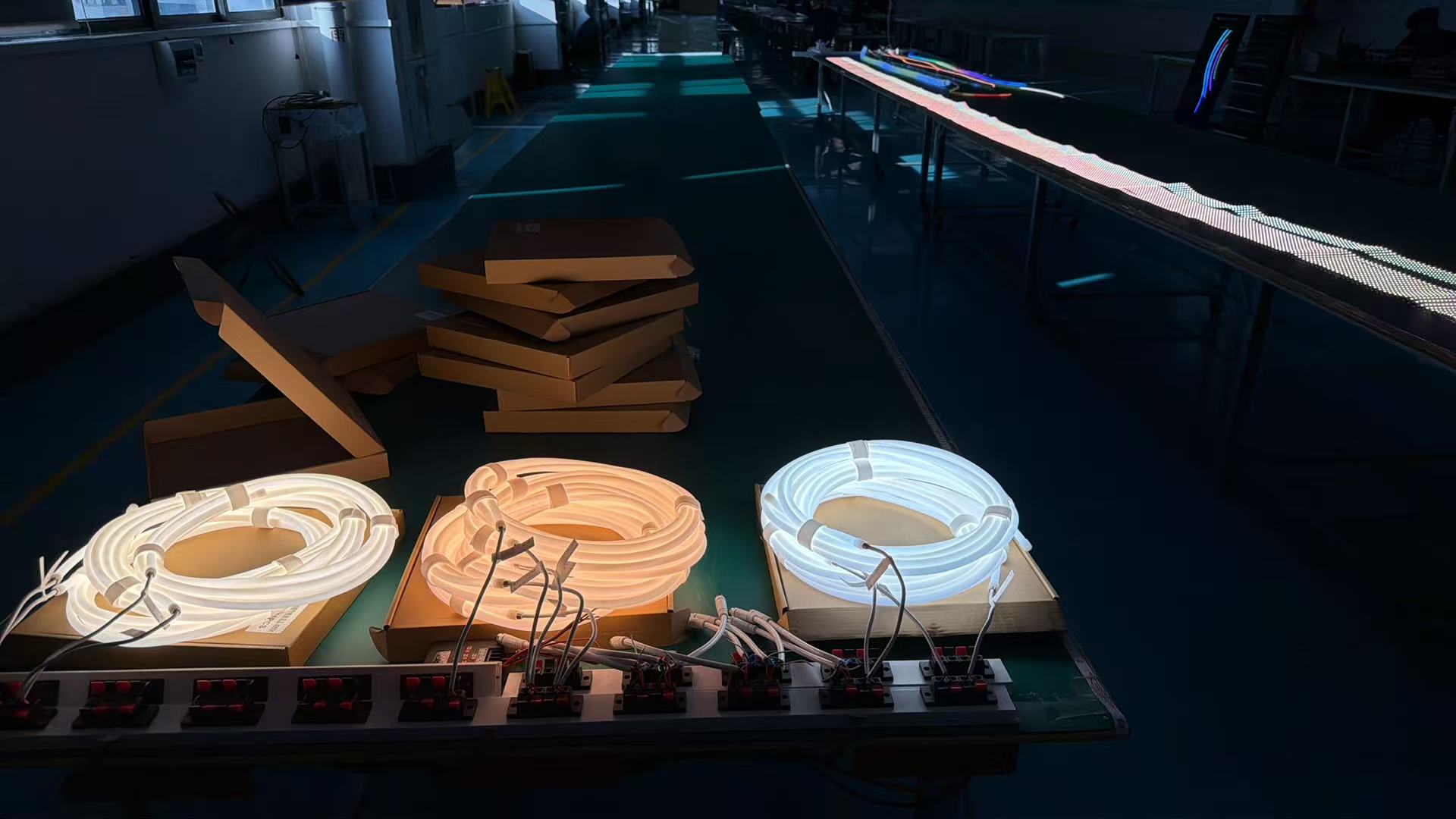
I need you to understand something important. The difference between a good sample and a stable mass production is huge. And this difference will either save your project or destroy it. Let me show you what really matters.
What Makes Sample Testing Different from Long-Term Stability?
I see this problem all the time. Clients show me test reports. LM80 certification. IP67 waterproof rating. Ra90 color rendering. 3-step MacAdam ellipse. UV resistance. They think these numbers prove everything. But they only prove one thing. The sample worked in the lab.
Sample testing proves short-term performance under controlled conditions. Long-term stability requires analyzing material compatibility, thermal cycling behavior, UV degradation curves, and mechanical stress accumulation over 12 to 24 months. These are completely different validation processes that many manufacturers skip.
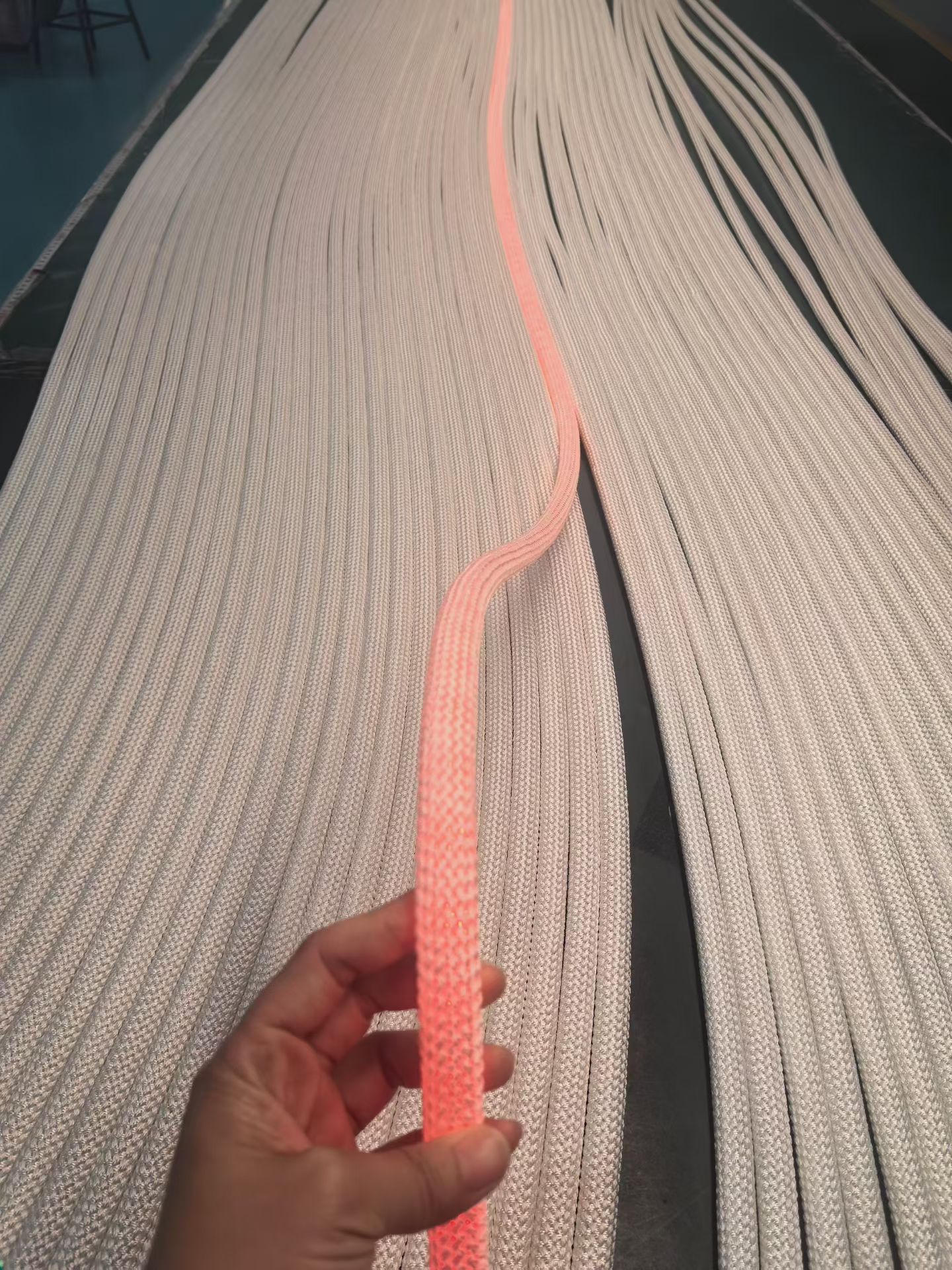
I worked on a hotel facade project once. The sample phase was perfect. Uniform light output. Consistent color temperature. Waterproof test passed. We even ran a 15-day continuous burn-in test. No problems. So we moved to mass production.
Then summer came. High temperatures triggered a chain reaction. First, the silicone surface became slightly sticky in some sections. Then the corner areas started collecting dust. After that, we noticed micro-yellowing. Six months later, parts of the surface began to powder. Then the silicone body contracted, causing end seals to fail. Water vapor entered. Finally, entire sections went dark.
The problem was not the LEDs. It was the silicone system. The supply chain replaced high-UV-resistant platinum-cured silicone with regular industrial-grade mixed silicone to cut costs. Short-term lab tests showed nothing. But real outdoor environments combine UV exposure, acid rain, high heat, ozone, and thermal cycling simultaneously. The entire material system destabilized.
The worst part is this. Most LED lighting manufacturers have no material failure analysis capability. They only test if the light turns on, if electricity flows, and if the IP rating passes. They never analyze why silicone becomes brittle after 8 months, why corner sections develop dark zones, why different batches show color drift, or why some IP67 projects last two years while others leak in six months.
Why Do Materials Fail When Everything Seems Compatible?
The real problems hide in material compatibility. Many adhesives show excellent short-term bonding strength. But after prolonged high temperatures, they release low-molecular-weight volatile compounds. These compounds slowly migrate to the silicone surface. The result is not immediate debonding. Instead, the surface becomes sticky first. Then it attracts dust. Then it yellows. Finally, it cracks.
Material compatibility failure is a progressive process. Adhesives and silicone systems may pass 72-hour testing but fail in real-world applications due to thermal cycling, volatile compound migration, and cross-contamination between layers. Reliable manufacturers conduct 1,000+ hour thermal cycling compatibility tests before approving material combinations.
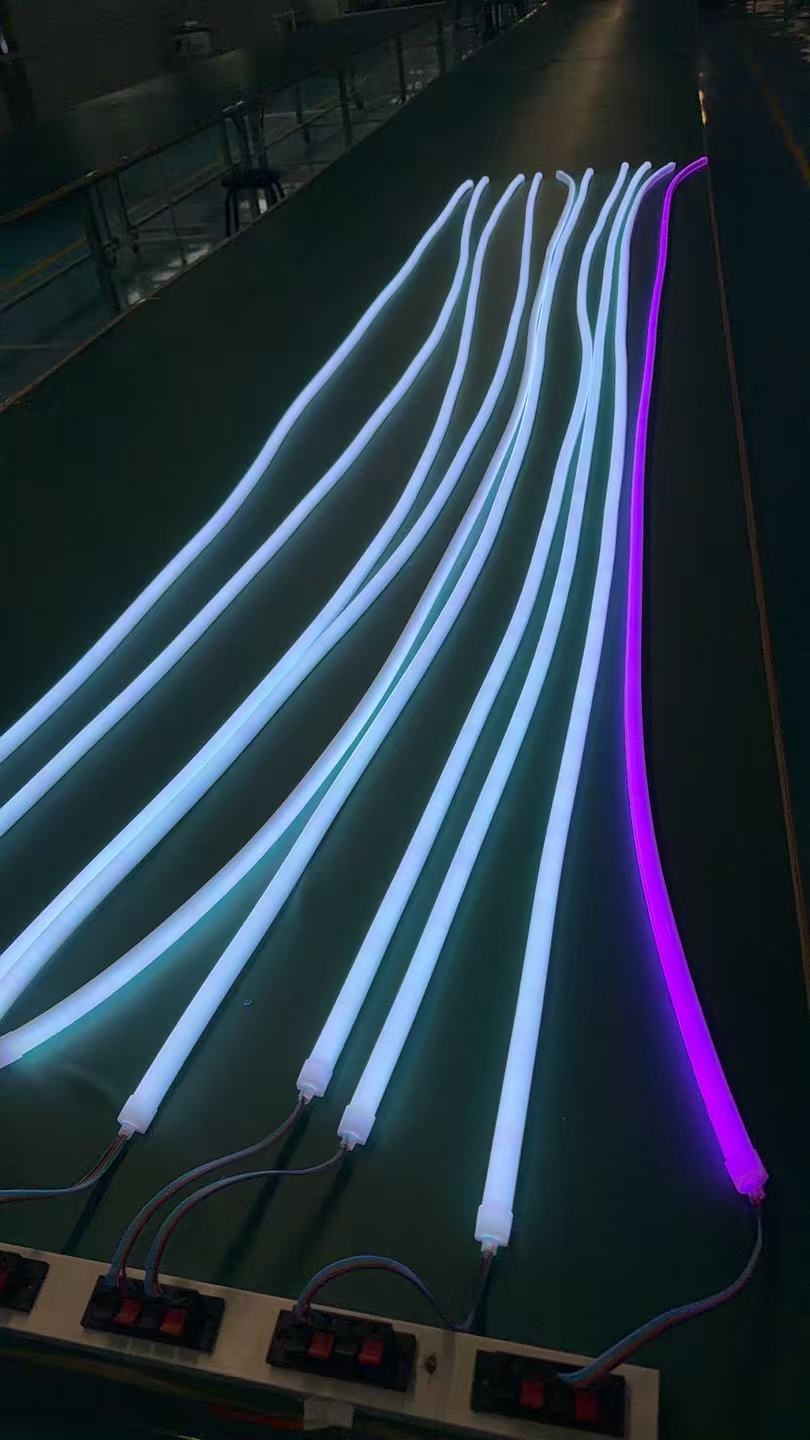
A 72-hour lab test cannot detect this. You need long-term thermal cycling compatibility testing. Many projects fail not because the product is bad, but because the entire material system attacks itself.
| Material Layer | Thermal Expansion Coefficient | Common Failure Mode | Testing Duration Required |
|---|---|---|---|
| Platinum-Cured Silicone | 300 ppm/°C | Surface cracking | 1,000+ hours |
| Industrial Silicone | 280 ppm/°C | Yellowing + embrittlement | 500+ hours |
| FPC Copper Layer | 17 ppm/°C | Fatigue fracture | 2,000+ cycles |
| Aluminum Housing | 23 ppm/°C | Debonding stress | 1,000+ cycles |
| Adhesive Layer | Varies | Volatile migration | 500+ hours at 85°C |
What Happens When Thermal Expansion Is Ignored?
I have seen another common failure. Thermal expansion stress. This happens especially in building facades. Daytime sun exposure. Nighttime cooling. Metal frames, aluminum channels, silicone, FPC boards, and adhesive layers. Each material has a different expansion coefficient. If the structural design has no release space, the tighter you install it initially, the faster it fails.
Thermal expansion mismatch causes progressive mechanical failure. When metal housing, silicone body, and FPC substrate expand at different rates without structural relief, the system accumulates stress. After 3 months, wave deformation appears. After 6 months, end contraction occurs. After 12 months, partial detachment from the channel happens, leading to internal copper board fatigue fracture.
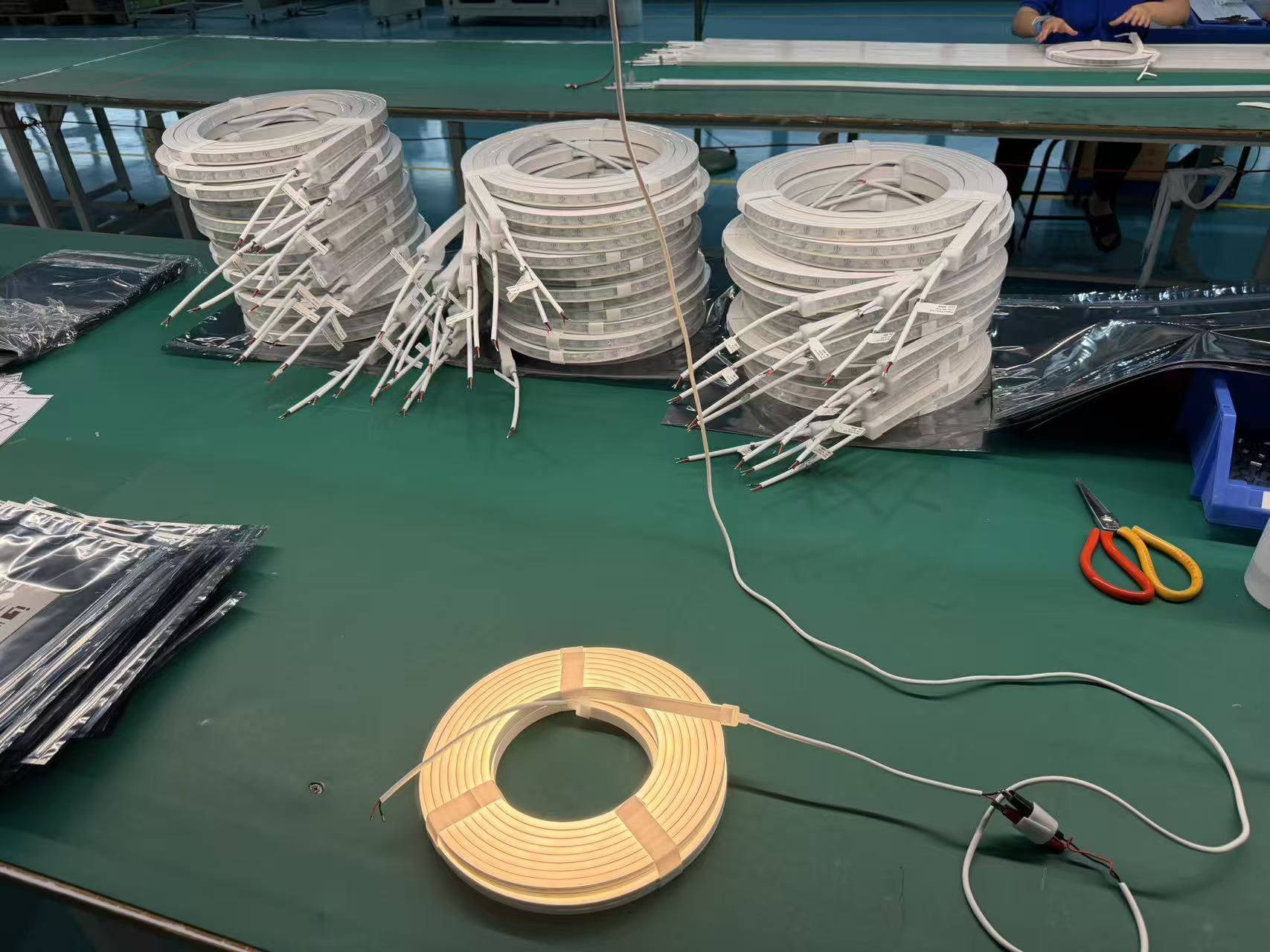
The installation looks straight and beautiful at first. Three months later, wave deformation starts. Six months later, the ends contract. One year later, partial sections detach from the channel. The LED strip's internal copper board suffers long-term tension. Hidden fractures form.
This type of problem is terrifying. The lights work perfectly during initial testing. When the real problem appears, the warranty period has expired. Maintenance costs spiral out of control.
So mature LED lighting manufacturers do not just sell lights. They analyze the installation structure, usage environment, thermal cycling conditions, UV intensity, installation material type, adhesive system, power supply distance, voltage drop, maintenance method, and long-term mechanical stress first. Because different projects require completely different structural solutions.
For example, in high-UV regions, the real concern is not the IP67 rating. It is the mechanical property retention rate after UV aging. Many materials do not yellow but still age internally. Some silicone shows no color change. But inside, it is already becoming brittle, hardening, and losing rebound capability. Sealing ability declines.
Mature outdoor projects control the Shore A hardness range of silicone. Too soft means long-term sagging. Too hard means low-temperature cracking. Especially in continuous corner areas.
Why Do Corner Sections Fail Before Straight Sections?
This is why many projects have no problems in straight sections. But corners fail first. Because corners endure composite stress. This includes bending stress, thermal stress, installation tension, and material shrinkage force.
Corner failures result from compounded stress concentration. Straight sections experience uniform thermal and mechanical loads. Corners combine bending radius stress, differential thermal expansion, adhesive shear forces, and repeated flexural fatigue. Many suppliers only test static bending. Real engineering involves long-term dynamic fatigue that accumulates over thousands of thermal cycles.
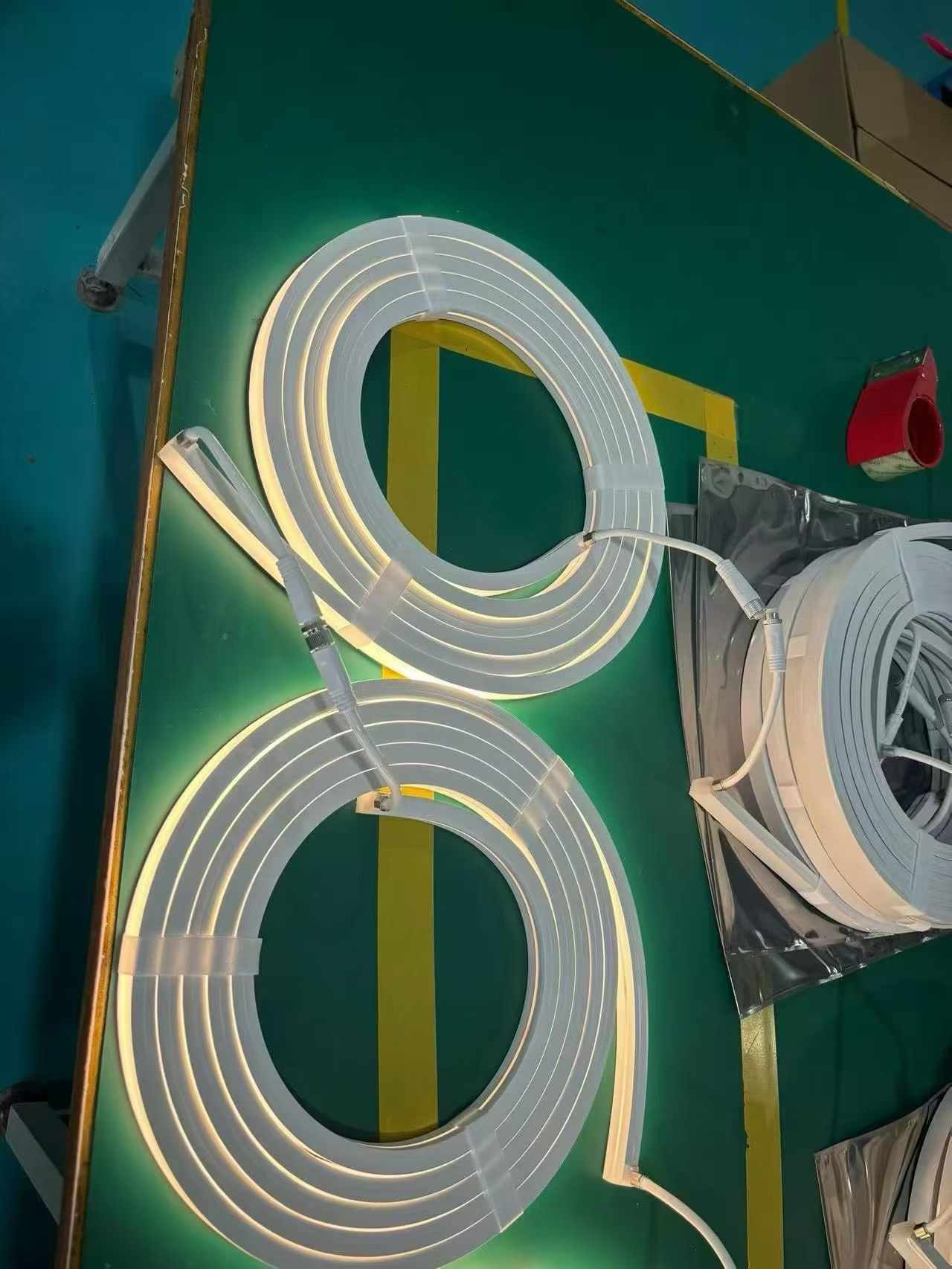
Many supply chains only test static bending. Real engineering involves long-term dynamic fatigue. The difference is critical.
Here is a breakdown of what happens in corner sections over time:
| Failure Stage | Timeline | Observable Symptom | Root Cause |
|---|---|---|---|
| Initial Installation | Day 1 | Perfect appearance | High tension without relief |
| Thermal Cycling Begins | Month 1-3 | Micro-deformation | Material expansion mismatch |
| Adhesive Weakening | Month 3-6 | Slight gap formation | Volatile compound migration |
| Mechanical Fatigue | Month 6-12 | Visible corner separation | Repeated stress accumulation |
| Sealing Failure | Month 12-18 | Water ingress | Loss of compression seal |
| Complete Failure | Month 18-24 | Dark zones appear | Copper trace fracture |
What Causes Color Banding Across an Entire Building?
Another problem causes entire buildings to fail. Color temperature binning. Many projects use only a few dozen meters of sample strips. But mass production may involve thousands of meters. If binning is not locked to specific batches, you might not notice during the day. But at night, when the building lights up, you see color bands.
Color temperature inconsistency happens when LED binning is not batch-controlled. A few dozen meters of samples may come from a single production lot with tight tolerances. But thousands of meters of mass production may mix multiple batches with variations in dominant wavelength, forward voltage, and color temperature. The result is visible color banding across the facade, especially when mixing 2700K, 3000K, and 4000K zones.

This is especially bad in mixed zones. 2700K combined with 3000K and 4000K. This problem cannot be fixed on site. The only solution is to replace entire batches.
Professional LED lighting manufacturers control LED batch consistency, driver output fluctuation, VF matching, thermal degradation curves, and MacAdam drift between different batches. Because what costs money in commercial lighting is never the LED strips. It is the scaffolding, high-altitude construction, business shutdown during maintenance, brand complaints, nighttime rework, and full building reinstallation.
So the real question is never about price per meter. It is about whether this project will still be stable five years from now.
What Should I Ask Before Choosing a Manufacturer?
I always tell clients to ask these questions. They reveal everything.
- Do you conduct thermal cycling compatibility tests for at least 1,000 hours before approving material combinations?
- Can you provide material degradation curves for silicone after UV exposure over 5,000 hours?
- What is your Shore A hardness control range for outdoor silicone systems?
- How do you manage LED binning across production batches spanning months?
- Do you analyze mechanical stress distribution in corner installations before recommending a structural solution?
- Can you show me failure analysis reports from previous projects?
These questions separate manufacturers who understand long-term system stability from those who only focus on passing initial certifications. A reliable LED lighting manufacturer does not sell products. They sell engineered solutions validated through extended environmental testing, material science analysis, and post-installation performance tracking.

We at Shenzhen Alister Technology have learned this through real projects. We test materials for 2,000+ thermal cycles. We validate silicone systems under accelerated UV aging for 5,000+ hours. We lock LED binning at the batch level. We design installation structures with thermal expansion relief. We analyze mechanical stress in 3D models before production. We track project performance 12 months and 24 months after delivery.
Because we know that the most expensive part of any project is not the initial cost. It is the cost of failure.
Conclusion
Choosing a reliable LED lighting manufacturer is not about certifications or prices. It is about understanding material science, thermal management, and long-term system stability. Ask the right questions, demand the right tests, and your project will last.