

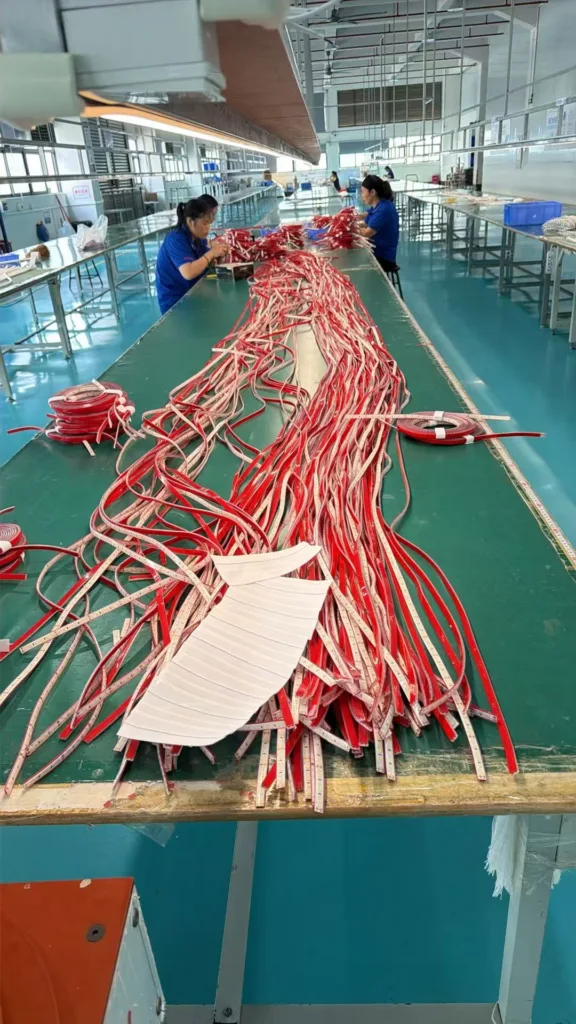
I've seen this pattern dozens of times: someone searches for "NKT LED lighting," "LED lighting supplier," or "OEM factory," focusing entirely on lumens, prices, certifications, and lead times. But here's the brutal truth—most commercial lighting projects don't fail because the lights don't turn on. They fail because the entire material system wasn't engineered to survive real outdoor conditions for 3-5 years.
If you've managed large-scale projects before, you already know: the difference between a sample that passes lab tests and a system that survives three summers in the field isn't luck—it's engineering discipline. The question isn't "Does it light up?" It's "Will it still perform identically in Year 3?"

I'll be direct—if you're evaluating suppliers based purely on IP ratings and initial brightness, you're measuring the wrong variables. Let me walk you through what separates a vendor sample from a bankable commercial solution.
What's the Real Difference Between IP67 and Long-Term System Integrity?
You see an IP67 rating. I see a dozen potential failure modes that won't show up until Month 6.
Here's what actually determines whether your building facade lighting system survives past the warranty period:
IP ratings test short-term water immersion. Real projects face:
- UV radiation
- Ozone exposure
- Salt spray
- Thermal cycling (-40°C to +60°C)
- Acid rain
- Particulate contamination
- Material expansion/contraction stress
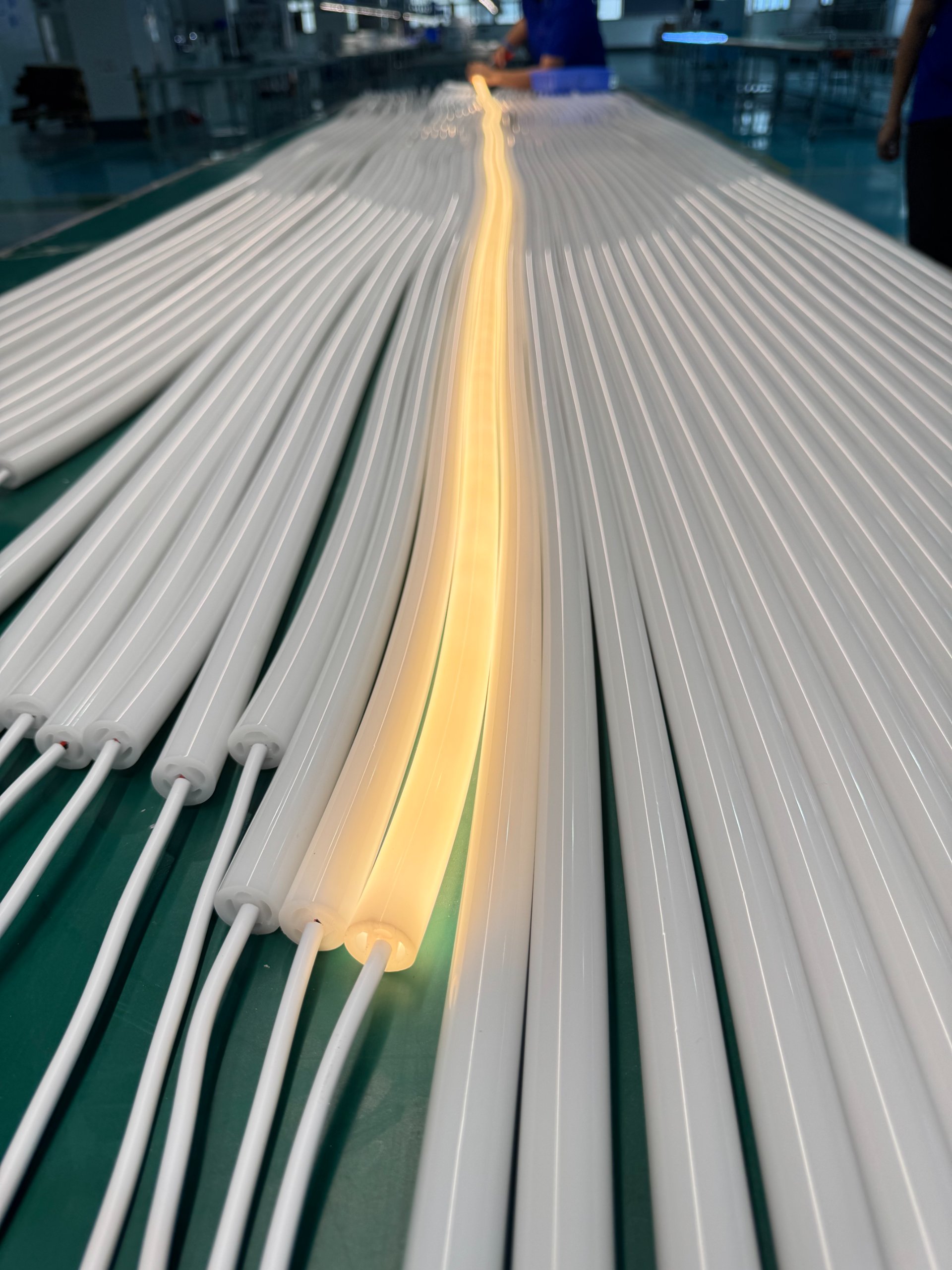
Let me break down what we actually validate before calling something "outdoor-rated":
| Test Parameter | What Samples Show | What Projects Need |
|---|---|---|
| Silicone UV Resistance | Initial color stability | Anti-yellowing after 5000h UV-B exposure |
| Adhesive Bonding | Day-1 peel strength | Post-thermal-cycle + humidity adhesion retention |
| FPC Copper Integrity | Static flex test | 10,000+ bend cycle fatigue analysis |
| LED Binning Control | Single-batch color match | Multi-batch CCT tolerance ±50K across 5000m runs |
| Thermal Management | Spot temperature check | Long-term junction temperature drift under 90% load |
The difference? Samples survive lab conditions. Systems survive real installation environments.
I've consulted on projects where perfectly spec'd samples turned into maintenance nightmares six months post-installation. The common thread? Nobody validated material compatibility under combined environmental stress.
Why Do Building Corner Sections Fail First—Even When Samples Pass Flex Tests?
This one catches even experienced contractors off guard. Your sample flexes beautifully during testing. Three months after installation, the corner-mounted sections start showing dark zones.
The culprit isn't obvious—it's cumulative micro-stress.
Here's the failure sequence I've documented across multiple projects:
- Installation Phase: Silicone neon flex bends perfectly around 90° corners
- Month 1-2: Daily thermal expansion/contraction begins (material experiences ±5mm length change per meter)
- Month 3-4: FPC copper traces at bend radius start developing micro-cracks
- Month 5-6: Electrical resistance increases → localized dimming → cascading failure

What makes this worse: Shore A hardness inconsistency.
Many suppliers use silicone that's too soft (Shore A <50) because it makes installation easier. But here's what happens over time:
- Lower hardness = higher creep under gravity
- Mounting clip zones experience stress concentration
- Continuous UV exposure degrades silicone tensile strength
- Corner sections slowly deform
- FPC substrate experiences repeated pull cycles
- Copper fatigue cracks propagate
Our manufacturing approach:
We control silicone hardness within Shore A 60-70 range specifically for architectural installations. Not because it's easier to bend (it's not), but because it maintains structural memory under continuous stress.
The question isn't "Can it bend?" It's "Will it hold that bend for 50,000 thermal cycles without transferring stress to the FPC?"
RGB + White Light Mixing—Why Does Color Uniformity Degrade After 4 Months?
This is where most "multi-color capable" products reveal their limitations. The sample installation looks perfect. Four months later, your building facade shows visible color banding—especially after sunset.
The problem isn't the control system. It's thermal management asymmetry.
Different LED types generate different heat profiles:
| LED Type | Typical Junction Temp (90% Load) | Heat Density (W/m) | Thermal Decay Rate |
|---|---|---|---|
| 5050 RGB | 85-95°C | 14-18W | 0.3-0.5%/1000h |
| 2835 White (4000K) | 75-85°C | 12-15W | 0.2-0.3%/1000h |
| RGBW Hybrid | 90-100°C | 16-20W | 0.4-0.6%/1000h |
When you mix RGB dynamic modes with continuous white lighting on the same run, you get:
- Unequal heat accumulation along the strip
- Non-uniform lumen depreciation across zones
- Driver output drift as ambient temperature fluctuates
- Visible color shift between sections sourced from different LED bins

I worked on a hotel facade project where this exact issue emerged. The contractor used a standard "RGBW compatible" product. Six months post-installation:
- North facade (less sun exposure): maintained 4000K white balance
- South facade (full sun exposure): shifted to 4200K+ with visible yellow tint
- Corner transitions: showed 300K+ CCT difference, visible to naked eye at dusk
The fix wasn't replacing strips—it required:
- Segregating high-thermal-load zones onto separate drivers
- Limiting continuous circuit length to 8m max (vs. standard 10m)
- Implementing temperature-compensated constant current regulation
- Locking all LED purchases to ±3-step MacAdam ellipse binning
- Reducing max load to 85% to prevent thermal drift
This is why I always ask clients: "Are you optimizing for installation convenience, or 3-year color consistency?"
The Adhesive Compatibility Time Bomb Nobody Tests
Here's a failure mode that shows up in Year 2-3: de-lamination.
Not because the adhesive wasn't strong enough initially. But because nobody validated long-term chemical compatibility between:
- Silicone extrusion compound
- UV-printed diffusion layer
- Structural adhesive
- Aluminum channel surface treatment
- Mounting tape backing

What happens in practice:
Month 0-6: Everything bonds perfectly
Month 6-12: High temperatures trigger slow volatiles migration from silicone
Month 12-18: UV ink layer begins yellowing at interface zones
Month 18-24: Adhesive plasticizer absorption reduces peel strength
Month 24+: Edge whitening, localized bubbling, structural failure
I've seen $200K projects require complete reinstallation because the supplier never tested adhesive + silicone + UV ink compatibility under accelerated aging (85°C/85% RH + UV-A exposure).
Our validation protocol includes:
- 1000h thermal cycling (-40°C to +80°C, 30-min cycles)
- 500h salt spray (ASTM B117)
- 2000h UV-A/UV-B exposure (340nm, 0.89W/m²)
- 90° peel strength testing before/after aging
- FTIR analysis for material migration
- Plasticizer extraction testing
Because the real question isn't "Does it stick?" It's "Will it still stick after three winters and three summers?"
Conclusion
Real LED lighting reliability isn't about passing initial tests—it's about engineering material systems that survive combined environmental stress for 3-5 years. The projects that succeed don't just meet IP ratings; they validate thermal management, material compatibility, and structural integrity under real-world conditions before installation begins.