

Most people assume LED innovations automatically mean better projects. But after installing thousands of meters across commercial facades, I've learned the brutal truth: new technology often introduces hidden failure modes that won't show up until month 6, 12, or 24—when your warranty becomes your nightmare.
LED lighting technology innovations don't fail because they lack performance upgrades. They fail because new materials, structures, and controls alter the entire system's stress balance—yet most engineering validations only test isolated parameters, not long-term coupled failure pathways. Innovation without re-validating material-structure compatibility simply delays catastrophic failure in more unpredictable ways.
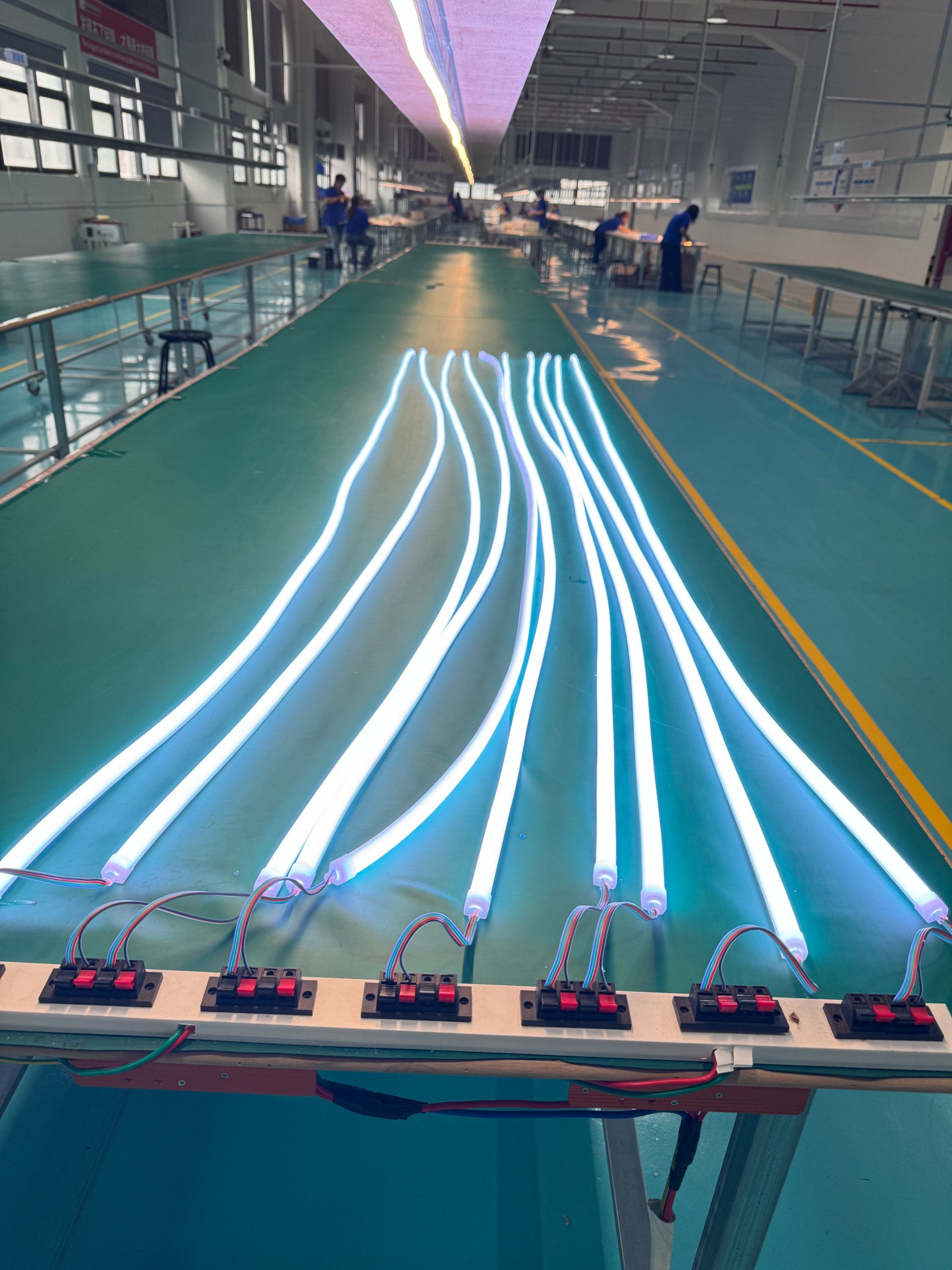
I'm about to walk you through the engineering traps that separate laboratory breakthroughs from real-world disasters—not from theory, but from post-mortem analyses of failed installations.
Why Do "Innovative" LED Systems Fail After Passing All Initial Tests?
When we first started offering COB-based silicone neon flex with smart dimming controls, our samples were flawless. Light efficiency jumped 20%, heat dissipation improved, and IP68 tests came back perfect.
The real problem emerged 8 months into a high-rise facade project: progressive yellowing on south-facing sections, expanding dark zones at corners, intermittent flickering, and visible color shifts between different building zones. By month 9, the entire installation looked like a patchwork of mismatched light bands.
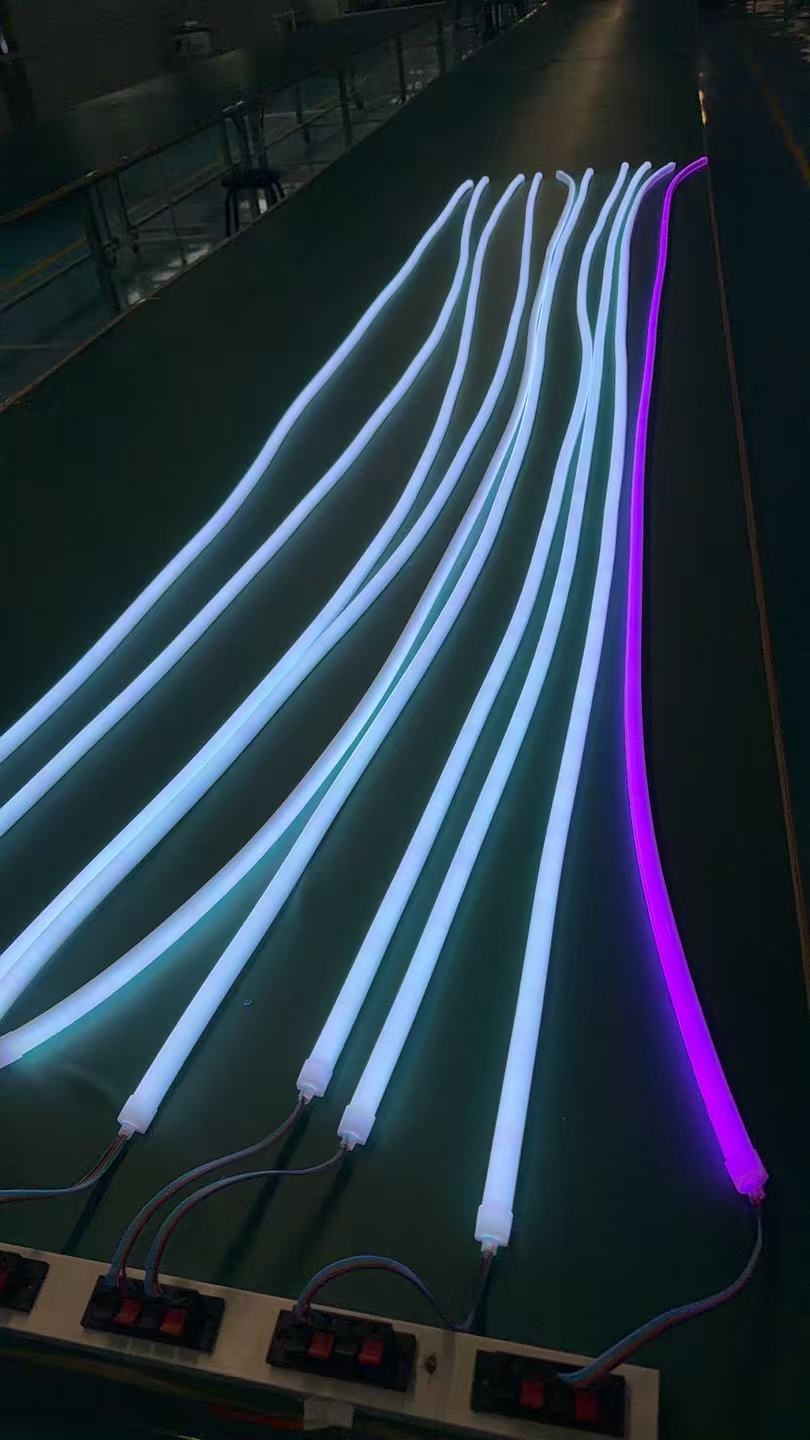
Post-failure analysis revealed the core issue wasn't a single component malfunction. It was systemic coupled degradation:
The "new generation" high-transparency silicone underwent molecular chain scission under UV + thermal cycling. Higher transparency meant lower mechanical strength tolerance. The adhesive system initiated low-molecular migration into the silicone matrix. Smart dimming drivers continuously adjusted output to compensate for voltage drop across long cable runs. Different LED binning batches got amplified under low-current operation modes.
Every innovation point worked in isolation. Together, they created a failure cascade no single test could predict. This is why innovation doesn't automatically equal reliability—it often equals controlled failure modes being replaced by chaotic ones.
Let me break down the specific engineering traps by innovation category, using the framework we now use for every OEM/ODM project validation.
How Do Material Innovations Actually Change Long-Term Failure Boundaries?
When a client requests "eco-friendly silicone" or "high-transparency formulations," most factories celebrate the performance upgrade. I've learned to immediately ask: "How does this alter UV degradation kinetics, compression set behavior, and microcrack propagation rates?"
High-transparency silicone formulations often sacrifice crosslink density for optical clarity. After 2000-5000 hours of UV exposure, tensile strength retention can drop below 70%—but standard datasheets only show initial properties.

We now mandate accelerated aging protocols that go beyond standard tests:
Material Revalidation Matrix:
| Test Parameter | Standard Spec | Our Extended Validation |
|---|---|---|
| UV Exposure Duration | 1000 hours | 5000 hours + thermal cycling |
| Mechanical Property Measurement | Initial tensile strength | Retention rate at 2000h/5000h |
| Compression Set Testing | 22h @ 70°C | 168h @ 85°C + recovery tracking |
| Yellowing Index | ΔE < 3 @ 1000h | ΔE tracking every 500h to 5000h |
| Adhesion Testing | Initial peel strength | Post-aging + thermal shock cycles |
One critical discovery: "low-odor" formulations using alternative platinum catalysts showed 15% faster mechanical property degradation under combined UV + moisture conditions. The innovation solved an installation complaint but introduced a 6-month failure acceleration nobody documented.
This is why every material innovation must re-establish the entire lifespan boundary, not just improve Day 1 performance. You're not upgrading a component—you're altering the system's aging pathway.
Why Do Flexible Structure Innovations Create Hidden Fatigue Failures?
Flexible LED strips keep getting marketed as "ultra-bendable" with minimum bend radius specs like 10mm or 15mm. But here's what datasheets never mention: bend radius specifications measure instantaneous mechanical limits, not cyclic fatigue under real-world stress conditions.
A commercial installation doesn't experience one perfect bend. It experiences thermal expansion cycles (building materials expanding/contracting), wind loading (especially on high-rise facades), and installation tension errors—all creating continuous low-amplitude flexing.
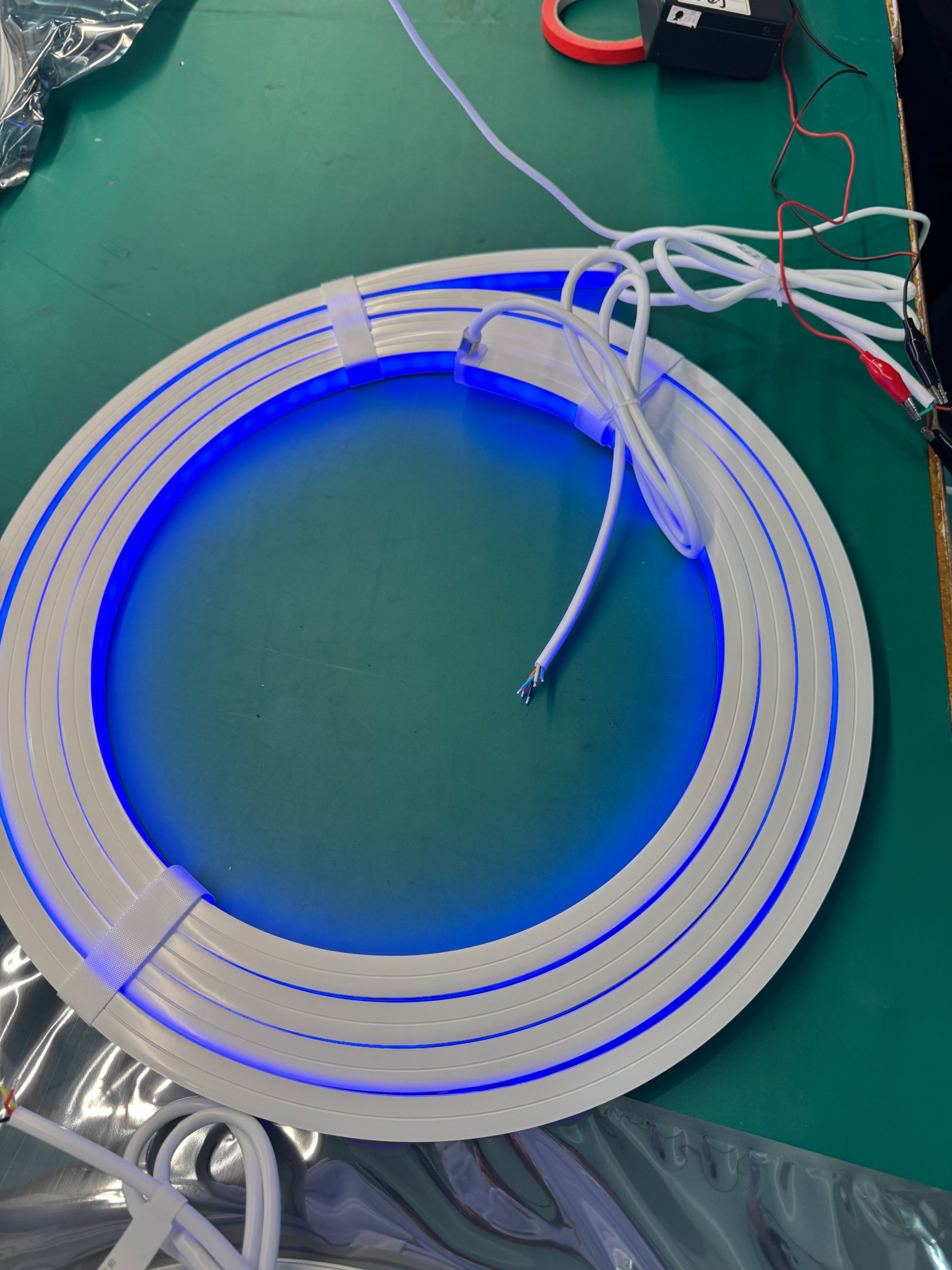
After investigating corner-zone failures across multiple projects, we identified the core problem: copper foil fatigue crack initiation happens at 10,000-50,000 cycles even when maximum bend radius stays within spec. The innovation that enabled tighter bends (thinner copper, more flexible substrates) simultaneously reduced fatigue resistance.
Our current design protocol now includes:
Fatigue-Resistant Structure Requirements:
- Copper foil specification: Minimum 2oz thickness with rolled annealed copper (RA), not electrodeposited (ED)
- Stress relief architecture: Serpentine trace patterns at high-flex zones, not straight traces
- Independent load path design: Corner sections use separate mechanical support, not continuous strip tension
- Flex cycle validation: 50,000 cycles @ 90° bend before electrical parameter shift
One OEM partner insisted on ultra-thin FPC for "better flexibility." After 6 months, we saw 12% failure rate at architectural corners. Switching to 2oz RA copper with stress-relief patterns dropped failure rate to under 0.3%—but made the strip 15% less flexible. The real innovation was choosing which trade-off matched the actual installation stress profile, not maximizing flexibility specifications.
How Do IP Rating Innovations Mask Progressive Water Ingress Pathways?
Every new silicone neon flex generation claims improved waterproofing: IP67, IP68, even "underwater installation capable." Initial tests pass perfectly—submerge for 24 hours, no issues.
But real-world failures don't come from catastrophic water breakthrough. They come from micro-penetration pathways that expand over 6-18 months through combined thermal cycling + material shrinkage + capillary action.
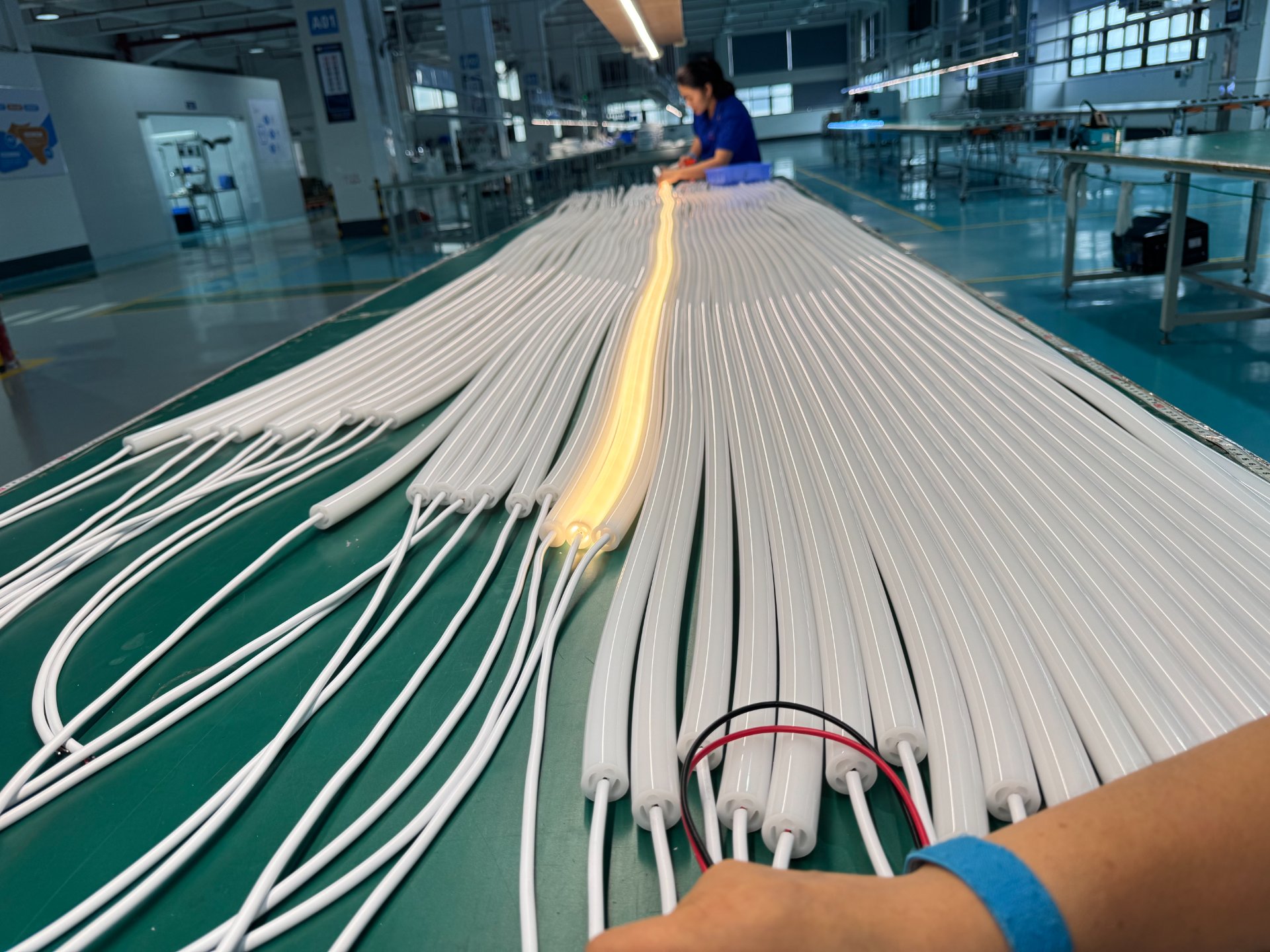
I remember a luxury hotel pool project where "fully underwater-rated" strips started showing electrical parameter drift at month 8. No visible water inside. No pressure test failures. But electrical resistance measurements showed 5-8% increase across random sections.
Teardown revealed the mechanism: Silicone-to-silicone interface bonds had developed microscopic separation gaps (under 50 microns) due to compression set relaxation. Chlorinated water vapor migrated through these capillary channels, creating conductive pathways that didn't trigger catastrophic shorts—just progressive performance degradation.
This fundamentally changed how we validate IP innovations:
Extended IP Validation Protocol:
| Standard IP Test | Why It's Insufficient | Our Validation Addition |
|---|---|---|
| 24h static immersion | No thermal cycling effects | 1000h wet-heat cycling (40-85°C) |
| Pressure testing | Single-event validation | Long-term compression set + re-test |
| Visual inspection | Surface-level only | Electrical parameter tracking over time |
| Room temperature only | No real-world thermal stress | UV exposure + thermal shock cycles |
The innovation that actually solved underwater applications wasn't "better sealing material"—it was designing compression-recovery mechanisms that maintained seal pressure after 1000+ thermal cycles. This required adding internal support structures that actually made the product 8% thicker. Marketing hated it. Engineers loved it. Zero underwater failures over 24 months across 12 pool projects.
Why Do Smart Control Innovations Create System-Level Instability?
The newest trend is integrating smart dimming, DALI/DMX control, and adaptive color temperature into LED systems. In controlled lab environments, these systems perform beautifully. But commercial installations with 50-100 meter cable runs? Totally different story.
I watched one retail chain project where intelligent dimming drivers were supposed to maintain uniform brightness across an entire storefront. First few weeks: perfect. By month 4: the far end of the installation was visibly dimmer during evening hours, and different sections showed slight color temperature shifts.
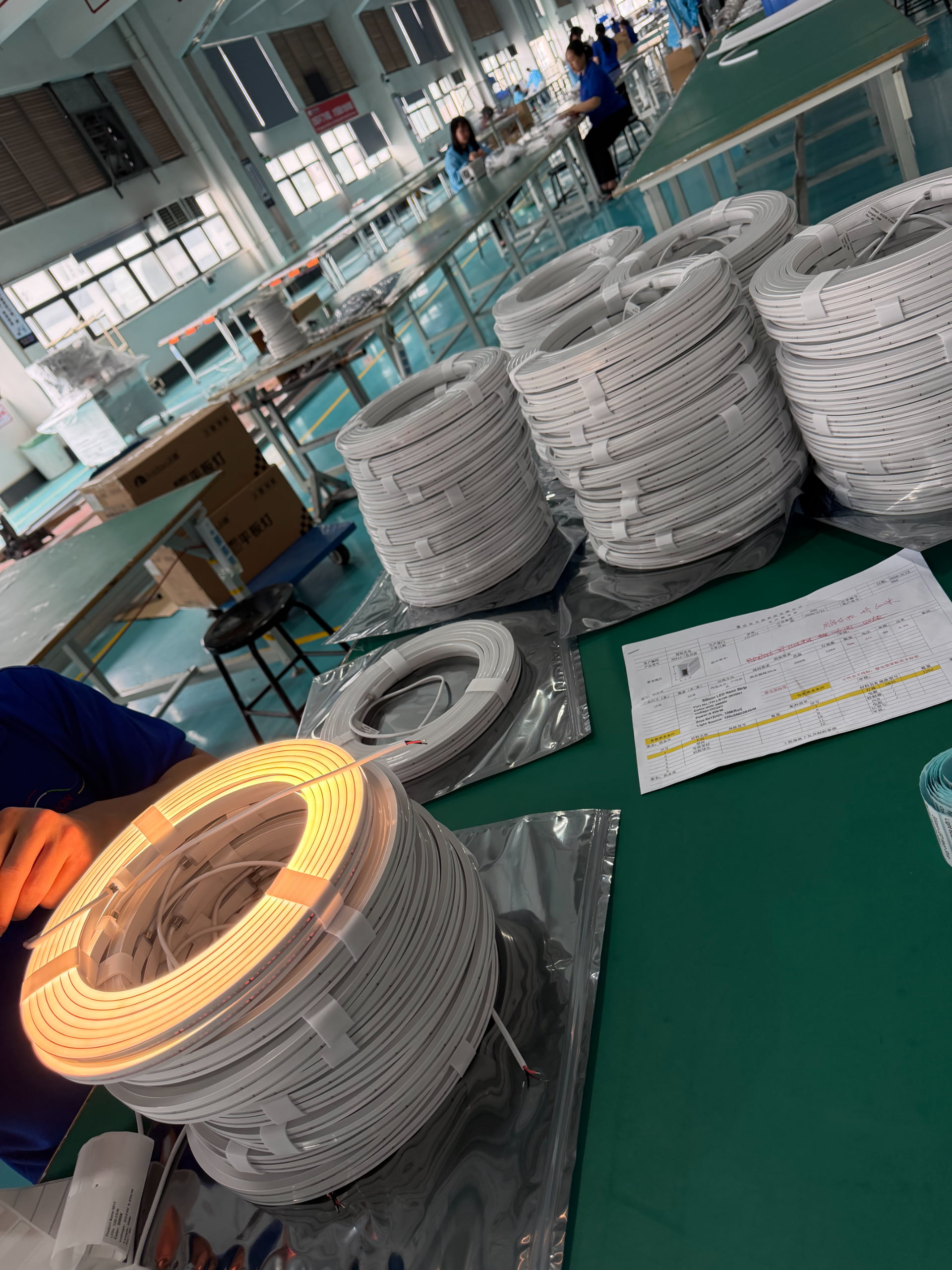
The root cause wasn't the driver innovation itself—it was how the smart algorithm responded to whole-system voltage distribution under dynamic load + temperature variations:
System-Level Failure Cascade:
- Cable voltage drop increases with length (unavoidable physics)
- Smart drivers detect lower voltage at far end
- Drivers increase current to compensate for perceived dimming
- Increased current causes additional voltage drop + heating
- Temperature rise causes LED forward voltage shift
- Smart algorithm re-adjusts, creating oscillating feedback loop
- Different ambient temperatures at different building zones create non-uniform compensation behavior
The "innovation" of intelligent control actually amplified system-level instabilities that dumb constant-current drivers would have ignored. The solution wasn't better algorithms—it was:
Whole-System Design Requirements for Smart Controls:
- Maximum cable run calculations must include dynamic load profiling, not just static voltage drop
- Driver reserve capacity: 20% minimum overhead beyond rated load
- Temperature coefficient compensation: Must account for 40°C ambient variation
- Segment isolation: Runs over 30m require independent driver zones with synchronized control signals
- Voltage monitoring: Real-time feedback must measure at far end of installation, not driver output
After implementing these system-level design rules, smart control reliability went from 85% to 99.2% over 24-month tracking. But here's the key insight: The innovation that mattered wasn't smarter drivers—it was smarter system architecture that understood how intelligence could become instability.
How Do Color Performance Innovations Amplify Batch Consistency Problems?
High-CRI LEDs, tunable white technology, and RGBW mixing systems represent genuine optical innovations. But there's a paradox: The tighter you control color quality specifications, the more visible batch-to-batch variations become in large installations.

One architectural lighting project specified 95+ CRI with MacAdam 2-step binning for "museum-quality illumination." Sample approval was unanimous. But when the first production batch (4,000 meters) was installed, the architect immediately spotted what they called "banding"—subtle but visible color temperature shifts every 20-30 meters.
The investigation revealed that while individual LED bins stayed within MacAdam 2-step tolerance, the mixing of bins across production batches created just enough variation to be perceptible across large continuous runs. This is the cruel reality of human vision: we're exceptionally sensitive to relative color differences even when absolute specifications are met.
Color Innovation Validation Requirements:
| Specification Level | Standard Practice | Failure-Proof Protocol |
|---|---|---|
| LED Binning | MacAdam 3-step acceptable | MacAdam 2-step + single-bin locking for project |
| CRI Specification | 90+ general spec | 95+ with R9 > 50 mandatory |
| CCT Tolerance | ±150K acceptable | ±100K + batch tracking by reel |
| Driver Current Matching | ±5% across installation | ±2% + calibration per zone |
| Long-term Drift | No specification | Maximum 3% CCT shift @ 5000h verified |
We now implement "batch locking" for projects over 2,000 meters—every reel in a continuous architectural run must come from the same LED production batch, same phosphor lot, same driver calibration batch. This reduces our manufacturing flexibility and increases inventory complexity. But it eliminates the single biggest complaint in high-end installations: perceptible color inconsistency.
The counterintuitive lesson: Color performance innovations don't just demand better components—they demand tighter supply chain control than most manufacturers are willing to implement.
What's the Real Innovation That Actually Reduces Failure Rates?
After analyzing failure patterns across 50+ commercial projects, I can state definitively: The innovation that matters most isn't technological advancement—it's systematic validation of how new technologies alter existing failure pathways.
Every material upgrade, structural change, and control system enhancement introduces new variables into a complex system. The companies that succeed in B2B lighting installations aren't the ones with the most cutting-edge datasheets. They're the ones who ask:
- How does this innovation change thermal stress distribution?
- What new material compatibility issues emerge?
- How do assembly tolerances interact with the new design?
- What failure modes move from visible to hidden?
- How do batch variations get amplified or dampened?
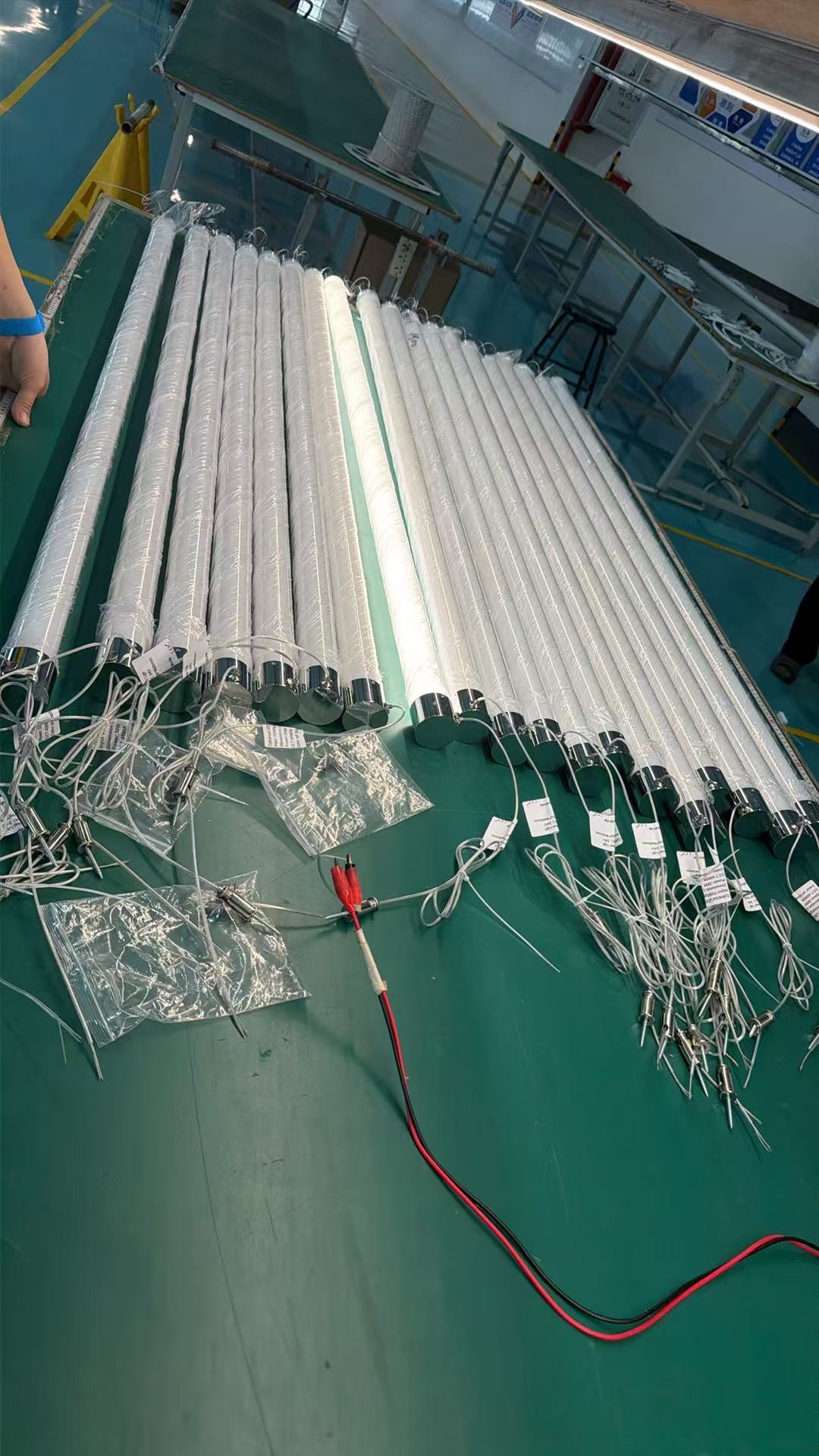
At our facility in Shenzhen, we've established a "failure mode prediction protocol" that runs parallel to every innovation development:
Innovation Validation Framework:
- Material Level: Accelerated aging 3x beyond standard specs
- Component Level: Failure mode effects analysis (FMEA) before prototyping
- System Level: Whole-installation simulation under worst-case environmental profiles
- Time-Series Validation: 1000h/3000h/5000h checkpoint measurements, not just initial testing
- Batch Variation Study: Minimum 5 production batches tested before commercial release
This process takes 4-6 months longer than standard development cycles. It costs 30-40% more in validation expenses. But it's reduced our field failure rate from industry-standard 3-5% down to under 0.8% over 24-month installation periods.
The real innovation isn't faster development—it's slower, more comprehensive validation that treats every upgrade as a potential system destabilizer until proven otherwise.
Conclusion
LED lighting technology innovations fail not because they lack performance improvements, but because they introduce unvalidated failure pathways into complex systems. The only innovation that truly matters in B2B installations is the discipline to re-establish long-term reliability boundaries every time you change materials, structures, or controls—treating advancement not as progress, but as risk restructuring that demands systematic proof.