

Most people think choosing an LED lights supplier is about finding the cheapest price or the fastest delivery. But I've seen too many projects fail not because the lights broke, but because the supplier couldn't maintain consistency over the project's lifetime. The real question isn't "Can they deliver?" It's "Can they deliver the same quality two years from now?"
The supplier you choose today determines whether your project succeeds in five years. A true LED lights supplier isn't just selling products—they're managing your long-term risk. The biggest mistake? Treating suppliers as product vendors instead of system stability partners who control your project's entire lifecycle.
I learned this the hard way. After watching dozens of commercial lighting projects collapse—not from product failure, but from supply chain instability—I realized something critical. The samples were perfect. The certifications were valid. The pricing was competitive. But none of that mattered when the replacement batch arrived 18 months later with completely different performance characteristics.
What Makes a Reliable LED Lights Supplier Different from Just Any Vendor?
When you're sourcing LED lighting for a multi-location rollout or a major architectural project, you need more than a catalog. You need a partner who understands that your project doesn't end when the truck leaves their factory. It starts there.
A genuine LED lights supplier proves their value not through glossy brochures, but through documented change management protocols, locked material specifications, and batch-to-batch consistency controls. These systems determine whether your building looks uniform in three years or starts showing visible color bands across different installation phases.
Most buyers focus on the wrong metrics. They compare unit prices. They check lead times. They verify certifications. These matter, but they're not what kills projects. What actually destroys projects is what happens after the initial purchase order. Let me break down what really matters.
Material System Stability: The Hidden Risk Factor
Many LED lights suppliers change their component sources annually. They switch LED chip manufacturers. They find cheaper PCB vendors. They negotiate new silicone raw material contracts. Each change saves them a few cents per unit. But each change also introduces variability that won't show up in your initial testing.
I've worked with clients who installed beautiful linear lighting systems across their entire hotel chain. Two years later, during the expansion phase, the same model number from the same supplier produced noticeably different results. The color temperature specification was identical on paper. Both batches claimed 3000K. But the first batch used 2-step SDCM binning. The second batch used 5-step SDCM binning.
You can't see the difference when you're looking at a single fixture. But when you install 200 meters of continuous linear lighting, the human eye detects the shift instantly. The entire façade showed visible banding. The solution wasn't replacing broken lights. It was tearing out perfectly functional fixtures and starting over because the supplier changed their LED sourcing without informing the buyer.
This is why I always ask suppliers about their change notification protocols before I ask about price. Do they issue Product Change Notifications (PCN)? Do they lock LED binning codes? Do they maintain material traceability? These questions reveal whether they're managing products or managing systems.
Manufacturing Process Control: Why Samples Lie
Sample testing is necessary but insufficient. Samples represent one moment in time under controlled conditions. Real projects face temperature swings, voltage fluctuations, installation stress, and environmental exposure over thousands of hours. The gap between laboratory performance and field performance is where most projects fail.
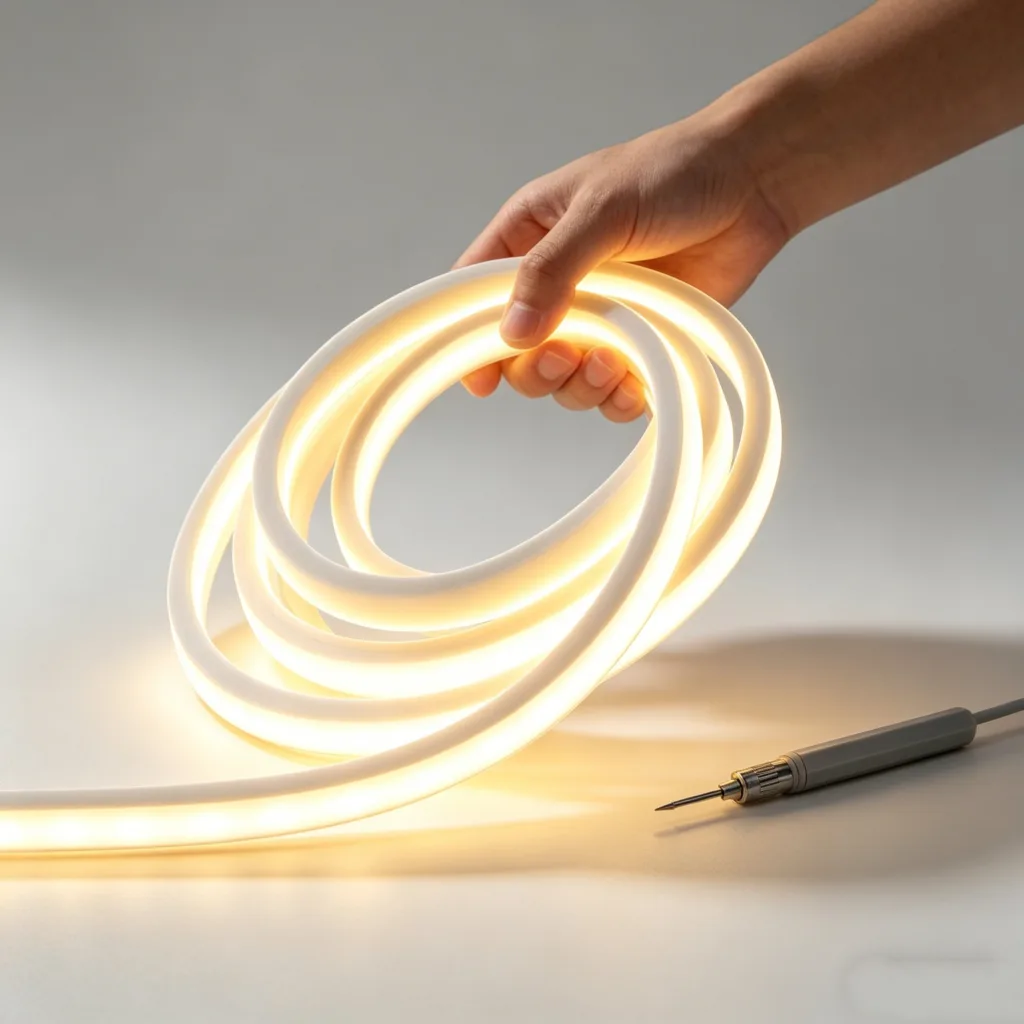
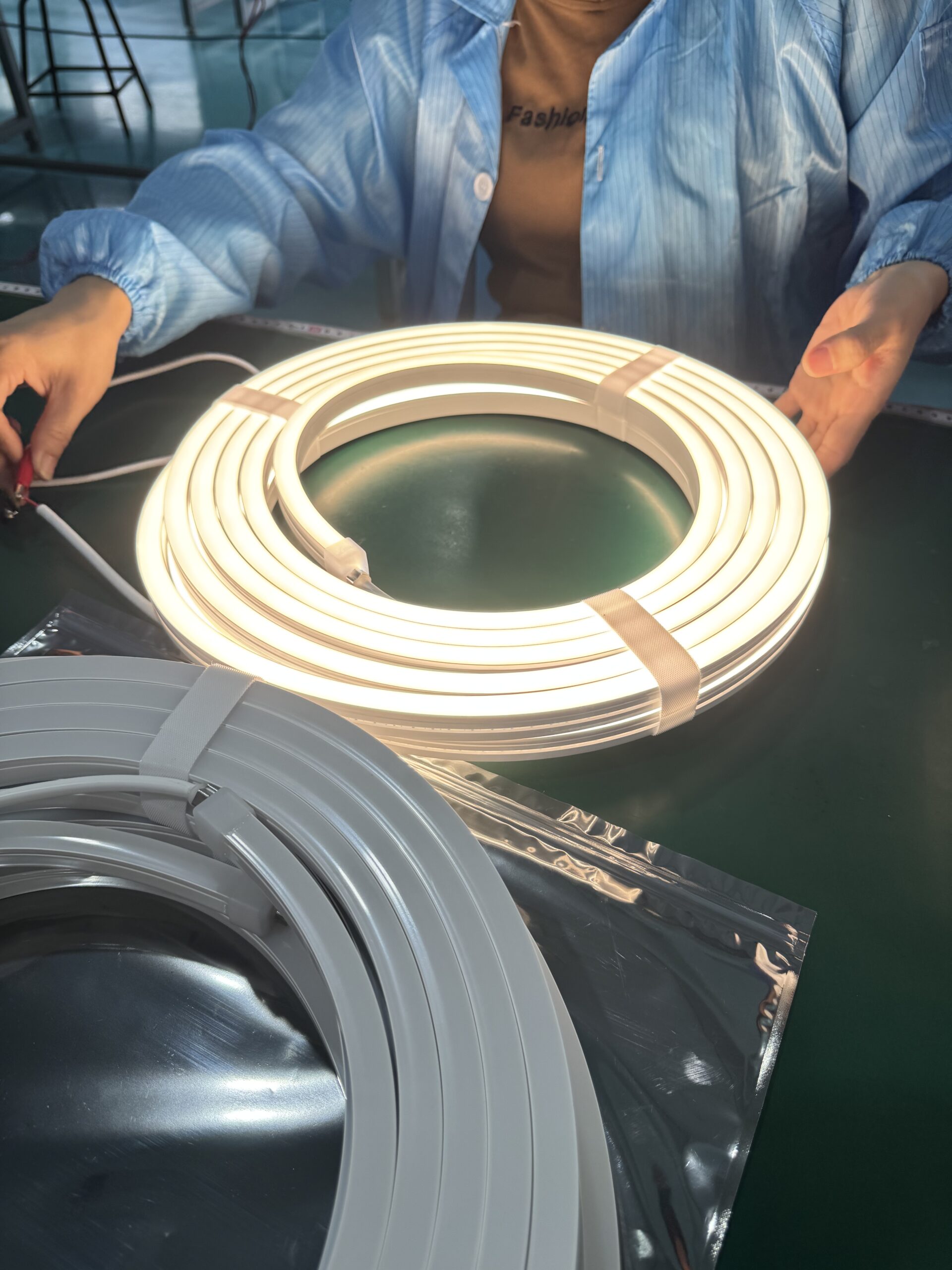
Take silicone neon flex as an example. Everyone tests for uniform light output and IP rating. But few people verify extrusion process stability. The extrusion temperature can vary by 10-15°C during a production run. The curing time can shift by 30 seconds between morning and afternoon shifts. The material mixing ratios can drift slightly as drums are replaced.
Each of these micro-variations creates cumulative stress in the silicone wall thickness. This leads to inconsistent thermal expansion coefficients. This causes differential aging rates. This results in some sections yellowing faster than others, or some segments losing waterproof integrity years before others fail.
You won't see this in samples. You'll see it 18 months after installation when the outdoor sections start showing uneven discoloration patterns. By then, the problem isn't fixable without replacement. And the supplier will point to their IP68 test certificate and claim they delivered exactly what was specified.
This is why professional buyers demand thermal cycling test data, not just static IP ratings. They want to see accelerated aging reports. They want UV exposure test results over 2000+ hours. They want documentation of extrusion temperature control ranges during production runs. These documents tell you whether the supplier understands process control or just knows how to pass inspection tests.
Power System Design: The Three-Year Time Bomb
Here's a scenario that happens constantly. A supplier provides a 100W LED system with a 100W power supply. The math works perfectly. The initial installation runs flawlessly. Everyone is satisfied. Then, around year two or three, failures start clustering.
The problem isn't the LED. It's not the housing. It's the power supply running at maximum capacity with zero margin for real-world conditions. Electrical grids aren't stable. Voltage drops happen. Surge events occur. Ambient temperatures fluctuate. LED efficiency degrades slightly over time, requiring more current to maintain output.
Each of these factors pushes the power supply closer to its thermal limit. Over thousands of hours, components age faster. Capacitors lose capacitance. MOSFETs develop higher on-resistance. Thermal paste dries out. The system doesn't fail immediately. It degrades gradually until it crosses a threshold and stops working.
The solution isn't buying more expensive power supplies. It's working with an LED lights supplier who designs with 20-30% power headroom, implements proper thermal management, and selects driver components rated for 50,000+ hour lifetimes at operating temperature. These decisions happen during initial design, not during warranty claims.
Replacement Consistency: The True Test of Supply Chain Maturity
Here's the ultimate test of whether your LED lights supplier is actually managing risk for you. Ask them this question: "If I order replacement units in three years, can you guarantee they'll match the color, brightness, and performance of today's production?"
Most suppliers will say yes. Very few can actually deliver it. Matching future batches to past production requires:
- Locked LED bin codes with multi-year inventory commitments
- Frozen bill of materials with version control
- Documented color temperature ranges using spectral measurements, not just CCT specifications
- Thermal performance consistency testing across production lots
- Material traceability systems that track component changes
These capabilities cost money to implement. They require sophisticated ERP systems. They demand supply chain discipline. They're invisible during initial purchasing but become critical during project expansion, maintenance, and repair phases.
I've seen retail chains spend $500,000 replacing perfectly good fixtures because the replacement batch didn't match the aesthetic of the original installation. The supplier insisted they delivered the correct model number. They did. But the model number didn't capture the LED binning, the silicone formulation revision, or the power supply manufacturer that had changed since the original order.
How Do You Actually Vet an LED Lights Supplier Before Committing?
Forget the standard RFQ process. Instead, have these specific technical conversations. They'll reveal more about supplier capability than any factory tour or certification stack.
Ask About Change Management Protocols
Professional LED lights suppliers maintain formal change control systems. Ask them to describe their PCN process. How do they notify customers when components change? What approval do they require before implementing material substitutions? Do they maintain legacy specifications for continuity-critical projects?
If they look confused by these questions, they're not managing supply chain stability. They're just fulfilling orders. That's fine for one-time purchases. It's catastrophic for multi-phase projects or systems requiring long-term support.
Request Thermal Design Documentation
Don't just accept lumens per watt specifications. Ask for junction temperature measurements. Request driver case temperature data under maximum load. Verify thermal resistance calculations from LED junction to ambient air. These documents reveal whether thermal engineering happened or whether they just bolted LEDs to aluminum and hoped for the best.
Heat is the enemy of LED lifespan. Suppliers who can't produce thermal analysis documentation either haven't done the engineering or don't understand why it matters. Either way, your project will pay the price through accelerated lumen depreciation and premature failures.
Verify Material Compatibility Testing
This matters especially for projects involving silicone, adhesives, diffusers, or specialized coatings. Ask whether they've conducted long-term compatibility testing between materials. UV inks can migrate into silicone. Acrylic can react with certain adhesive chemistries. Plasticizers can leach from PVC jacketing into LED encapsulants.
These interactions don't happen immediately. They develop over months or years of exposure. Professional suppliers test material combinations for 2000+ hours under accelerated aging conditions before releasing products. This testing costs time and money, which is why many suppliers skip it. Then you discover delamination, yellowing, or adhesion failure after installation when it's too expensive to fix.
Test Replacement Batch Consistency
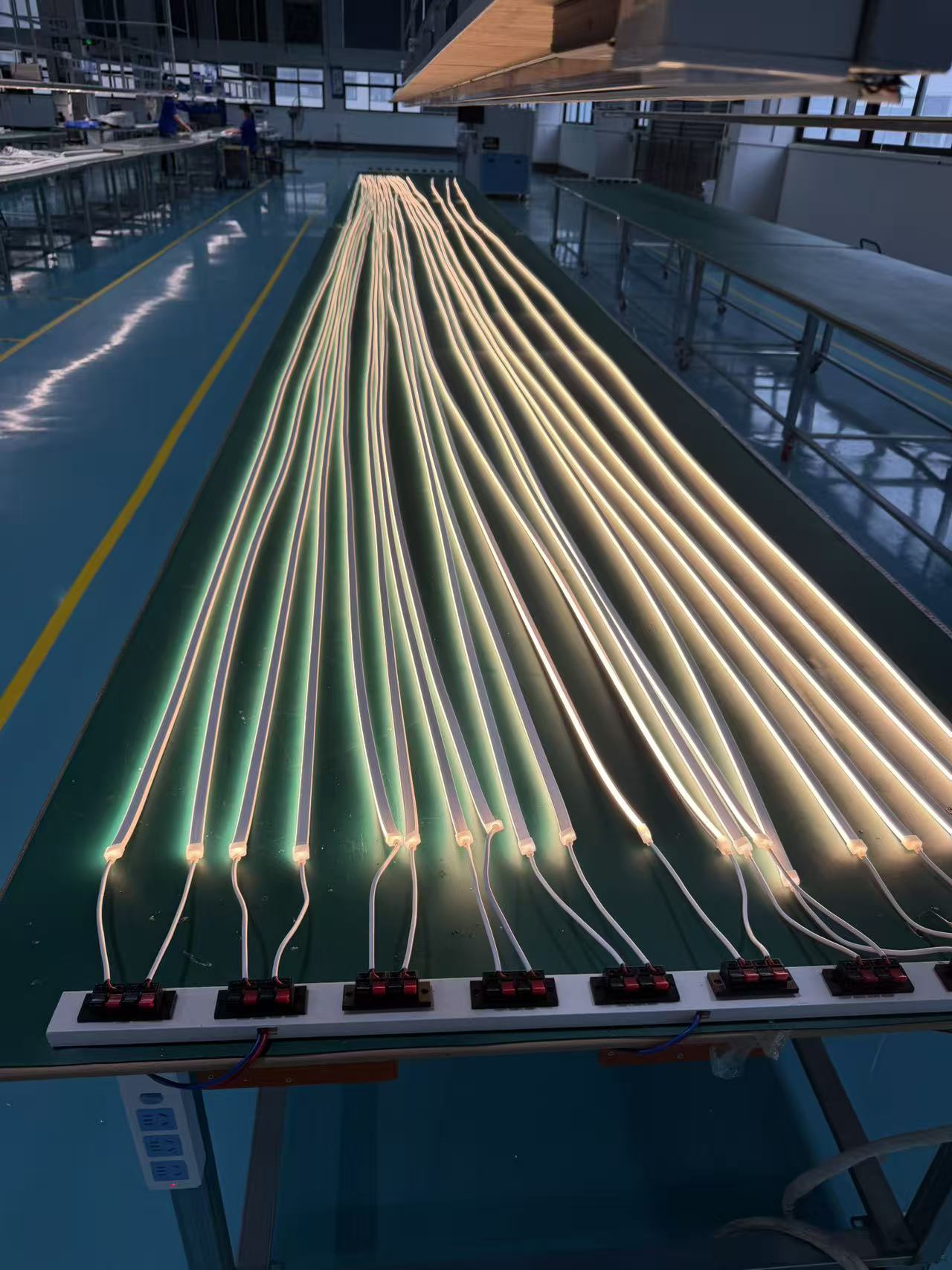
If possible, order samples from different production runs separated by several months. Compare them using spectrometers, not just visual inspection. Measure color temperature, color rendering index, luminous flux, and spectral distribution. Professional LED lights suppliers maintain consistency within 5% across batches. Mediocre suppliers show 15-20% variation.
This test requires patience and planning, but it's the single best predictor of long-term supply reliability. If they can't maintain consistency across sample batches, they definitely can't maintain it across production batches spread over years.
Conclusion
The right LED lights supplier isn't the one with the lowest price or the biggest catalog. It's the supplier who can deliver identical performance five years from now when you need replacement units. Because project success isn't measured at installation—it's measured over the entire operational lifetime of the system.